


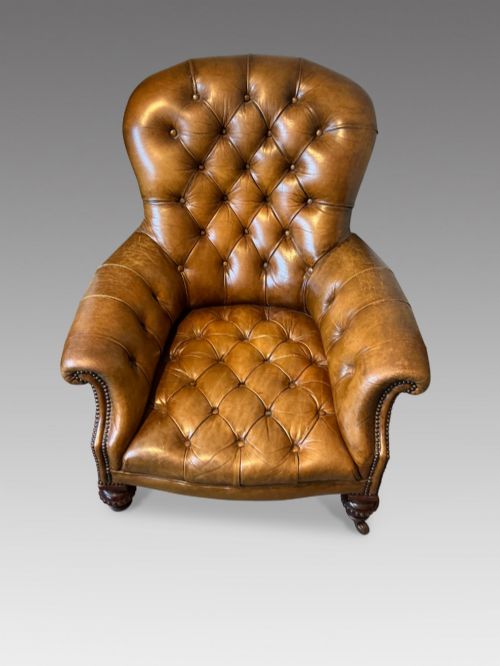
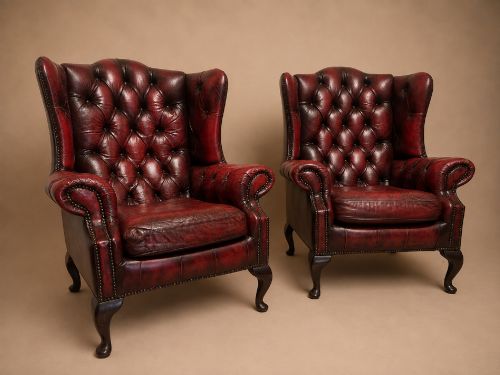
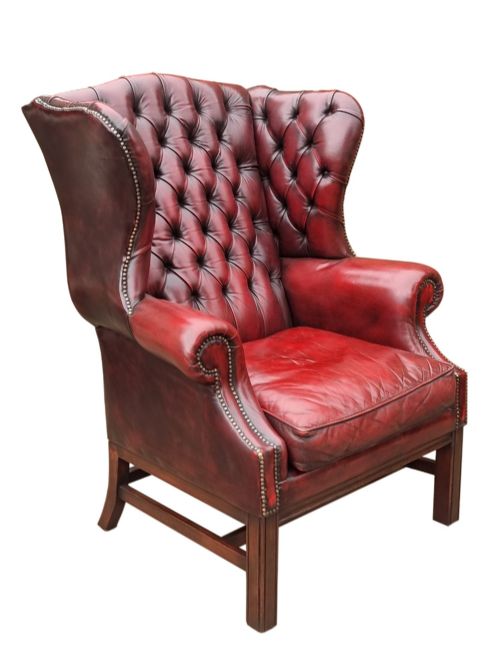
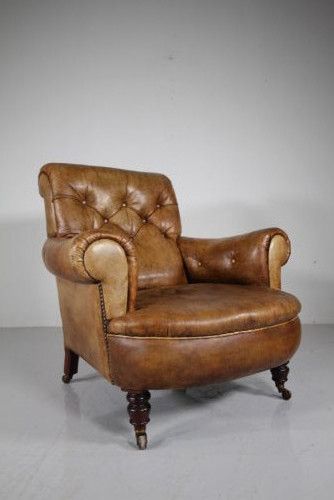
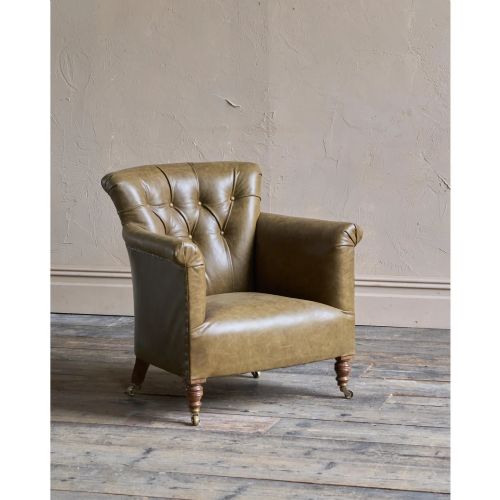

Buttoned Leather Chair
When you choose a buttoned leather chair, you secure a sturdy seat shaped by generations of domestic use.
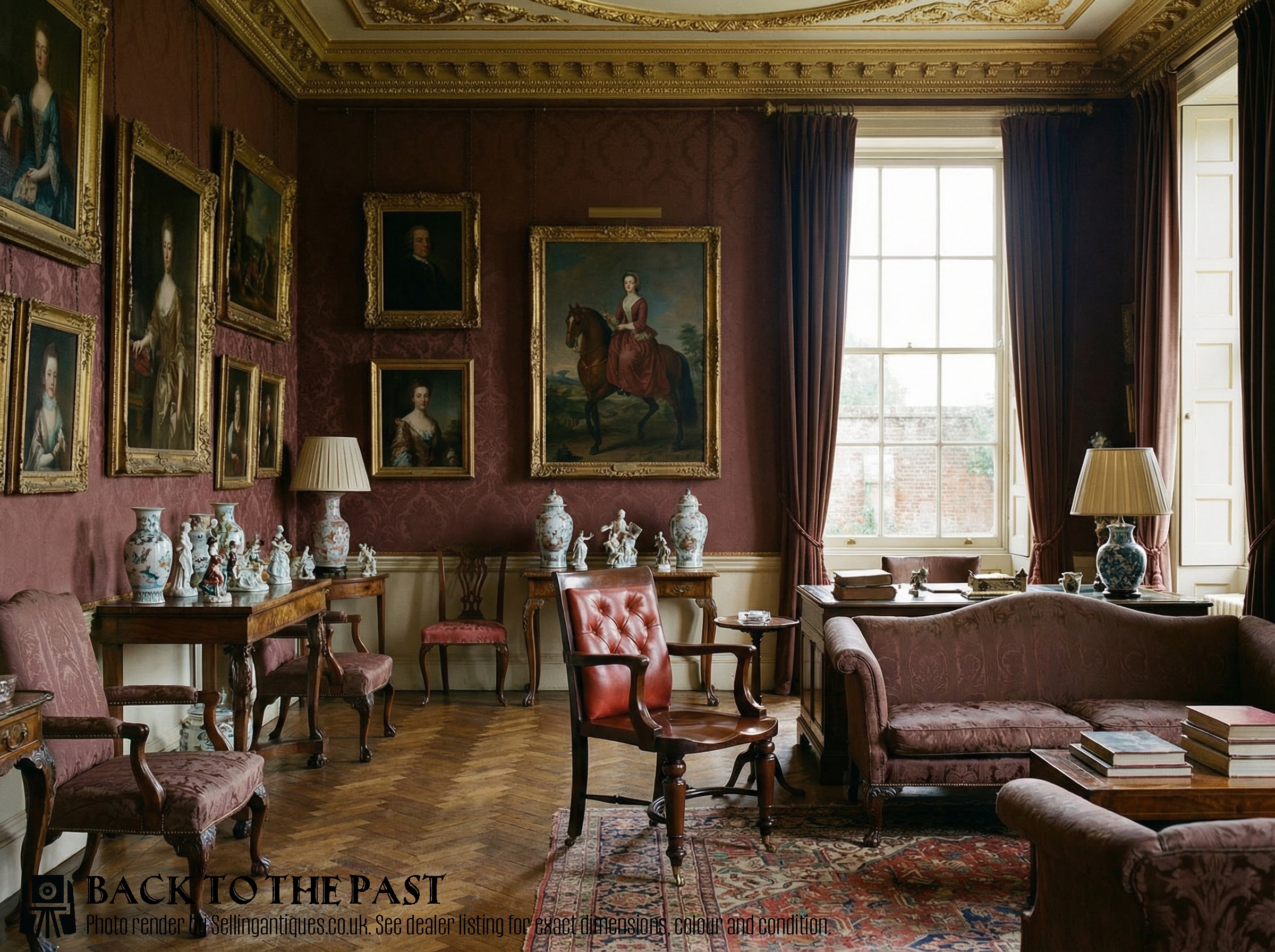
Buttoned Leather Chair
A buttoned leather chair provides a supportive, upholstered seat designed for studies, libraries, and drawing rooms across various historical periods. The selections available on this page span several centuries, featuring forms intended for specific daily tasks.
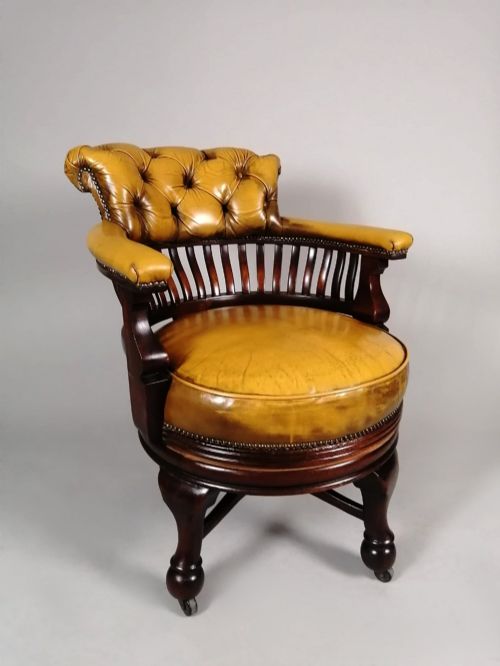
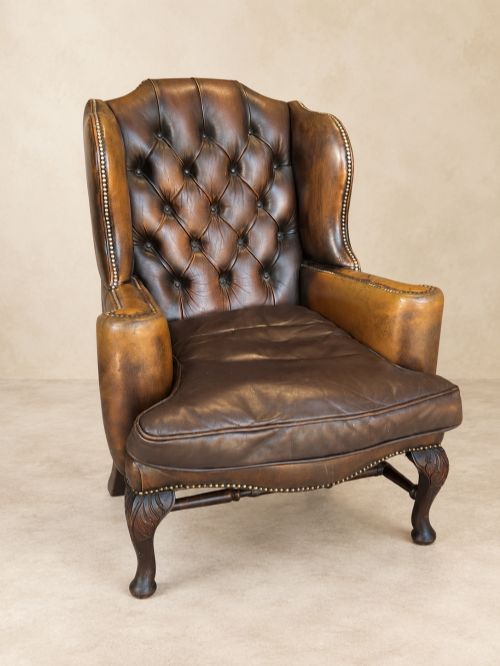
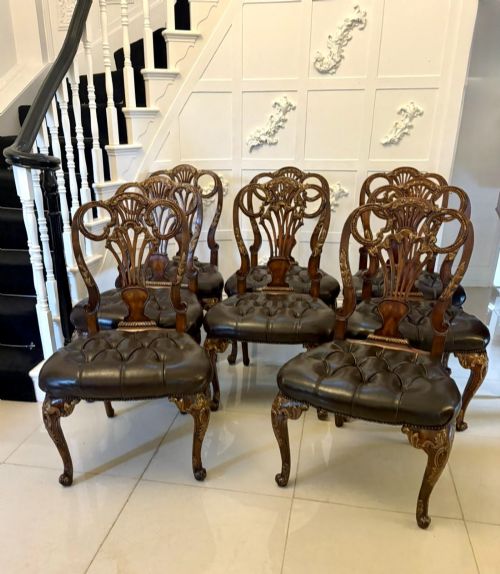
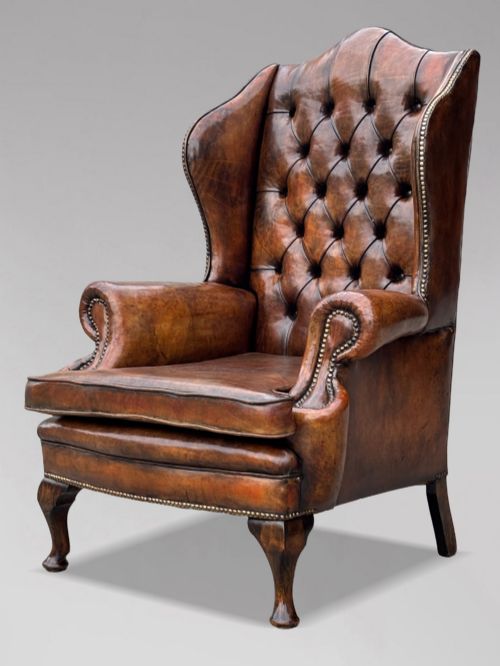
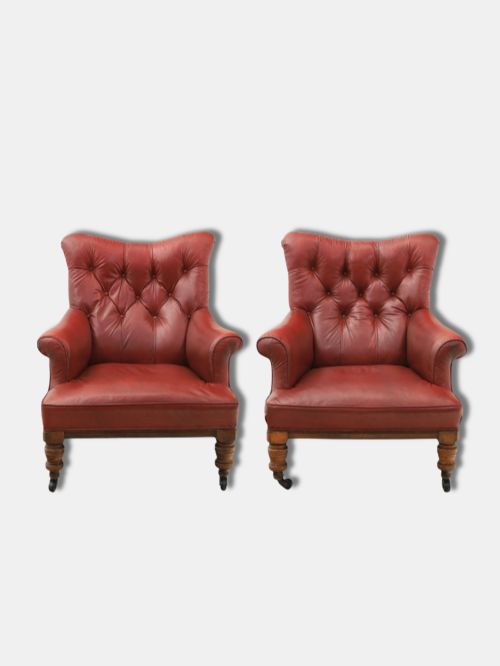
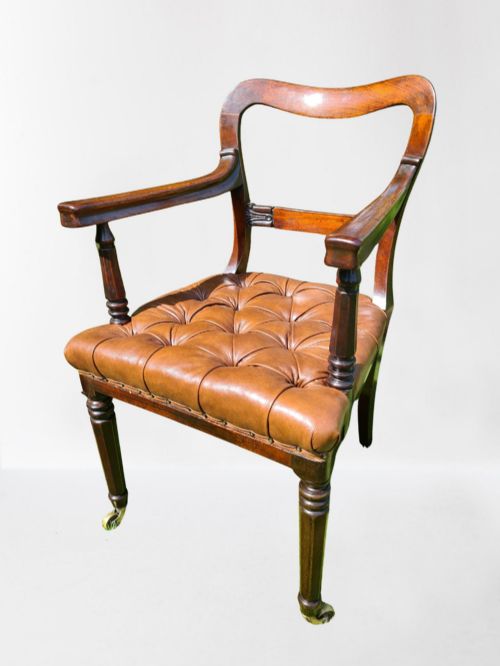
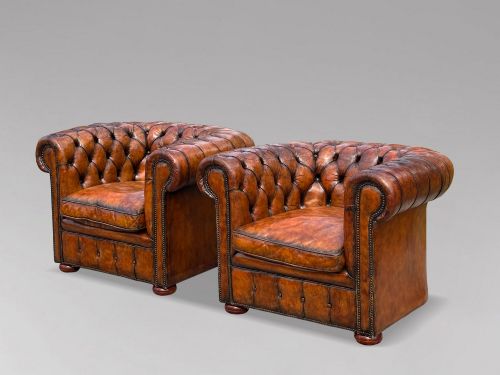
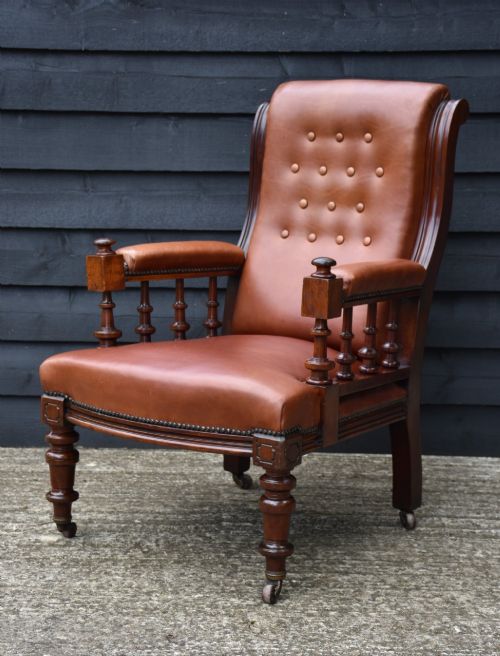
The most common examples you will encounter here include Victorian library armchairs, revolving desk chairs, and deep-buttoned wingbacks. These pieces range from substantial club chairs to compact office seating and dining chairs.
Makers utilised diverse woods such as mahogany, oak, rosewood, and walnut to build the foundational frames before applying leather upholstery. The resulting seat styles vary from Regency and William IV designs to Edwardian and later twentieth-century iterations.

Materials and construction methods
Carpenters constructed the structural frames of these seats using hardwoods like mahogany, oak, and walnut, frequently incorporating carved details or brass inlay. Joinery techniques ensured the stability required for heavy library and desk environments.
Upholsterers stretched leather over internal stuffing, securing the hides with deep tufting and fastening the materials with brass tacks. Revolving and reclining variants additionally integrated mechanical ironwork, brass castors, and swivel mechanisms.
Buttoned Leather Chair Retail Price Guide 2026
Typical asking prices for buttoned leather chair among the pieces listed under this phrase on Sellingantiques today, from the lower quarter to the upper quarter. They describe what is for sale here now, not the wider market.
Listings feature mahogany, oak, rosewood, walnut, and cane alongside brass and leather materials across various nineteenth and twentieth-century periods.
Evaluating craftsmanship and condition
The distinction between standard utility seating and exceptional library chairs rests upon the depth of the woodwork carving and the selection of timber. Dense mahogany and figured rosewood frames indicate higher workshop status than utilitarian pine or basic oak carcases.
The treatment of the hide also separates ordinary examples from finer specimens, particularly where hand-dyeing and traditional deep-buttoning create uniform pleating. Original mechanical actions on revolving desk chairs and patent reclining frames add notable distinction to a piece.
Howard and Sons·Gillows
The Buttoned Leather Chair Glossary
- Wingback
- A chair style featuring protective side panels designed to shield the occupant from draughts. These upholstered extensions frame the upper back of the seating.
- Bergère
- An enclosed armchair with stuffed or cane upholstery set into a wooden frame. The exposed timber frame defines the formal profile of the seat.
- Chesterfield
- A heavily upholstered low seat featuring deep buttoning across the back and arms. This traditional form appears frequently in club and library settings.
- Revolving
- A chair equipped with a central spindle and undercarriage allowing the upper seat to rotate. Such mechanisms commonly support office and desk duties.
- Carver
- An armchair designed to match a set of dining or side chairs, usually placed at the head of a table. These pieces feature supportive elbow rests.
Buttoned Leather Chair: Frequently Asked Questions
How do I identify a Victorian desk chair?
Victorian desk chairs typically combine mahogany or oak frames with revolving mechanisms, leather upholstery, and deep buttoning. Many examples feature four-legged cross bases fitted with brass castors.
These pieces were built for heavy study use, so look for sturdy timber frames and adjustable height screws underneath the seat.
Where were wing armchairs placed?
Wing armchairs traditionally sat beside fireplaces or in draughty hallways to protect the occupant from cold air currents. The side panels caught heat from the hearth.
Over time, they moved into libraries and drawing rooms as comfortable reading seats.
What is the difference between a club chair and a wingback?
A club chair has a low back and rounded arms without the projecting side panels characteristic of wingback designs. Club chairs focus on deep, enveloping comfort for general lounging.
Wingbacks offer a taller backrest and structured side wings for enhanced head support.
How do I care for antique leather upholstery?
Antique leather requires gentle cleaning and occasional conditioning to prevent the hide from drying out. Avoid placing these chairs near direct heat sources or strong sunlight.
Regular dusting with a soft cloth preserves the natural patina built up over decades of use.