

Button Leather Chair
A button leather chair brings substance and deep comfort to a room, offering the tactile richness of aged hide secured with neat tufting.
Button Leather Chair
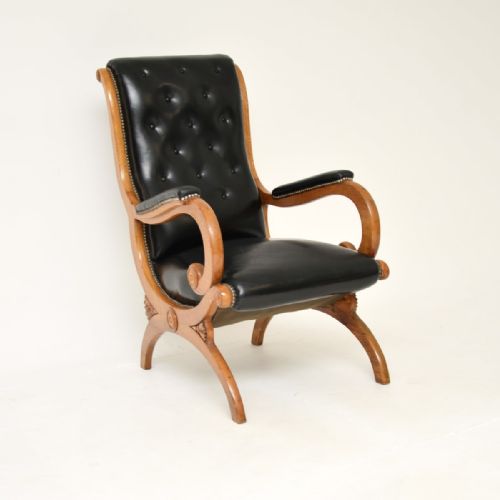
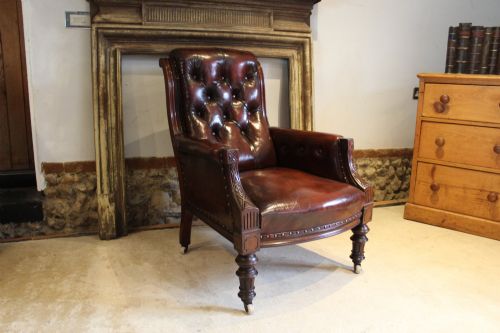
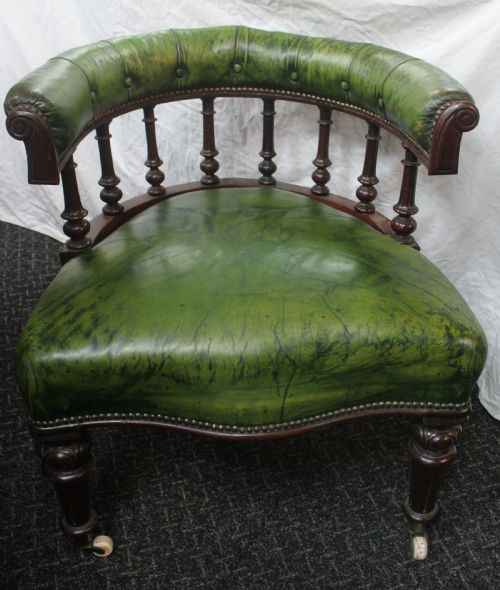
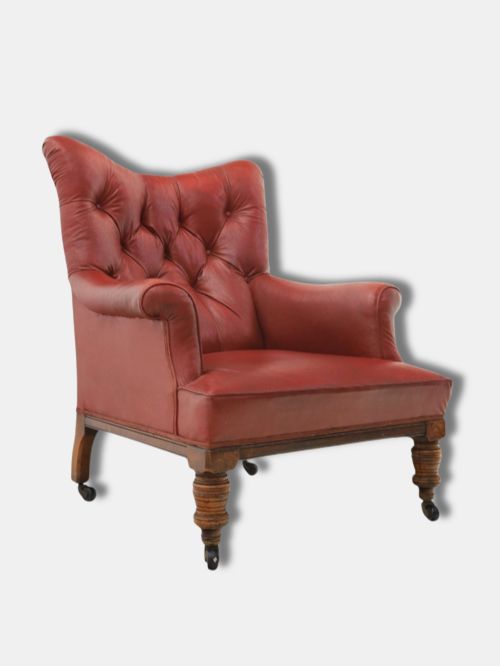
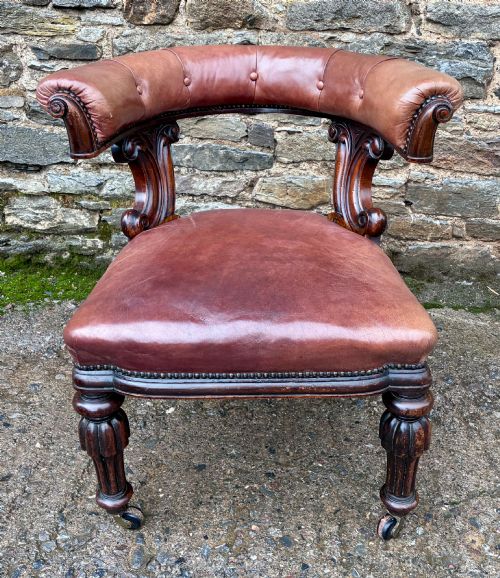
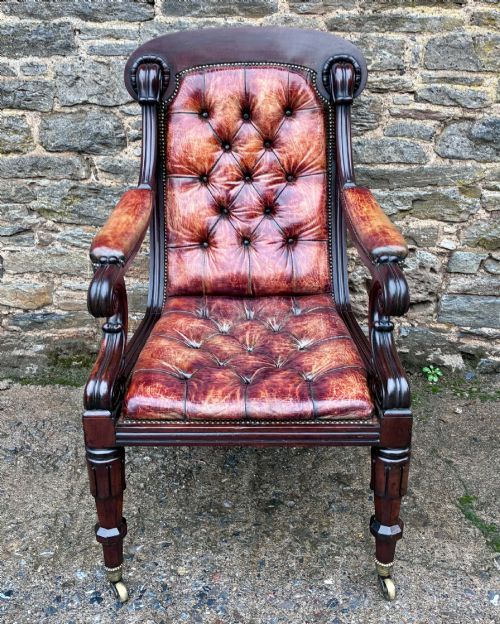
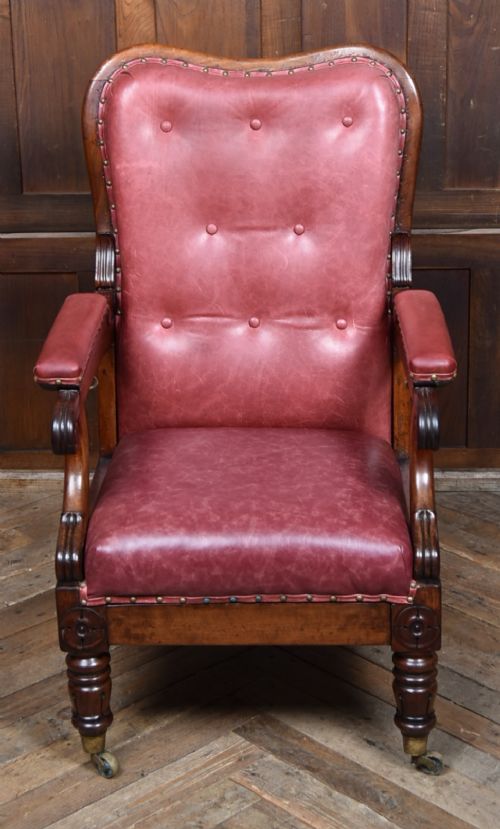
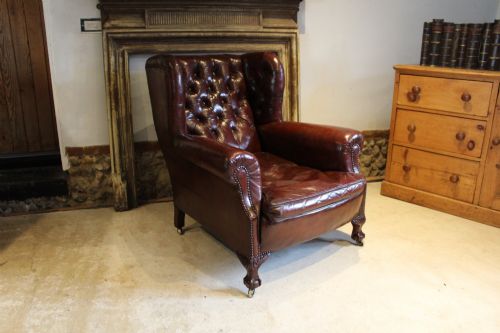
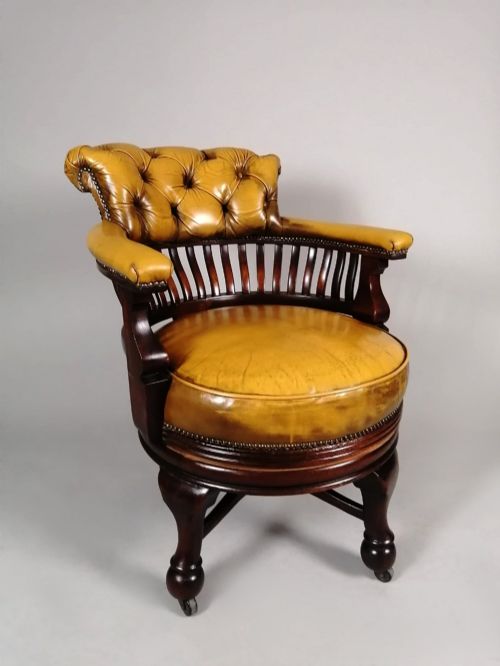
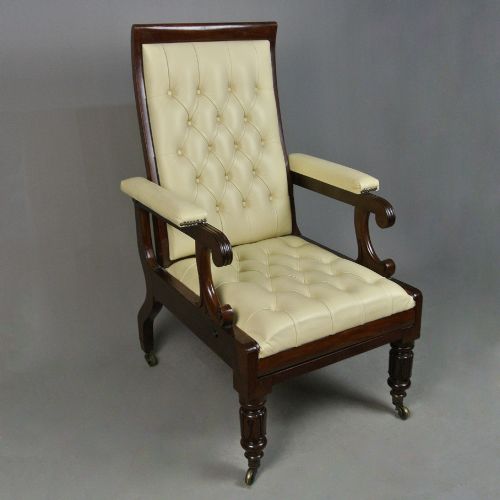
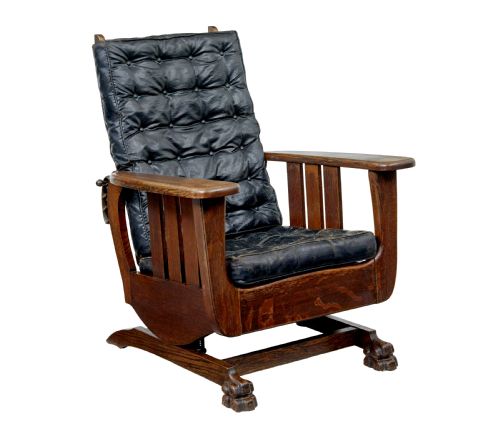
When searching for a button leather chair, buyers encounter a robust array of seating types spanning the nineteenth and early twentieth centuries, with Victorian library armchairs and club chairs forming the bulk of what is available. These seating options range from heavy mahogany and oak framed library armchairs to low slung club chairs and swivel desk chairs designed for study or office work.
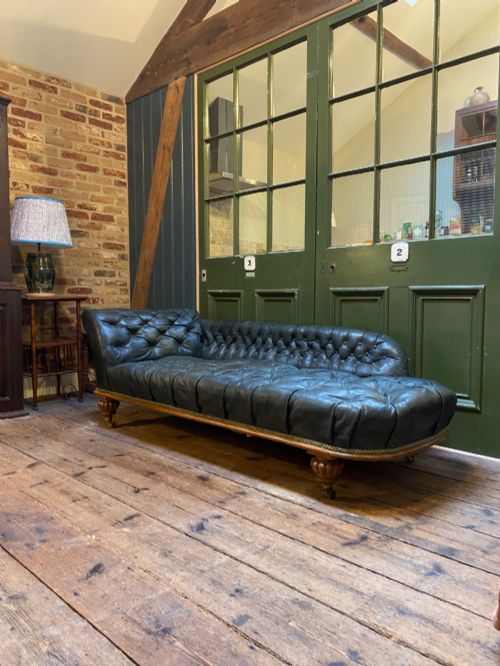
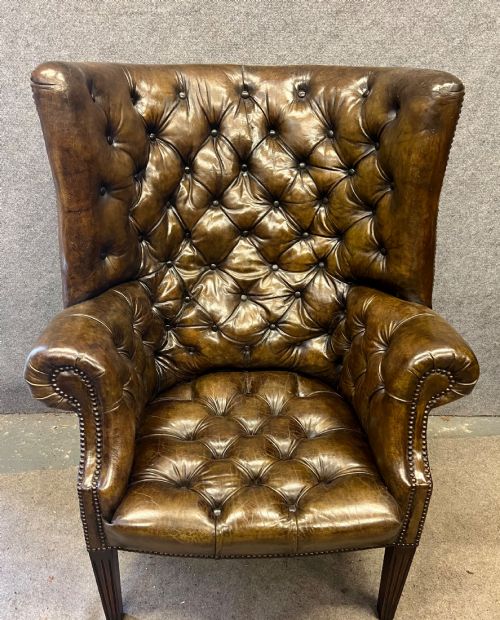
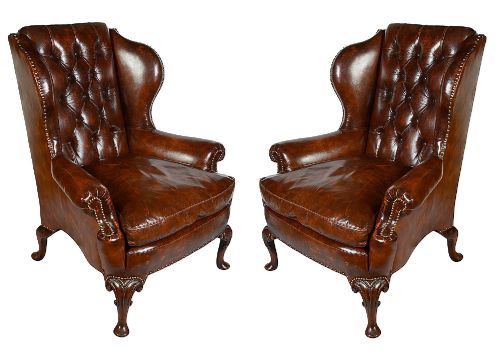
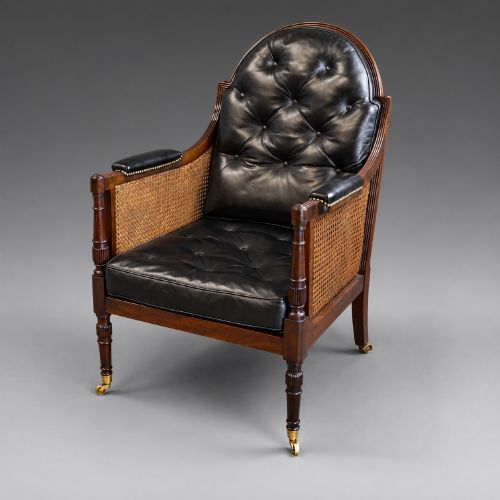
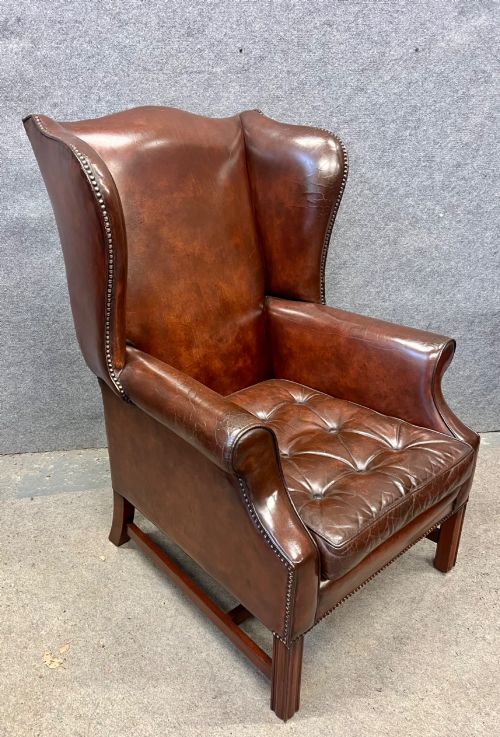
The selection includes specific variants such as wing armchairs, bergere chairs, and reclining chairs dating from the Regency era through to the Edwardian period and the 1920s. Side chairs, rocking chairs, and chaise longues also appear, demonstrating how varied the application of buttoned leather upholstery was across different domestic and professional settings.
Materials and construction methods
Makers built the frames of these chairs using dense timbers such as mahogany, oak, walnut, and rosewood, often carving the woodwork with restrained Victorian or Regency detail. Brass details appear frequently, including decorative studs, castors on desk chairs, and inlay work.
Upholsters worked leather over sprung or stuffed interiors, securing the hide with deep buttoning that created characteristic folds and tension across the backrest and arms.
Button Leather Chair Retail Price Guide 2026
Typical asking prices for button leather chair among the pieces listed under this phrase on Sellingantiques today, from the lower quarter to the upper quarter. They describe what is for sale here now, not the wider market.
Some nineteenth century sitters could recline at a whim thanks to clever patent mechanisms hidden inside solid mahogany armchair frames.
Assessing quality in antique seating
The distinction between ordinary and superior examples lies in the integrity of the timber frame and the depth of the carving, alongside the suppleness and grain of the leather hide itself. Chairs that retain their original show wood, uncompromised structural joints, and evenly spaced buttoning command greater respect from collectors.
Proportion and execution define the higher tiers, where makers balanced substantial upholstery with carefully turned or carved legs and arms, ensuring the piece maintains both visual weight and physical balance.
Howard and Sons
The Button Leather Chair Glossary
- Bergere
- An enclosed armchair with stuffed upholstery and wooden framing, often featuring cane panels on the sides or back. This French influenced form became popular in British interiors during the Regency period.
- Chesterfield
- A heavy, deep seated armchair or sofa characterised by rolled arms and uniform button tufting across the back and inner sides. These pieces often utilise brown or oxblood leather.
- Library armchair
- A substantial, sturdy seat designed for long hours of reading, usually constructed from mahogany or oak with leather upholstery. They frequently incorporate padded arms for added comfort.
- Reclining chair
- An adjustable seating form, such as those found in nineteenth century patents, allowing the user to alter the angle of the back. These mechanical chairs often combine mahogany frames with leather padding.
Button Leather Chair: Frequently Asked Questions
What is a button leather chair?
A button leather chair is a traditional seat featuring leather upholstery secured with tufted buttons, creating a dimpled surface pattern across the backrest or arms.
These pieces typically date from the nineteenth and early twentieth centuries, encompassing library chairs, club chairs, and desk chairs built from woods like mahogany and oak.
Where were these chairs used?
Historically, these chairs served in studies, libraries, drawing rooms, and gentleman's clubs where durable yet comfortable seating was required for long periods of reading or work.
Desk variants were placed in offices and studies, while larger wing and club chairs sat beside fireplaces or in reading rooms.
How do I care for antique leather?
Antique leather benefits from regular dusting and occasional treatment with appropriate leather dressings to keep the hide supple and prevent cracking.
Keeping the leather away from direct sunlight and excessive heat sources preserves the natural tone and texture of the material over time.
How do I date a leather armchair?
Dating relies on observing the timber framing styles, such as Regency brass inlay or heavy Victorian carved mahogany, alongside construction methods and the type of leather used.
Makers' marks or patent stamps, when present, provide more precise chronological markers for pieces from the nineteenth and early twentieth centuries.