

Button Backed Club Chairs
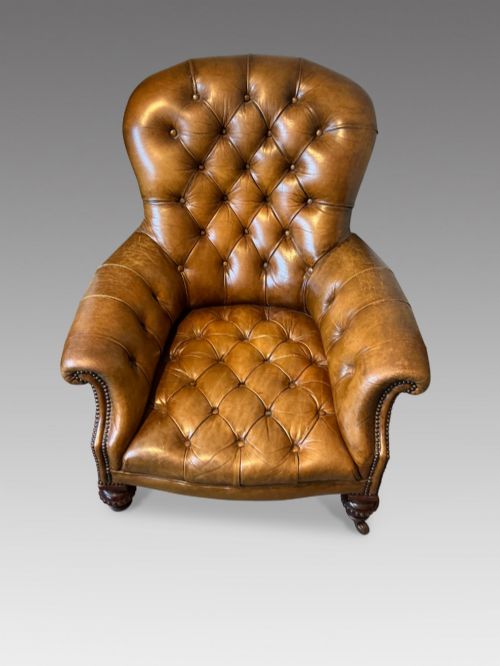
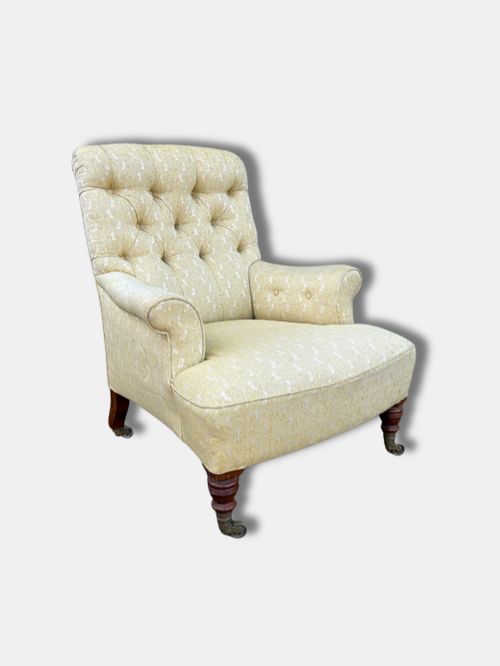
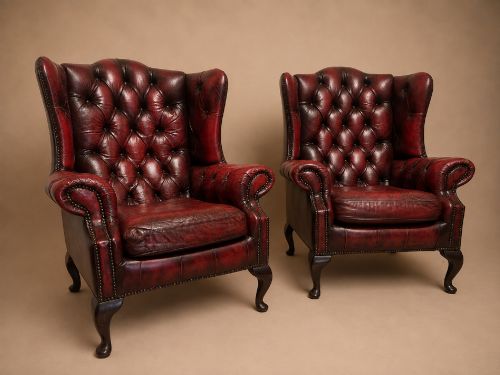
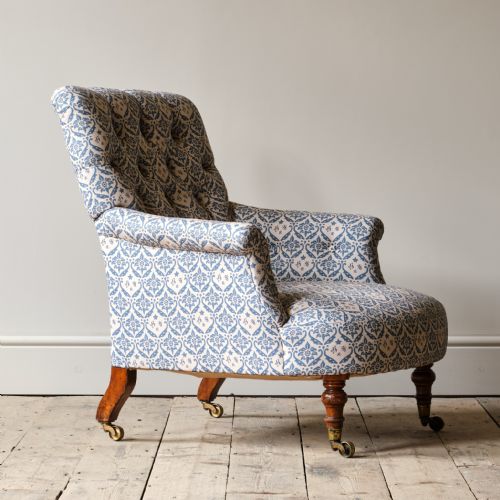
Button backed club chairs offer deep seating and sturdy frames, bringing traditional comfort and rich leather texture to a study or library.
Button Backed Club Chairs
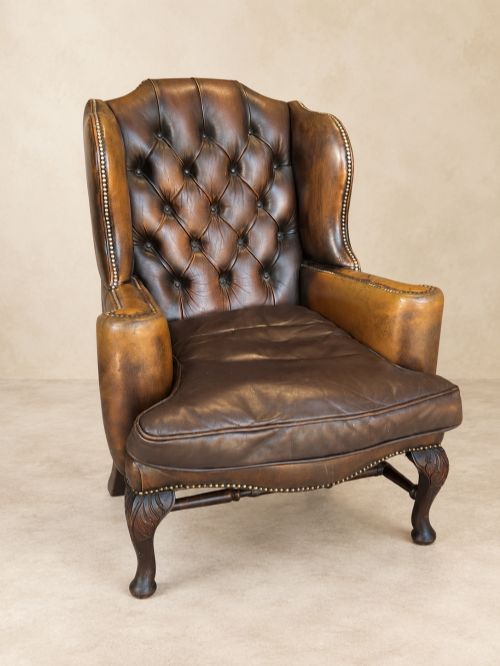
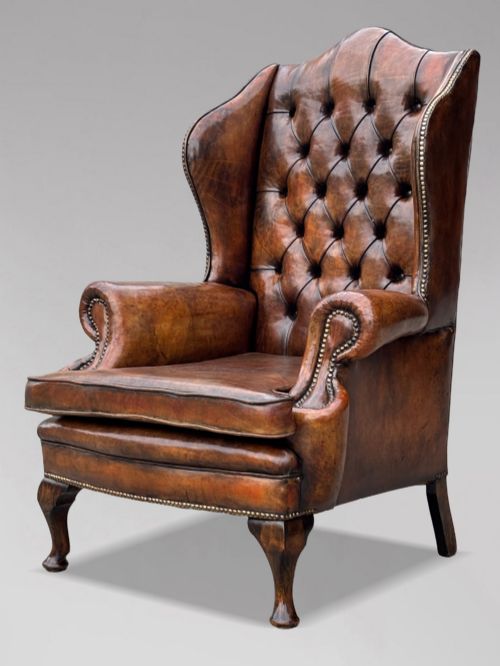
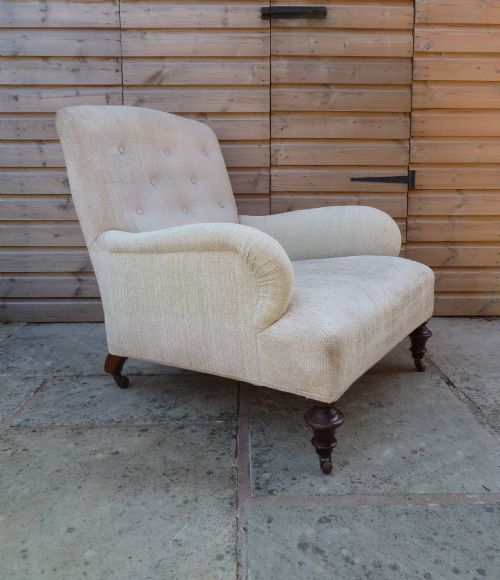
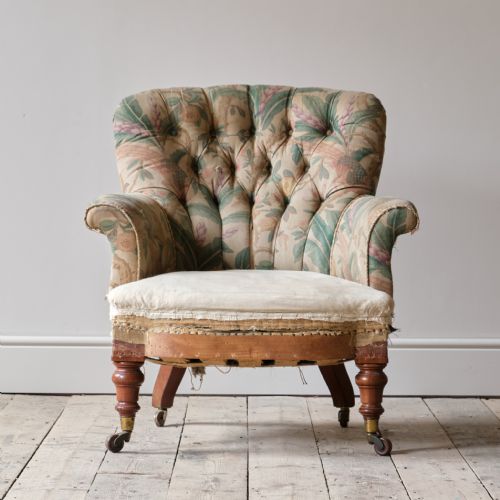
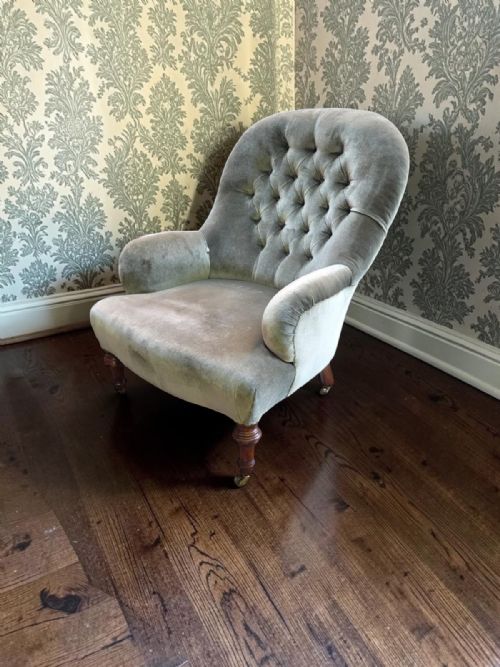
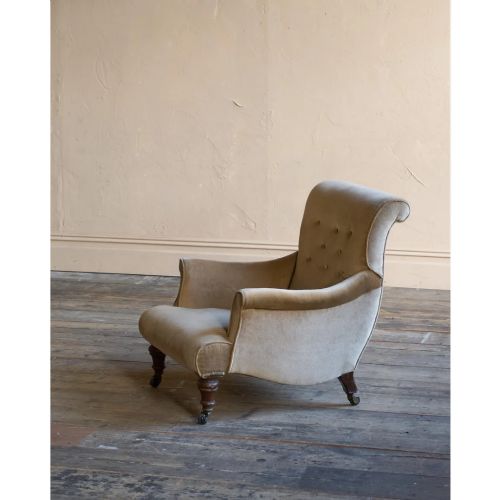
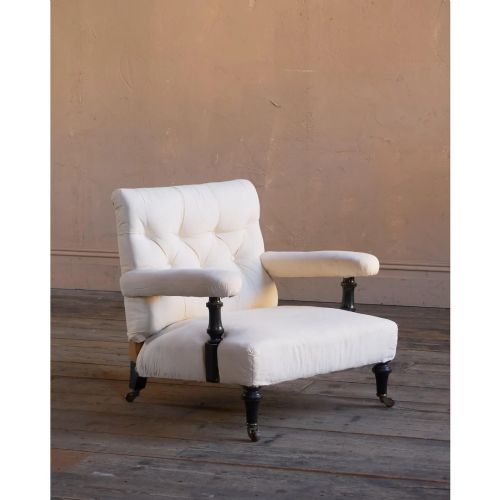
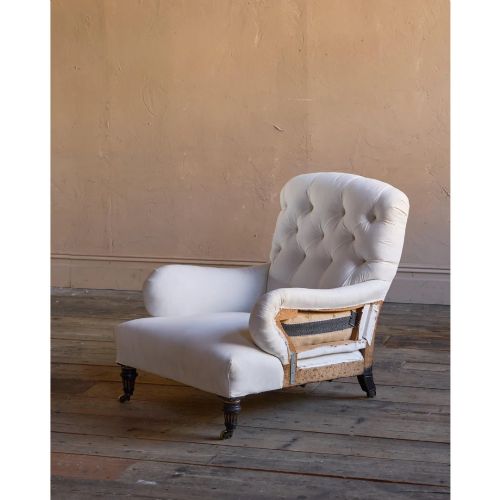
Button backed club chairs are substantial low-slung seating options designed for comfort, frequently encountered on this page as library armchairs, Chesterfield armchairs, and country house armchairs. These pieces typically date from the nineteenth century and the Edwardian era, spanning periods such as the Victorian age, the Regency era, and the nineteen-twenties.
The forms encompass wing armchairs, tub chairs, open armchairs, and high buttoned curved back chairs. Makers and styles represented range from English country house workshops and French Napoleon III designs to specific makers like Howard and Sons, Holland and Sons, and Gillows.
Leather remains the predominant upholstery material across these listings, accompanied by fabric, calico, velvet, and rexine. Frames are constructed from timber including mahogany, oak, walnut, rosewood, and general wood, often supported by brass details.
How they were made
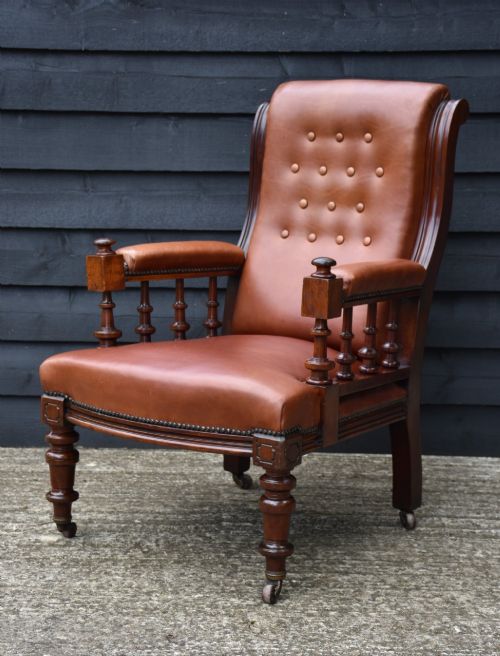
Frames are built from sturdy hardwoods such as mahogany, oak, walnut, and rosewood, providing a rigid internal skeleton to support heavy daily use. Wood is carved or shaped to form the arms, legs, and exposed framing seen on library and open armchairs.
Upholstery relies on leather, fabric, velvet, calico, and rexine pulled tightly over padding and secured with deep buttoning. Brass elements appear as decorative tacks or structural fittings, while aesthetic movement legs and carved wooden supports finish the lower section.
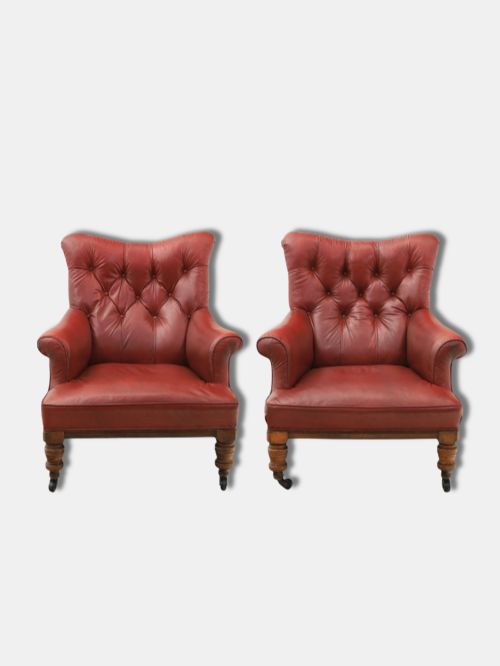
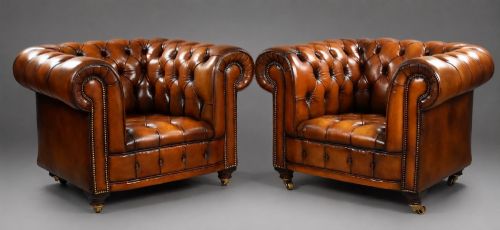
His and hers matching green leather chairs wait patiently for a synchronized sit-down.
What varies in quality
The distinction between standard production and exceptional work rests on the prestige of the maker and the refinement of the timber frame. Pieces attributed to prominent workshops like Howard and Sons or Gillows command greater interest through documented craftsmanship and superior joinery.
Leather selection and the execution of the buttoning dictate the visual impact of the upholstery. Finer examples display carefully matched hides, precise tufting, and harmonious proportions between the padded back and the wooden support structure.
Howard and Sons·Holland and Sons·Gillows·Mellier and Co
The Button Backed Club Chairs Glossary
- Button backed
- Upholstery pulled into deep indentations using buttons to secure the padding. This technique creates a tufted surface that holds its shape over decades of use.
- Chesterfield
- A deep-buttoned upholstered furniture style traditionally finished in leather. These items feature arms and backs of the same height.
- Library armchair
- A sturdy, comfortable seat designed for reading rooms and studies. They usually incorporate substantial wooden frames and leather upholstery.
- Wing armchair
- A high-backed seat featuring side panels designed to shield the user from draughts. These pieces often showcase prominent buttoning on the backrest.
- Bergere
- An enclosed armchair with wooden framing and woven cane or upholstered sides. They appear frequently in nineteenth-century contexts.
Button Backed Club Chairs: Frequently Asked Questions
What is a club chair?
A club chair is a heavily upholstered comfortable armchair designed for relaxation in studies, libraries, and living rooms. They typically feature deep seats and supportive backs.
Most examples found here utilise leather upholstery stretched over robust wooden frames, often enhanced with traditional buttoning.
How do I identify a Victorian armchair?
Victorian armchairs are identified by their heavy timber frames, dark hardwoods like mahogany or walnut, and distinct upholstery styles. They often incorporate buttoned leather and sprung seats.
Look for architectural clues in the woodwork, such as turned legs or carved arm supports, which reflect nineteenth-century cabinet-making trends.
Are these chairs comfortable for daily use?
These seating options were engineered for long periods of sitting in libraries and country houses. Their deep proportions and sturdy padding provide substantial physical support.
Modern users find them suitable for daily lounging, provided the internal springs and upholstery have been properly maintained over time.
What distinguishes a Howard style chair?
Howard style chairs are recognised by their generous proportions, low-slung profiles, and exceptional upholstery finish. They set a standard for nineteenth-century English seating comfort.
Authentic pieces from the maker or those in that specific style often feature characteristic tapered legs and understated aesthetic details.