
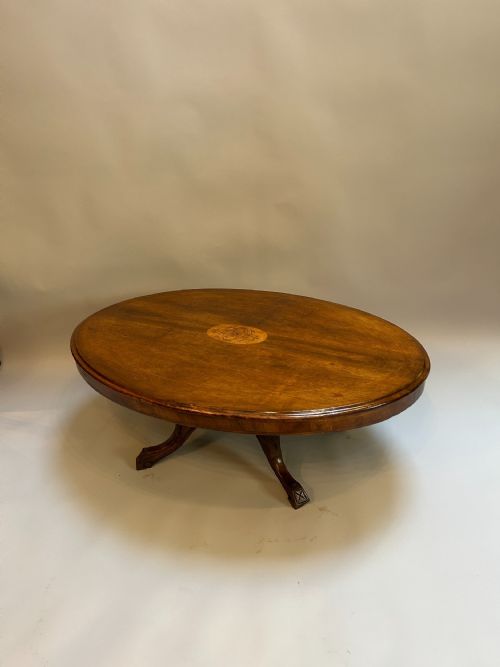


Burr Wood Tripod Table
A burr wood tripod table brings distinctive grain patterns and a compact single-pillar form into a room.
Burr Wood Tripod Table
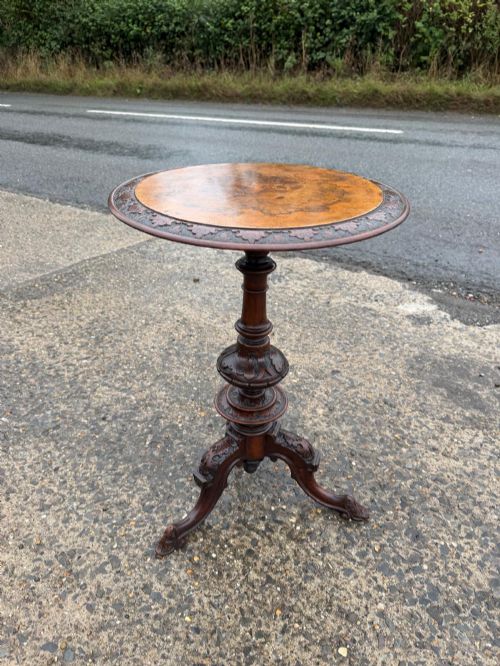
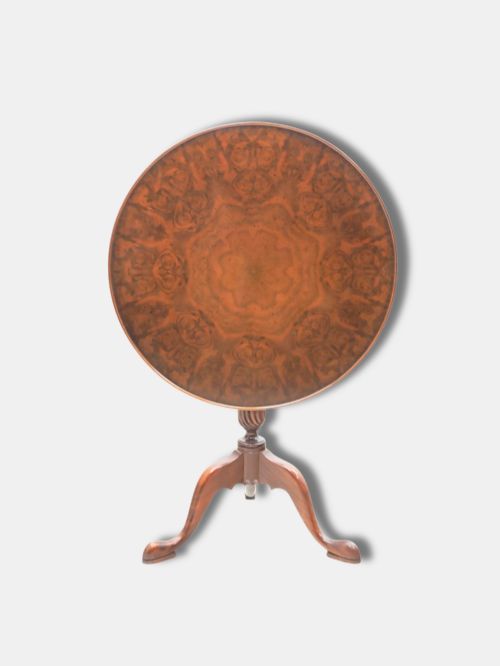
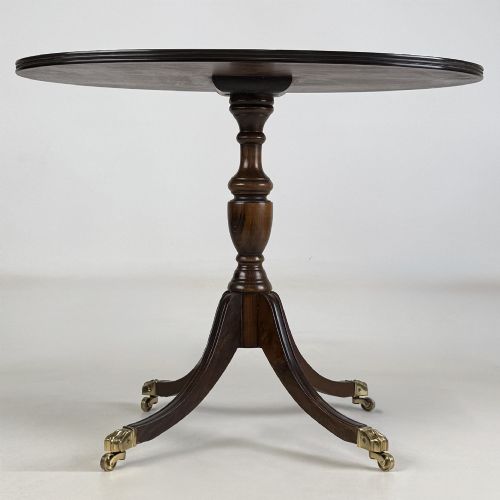
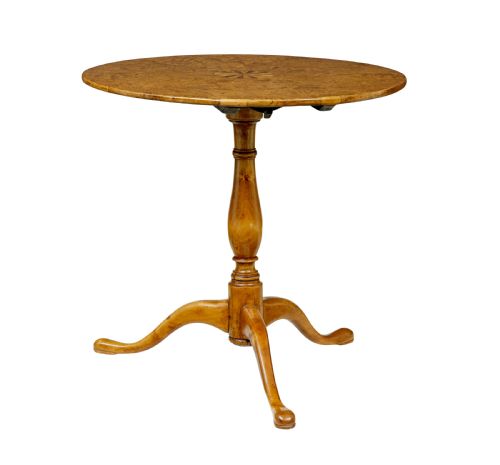
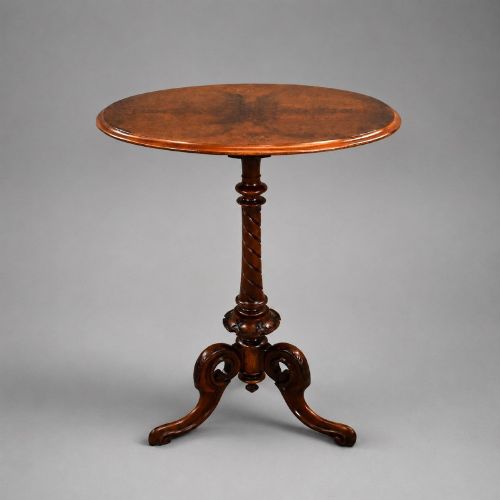
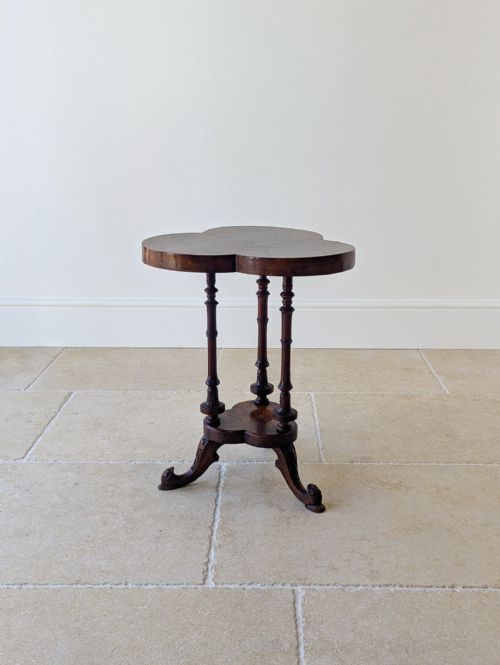
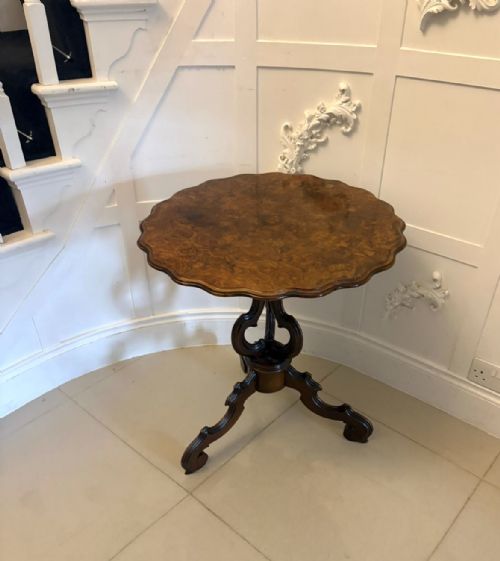
A burr wood tripod table combines a central pillar support with three legs and a highly figured wooden top. These pieces appear frequently in Victorian and Georgian periods, often taking the form of wine tables, lamp tables or small occasional tables.
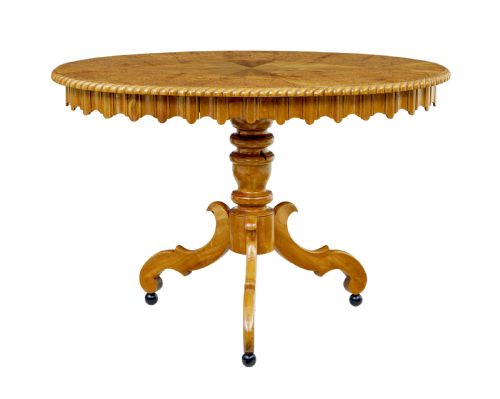
The most common examples on this page are Victorian and nineteenth-century occasional pieces utilising burr walnut, elm or birch. Buyers select them to add organic pattern and warmth to sitting rooms and halls without occupying significant floor space.
What varies in quality
The distinction between ordinary and superior pieces rests largely in the choice and arrangement of the veneer. Finer tables display symmetrical, highly active burr patterns across the entire top without heavy patching or mismatched grain.
Proportion and the turning of the tripod base dictate the overall elegance of the table. Stronger examples maintain balanced legs that match the timber tone of the top and show crisp detailing in the pedestal carving.
Some nineteenth-century tables come with cast iron bases retrofitted to surviving burr walnut tops, creating an industrial twist on traditional parlour furniture.
The Burr Wood Tripod Table Glossary
- Burr wood
- A growth on a tree where the grain has grown in a deformed, swirling manner, producing highly decorative patterns when cut. Cabinet makers prized these sections for table tops.
- Tripod table
- A small table supported by a central pillar resting on three legs. This construction prevents wobbling on uneven floors.
- Tilt-top table
- A table designed with a mechanism allowing the top to hinge vertically when not in use. This saved space in smaller rooms.
- Teapoy
- A small stand or table originally used for holding tea caddies and serving tea. Victorian examples often include internal compartments.
- Inlay
- Pieces of contrasting material fitted into a recessed surface to form a decorative pattern. Common types involve boxwood or lighter timbers set into darker walnut.
Burr Wood Tripod Table: Frequently Asked Questions
What is a burr wood tripod table used for?
These tables function well as bedside stands, lamp supports or places to set drinks in a living room. Their compact footprint allows them to fit easily beside armchairs.
Historically, many served as wine tables or tilt-top stands for reading and serving tea. Today they remain versatile accent pieces that fit into awkward corners.
How do I care for a burr walnut table?
Keep the wood away from direct sunlight and strong heat sources to prevent the veneer from drying out or splitting. Polish the surface occasionally with traditional wax.
Avoid placing wet glasses or damp items directly onto the polished wood. Use coasters to protect the delicate grain and finish.
How can I tell a Victorian table from a Georgian one?
Georgian tables often display simpler, heavier proportions with solid timber tops or early mahogany frames. Their leg turning tends to follow classical architectural lines.
Victorian versions frequently feature elaborate burr walnut veneers, inlaid decoration, and more complex pedestal bases. The introduction of swivel mechanisms also became widespread during this era.
What makes Swedish burr birch different?
Swedish pieces frequently utilise pale burr birch or alder root rather than the darker English walnut or mahogany. This gives the timber a much lighter, golden tone.
Scandinavian makers often kept the structural designs clean and functional, focusing heavily on the natural shimmer of the pale figured grain.