



Birch Tilt Top Pedestal Table
A birch tilt top pedestal table brings rich figuring and clever engineering to a room, offering a versatile surface that tucks away easily when not in use.
Birch Tilt Top Pedestal Table
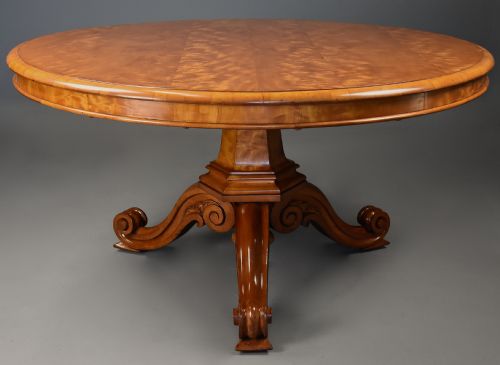
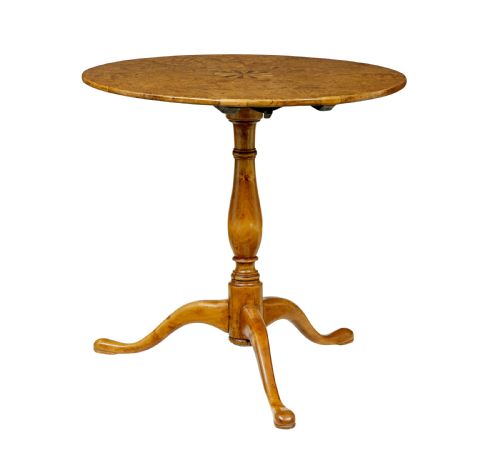
A birch tilt top pedestal table is a practical and striking piece of furniture found in nineteenth-century workshops, particularly within Swedish Biedermeier and Regency design traditions. These tables function primarily as occasional, breakfast, or centre tables, featuring a central column supporting the top.
The versions most commonly met on this page date from the nineteenth century, including specific years like 1860 and 1880, as well as broader Regency and Victorian periods. Makers favoured timber varieties such as burr birch, satin birch, and standard birch, often enhancing the circular or oval tops with wood veneer and contrasting inlay.
Buyers seek these forms for their warm timber tones and functional tilting mechanism, which originally allowed the table to stand against a wall when space was needed. The combination of a central pedestal base with figured wood creates a distinct silhouette suited to both period and modern interiors.
How they were made
Cabinetmakers constructed these tables using solid timber frames paired with decorative wood veneer, applying burr birch and satin birch sheets to create highly figured surfaces. The grain patterns were carefully selected and arranged symmetrically across the circular and oval tops.
Inlay work in contrasting timbers such as ebony added geometric or linear detail to the edges and borders. Supporting pedestals were turned from solid wood, often rising from tripod bases or weighted centre columns to ensure stability.
Birch Tilt Top Pedestal Table Retail Price Guide 2026
Typical asking prices for birch tilt top pedestal table among the pieces listed under this phrase on Sellingantiques today, from the lower quarter to the upper quarter. They describe what is for sale here now, not the wider market.
The clever pivoting mechanism lets your table double as a decorative wall panel when you simply want to admire the wood grain.
What varies in quality
The distinction between standard examples and superior pieces rests on the choice and handling of the timber. Finely figured burr birch and satin birch veneers demand exceptional skill in selection and application, creating depth and movement that plain wood lacks.
Refinement in the turning of the pedestal and the precision of the inlay work further separate the workshops. Superior examples demonstrate crispness in the joinery of the tilting mechanism and harmony in the proportions of the base.
The Birch Tilt Top Pedestal Table Glossary
- Tilt top
- A table top mounted on a hinge mechanism that allows it to pivot from a horizontal to a vertical position. This clever design enabled the furniture to be stored flat against a wall when not in use.
- Pedestal
- A central vertical column supporting the table top, typically rising from a weighted base or tripod feet. It eliminates the need for four corner legs, allowing more legroom around the table.
- Burr birch
- A specialised timber cut from growths on a birch tree, yielding swirling, knotty grain patterns. Cabinetmakers prized this material for its decorative visual impact on prominent surfaces.
- Satin birch
- A light-coloured wood variety with a natural sheen that catches the light. It was frequently utilised in nineteenth-century formal tables for a smooth, luminous finish.
- Biedermeier
- A dominant style in Central European furniture design during the nineteenth century, focusing on utilitarian comfort and clean lines. It showcased domestic timbers like birch rather than heavy imported mahogany.
Birch Tilt Top Pedestal Table: Frequently Asked Questions
How do I use a tilt top table?
The tilting mechanism allows the top to lock flat for dining or display, and pivot vertically when you need to reclaim floor space in a smaller room.
Historically, this made the furniture easy to move aside or store against a wall between meals or evening gatherings.
Where should I place a pedestal table?
These tables work exceptionally well as freestanding centre pieces in hallways, or as occasional surfaces beside seating in a drawing room.
Because the central pedestal removes corner legs, chairs can be tucked underneath easily without obstruction.
What is the difference between birch and satin birch?
Standard birch provides a pale, durable surface with a straightforward grain, commonly used for structural elements and simpler pieces.
Satin birch possesses a distinct natural lustre and smoother appearance, selected specifically for high-status decorative tabletops.
How can I identify a nineteenth-century piece?
Nineteenth-century examples frequently employ specific regional aesthetics like Swedish Biedermeier or Regency forms, utilising traditional hand-cut veneers and solid timber construction.
Look for the warm tones of burr birch and hand-applied finishes that develop a soft patina over decades of use.