
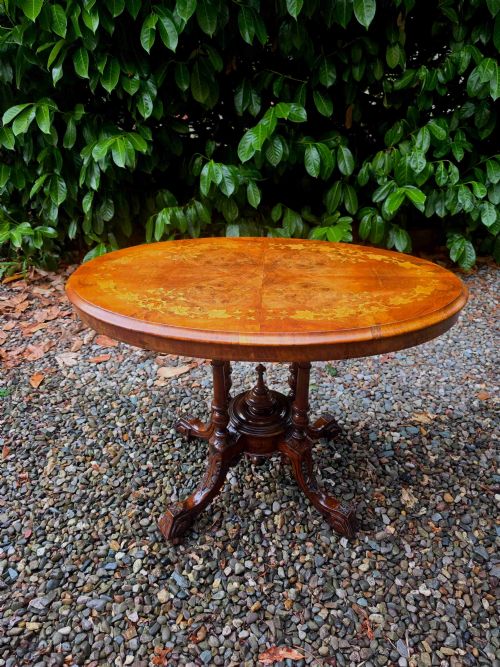
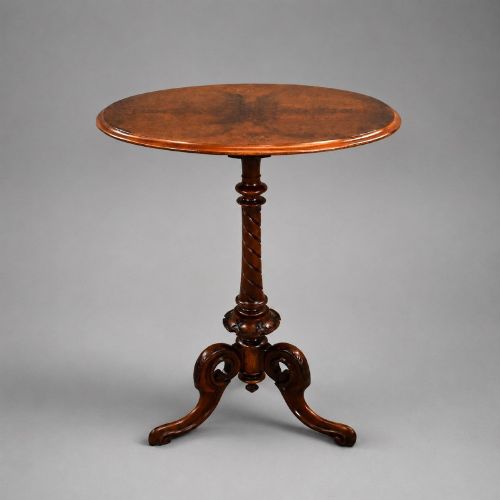
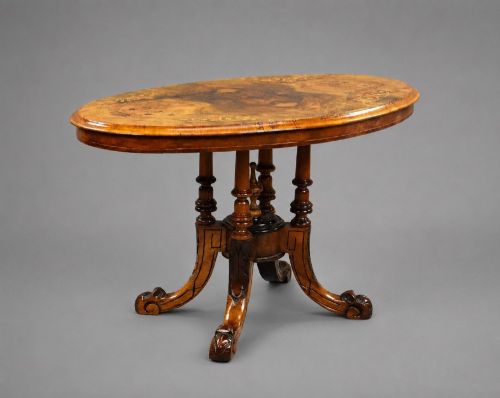
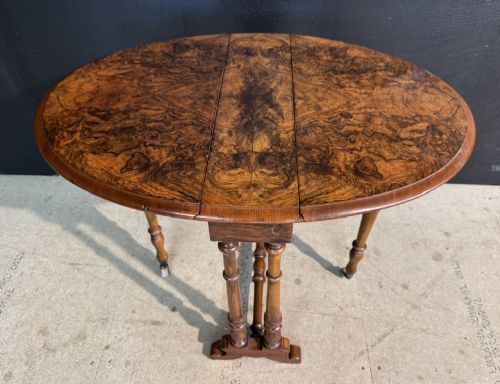

Burr Wood Occasional Table
A burr wood occasional table brings rich, swirling natural grain patterns into a room, serving as both a practical surface and a striking focal point.
Burr Wood Occasional Table
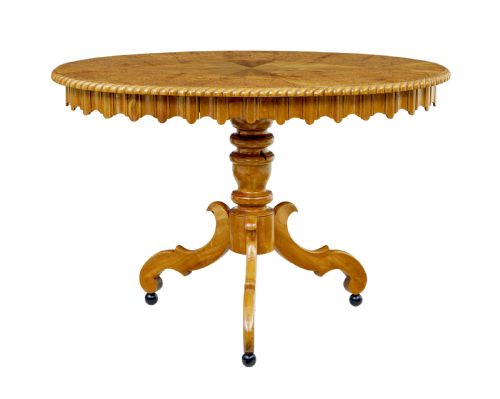
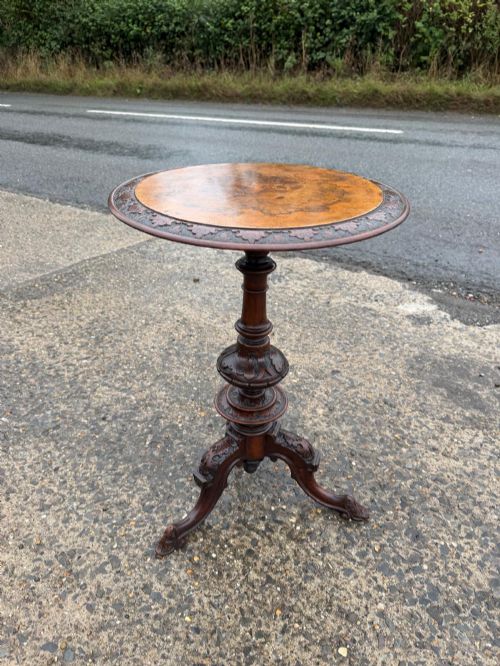
A burr wood occasional table is a compact, movable piece of furniture designed for everyday use, frequently taking the form of a side table, lamp table, or coffee table. These pieces emerge across multiple eras, with Victorian and twentieth-century examples appearing regularly.
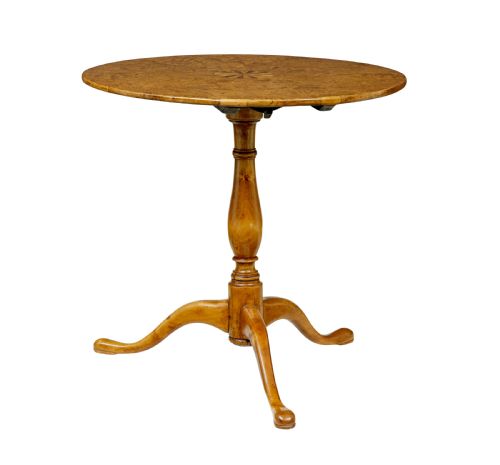
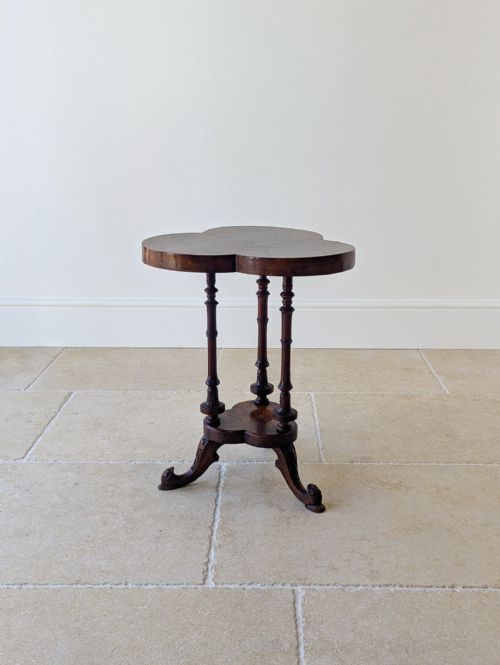
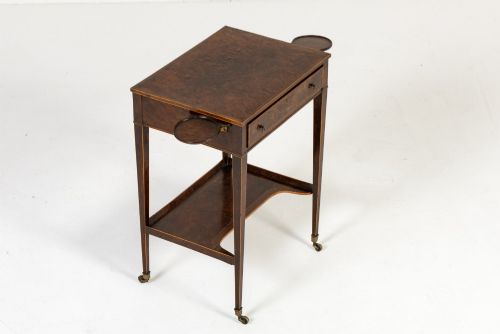
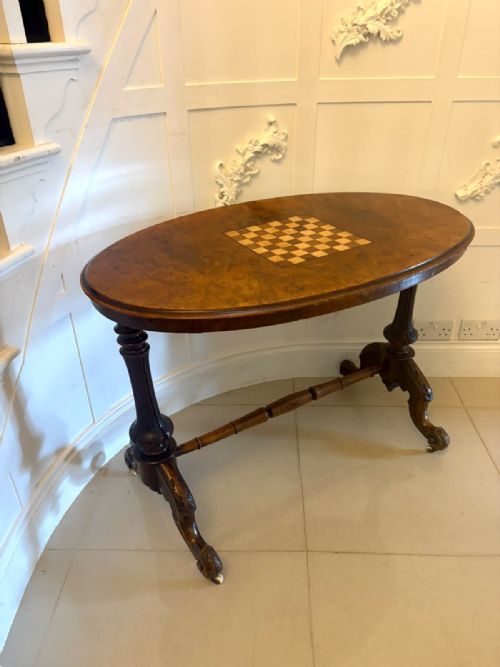
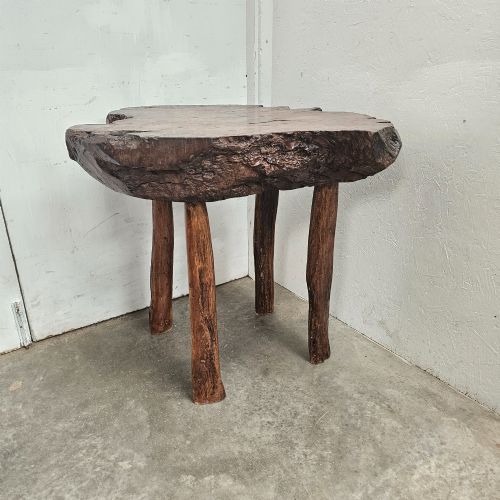
The selection ranges from tripod bases and chess tops to nests of tables and work tables. Walnut and burr birch dominate the offerings, accompanied by elm, ash, yew, and thuya.
Origin points stretch across Britain, Sweden, and France, encompassing styles from Georgian design and Regency to Art Deco and Biedermeier revival.
How they were made
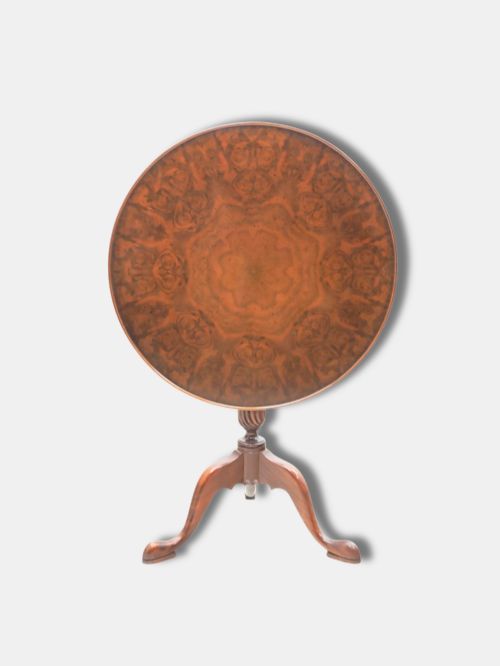
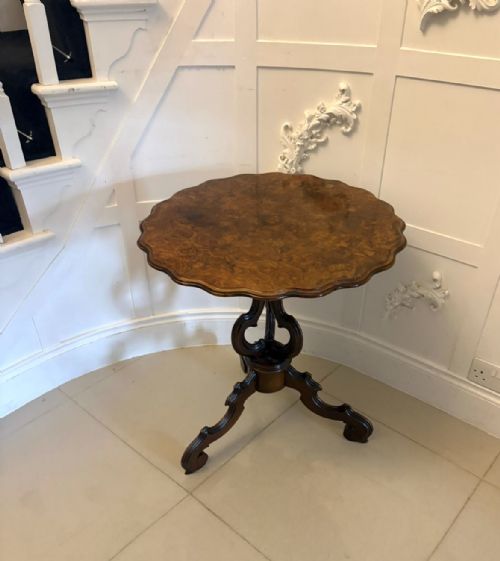
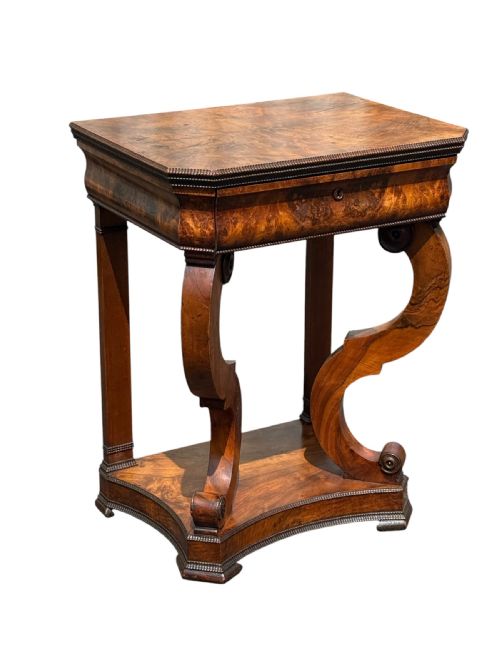
Cabinet makers utilised thin veneers sliced from tree growths known as burrs, where the grain grew in turbulent, knotted patterns. These decorative veneers were carefully laid over solid secondary timbers to create highly figured tabletops.
Many examples incorporate contrasting wood inlay, brass fittings, and carved pedestals or tripod legs. Timber selection governed the visual impact, relying on the natural oils and deep figuring of walnut, birch, and elm.
Listings feature burr wood occasional tables spanning the Victorian, Edwardian, and Art Deco periods, alongside nineteenth-century Swedish and French pieces.
What varies in quality
The tier of a burr wood occasional table depends upon the density and symmetry of the burr figuring across the surface. Master craftsmen matched veneer leaves meticulously to form harmonious patterns, whereas lesser examples display disjointed grain orientation.
Structural integrity also separates standard items from finer work, particularly in the precision of the joinery and the stability of tripod bases or stretcher frames. Original surface patination and restrained use of inlay elevate certain pieces above purely utilitarian furniture.
The Burr Wood Occasional Table Glossary
- Burr wood
- A growth on a tree where the grain has grown in a deformed, swirling manner, yielding highly decorative veneer. Furniture makers prized this timber for its complex, organic patterns.
- Veneer
- A thin slice of superior wood applied to the surface of a coarser secondary timber. This technique permitted the display of expensive grain patterns while maintaining structural stability.
- Tripod table
- A small table supported by a central pillar resting on three legs. This form gained popularity during the eighteenth and nineteenth centuries for its versatility.
- Inlay
- Pieces of contrasting wood or other materials fitted into the surface of a table to form decorative patterns. Craftsmen utilised this method to frame borders and enrich tabletops.
- Guéridon
- A small French round table supported by one or more columns. The form originated in the seventeenth century and continued through the nineteenth century.
Burr Wood Occasional Table: Frequently Asked Questions
What is a burr wood occasional table used for?
These tables provide a convenient surface for lamps, drinks, or decorative items within sitting rooms and hallways. Their compact proportions allow them to fit easily beside seating.
Historically, specific variations accommodated games, writing, or needlework, adapting to the domestic routines of the period.
How do I identify Victorian pieces?
Victorian examples frequently showcase rich burr walnut veneers, often paired with intricate inlays, turned pedestals, or tilt-top mechanisms. Construction methods from this era typically involve denser secondary woods beneath the decorative surface.
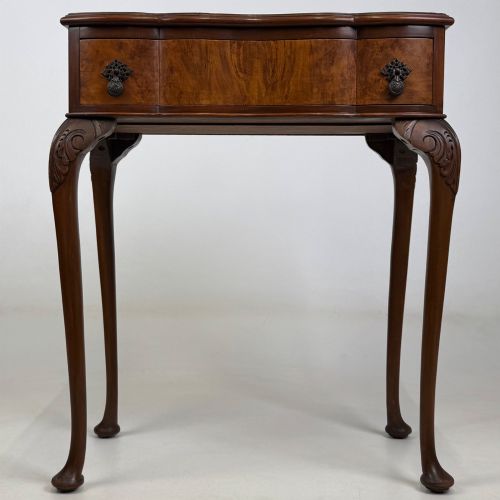
Stylistic cues draw upon earlier design revivals, including Queen Anne and Georgian motifs adapted to nineteenth-century proportions.
Are Art Deco tables different?
Twentieth-century Art Deco pieces lean towards geometric simplicity, smooth planes, and bold figured walnut surfaces without excessive ornamentation. Their silhouettes prioritise clean architectural lines over carved details.
These tables function primarily as low coffee tables, reflecting changing lifestyle habits of the nineteen-thirties.
How do I care for burr wood?
Keep these tables away from direct sunlight and strong heat sources to prevent the wood from drying out and the veneer from lifting. Gentle dusting with a soft, dry cloth preserves the polished surface.
Avoid placing damp items directly onto the timber to protect the historic polish and underlying grain.