
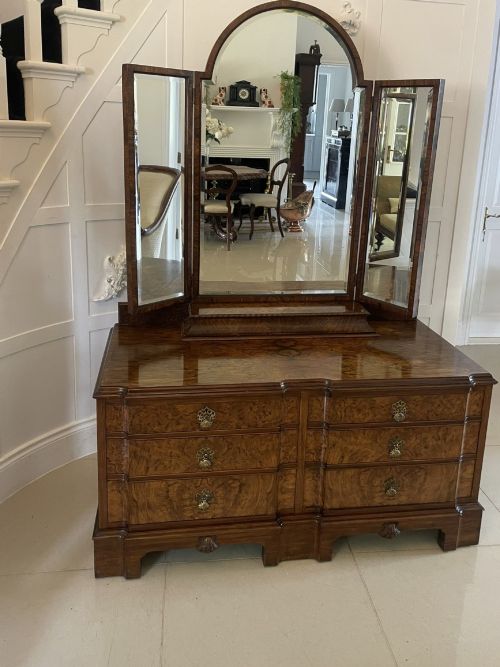
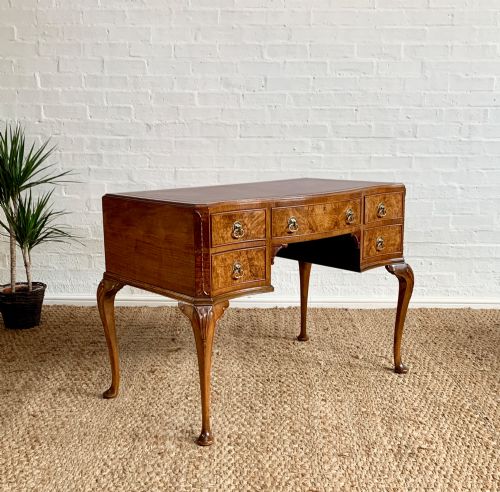
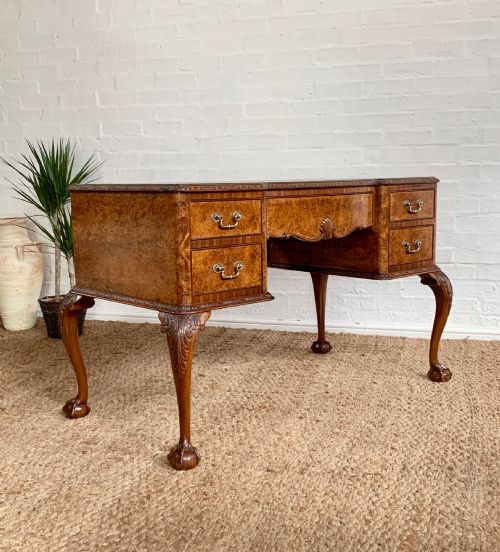

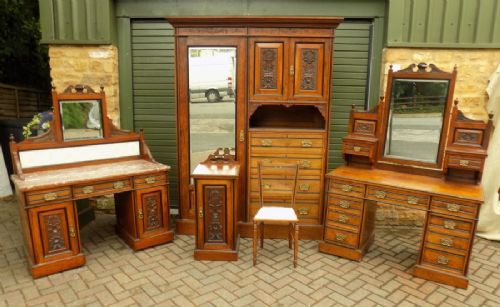
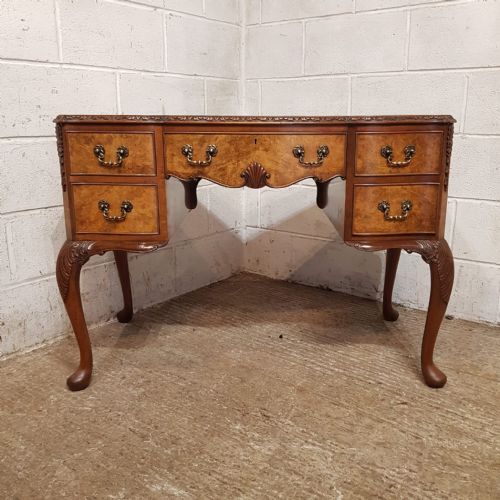
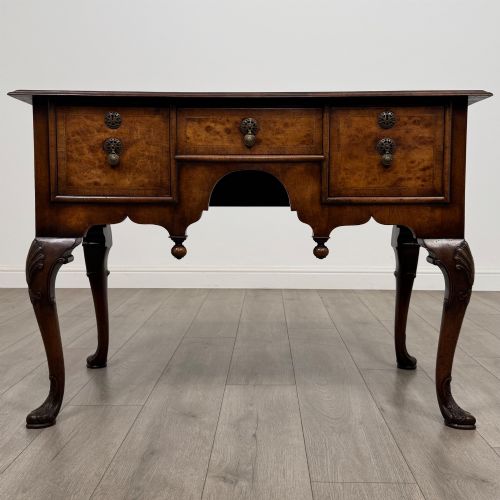


Burr Walnut Vanity Desk
A burr walnut vanity desk combines deep swirling grain with practical compartments for daily grooming and correspondence.
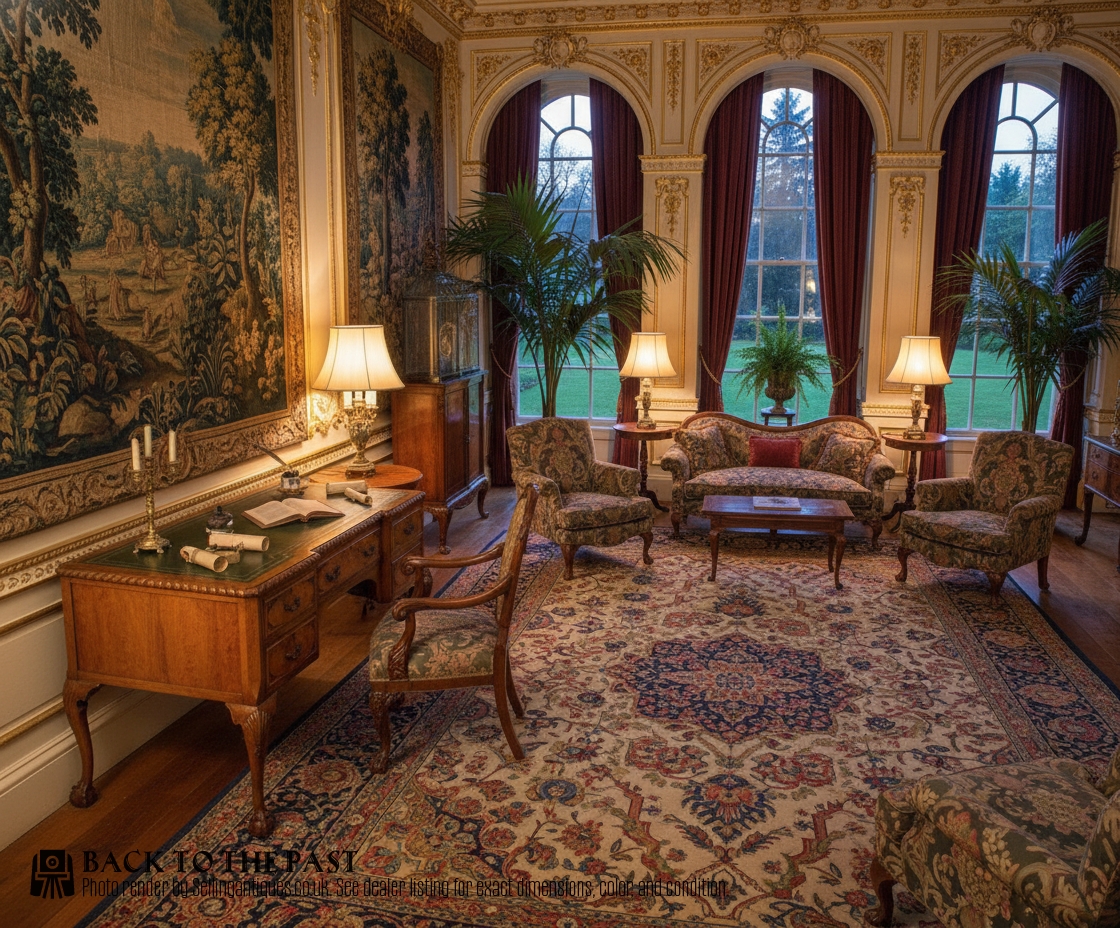
Burr Walnut Vanity Desk
A burr walnut vanity desk serves as both a writing surface and a dressing table, bringing ornate timber figures into private chambers and reception rooms. These pieces combine drawers, kneeholes, and fitted mirrors to support personal writing and grooming rituals.
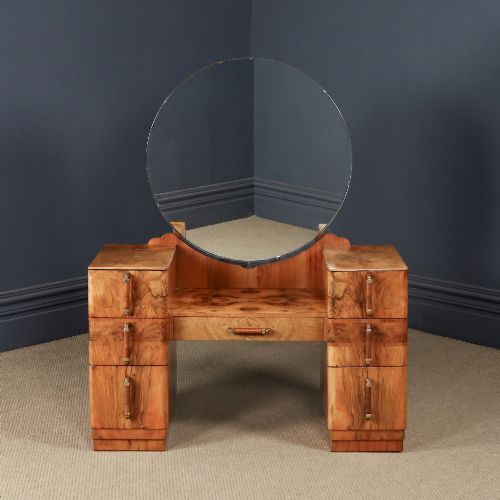
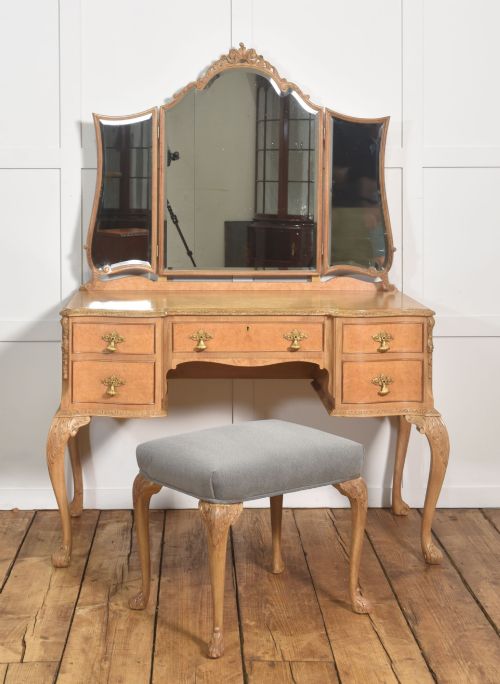
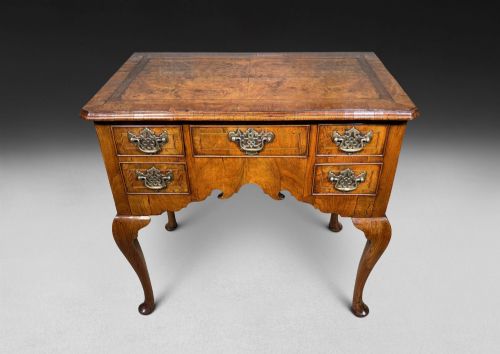
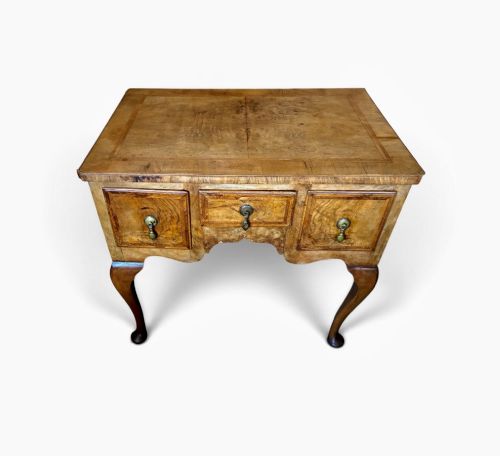
The selections available here range from eighteenth-century lowboys and Georgian forms to Victorian Duchess dressing tables, Edwardian writing desks, and streamlined Art Deco pedestals. Queen Anne style revivals with cabriole legs appear frequently alongside serpentine fronts and pedestal variations.
Makers and workshops across different centuries adapted the form to suit changing fashions, incorporating leather writing inserts, triple mirrors, and brass mounts. The overarching characteristic remains the prominent use of highly figured walnut timber across the primary surfaces.
Materials and construction
Cabinet makers applied thin burr walnut veneers over solid secondary timbers to showcase the chaotic, swirling grain patterns created by tree growths. This demanding technique required precise slicing and matching of the veneer leaves to create symmetrical patterns across drawer fronts and desk tops.
Secondary materials such as brass for handles, locks, and mounts provide functional contrast to the dark timber, while glass appears in dressing table mirrors and cabinet doors. Certain pieces integrate green tooled leather writing surfaces inset into the top to create a durable platform for ink and paper.
Some Victorian glove boxes share the exact same burr walnut and brass mounting as the larger dressing tables.
Evaluating craftsmanship and condition
The distinction between ordinary and exceptional pieces rests upon the intensity of the burr figure and the precision of the veneer matching across symmetrical drawer fronts. Superior examples exhibit continuous grain flow around corners and flawless integration of secondary woods.
Structural integrity of the joints, the original patination of the walnut surface, and the retention of period brass hardware elevate certain items above standard workshop production. The presence of maker stamps or labels from prominent retailers adds historical documentation to the construction.
Wylie & Lochhead Glasgow·Maples of London·Harry and Lou Epstein
The Burr Walnut Vanity Desk Glossary
- Burr walnut
- Wood grain taken from a tree growth or burl, producing intricate circular patterns and knots. This highly decorative veneer appears on the most expensive antique cabinet work.
- Lowboy
- A small side table with drawers, typically raised on four tall legs and dating from the eighteenth century. These pieces function as compact writing desks or dressing tables.
- Kneehole desk
- A writing table featuring a central recessed space for the legs, flanked by pedestals of small drawers. This form provides substantial storage without excessive bulk.
- Duchess dressing table
- A large Victorian dressing table featuring a large central mirror supported by smaller jewellery drawers and side supports. They represent an elaborate evolution of the bedroom vanity.
- Cabriole leg
- A furniture leg that curves out and then in, resembling the leg of an animal. This style is characteristic of Queen Anne and George II furniture designs.
Burr Walnut Vanity Desk: Frequently Asked Questions
What is a burr walnut vanity desk?
A burr walnut vanity desk is a dual-purpose table designed for writing and personal grooming, constructed using decorative burl wood veneers. They typically feature multiple drawers and integrated mirrors.
These pieces bridge the gap between bedroom furniture and library writing tables, reflecting the specific social habits of their respective periods.
How do I date a burr walnut vanity desk?
Dating relies on examining construction techniques, hardware, and stylistic indicators such as leg shapes and mirror frames. Eighteenth-century examples show hand-cut dovetails and solid timber framing, whereas Victorian and Edwardian pieces utilise machine-sawn elements and distinct veneer thicknesses.
Art Deco versions from the nineteen-thirties display streamlined geometric silhouettes and contrasting figured veneers without traditional period revival ornamentation.
Where were these desks used?
These desks were originally placed in private bedrooms, boudoirs, and dressing rooms for morning correspondence and grooming. They provided private storage for personal papers, cosmetics, and writing implements.
In modern interiors, they function effectively as bedroom dressing tables, hallway writing spots, or compact living room desks.
How do I care for burr walnut veneer?
Burr walnut veneer requires protection from direct sunlight and extreme humidity changes to prevent the thin timber from lifting or cracking. Regular dusting with a dry, soft cloth maintains the natural lustre of the French polished surface.
Avoid using silicone-based polishes or excessive water, as moisture can penetrate hairline fractures in the aged finish.