
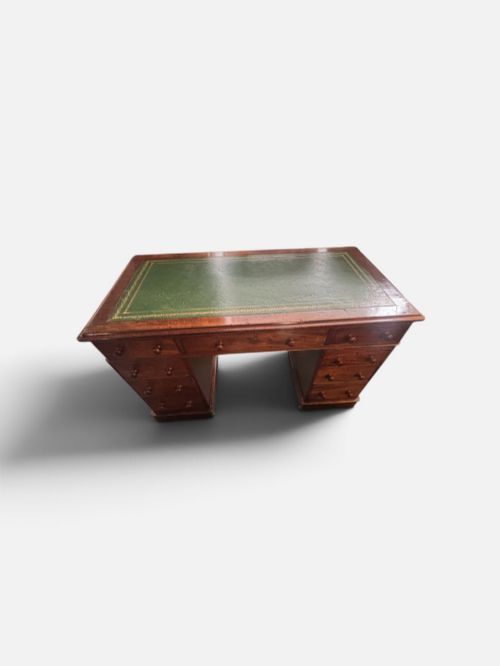
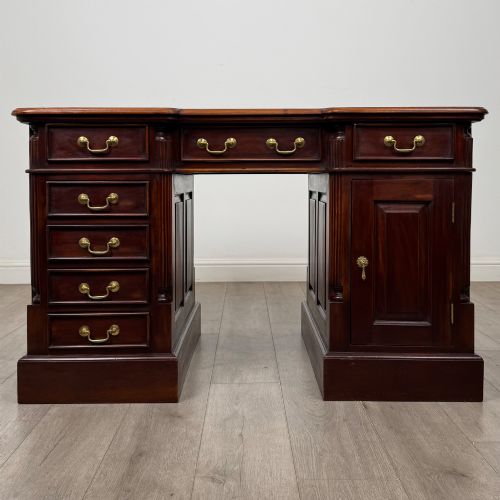


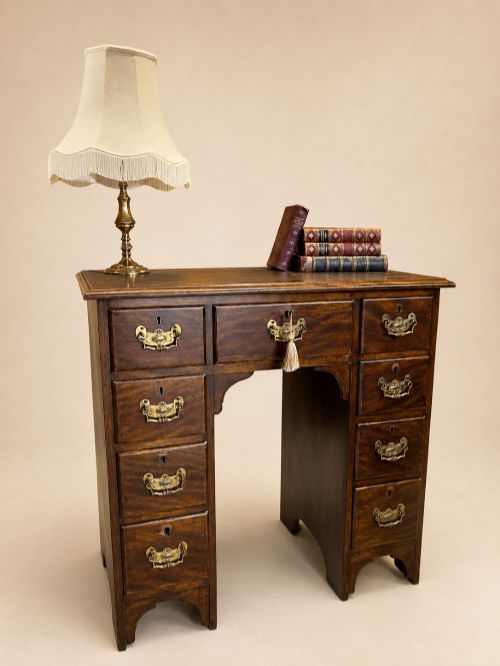
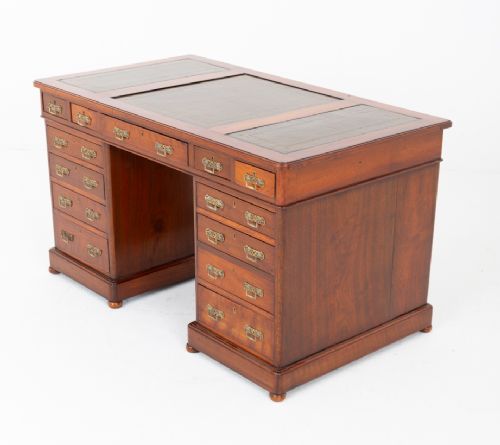
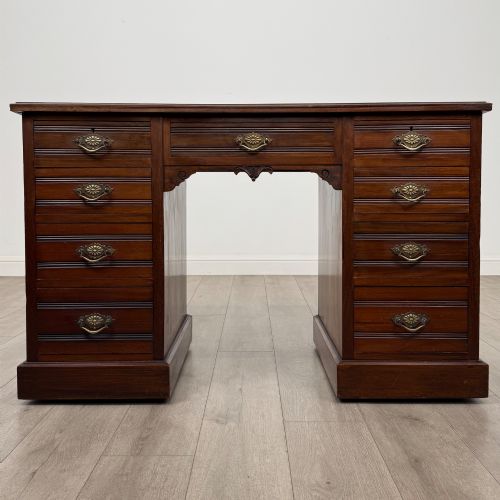
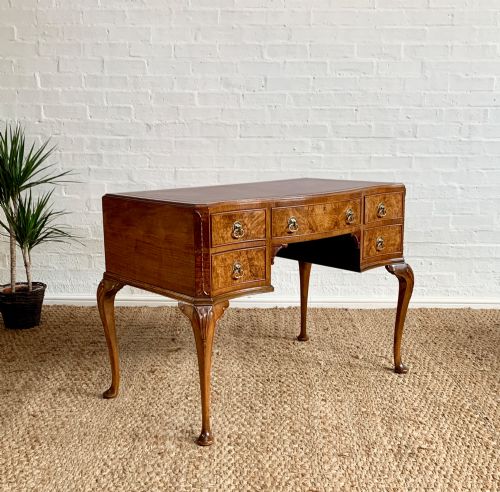
Traditional Kneehole Writing Table
A traditional kneehole writing table is a sturdy pedestal desk built for serious work, offering ample drawers and a classic central recess.
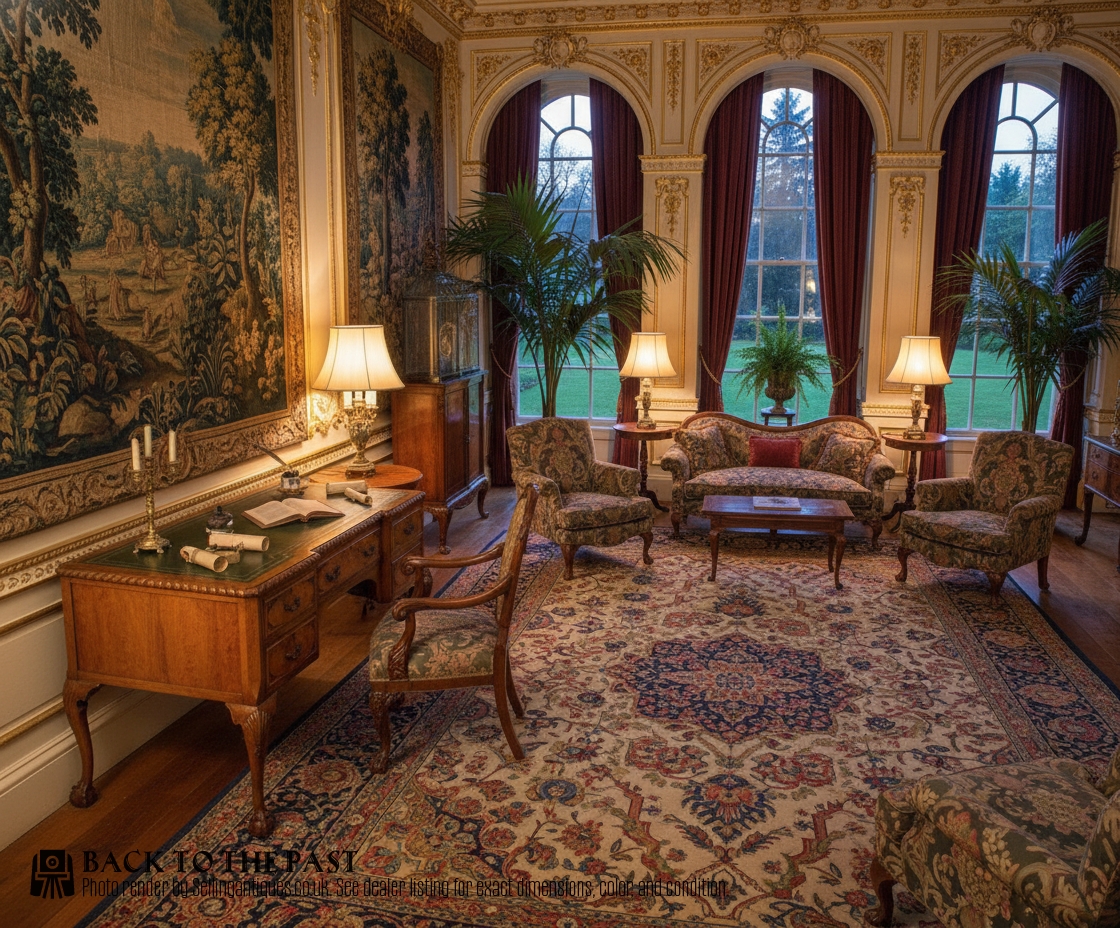
Traditional Kneehole Writing Table
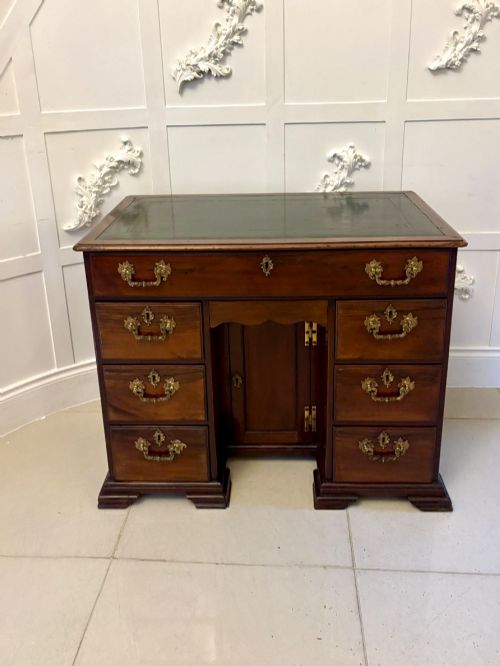
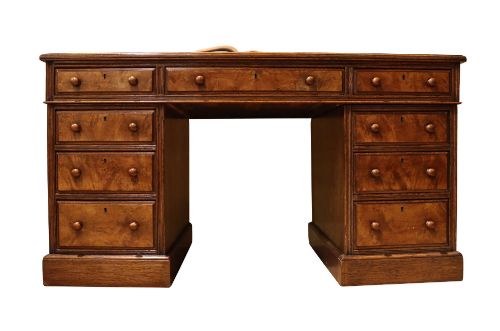
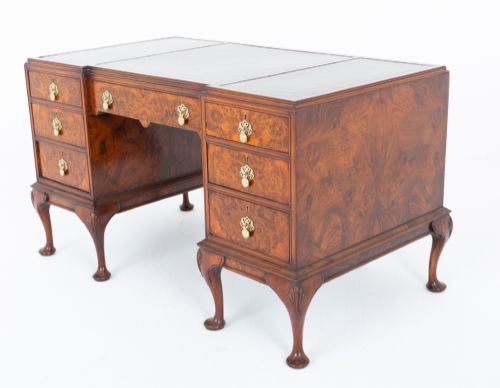
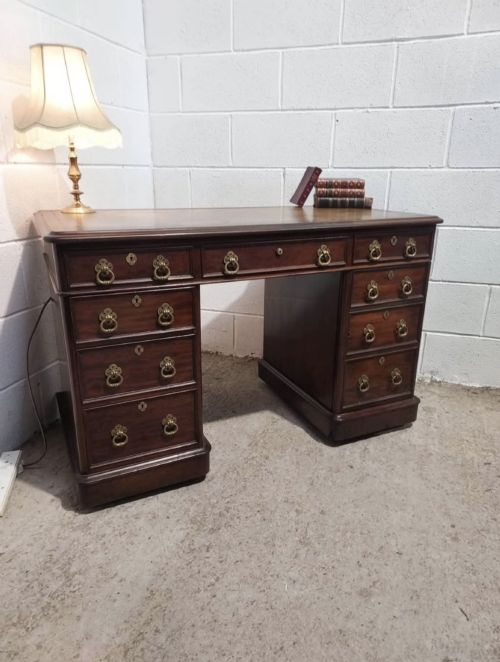
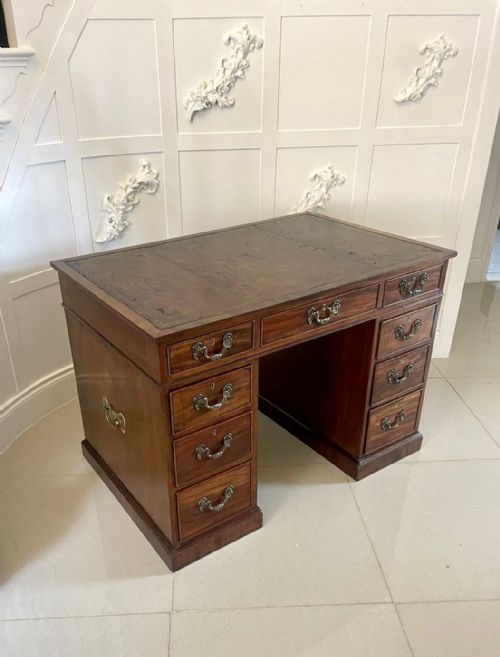
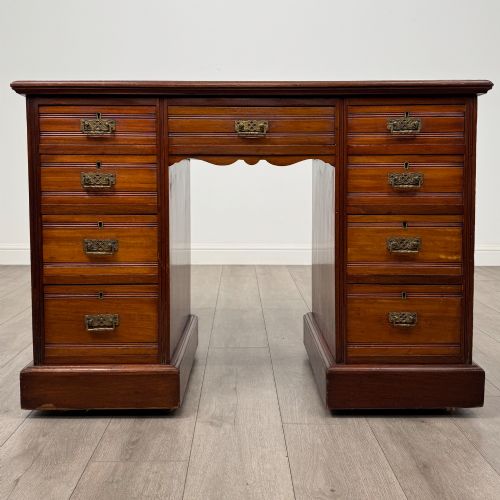
A traditional kneehole writing table is a pedestal desk featuring a central recessed space flanked by banks of drawers, designed to provide a dedicated workspace with generous storage. Buyers searching this phrase encounter substantial timber furniture intended for domestic studies, libraries and estate offices.
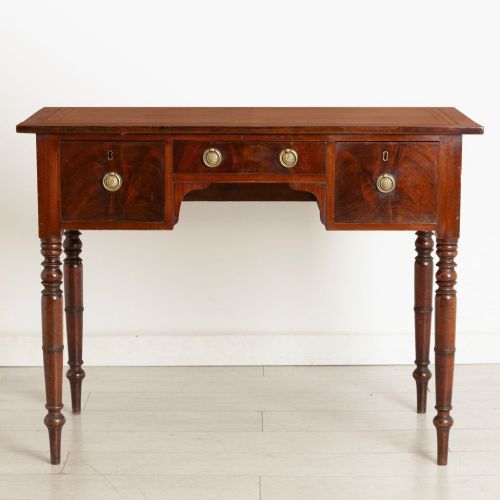
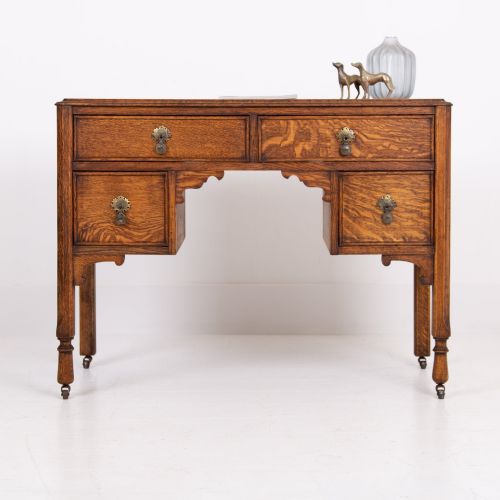
The pieces appearing on this page span several centuries and stylistic revivals, with Victorian and Edwardian examples in mahogany or burr walnut forming the main selection. Cabinet makers also built these desks in oak, pine and walnut, following Georgian, Queen Anne and Chippendale influences.
Most items function primarily as desks or pedestal desks, alongside occasional side tables and dressing tables that share the same pedestal configuration. These variants offer the familiar kneehole arrangement combined with inset leather writing surfaces and multiple drawers.
How they were made
Cabinet makers relied on solid timbers such as mahogany, oak and walnut for the structural carcase and drawer linings, often applying finely figured burr walnut or flame mahogany veneers to the main surfaces. These woods were chosen for their durability and grain pattern, giving each desk its characteristic appearance.
Worksurfaces typically incorporate inset leather inserts, frequently tooled with gilt decoration, to provide a smooth and durable writing plane. Drawers feature traditional dovetail joinery and are fitted with brass handles, while freestanding versions receive careful finishing on all sides to allow placement in the centre of a room.
The furniture includes Georgian and Chippendale styling alongside Victorian and Edwardian pedestal desk formats.
What varies in quality
The selection of timber veneer dictates the visual impact of a desk, with matched burr walnut or flame mahogany representing a higher standard of craftsmanship than plain or utility woods. Cabinet makers who invested time in selecting and aligning grain patterns produced pieces with superior visual balance.
Construction details such as drawer depth, timber thickness and the presence of original brass hardware separate standard utility pieces from fine workshop productions. Desks finished on the back for freestanding placement reflect a higher grade of original commission than those intended solely to stand against a wall.
Trollope & sons·Wylie & Lochhead Glasgow
The Traditional Kneehole Writing Table Glossary
- Kneehole desk
- A form of writing table featuring a central recess for the sitter's legs, positioned between two supporting pedestals of drawers. This layout became standard for domestic and office writing furniture from the eighteenth century onwards.
- Pedestal desk
- A heavy freestanding desk supported by two vertical columns of drawers rather than conventional legs. These units offer large storage capacity while maintaining a formal presence in a room.
- Burr walnut
- A highly figured timber veneer sliced from the woody growths on walnut trees, prized for its swirling patterns. Cabinet makers utilised this material on top surfaces and drawer fronts to catch the light.
- Dovetail
- A traditional wood joint formed by interlocking fan-shaped tenons, used to construct durable drawer boxes. Fine hand-cut dovetails indicate careful workshop assembly.
- Tooled leather
- A writing surface inset into the desktop, decorated around the border with pressed gold or blind tooling. This provides a traditional matte texture for writing.
Traditional Kneehole Writing Table: Frequently Asked Questions
What is a kneehole desk?
A kneehole desk is a pedestal writing table with a central void beneath the desktop, allowing the user to sit squarely between two banks of drawers.
This form balances storage capacity with comfortable legroom, making it practical for daily administrative tasks.
How do I date a wooden desk?
Dating relies on identifying the prevailing timber choices, construction methods and stylistic revivals present in the carcase and drawer assembly.
Cabinet makers in different eras favoured specific veneers, handle designs and internal secondary woods like oak or pine.
Are these desks suitable for daily use?
These pieces were built as robust working furniture from durable hardwoods designed to withstand decades of regular office or domestic employment.
Modern users frequently utilise them as study desks, pairing the traditional leather writing surface with contemporary seating.
What is burr walnut?
Burr walnut is a decorative wood veneer harvested from tree burls, yielding dense, swirling grain formations.
Craftsmen applied these rich veneers to drawer fronts and tabletops to create striking visual contrast against solid timber frames.