


Burr Walnut Tier Stand
A burr walnut tier stand brings layered display space and rich, figured timber grain into a room.
Burr Walnut Tier Stand
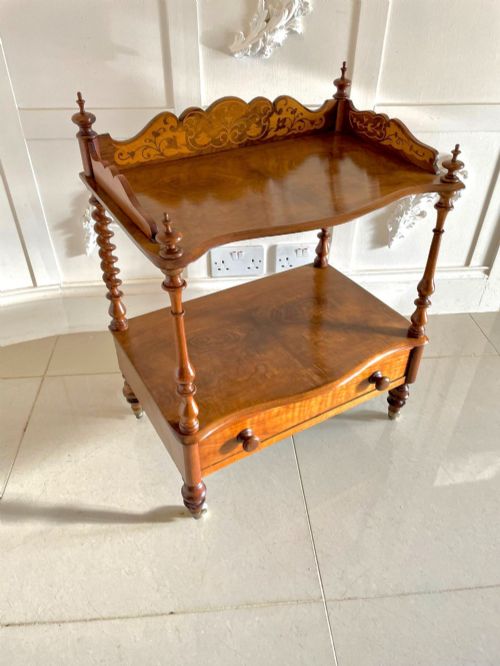
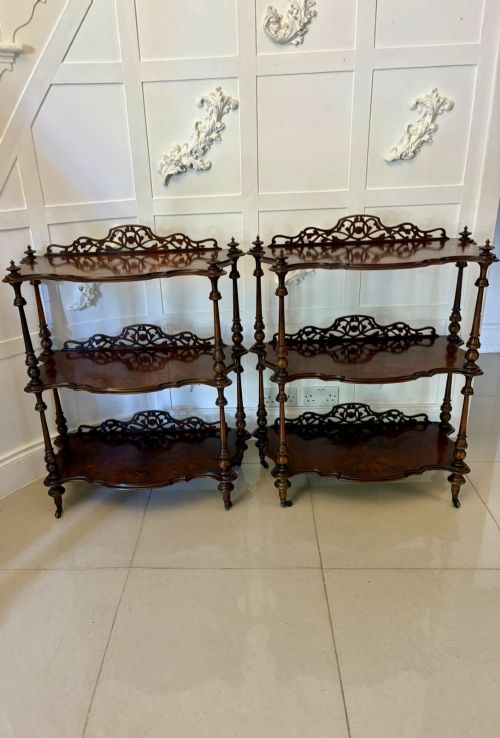
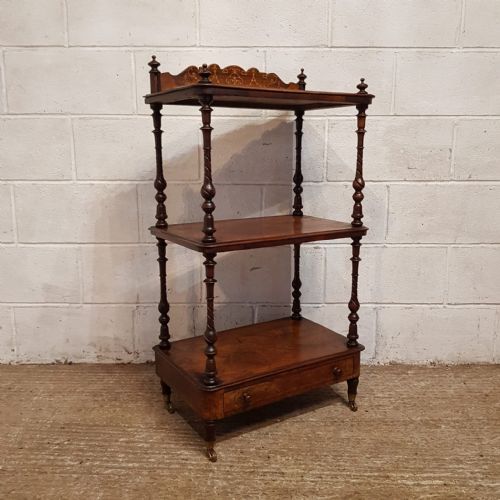
A burr walnut tier stand encompasses multiple open levels supported by slender uprights, designed for holding books, sheet music, or decorative objects. When searching this phrase, buyers encounter tiered multi-level furniture primarily originating from the Victorian and Edwardian periods.
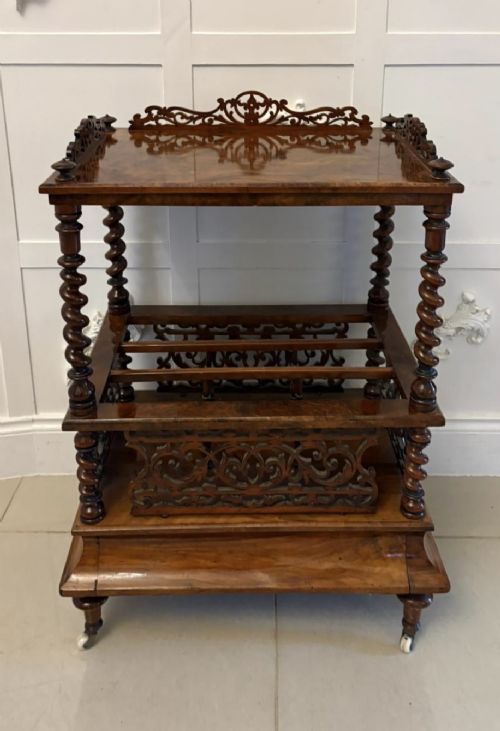
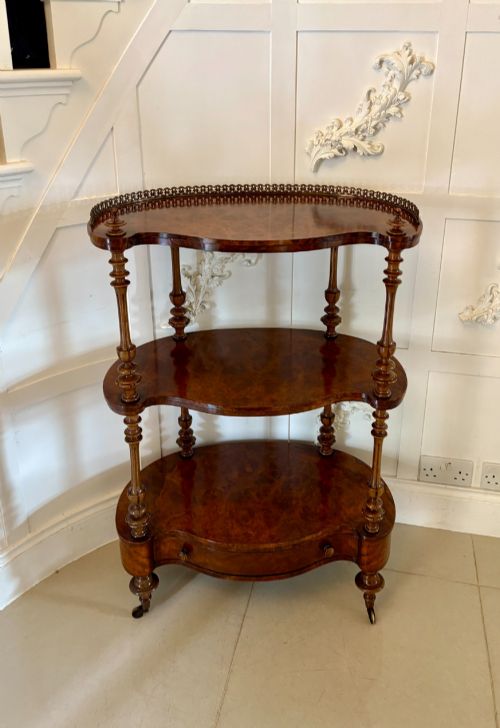
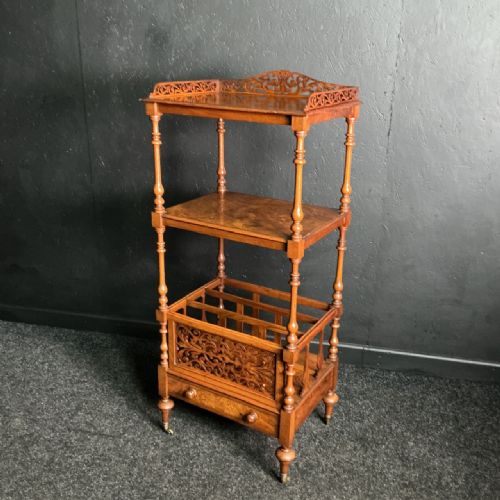
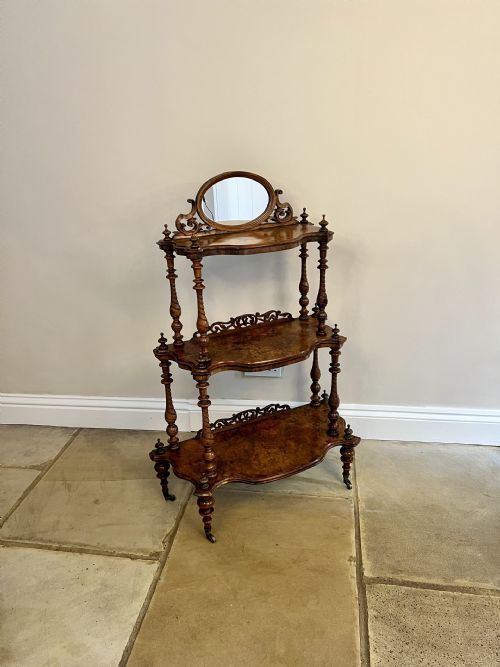
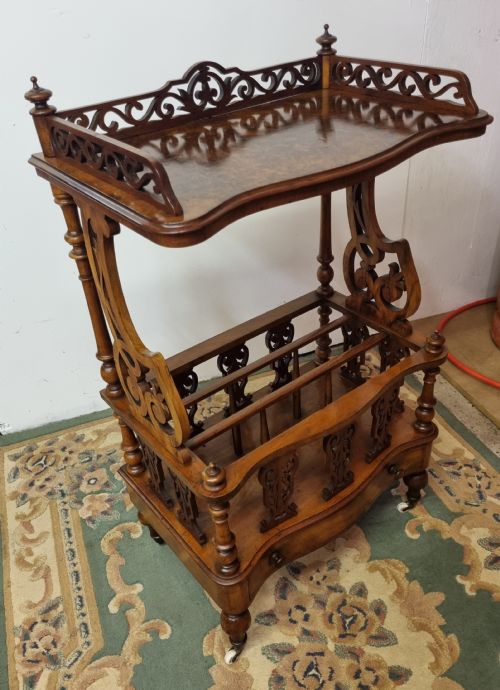
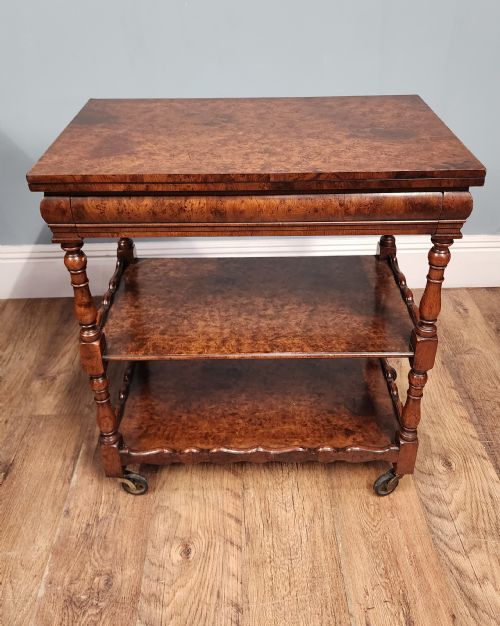
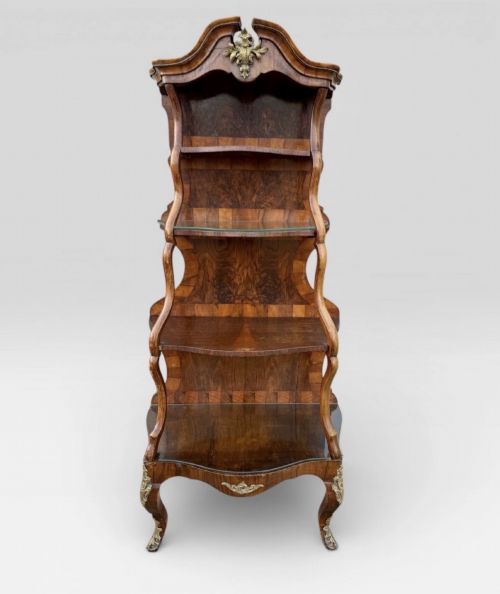
The selections span distinct configurations, including freestanding open whatnots, corner stands, tiered etagères, and specialised music cabinets featuring built-in rack compartments. Many examples integrate lower drawers, brass castors, or fretwork galleries.
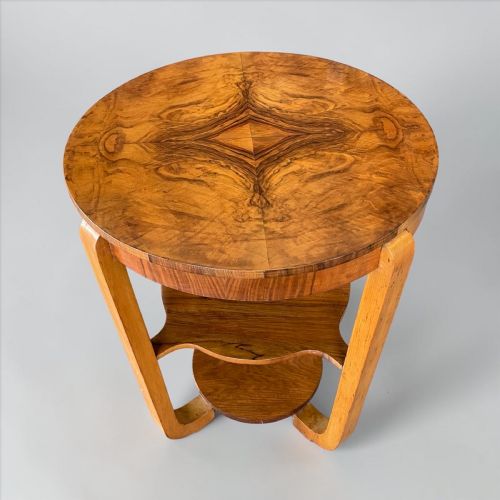
Victorian pieces dominate the selections, accompanied by later Edwardian and Art Deco iterations. Cabinetmakers utilised walnut and figured burr veneers across various forms, ranging from serpentine display consoles to three-tier lamp tables.
What varies in quality
The visual impact of the timber grain marks the distinction between ordinary and exceptional examples. Richly figured burr walnut with balanced, symmetrical patterning elevates a tier stand above plain timber surfaces.
Fine craftsmanship shows in the crispness of turned supports, the precision of inlaid stringing, and the integration of functional elements like drawers or pierced fretwork galleries. Substantial weight and rigid tier joints indicate superior construction.
Listings feature Victorian, Edwardian, and Art Deco periods, utilising burr walnut, solid walnut, brass, and glass.
Holland Sons·Hille
The Burr Walnut Tier Stand Glossary
- Burr walnut
- A veneer sliced from the growth warts or burls of walnut trees, prized for its swirling, highly figured grain patterns. It provides a decorative surface for high-status cabinet work.
- Whatnot
- A piece of furniture consisting of several open shelves for displaying small objects or books. They became popular in the nineteenth century for drawing room display.
- Etagère
- A French term for a piece of furniture with a series of open shelves for displaying ornaments. These stands share a similar multi-tiered form with whatnots.
- Canterbury
- A stand fitted with divisions for holding sheet music, magazines, or folios, frequently combined with a tiered whatnot top. Many incorporate a low drawer beneath the rack section.
- Serpentine
- A curved shape curving outward at the centre and inward at the sides, creating a flowing contour on table tops and cabinet fronts.
Burr Walnut Tier Stand: Frequently Asked Questions
What is a burr walnut tier stand used for?
These stands serve as multi-level display units for ceramics, small sculptures, books, and decorative objects. Their open shelving allows items to be viewed from multiple angles.
Historically, variations such as music cabinets and canterburys also accommodated sheet music and periodicals in domestic parlours.
Can a tier stand fit in a small room?
Corner tier stands utilise empty wall junctions efficiently while providing multiple levels of display space without occupying a large floor footprint. Freestanding circular or serpentine tables require slightly more central room placement.
Their slender upright supports maintain a visually light presence within interior spaces.
What is the difference between a whatnot and an etagère?
The terms often overlap in nineteenth-century furniture description, though etagère traditionally leans toward lighter French-influenced display pieces. Whatnots frequently incorporate functional additions like lower drawers or music racks.
Both forms share the characteristic multi-tiered shelving structure.