



Burr Walnut Drinks Bar
A burr walnut drinks bar brings distinct twentieth-century character to a room, offering clever storage for bottles, glasses and mixing gear behind richly figured timber.
Burr Walnut Drinks Bar
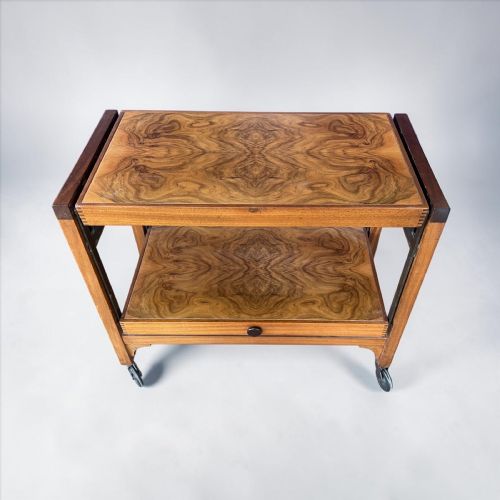
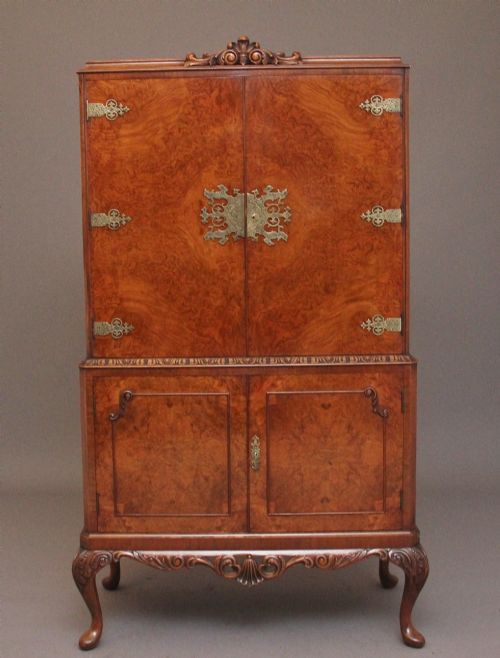
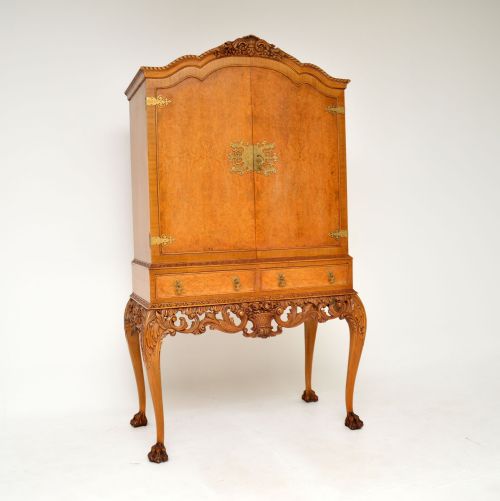
A burr walnut drinks bar functions as a dedicated station for entertaining, taking the form of cocktail cabinets, dry bar cabinets, serving trolleys and folding bars. These pieces emerge chiefly from the 1920s and 1930s, alongside Edwardian and Victorian examples, reflecting changing social habits of the early twentieth century.
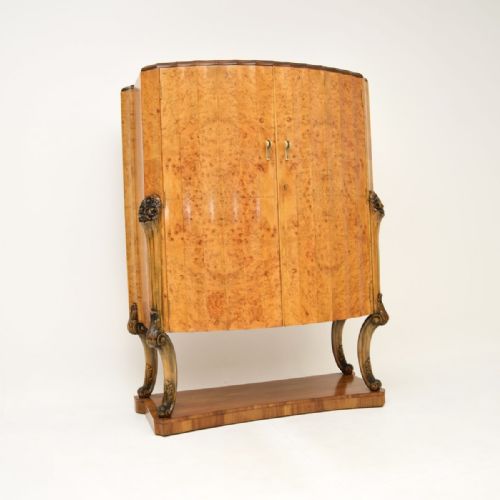
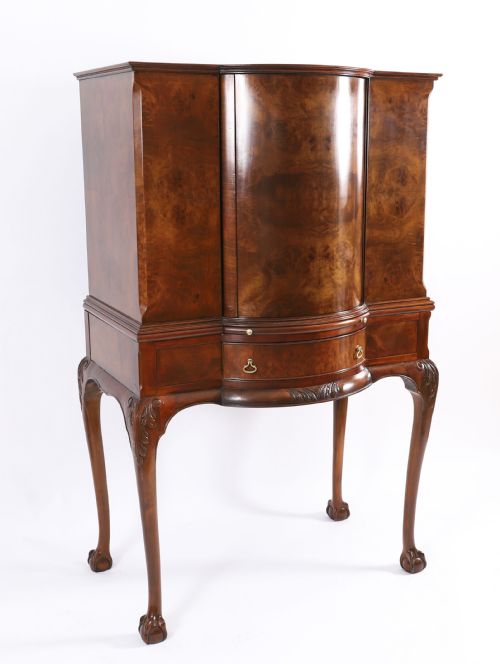
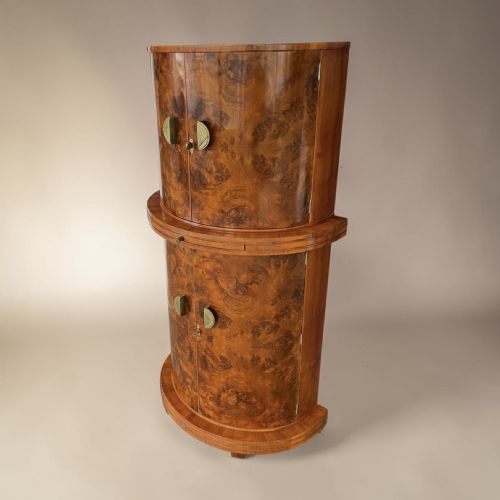
The version most commonly met on this page is the Art Deco or 1920s cocktail cabinet, often featuring double bow fronts, demi-lune shapes or cloud-shaped outlines. These standing furniture pieces conceal mirrored interiors, pull-out preparation slides and specialised racks designed specifically for glassware and spirits.
What separates the finer examples
The standard of a burr walnut drinks bar rests heavily on the ambition of the veneer matching and the integrity of the cabinet work. Maker attribution elevates certain pieces, particularly items produced by renowned firms like Epstein, Hille, or Waring and Gillow, whose workshops employed superior timber selection and cabinet-making techniques.
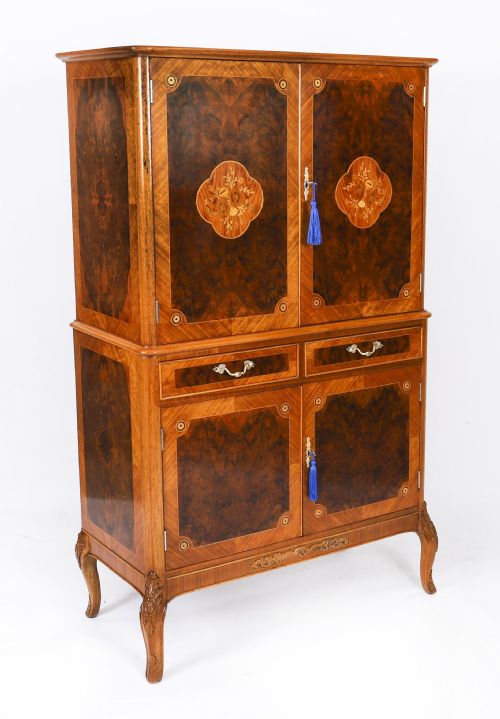
Interior execution separates standard production from exceptional pieces, visible in fitted glass sliding doors, complex pull-out mechanisms, integrated electrical lighting, and complete original internal glassware. The continuity of the burr walnut grain across complex curved fronts and doors dictates the overall success and visual balance of the furniture.
Several folding bar cabinets were once dispatched directly from Harrods in London to keep early cocktail enthusiasts fully supplied.
Epstein·Hille·Harry and Lou Epstein·Waring and Gillow
The Burr Walnut Drinks Bar Glossary
- Burr Walnut
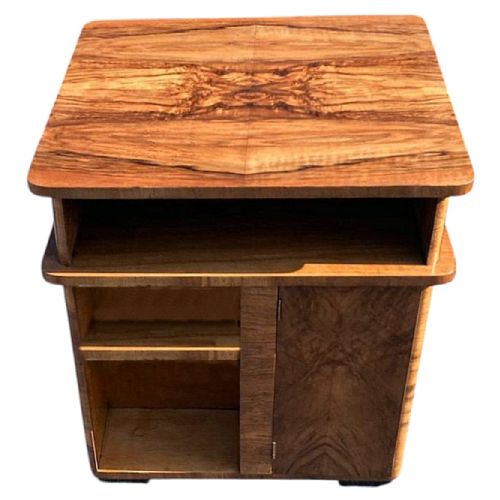
- A timber harvested from the abnormal growth or burl on a walnut tree, yielding a swirling, highly figured grain pattern prized for decorative veneer. Cabinet makers slice this wood thinly to cover larger structural surfaces.
- Cocktail Cabinet
- A specialised piece of furniture designed to store and serve alcoholic beverages, typically containing internal glass shelves, mirror backs, and a pull-out mixing slide. These forms became exceptionally popular during the Art Deco period.
- Metamorphic
- A descriptive term for furniture that transforms in shape or function through folding, sliding, or revolving mechanisms. In drinks furniture, this allows a compact cabinet to expand into an active serving bar.
- Marquetry
- An art form where small pieces of different coloured wood veneers are assembled into intricate decorative patterns on a surface. It appears on select cabinet doors and top panels.
- Demi-Lune
- A half-moon shape used for the footprint and front profile of specific cabinets and tables. This curved design allows the furniture to sit flush against a wall while projecting outward into the room.
Burr Walnut Drinks Bar: Frequently Asked Questions
What is a dry bar cabinet?
A dry bar cabinet is a piece of furniture designed to hold bottles, glassware and bar accessories without a built-in sink or plumbing.
These cabinets typically feature mirrored backs, glass shelves, and pull-out preparation ledges for mixing drinks.
How do I tell Art Deco from earlier styles?
Art Deco drinks furniture, dating largely from the 1930s, relies on streamlined geometry, smooth curved surfaces, and symmetrical veneer patterns.
Earlier 1920s or Edwardian pieces frequently incorporate traditional revival motifs such as Queen Anne style cabriole legs or more ornate decorative trim.
Where should I place a drinks cabinet?
These cabinets suit dining rooms, living spaces, or home entertaining areas where guests gather.
Because many feature finished backs or curved silhouettes, they work well against flat walls or positioned to anchor a room corner.
How do I care for burr walnut veneer?
Burr walnut veneer requires protection from direct sunlight and excessive moisture to prevent fading and veneer lifting.
Dust regularly with a soft dry cloth and maintain stable indoor humidity levels to preserve the polished timber surface.