



Art Deco Dry Bar Cabinet
An art deco dry bar cabinet brings period glamour to a room, holding spirits and glassware behind figured veneers.
Art Deco Dry Bar Cabinet
When searching for an art deco dry bar cabinet, buyers encounter sophisticated drinks furniture designed to house bottles and glassware. These pieces typically take the form of cocktail cabinets, drinks cabinets, and sideboards originating from the 1920s, 1930s, and 1940s.
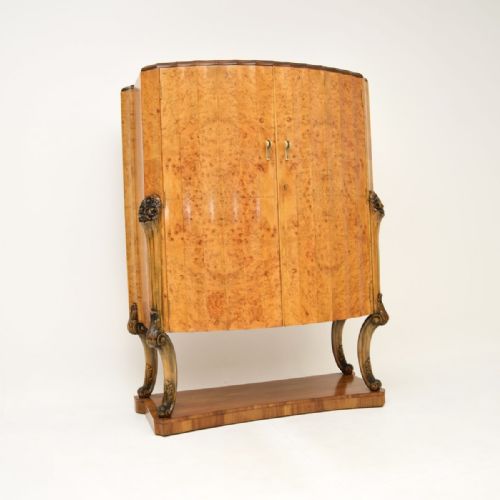
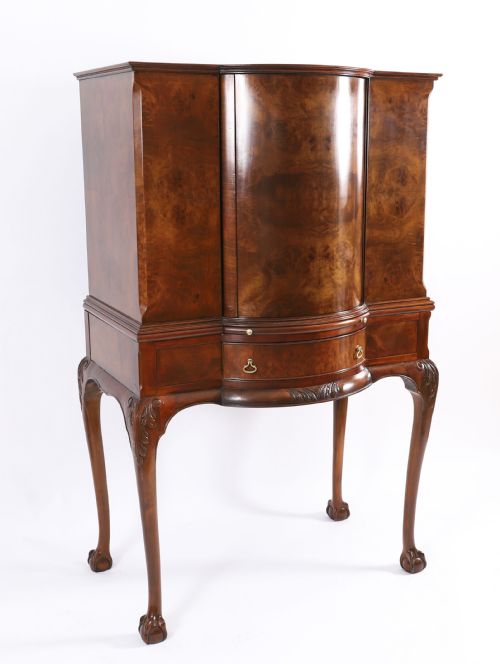
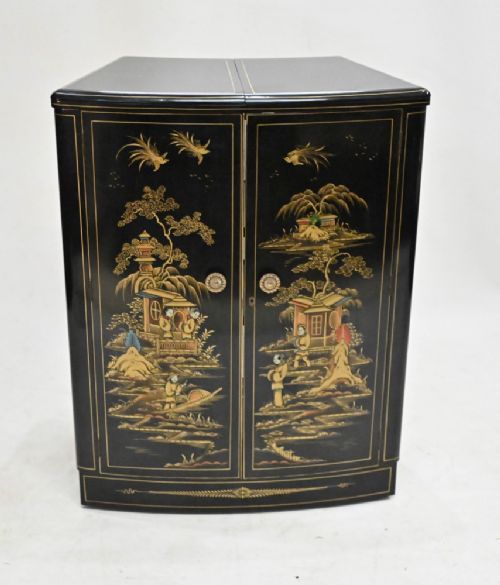
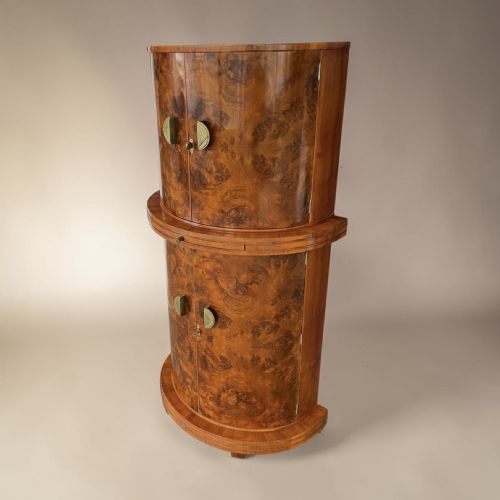
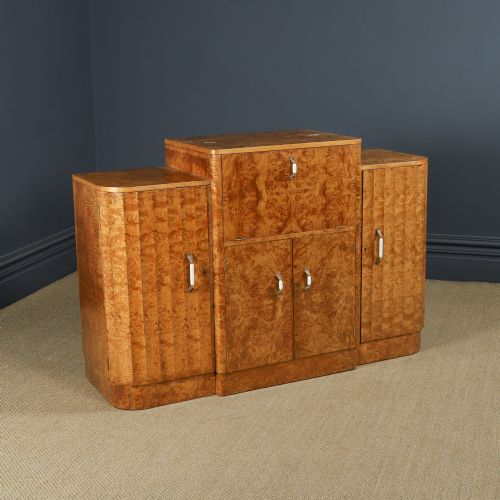
The version most frequently met on this page is constructed from burr walnut or walnut veneer, often echoing the geometric lines characteristic of the Art Deco style. Occasional examples display contrasting materials such as bird's-eye maple, satinwood, or black lacquer.
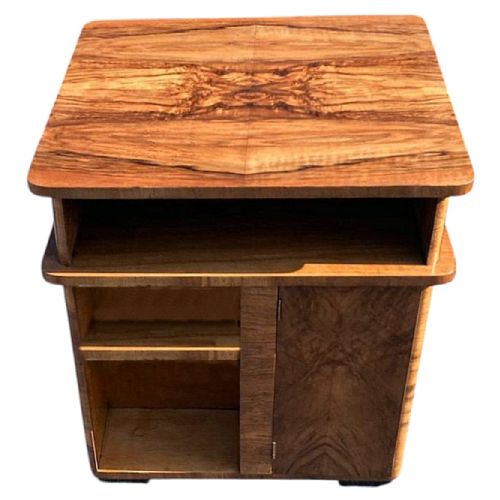
Beyond standard upright cabinets, the selection includes corner units, revolving designs, and low tables designed specifically for serving drinks. English makers and workshops dominate the provenance, placing these items firmly in the interwar entertaining tradition.
Materials and construction methods
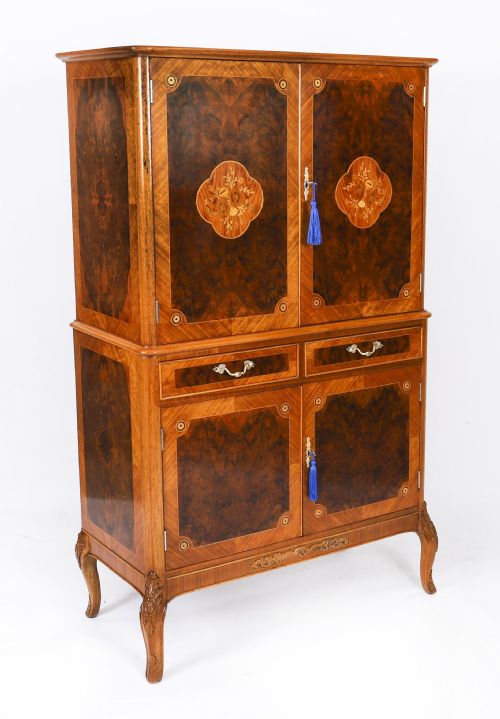
Cabinet makers applied figured veneers such as burr walnut, walnut, and bird's-eye maple over sturdy wooden carcases to create striking grain patterns on the exterior doors. These polished wooden surfaces were frequently paired with contrasting interior elements.
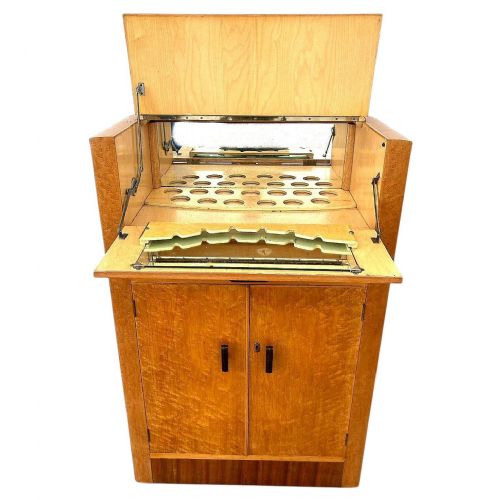
Functional hardware played a dual role in both utility and visual style, incorporating polished brass, chrome fittings, and mirrored sections inside the drinks compartments. Glass shelves and glass tops added practical surfaces for bottle preparation and serving.
The listings span three distinct decades: the 1920s, 1930s, and 1940s, capturing the evolution of interwar furniture design.
Distinctions in craftsmanship
Interior fitted compartments, pull-out preparation slides, and integrated lighting or electric fittings separate standard production items from workshop masterworks. Maker attribution to notable London firms further elevates a piece within the category.
Epstein·Harry and Lou Epstein·Hille·Maurice Adams·Waring and Gillow·Harrods
The Art Deco Dry Bar Cabinet Glossary
- Burr walnut
- A wood veneer taken from the wart-like growths on walnut trees, prized for its swirling, intricate grain patterns. It forms the primary decorative surface for many interwar drinks furniture pieces.
- Veneer
- A thin layer of superior wood adhered to a base timber carcase to display decorative grain. Cabinet makers selected burr walnut and maple for maximum visual impact.
- Chinoiserie
- A decorative style employing European interpretations of Chinese artistic motifs. Lacquered cabinets in this style feature hand-painted figures and landscapes.
- Dry bar
- A piece of furniture dedicated to the storage and serving of alcoholic beverages without built-in refrigeration. These units rely on mirrored backs and glass shelves to display glassware.
- Book-matching
- A woodworking technique where adjacent veneer leaves are opened like a book to mirror each other's grain. This method creates symmetrical patterns across cabinet doors.
Art Deco Dry Bar Cabinet: Frequently Asked Questions
What is an art deco dry bar cabinet?
An art deco dry bar cabinet is a specialised piece of furniture designed during the interwar decades to store and serve alcoholic drinks. They typically feature drop-down flaps or double doors opening to reveal mirrored interiors and glass shelving.
These units reflect the social habits of the 1920s and 1930s, when home entertaining became a focal point for modern lifestyles. The exteriors showcase luxurious veneers while the interiors serve as dedicated cocktail preparation stations.
How do I use a cocktail cabinet at home?
These cabinets function today much as they did originally, serving as elegant storage for glassware, decanters, and bottled spirits. The pull-out preparation slide provides a convenient surface for pouring drinks.
Positioning the cabinet in a living room or dining area allows the reflective mirrored interiors and lit compartments to create a focal point during evening gatherings.
How do I distinguish 1920s from 1930s cabinets?
Cabinets from the 1920s frequently exhibit more eclectic decorative influences, including Chinoiserie lacquer and traditional revival styles alongside early modernist geometry. The materials often lean towards rich burr walnut with elaborate brass hardware.
Pieces from the 1930s typically embrace streamlined, functional forms with symmetrical veneer patterns and extensive use of chrome and mirror glass. The lines become cleaner, reflecting the height of the Art Deco movement.
Are these cabinets purely English in origin?
The majority of the pieces recorded in this category originate from English workshops and retailers operating during the interwar period. London furniture makers and department stores produced the bulk of these walnut and maple designs.
English cabinet-making traditions blended with continental European modernist trends to shape the specific aesthetic found across these listings.