


1930s Walnut Dry Bar
These 1930s walnut dry bar pieces are stylish hosting furniture designed for period home entertaining, highly prized for their striking figure and clever interior storage.
1930s Walnut Dry Bar
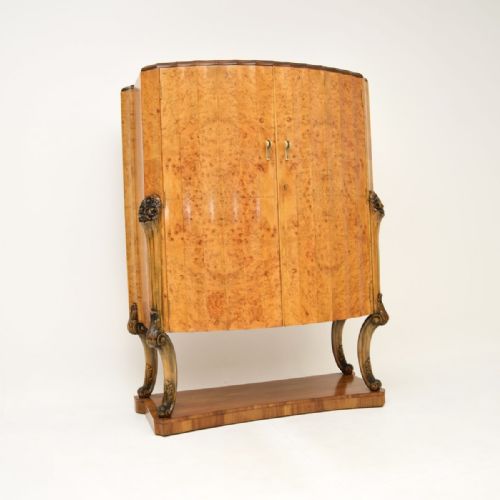
A 1930s walnut dry bar is fundamentally a cocktail or drinks cabinet built to house bottles, glassware and mixing equipment in a single impressive unit. Most examples encountered here belong to the Art Deco movement, though occasional pieces display Queen Anne Revival influences.
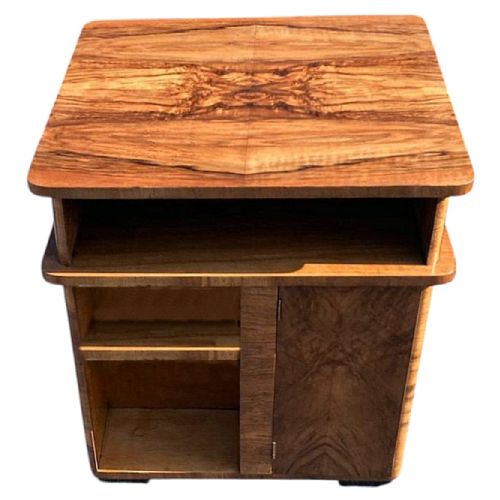
The primary forms take shape as cocktail cabinets, drinks cabinets, sideboards and cocktail tables. These items emerge predominantly from English workshops of the 1920s and 1930s, reflecting the social habits of the period.
Buyers look for these furniture items to serve as functional social centrepieces in modern living spaces. The combination of drop-down serving surfaces and dedicated bottle storage makes them exceptionally practical for entertaining.
How they were made
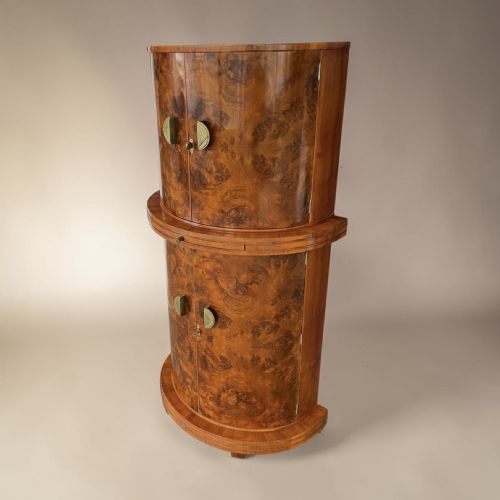
Cabinet makers utilised solid woods as a structural carcase before applying decorative veneers. Burr walnut and figured walnut feature extensively, chosen for their swirling, highly organic grain patterns.
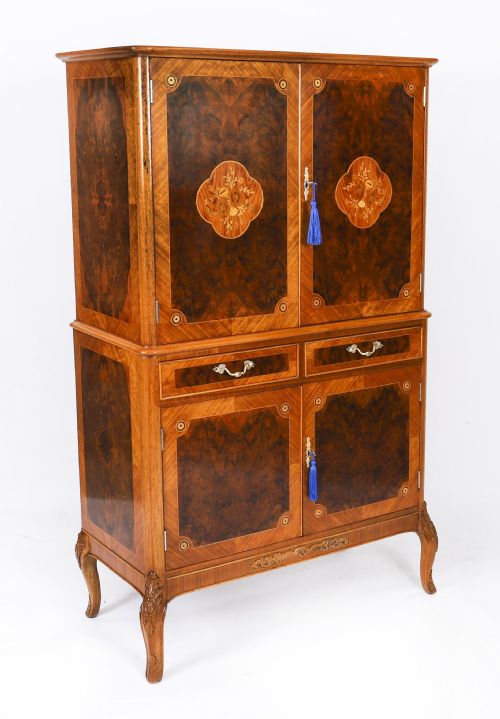
Surfaces were frequently enhanced with marquetry detailing to create geometric or floral patterns across the front doors. Chrome and brass hardware, including handles and hinges, provide functional contrast to the warm timber tones.
Interiors often incorporate mirrored backs and glass shelving designed to reflect light onto glassware. Integrated electric lighting also appears in select pieces to illuminate the mixing space when the cabinet doors open.
These cabinets were built for an era when the dry martini reigned supreme and every host needed a dedicated stage for mixing it.
What varies in quality
The visual impact of a 1930s walnut dry bar often depends on the selection and matching of the veneer. Cabinets featuring symmetrical burr walnut grain across the front doors represent the more ambitious end of the scale.
Attribution plays a significant role in distinction, with pieces carrying maker provenance commanding greater attention. The intricacy of internal fittings, such as pull-out slides and specialised glass racks, also marks out superior examples.
Epstein·Hille·Harry and Lou Epstein
The 1930s Walnut Dry Bar Glossary
- Burr walnut
- A timber harvested from the wart-like growths on walnut trees, yielding intricate and swirling grain patterns. It was sliced into thin veneers for decorative furniture surfaces.
- Cocktail cabinet
- A specialised piece of furniture designed specifically for the storage and preparation of alcoholic drinks. They typically include drop-down flaps that serve as mixing shelves.
- Marquetry
- The art of applying pieces of veneer to a structure to form decorative patterns and pictures. Makers used contrasting timbers to achieve geometric Art Deco designs.
1930s Walnut Dry Bar: Frequently Asked Questions
What is a 1930s walnut dry bar?
A 1930s walnut dry bar is a dedicated drinks and cocktail cabinet designed to store bottles, decanters and glassware during the interwar period. These pieces usually feature drop-down serving flaps and specialised internal compartments.
They reflect the popularisation of home cocktail culture and modern entertaining habits of the era. Most examples combine practical storage with dramatic Art Deco styling.
How do I use a cocktail cabinet at home?
These cabinets function ideally as mobile home bars for serving drinks to guests during social gatherings. The drop-down door provides a convenient surface for pouring and mixing beverages.
Internal glass shelves and mirrored sections showcase glassware while keeping bottles neatly organised out of sight when not in use.
How do I tell Art Deco from Queen Anne Revival?
Art Deco pieces from this era showcase geometric lines, symmetrical burr walnut veneers and streamlined chrome hardware. The overall aesthetic leans towards modernism and industrial innovation.
Queen Anne Revival furniture instead incorporates traditional flourishes such as cabriole legs and classical wood shaping, looking backward to earlier English design traditions.
What materials were used in these cabinets?
The primary exterior material is walnut, most commonly utilised in the form of burr walnut or figured walnut veneer over a sturdy timber carcase. Marquetry details frequently accent the main doors.
Interiors often combine mirror glass, clear glass shelving and metal elements like brass or chrome. Electrical components occasionally appear to illuminate the interior space.