



Burgundy Woven Rug
These burgundy woven rug examples bring together tribal textiles and carpets spanning the nineteenth and early twentieth centuries.
Burgundy Woven Rug
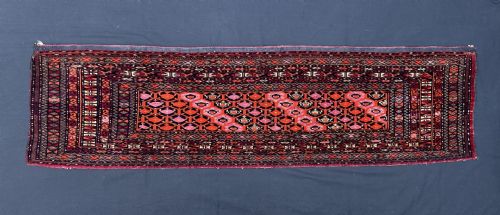
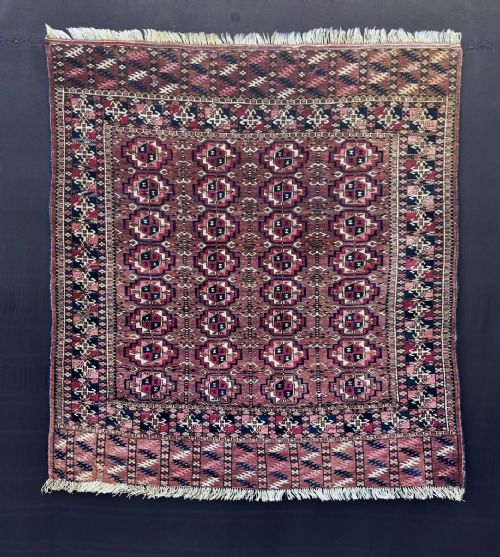
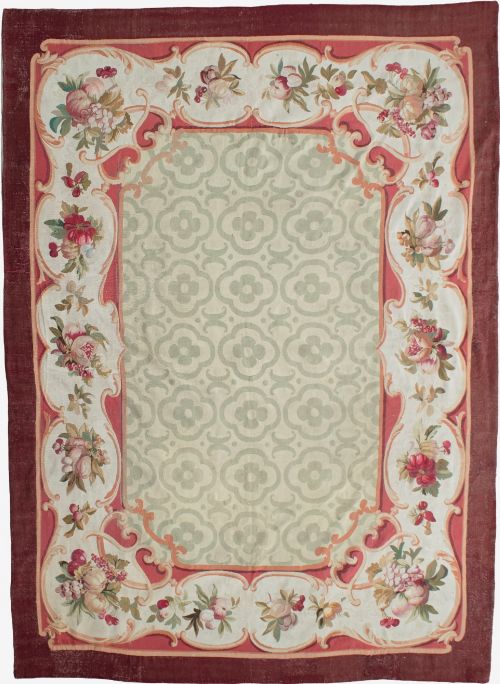
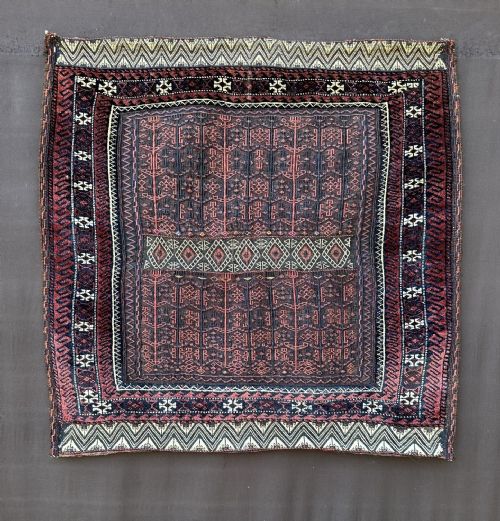
A burgundy woven rug brings together tribal textiles, tent bags, and carpets produced across Central Asia, Afghanistan, and France. When you examine this selection, you encounter tribal weavings alongside formal European carpets.
The majority of these pieces originate from nomadic or semi-nomadic groups such as the Turkmen, Yomut, Tekke, and Timuri tribes. Alongside these tribal works, French Rococo carpets appear to represent the more formal interior traditions of the nineteenth century.
Forms range from small wall hangings, torbas, and chuvals to larger area rugs and carpets. Each object reflects the distinct cultural traditions and domestic requirements of its makers.
How they were made
These textiles rely on wool, cotton, and silk, combined with natural dyes to achieve deep red and burgundy tones. Artisans utilised hand-spun wool for durability and soft texture.
Weaving techniques include flatweave constructions, soumak kilims, and pile carpets. Specific pieces feature silk highlights that catch the light against the matte wool foundation.
Burgundy Woven Rug Retail Price Guide 2026
Typical asking prices for burgundy woven rug among the pieces listed under this phrase on Sellingantiques today, from the lower quarter to the upper quarter. They describe what is for sale here now, not the wider market.
Several tent bags retain their original plain-weave backs, surviving centuries of nomadic movement intact.
What varies in quality
The fineness of the weave distinguishes standard utility items from exceptional tribal works. Closely knotted surfaces allow intricate motifs such as gul designs and curled leaf patterns to emerge with sharp definition.
The depth and variation of the dye work dictate visual richness. Natural dyes interact with wool fibres to create subtle tonal shifts across the surface of the textile.
The Burgundy Woven Rug Glossary
- Gul
- A repeating octagonal medallion motif frequently found in Central Asian tribal rugs. This design often denotes specific tribal lineages and regions.
- Torba
- A small, wide storage bag traditionally used inside nomadic tents. These pieces were hand-woven for domestic utility and dowry displays.
- Chuval
- A large tent bag utilised by Turkmen tribes for household storage. They typically display multiple primary guls across the face.
- Soumak
- A flatweave technique involving wrapping weft threads over warp threads to produce a textured surface. This method creates strong structures without a cut pile.
- Ensi
- A tribal door rug hung at the entrance of a yurt. These works feature distinct compartmentalised designs separating them from floor carpets.
Burgundy Woven Rug: Frequently Asked Questions
Where were these rugs made?
The pieces originate primarily from Central Asian regions associated with Turkmen and Yomut groups, alongside Afghan areas and nineteenth-century France.
Nomadic workshops and tribal weavers produced the majority of these textiles for functional domestic use.
How do I display a tent bag?
Torbas and chuvals function effectively as wall hangings or decorative mounted textile panels. Their compact dimensions suit residential spaces where standard carpets prove too large.
Mounting them on flat surfaces protects the structure from foot traffic while highlighting the intricate tribal iconography.
What materials are used?
Constructed principally from wool and cotton foundations, these textiles incorporate natural dyes for their colour palette. Certain examples include silk highlights to accentuate specific motifs.
Hand-spun wool provides the primary pile material across the tribal and regional pieces.
How do I date these textiles?
Dating relies on stylistic markers, structural analysis, and tribal attributions spanning the period from eighteen-fifty to nineteen-twenty. Material choices, such as the presence of early natural dyes, assist in placing pieces within this timeframe.
Specific design configurations and structural weaves connect individual items to established nineteenth-century production periods.