

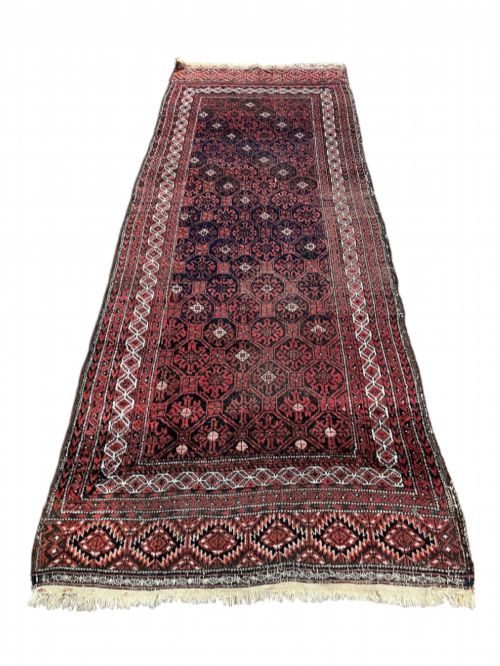


Burgundy Tribal Carpet
A burgundy tribal carpet brings the rich palette and geometric traditions of Central Asian and Persian weavers directly onto the floor.
Burgundy Tribal Carpet
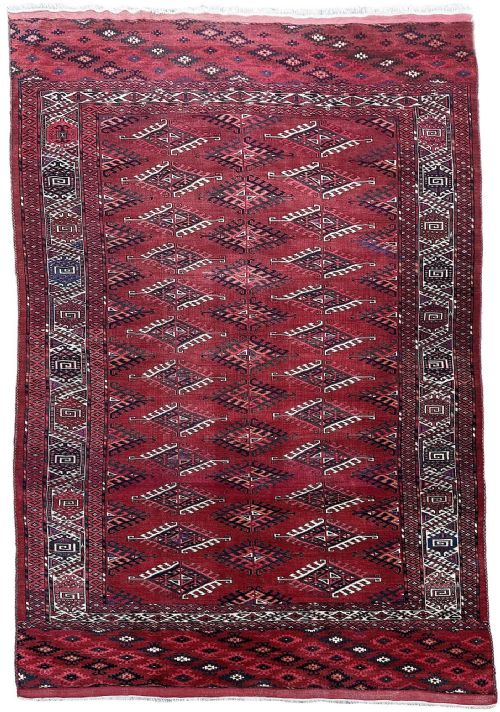
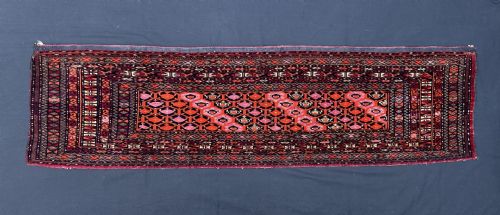
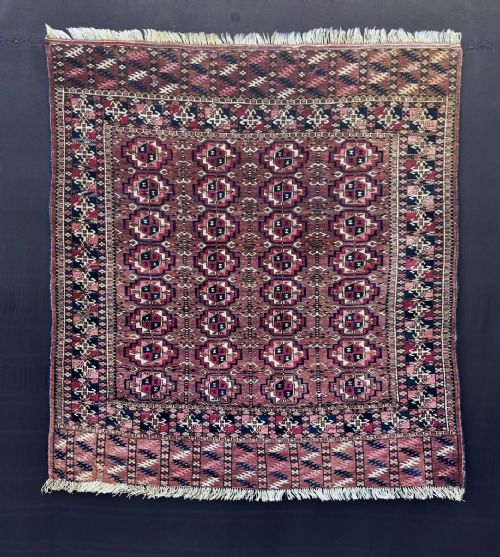
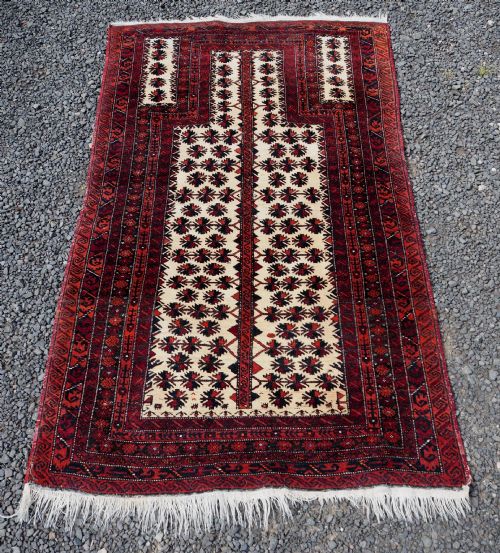
When you search for a burgundy tribal carpet, you encounter hand-knotted rugs, trappings, and dowry items created by nomadic and village weavers. The selection on this page leans heavily toward Turkmen tribal weaving, including Yomut, Tekke, Saryk, and Ersari pieces, alongside Baluch and Afghan village examples.
These textiles served practical and ceremonial roles within nomadic life, functioning as rugs, tent bands, wedding hangings, and storage bags rather than purely decorative floor coverings. The format often takes the shape of compact bags, torbas, chuvals, or elongated runners and main carpets designed for domestic spaces.
The aesthetic is defined by deep red and burgundy grounds punctuated by geometric motifs such as guls, hooked polygons, and prayer mihrabs. You will find pieces dating from the mid-nineteenth century through the early twentieth century, reflecting traditional tribal patterns passed down through generations.
How they were made
The construction relies primarily on wool, often hand-spun, combined with natural dyes that yield the characteristic deep red and burgundy tones seen across the pieces. Cotton and silk appear less frequently, with silk occasionally utilised for highlights and detailing within the pile.
Weavers employed traditional knotting techniques alongside flatweave structures such as soumak and kilim methods, particularly on utility bags and tent bands. Plain weave backs and sturdy foundations ensured these textiles could withstand the daily demands of nomadic life.
Listings span from eighteen-fifty to nineteen-thirty, uniting wool, cotton, and silk materials within traditional Turkmen and Baluch formats.
What varies in quality
The distinction between ordinary and exceptional examples lies in the density of the weave and the precision of the geometric layout. Finer knots allow for sharper definition within complex gul patterns and curled leaf designs.
The depth and consistency of the natural dyes significantly influence the visual impact of the piece. Superior examples display rich variations in tone across the burgundy field, driven by the quality of the wool and the dyeing process.
Yomut Tribe·Teke Tribes·Sariq Tribe·Karadashli Tribe·Baluch
The Burgundy Tribal Carpet Glossary
- Gul
- A medallion motif repeated across Turkmen carpets and trappings. Each tribal group typically utilised distinct gul variations to signify their lineage.
- Torba
- A small storage bag produced by nomadic weavers, usually featuring an open face and a plain weave back. These pieces were traditionally hung inside the tent for domestic storage.
- Chuval
- A large tent bag used by Turkmen tribes for storing household goods during migration. They frequently display multiple rows of guls and finely worked borders.
- Ensi
- A tribal door hanging placed at the entrance of a yurt or tent. They typically feature a quartered design separated by a candelabra motif.
- Soumak
- A flatweave technique involving wrapping weft threads over the warp to create a textured, durable surface. This method appears on kilims and the faces of specific bags.
Burgundy Tribal Carpet: Frequently Asked Questions
What is a tribal carpet?
A tribal carpet is a hand-knotted textile produced by nomadic or village communities rather than urban workshops. These pieces reflect the specific cultural motifs and traditional weaving methods of groups such as the Turkmen and Baluch.
The designs rely on geometric symbols, repeating guls, and deep red or burgundy colourways derived from natural dye sources.
How were tribal bags used?
Storage bags like torbas and chuvals were hung inside nomadic tents to organise belongings, bedding, and provisions. Their sturdy construction protected contents from dust and moisture during travel.
Over time, many of these bag faces were separated from their plain weave backs to be used as small wall hangings or decorative mats.
Are these carpets suitable for heavy floor use?
Many nineteenth and early twentieth-century tribal carpets and runners were built for functional domestic life using durable wool. Their dense knotting provides natural resilience against regular foot traffic.
Antique pile rugs and flatweaves benefit from appropriate underlays to protect the wool structure and extend their lifespan in modern interiors.