


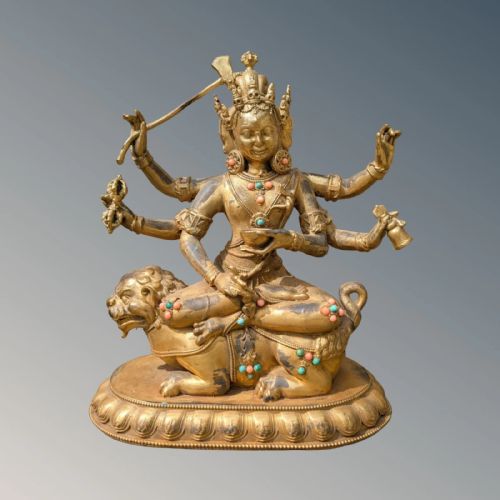


Buddhist Lion Statues
These Buddhist lion statues are powerful guardian figures cast in bronze and modelled in porcelain, carrying centuries of ritual tradition into any room.
Buddhist Lion Statues
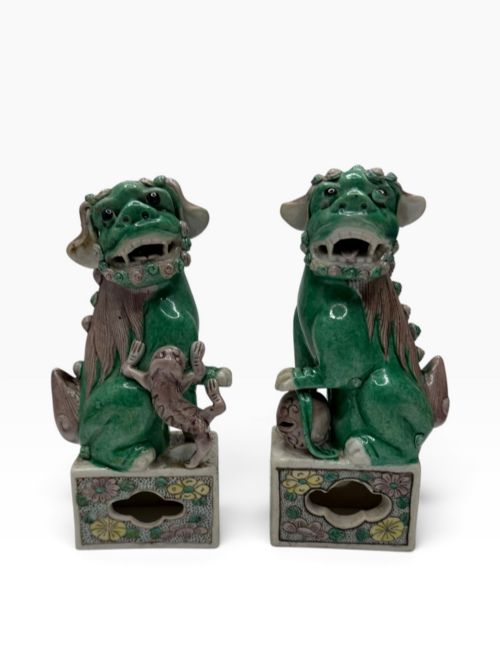
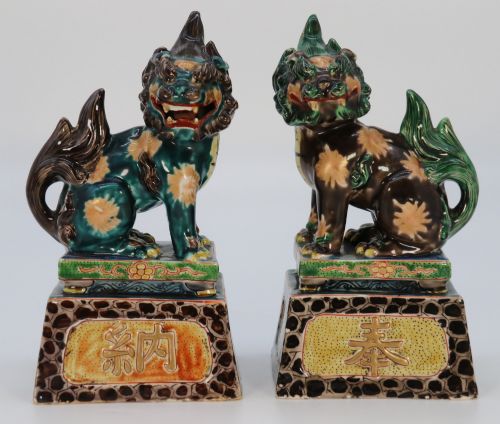
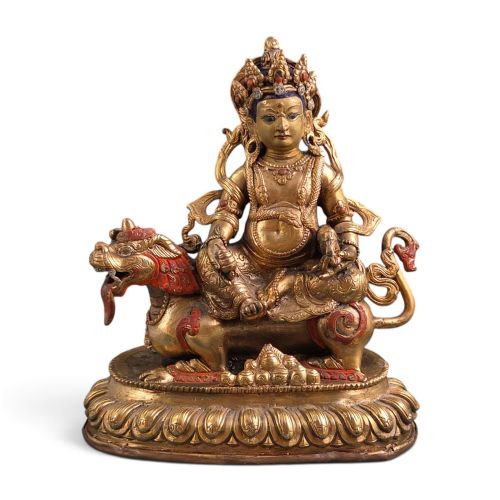
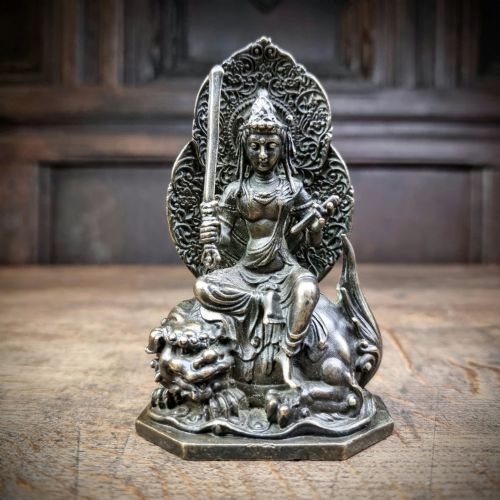
Buddhist lion statues appear in forms such as pairs of temple lions, temple guardians, and model shishi figures created across Asia. The selection here spans the nineteenth century up to nineteen twenty, taking shape as bronze, gilt bronze, brass, pottery, ceramic, and porcelain pieces.
The regional origins of these figures stretch from Chinese Qing Dynasty workshops and Japanese Meiji period kilns to Sino-Tibetan and Tibetan Himalayan traditions. Buyers frequently encounter matched pairs designed to guard an entrance, alongside individual figures and sculptural groups where deities sit upon the beast.
How they were made
Ceramic and porcelain versions combine moulded clay with colourful glazes, including famille verte enamels that bring vibrant hues to the surface. Japanese Kutani models employ fine pottery traditions with careful painting to capture the traditional stance of the shishi.
Buddhist Lion Statues Retail Price Guide 2026
Typical asking prices for buddhist lion statues among the pieces listed under this phrase on Sellingantiques today, from the lower quarter to the upper quarter. They describe what is for sale here now, not the wider market.
Listings feature items spanning the nineteenth century, nineteen hundred, eighteen eighty, and nineteen twenty.
What varies in quality
The distinction between ordinary and exceptional pieces lies in the crispness of the modelling and the depth of the casting detail across the mane and paws. Finer examples display balanced proportions and confident expressions that reflect the skill of the original maker.
Surface finish also determines quality, whether through the preservation of original gilding on bronze figures or the precision of enamel work on porcelain pairs. Heavier temple bronzes and well-fired ceramic models command attention through their sheer presence and material weight.
Unno Shomin
The Buddhist Lion Statues Glossary
- Shishi
- A traditional Japanese term for a stone or metal guardian lion, often shown with a playful or fierce expression. These figures derive from Chinese temple guardian traditions.
- Famille verte
- A Chinese porcelain palette dominated by green enamels, introduced during the Qing Dynasty. It creates bright, multicoloured decorative surfaces on ceramic figures.
- Gilt bronze
- Metal sculpture cast in bronze and coated with a thin layer of gold. This technique adds lustre and protects the underlying metal from corrosion.
- Meiji Period
- A Japanese historical era spanning from eighteen sixty-eight to nineteen twelve, known for refined metalwork and ceramic production. Objects from this time often exhibit remarkable technical precision.
- Sino-Tibetan
- An artistic style combining Chinese and Tibetan cultural influences, frequently seen in ritual bronzes and temple figures. These pieces merge intricate iconography with skilled metal casting.
Buddhist Lion Statues: Frequently Asked Questions
Where should I place a pair?
Traditionally positioned flanking an entrance or altar, pairs of temple lions create a sense of symmetry and balance in a room. Placing them on consoles or low tables allows their detailed casting and glaze work to be appreciated.
Because these figures were designed as guardians, keeping them in principal living spaces or hallways maintains their historical context as focal points.
How do I date these statues?
Dating relies on examining the material composition, casting style, and surface characteristics typical of specific periods like the nineteenth century or the Meiji era. Subtle differences in modelling and glaze formulas help distinguish older temple bronzes from later works.
Comparing the stylistic markers of Chinese Qing Dynasty pieces with Sino-Tibetan or Japanese examples provides further clues to their origins and age.
Are bronze and porcelain versions different?
Bronze and brass statues offer substantial weight and durable metal surfaces, often enhanced with gilding or fine chiselling. They tend to carry a solemn presence suited to temple guardian figures.
Porcelain and pottery versions introduce colour through glazes and enamels, offering brighter palettes and smoother contours. Each medium brings distinct sculptural qualities to the depiction of the lion.