
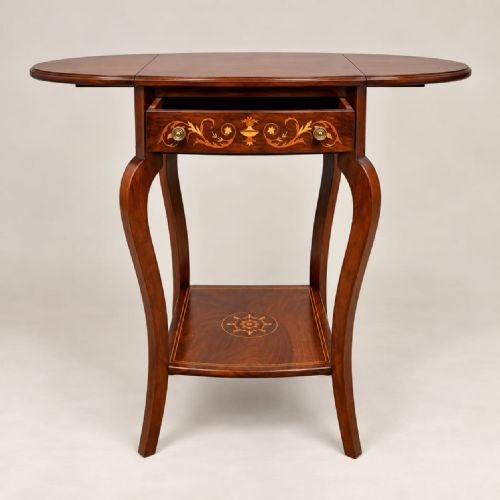


Brown Work Table
A brown work table combines practical utility with refined cabinetmaking, offering fitted compartments for sewing and writing within timber frames.
Brown Work Table
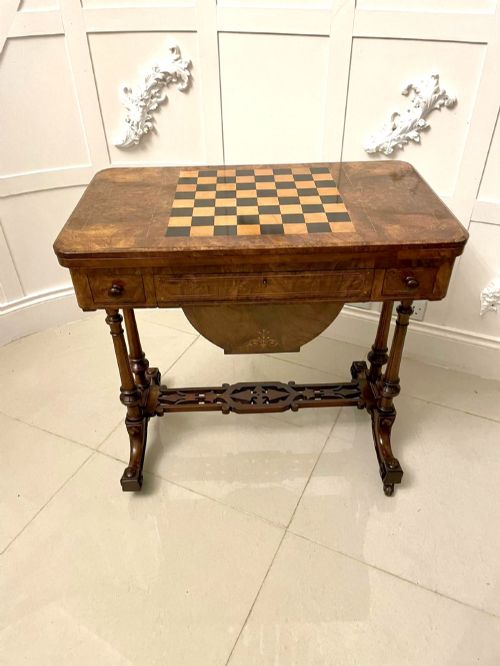
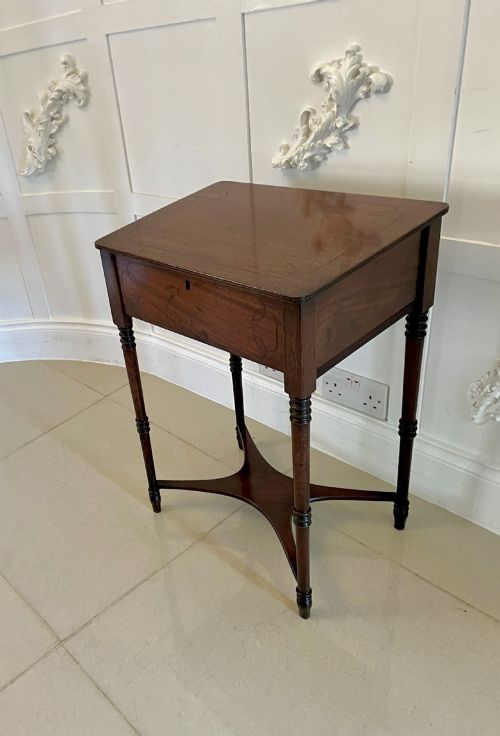
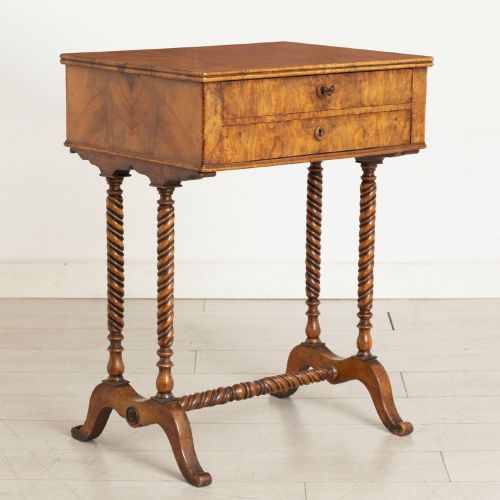
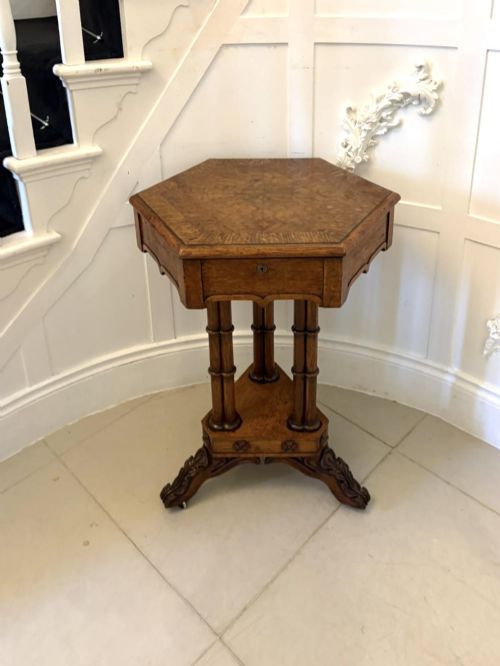
A brown work table serves as a specialised piece of domestic furniture designed primarily for sewing, needlework, and light writing tasks. These tables typically incorporate internal compartments, drawers, or suspended fabric bags to hold materials.
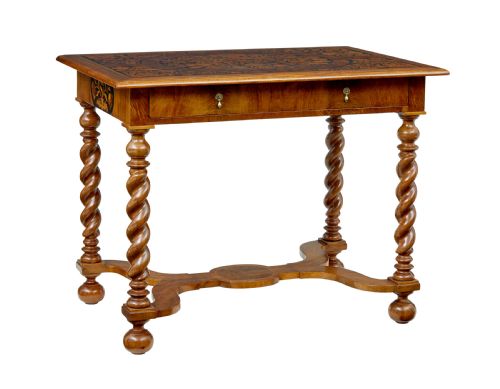
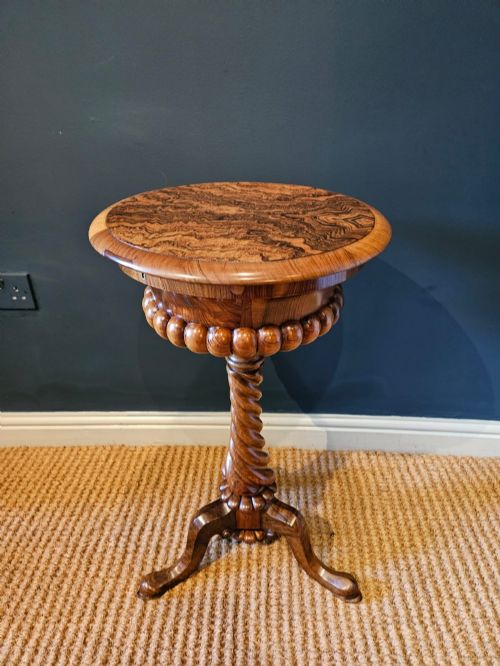
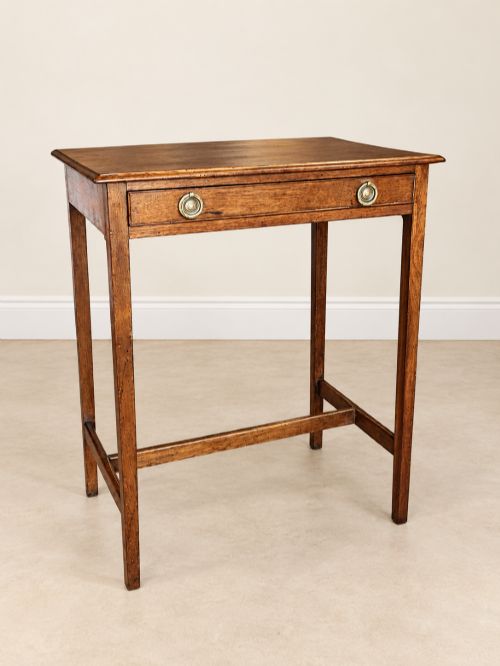
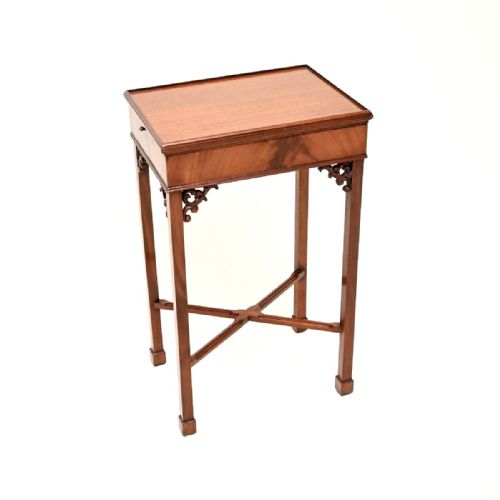
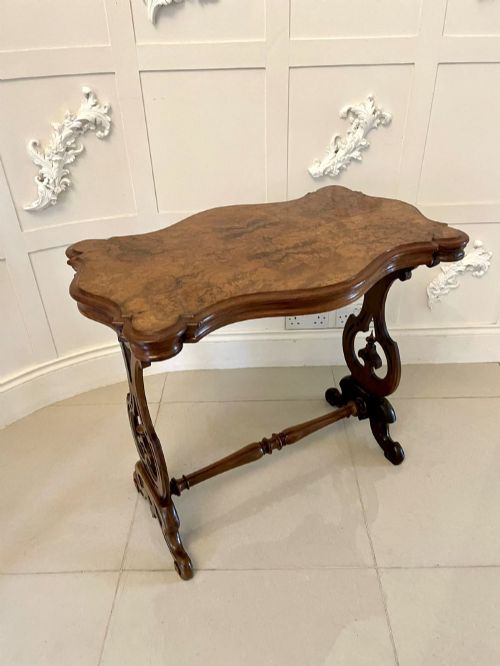
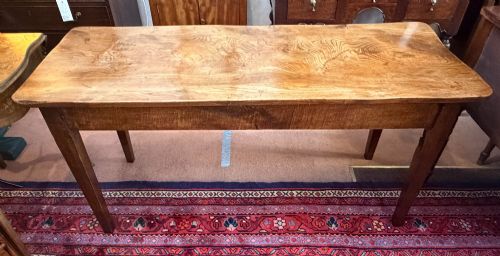
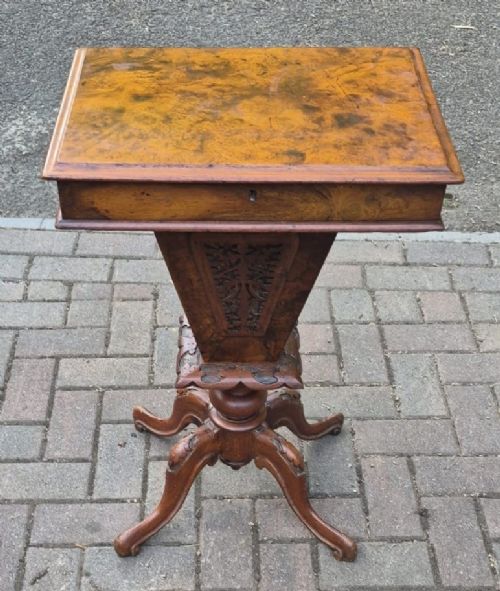
The pieces listed under this search phrase date predominantly from the Georgian, Regency, Victorian, and Edwardian periods. Examples range from modest oak and mahogany versions to elaborately carved burr walnut and rosewood specimens.
Makers utilised various timber species to construct these items, applying stylistic influences from Sheraton, French Provincial, and Arts and Crafts traditions. The most common forms on this page include freestanding sewing tables, drop-leaf occasional tables, and compact writing desks.
How they were made
Cabinetmakers constructed these tables using dense hardwoods such as mahogany, walnut, rosewood, and oak, often applying decorative veneers like burr walnut or satinwood over secondary woods. Timber selection dictated the structural integrity and surface appearance of each piece.
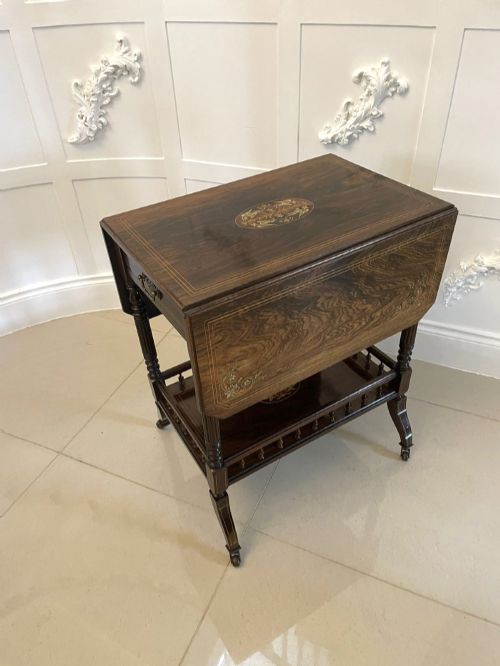
Joinery methods involved precise mortise and tenon framing, dovetail joints for drawers, and careful application of marquetry, parquetry, and inlay. Secondary materials such as brass fittings, fabric bags, and occasional gesso decoration completed the construction.
The listings include regional variations from English, Scottish, French, Swedish, and Jamaican workshops, demonstrating diverse decorative techniques such as parquetry and marquetry.
What varies in quality
Quality in these tables depends on the selection of timber figures, such as the richness of burr walnut or the grain pattern in mahogany and satinwood. Superior examples demonstrate exceptional execution in cross-banding, inlay work, and carved details.
The sophistication of the internal mechanism, such as fitted writing slides, compartmentalised drawers, and well-preserved drop-leaf supports, distinguishes finer workshop production from standard domestic utility pieces.
Ralph Turnbull
The Brown Work Table Glossary
- Work table
- A small table designed for needlework, sewing, and writing, often featuring internal compartments or a fabric storage bag. These pieces gained immense popularity during the Georgian and Victorian eras.
- Burr walnut
- A prized timber veneer taken from the wart-like growths on walnut trees, known for its swirling, highly decorative grain pattern. Cabinetmakers used it extensively on high-end Victorian furniture.
- Drop leaf
- A hinged table leaf that folds down when not in use to save space. This mechanism appears frequently on occasional and sewing tables.
- Parquetry
- Geometric patterns formed by fitting small pieces of wood together, similar to mosaic. Jamaican and European workshops utilised this technique on tabletops and cabinets.
- Inlay
- A decorative technique where contrasting materials such as satinwood or lighter timbers are embedded into the surface of a primary wood. It defines many Sheraton and Edwardian designs.
Brown Work Table: Frequently Asked Questions
What is a work table?
A work table is a compact piece of furniture designed for needlework, sewing, and correspondence. It typically includes internal drawers, compartments, or a suspended fabric bag.
Craftsmen produced these tables extensively across the Georgian, Regency, and Victorian periods in various timbers like mahogany, rosewood, and walnut.
How do I date a brown work table?
Dating relies on timber choice, structural style, and decorative techniques. Georgian pieces often display restrained mahogany lines, whereas Victorian examples frequently feature burr walnut and heavier carving.
Edwardian and later pieces tend to show lighter inlay work and cross-banding, reflecting changing interior tastes of the early twentieth century.
Were these tables used for sewing?
Yes, sewing and needlework represented the primary function for these tables during the nineteenth century. The fitted interior compartments kept threads, needles, and fabric organised.
Many designs also incorporated a sliding fabric bag beneath the drawer to catch scraps and hold ongoing projects.
Where should I place a work table in my home?
These compact tables function well as side tables, bedside surfaces, or occasional desks in living rooms and studies. Their freestanding form allows placement beside chairs or sofas.
Due to their historical finishes, placing them away from direct sunlight and excessive heat protects the timber and veneer.