




Mid Victorian Sewing Table
A mid victorian sewing table is a practical and decorative piece designed for needlework, bringing refined nineteenth-century craftsmanship into a modern room.
Mid Victorian Sewing Table
When you search for a mid victorian sewing table, you encounter nineteenth-century occasional and work tables designed specifically for domestic needlework and crafts. These pieces typically date from the mid-nineteenth century, spanning the eighteen-fifties through the eighteen-eighties during the Victorian period.
The form frequently appears as a freestanding work table or sewing table, alongside drop-leaf and cradle base variants. Many examples incorporate dual purposes, functioning as both games tables and sewing tables with fitted interiors.
How They Were Made
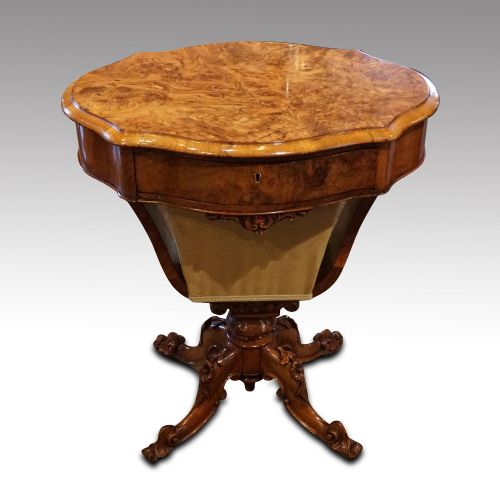
Cabinet makers utilised rich timbers including walnut, burr walnut, rosewood, and mahogany to construct the frames and tabletops. These primary woods were often selected for their striking grain patterns, particularly the figured burr walnut veneers.
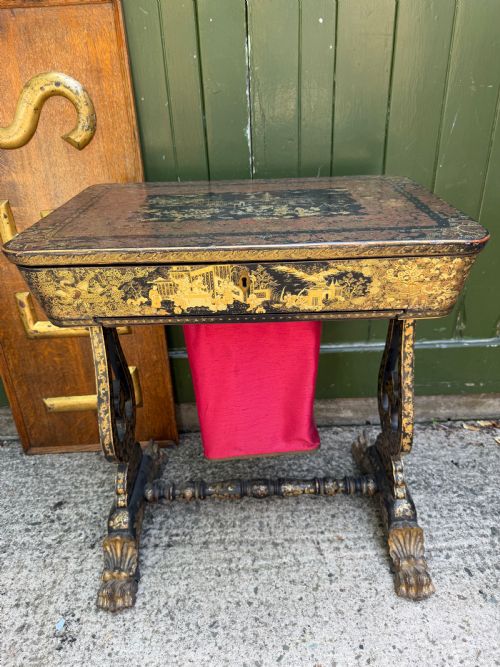
Interiors and functional elements integrated fabric, velvet, and brass fittings alongside specialised compartments. Certain imported examples also featured intricate gilded decoration applied to lacquer surfaces.
Periods represented span the nineteenth century, specifically noting eighteen-fifty, eighteen-sixty, eighteen-eighty, and the broader Victorian era.
What Varies in Quality
The distinction between standard examples and the finest pieces rests in the selection of timber veneers and the intricacy of the surface decoration. Burr walnut and figured rosewood with superior grain alignment command attention.
Construction detail separates the ordinary from the exceptional, visible in the stability of cradle bases, the precision of drop-leaf mechanisms, and the completeness of fitted internal compartments for sewing equipment.
The Mid Victorian Sewing Table Glossary
- Burr Walnut
- A beautifully figured wood veneer taken from the wart or burl on a walnut tree. It produces highly decorative, swirling patterns prized by Victorian cabinet makers.
- Cradle Base
- A curved rocking or swing support structure beneath the tabletop. This design allows the body of the table to tilt or pivot between upright pillars.
- Drop-Leaf
- A table design featuring hinged flaps on the sides that fold down to save space or lift up to extend the surface area. These leaves are supported by swing brackets.
- Work Table
- A nineteenth-century piece of furniture equipped with drawers, bags, or compartments specifically intended to hold sewing, knitting, and needlework supplies.
Mid Victorian Sewing Table: Frequently Asked Questions
What is a mid victorian sewing table used for?
These tables were originally designed to hold sewing gear, threads, and needlework projects inside internal compartments and attached fabric bags.
Today, they function well as decorative occasional tables in living spaces, holding books or small lamps while retaining their historical charm.
How do I identify a Victorian sewing table?
Look for characteristic nineteenth-century timber choices such as rosewood, walnut, and mahogany combined with traditional turned supports or cradle bases.
Many examples feature hinged lids opening to reveal fitted compartments specifically arranged for spools and needles.
Did these tables have multiple uses?
Numerous sewing tables incorporated dual functions, doubling as games tables with reversible or folding tops that revealed chess or board surfaces.
This versatility made them particularly popular in Victorian drawing rooms where space efficiency and entertainment mattered.
What woods were commonly used?
Cabinet makers predominantly relied on dense hardwoods such as rosewood and mahogany during the earlier Victorian decades, shifting toward burr walnut later in the period.
These timbers were frequently polished to a high gloss to showcase the natural grain patterns.