


Brown Wool Kilim
A brown wool kilim brings geometric pattern and nomadic texture into a room through flatwoven panels made across Persia, Anatolia, Central Asia, and the Caucasus.
Brown Wool Kilim
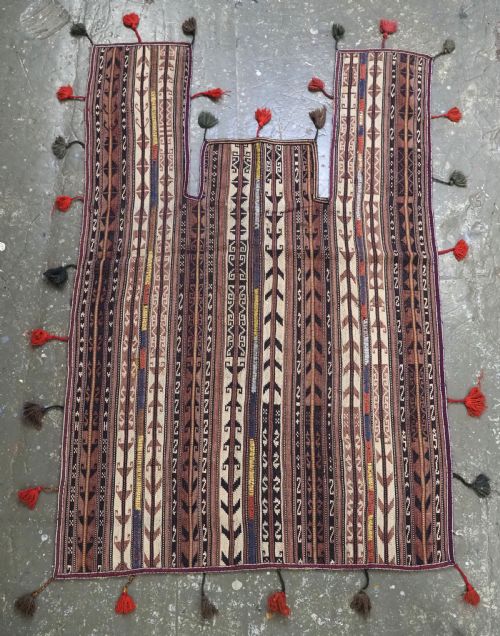
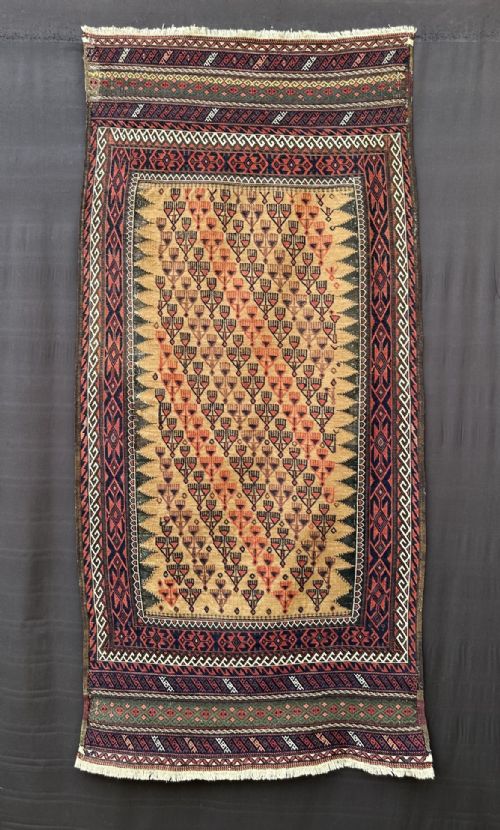
A brown wool kilim search brings up flatwoven tribal textiles, including covers, animal trappings, grain sacks, and rugs produced from the late nineteenth century into the early decades of the twentieth century. These pieces originate from nomadic and village groups such as the Yomut Turkmen, Qashqa'i, Bakhtiari, Timuri, and Shahsavan, alongside European examples from Bessarabia and Ukraine.
The most common formats on this page are utilitarian textiles repurposed or woven for daily nomadic life, such as sofreh dining cloths, mafrash storage bags, and tacheh wheat sacks. They display banded designs, geometric motifs, and tapestry weaves that reflect the specific weaving traditions of their makers.
Makers utilised their local surroundings for formats and functions, meaning many pieces served practical domestic roles before entering the collector market as decorative rugs and wall hangings.
Materials and Techniques
The foundation of these flatweaves relies primarily on hand-spun wool, often supplemented by cotton, camel hair, and goat hair for structural strength and textural contrast. Natural dyes provide the palette, yielding grounded earthy tones and rich browns that anchor the geometric compositions.
Weavers employed slit-tapestry techniques, soumak wrapping, and supplemental embroidery on structures woven in single panels or joined sections. Edge reinforcement frequently incorporated supplementary materials such as leather and metal to withstand heavy domestic use.
Brown Wool Kilim Retail Price Guide 2026
Typical asking prices for brown wool kilim among the pieces listed under this phrase on Sellingantiques today, from the lower quarter to the upper quarter. They describe what is for sale here now, not the wider market.
Several textiles began life storing wheat or serving as horse blankets before finding a quiet retirement on a modern floor.
Factors of Quality
Quality in these flatweaves rests on the tightness of the weave, the handling of the wool, and the depth achieved through natural dyes. Finer structures show greater precision in the geometric patterning and structural integrity across the span of the textile.
The handling of secondary materials like camel hair and the preservation of original finishes, such as backings on storage bags or complete ends on runners, distinguish pieces produced for daily tribal utility from standard commercial weaving.
The Brown Wool Kilim Glossary
- Kilim
- A flatwoven, pileless textile produced by tightly interweaving warp and weft strands to create a smooth surface with visible pattern on both sides.
- Sofreh
- A flatwoven dining cloth or spreading cloth traditionally used for communal meals and food preparation within nomadic households.
- Mafrash
- A rectangular storage bag or chest panel, typically woven in flatweave or soumak techniques by tribal groups for transporting belongings.
- Soumak
- A wrapping technique where weft threads are looped around warp threads to produce a textured, braided face with a strong structural back.
- Tacheh
- A traditional tribal wheat sack or storage container woven in wool and designed for agricultural use in western regions.
Brown Wool Kilim: Frequently Asked Questions
What is a brown wool kilim?
A brown wool kilim is a flatwoven tribal textile made without pile, utilising natural wool and earthy dyes for geometric patterns.
These pieces originate from nomadic and village workshops across the Middle East, Central Asia, and Eastern Europe during the late nineteenth and early twentieth centuries.
How were these tribal textiles used?
Nomadic groups used these flatweaves for daily practical functions such as floor coverings, dining spreads, animal trappings, and grain storage.
Many examples began as utilitarian items like wheat sacks or horse blankets before being preserved as decorative items.
How do I care for a kilim?
These flatweaves require gentle treatment, including regular low-suction vacuuming without a rotating brush and professional cleaning when necessary.
Keeping them out of direct sunlight helps protect the natural dyes from fading over time.
How are tribal regions told apart?
Tribal origins are identified through specific weaving structures, colour palettes, and repeating geometric motifs characteristic of particular groups.
Weavers from regions like the Caucasus, Anatolia, and Persia employed distinct structural traits and border designs.