
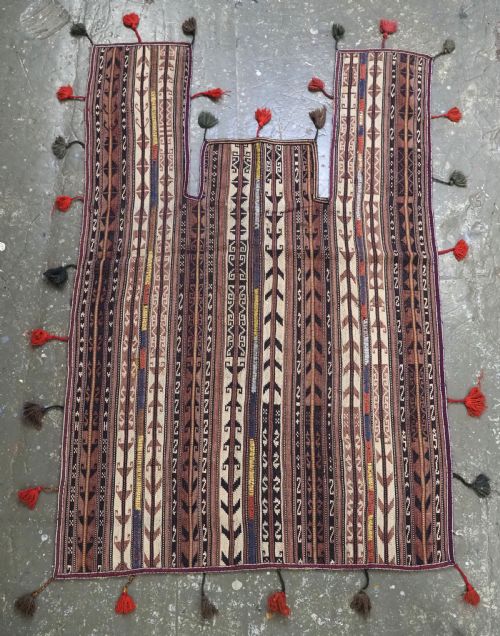
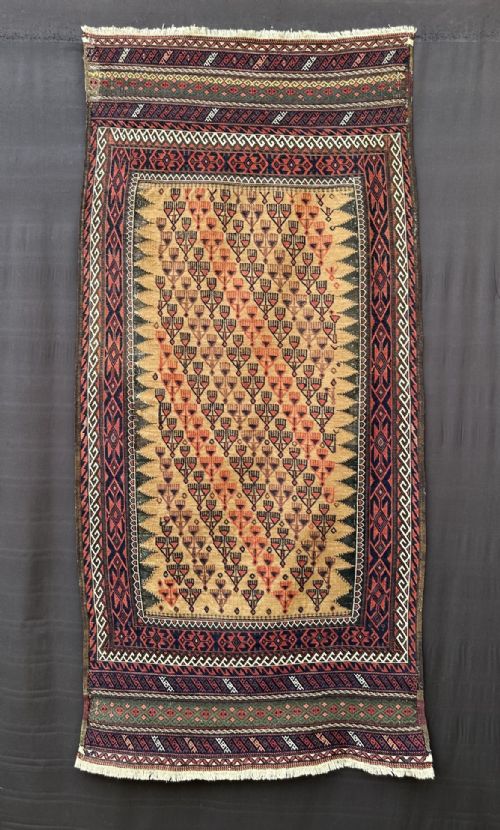


Brown Wool Flatweave Rug
A brown wool flatweave rug brings tactile depth to an interior through flat-woven textiles created by nomadic and village weavers across Persia, Central Asia, and Anatolia.
Brown Wool Flatweave Rug
A brown wool flatweave rug on this page typically originates from tribal and village traditions across Persia, Central Asian regions, and Anatolia, encompassing utilitarian objects like sofreh, mafrash panels, and grain sacks. These pieces were woven without a pile using warp-faced or weft-faced techniques, resulting in a durable, flat textile that functioned primarily for domestic storage, floor covering, or ceremonial use.
The selection ranges widely across the nineteenth and early twentieth centuries, drawing on specific tribal identities such as the Yomut Turkmen, Qashqa'i, Baluch, and Shahsavan. Buyers searching for a brown wool flatweave rug encounter formats spanning small storage bags and runner-sized tent bands up to room-sized kilims and tapestry rugs.
Distinctions in execution and structure
Quality rests upon the tightness of the weave, the fineness of the hand-spun wool, and the crispness of the geometric design execution. Tightly packed wefts and balanced structural tension produce a textile that retains its shape and integrity over decades.
The sophistication of the tribal design work and the integration of secondary materials like camel wool or cotton also separate standard utility objects from exceptionally finely woven tribal pieces.
The listings span periods from the nineteenth century through the 1940s, featuring wool, cotton, camel hair, and natural dyes across tribal traditions.
The Brown Wool Flatweave Rug Glossary
- Kilim
- A flat-woven carpet or textile produced without a pile by tightly interweaving warp and weft strands. This construction method creates a lightweight, reversible fabric adorned with geometric motifs.
- Sofreh
- A spread or cloth traditionally used for dining, kneading bread, or food preparation among nomadic and village households. These textiles often feature minimalist field designs and practical formats.
- Soumak
- A brocade-like flatweaving technique where decorative weft threads are wrapped over and under the warp threads. This method adds structural weight and subtle surface relief to the rug.
- Mafrash
- A rectangular storage bag or chest panel used in nomadic camps for bedding and household possessions. They frequently exhibit banded flatweave designs intended to be viewed folded or assembled.
- Tacheh
- A large grain or wheat sack woven by tribal groups for agricultural storage and transport. These utilitarian pieces showcase robust wool and functional geometric banding.
Brown Wool Flatweave Rug: Frequently Asked Questions
How were flatweaves used daily?
Nomadic and village communities utilised these flat-woven textiles for multiple daily purposes, ranging from floor coverings and dining spreads to storage containers for grain, bedding, and tent belongings. Their sturdy construction allowed them to withstand the rigorous demands of pastoral life.
Over time, many surviving pieces transitioned from functional nomadic gear into decorative interior objects, valued for their authentic tribal artistry and flat profile.
What materials make up these rugs?
The core material is sheep wool, frequently hand-spun to create durable, resilient yarn that takes natural dyes effectively. Cotton often appears in the foundation warps, while select pieces incorporate camel hair or goat hair for distinct texture and natural coloration.
These organic materials contribute to the rich, earthy brown tones characteristic of the category, developing a soft patina with age and handling.
How do I date a flatweave?
Dating relies on observing structural characteristics, wool preparation, dye palettes, and specific tribal weaving traditions. Pieces assigned to the nineteenth and early twentieth centuries typically exhibit hand-spun wool and traditional natural dye variations that differ from later synthetic-dyed commercial output.
Comparative analysis of tribal motifs, such as those specific to Yomut Turkmen or Shahsavan weavers, further helps narrow down the period of production.
How do I care for wool flatweaves?
Maintenance requires gentle regular vacuuming without a rotating brush roll to prevent snagging the flat-woven threads. Professional cleaning suited for antique textiles preserves the integrity of the hand-spun wool and natural dyes.
Placing a suitable underlay beneath the rug on a floor prevents slipping and reduces friction between the flatweave and the surface underneath.