
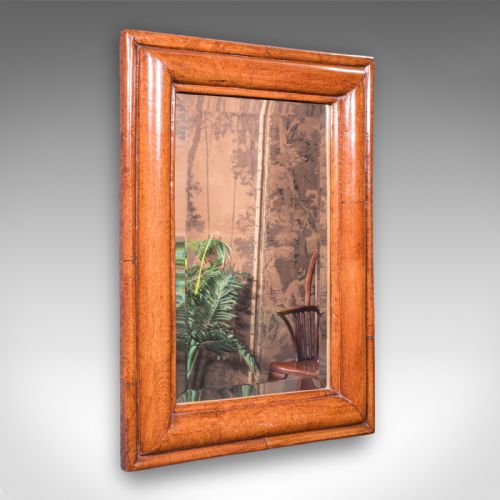
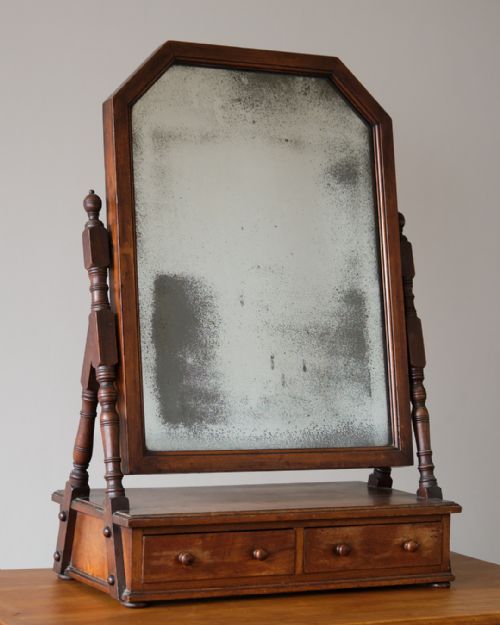
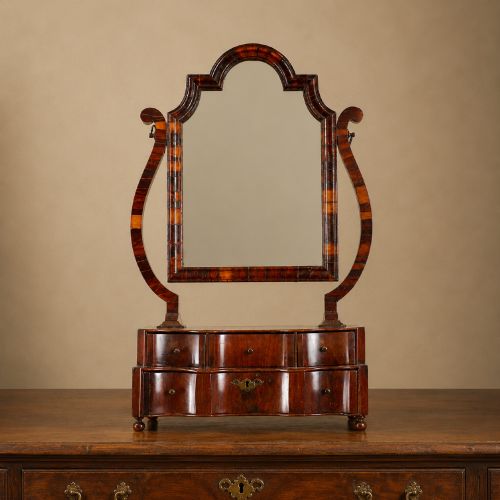
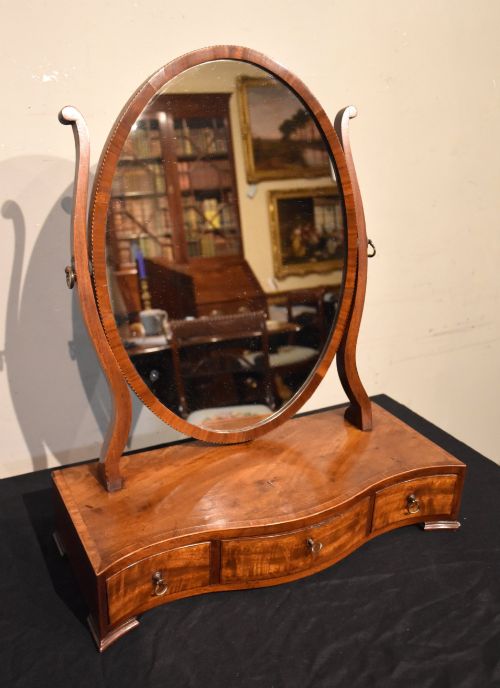

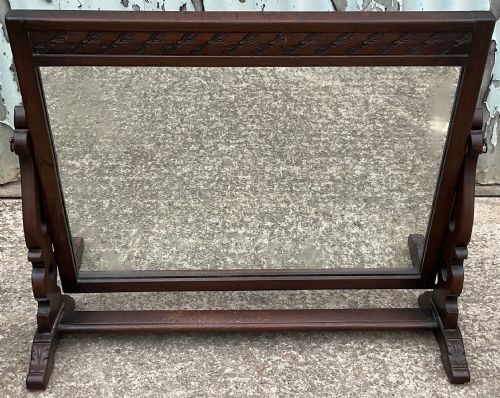
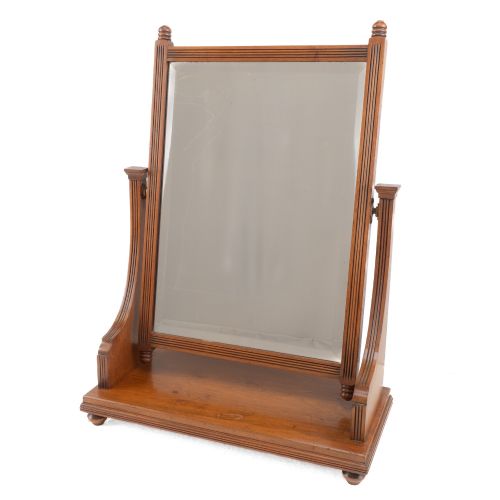

Brown Wooden Vanity Mirror
A brown wooden vanity mirror brings useful surface reflection and warm tone to a dressing table.
Understanding the Pieces
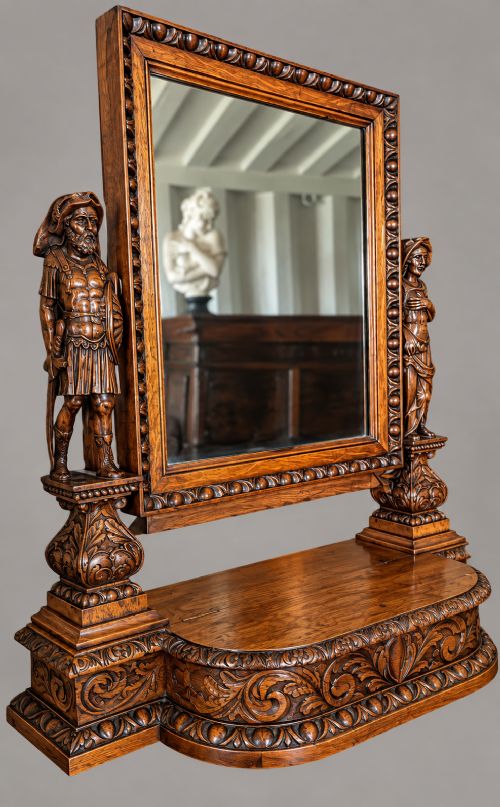
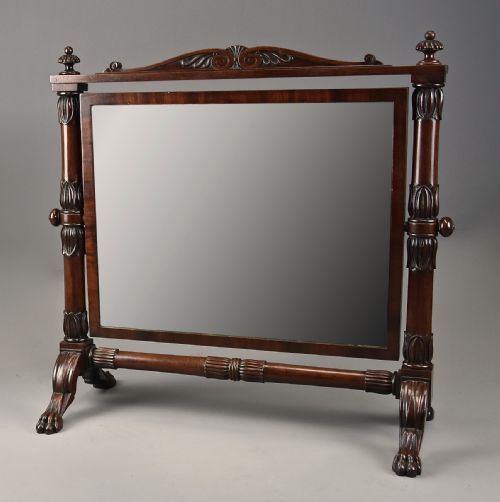
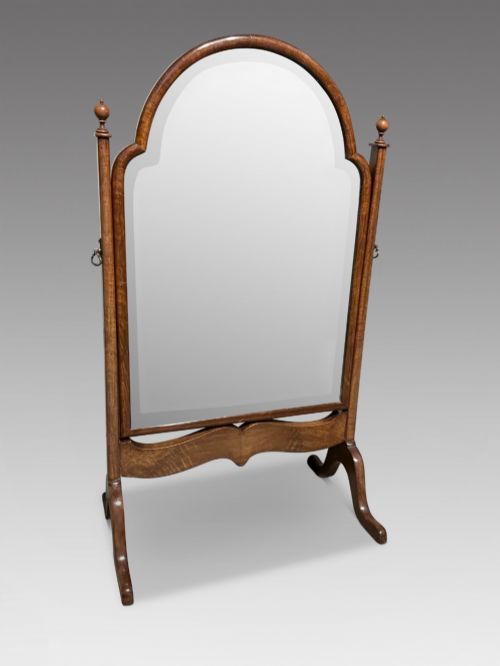
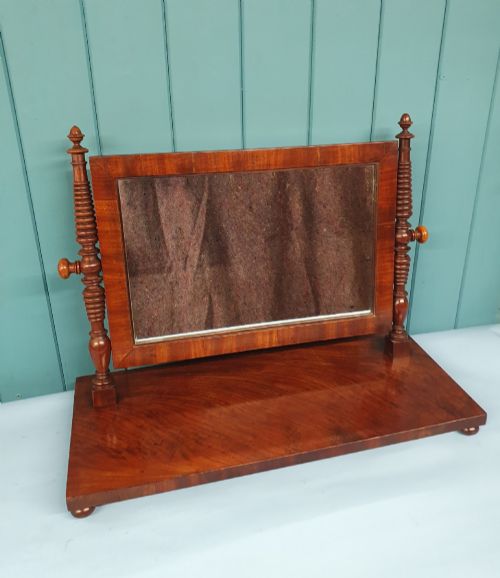
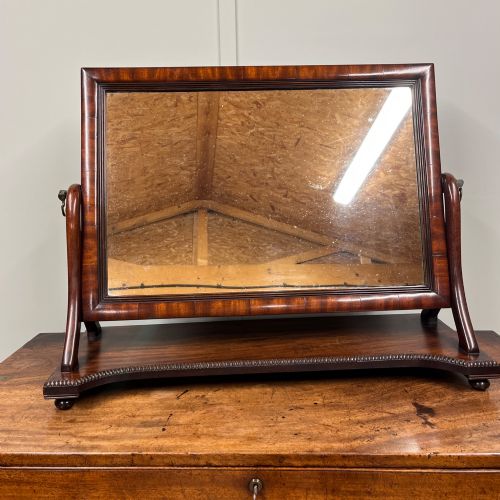
A brown wooden vanity mirror sits upon a chest or table to provide a movable reflection for grooming. These portable dressing table mirrors appear in formats ranging from small table top items to larger cheval frames.
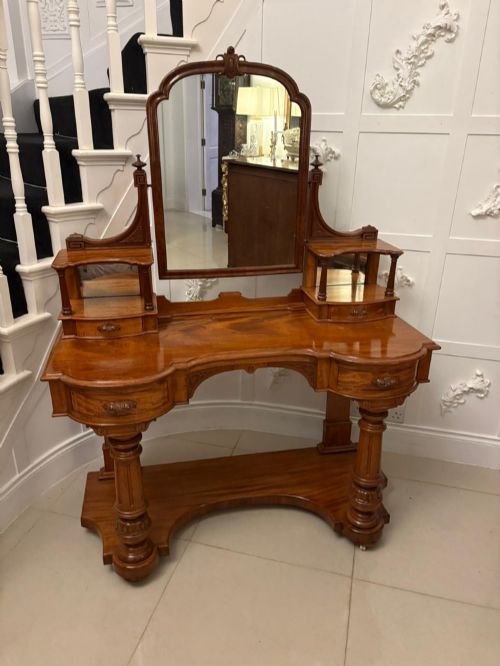
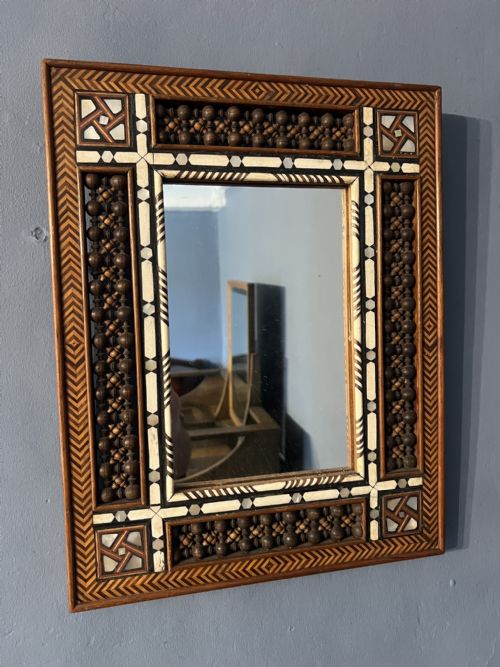
The selections here span periods from early Georgian to Edwardian and eighteen ninety. Forms include serpentine fronts, trio mirrors, and standard toilet mirrors.
Mahogany and walnut form the primary wooden structures across these examples. Brass fittings and glass mirror plates complete the construction.
Materials and Construction
Cabinet makers utilised dense hardwoods such as mahogany and walnut to build stable frames and box bases. These timbers provide both structural durability and deep natural grain patterns.
Brass fittings, including adjustment screws and hinges, allow the mirror plate to tilt at various angles. Glass mirror plates are fitted securely into the wooden surrounds.
Retail Price Guide 2026
Typical UK retail prices for brown wooden vanity mirror, calculated from the Sellingantiques database of over a million retail prices indexed since 2003. This retail price guide relies exclusively on Sellingantiques data; no external sources or auction records are used, so the figures do not describe the wider market.
Materials documented across the current selection include mahogany, walnut, brass, and glass.
Grading Quality
Finer examples display careful timber selection, such as figured mahogany or walnut veneers matched symmetrically across the base drawers. Plain secondary woods and simpler joints appear in more utilitarian pieces.
The refinement of the woodwork, from serpentine shaping to delicate brass hardware, distinguishes standard production from more ambitious cabinet work.
The Brown Wooden Vanity Mirror Glossary
- Cheval mirror
- A freestanding full length mirror that swings within a frame, occasionally adapted for table top use.
- Serpentine front
- A curved furniture front featuring a convex centre flanked by concave curves, seen on several dressing mirrors.
- Toilet mirror
- A historical term for a small dressing table mirror designed to sit on a surface during personal grooming.
- Trio mirror
- A three piece folding mirror arrangement, often associated with late nineteenth century French furniture design.
Frequently Asked Questions
What is a brown wooden vanity mirror used for?
These mirrors provide a movable surface reflection for personal grooming and dressing. They sit upon tables or chests rather than mounting directly to walls.
Historically, they formed an essential part of bedroom furniture before fitted wardrobes and fixed bathroom mirrors became common.
How do I date a wooden dressing mirror?
Dating relies on observing the timber types, structural styles, and hardware details present in the piece. Georgian and Regency examples often feature mahogany and serpentine shaping.
Later Victorian, Edwardian, and eighteen ninety pieces introduce different woods like walnut and alternative framing formats.
Where should I place a table top mirror?
These mirrors suit placement on top of dressing tables, chests of drawers, or sideboards. The adjustable frame allows the user to direct the angle of reflection.
Ensure the supporting surface is deep and stable enough to hold the base securely without tipping.
What woods are used in these mirrors?
The listings show mahogany and walnut as the primary timbers used for the frames and boxes. These hardwoods were chosen for their strength and decorative grain.
Additional materials include brass for the adjusting hardware and glass for the mirror plates themselves.