


Brown Wooden Tray
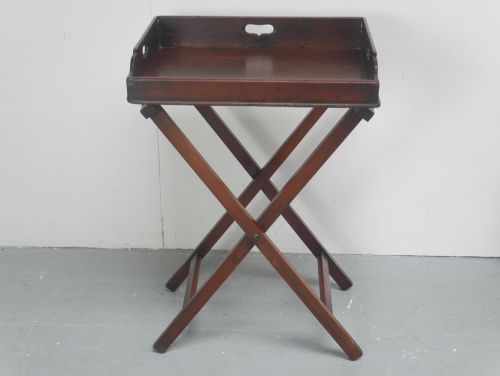
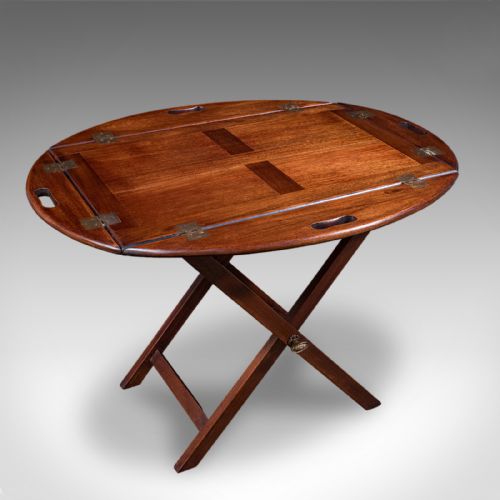
A brown wooden tray brings tactile warmth and practical utility to any room, offering a rich mahogany surface designed for serving or display.
What these pieces are
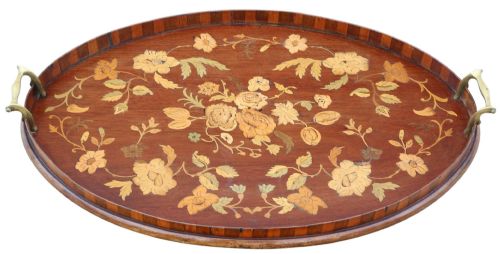
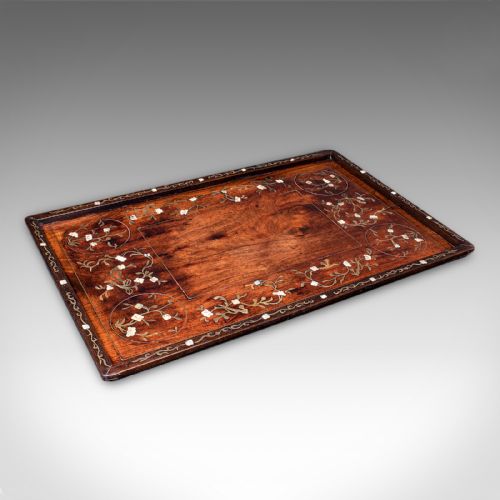
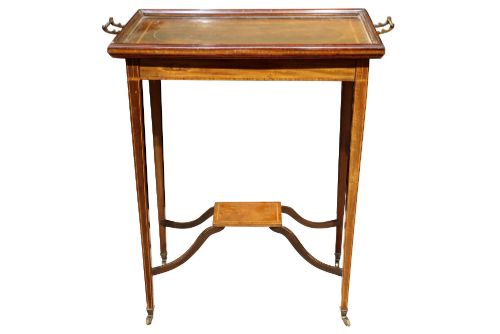
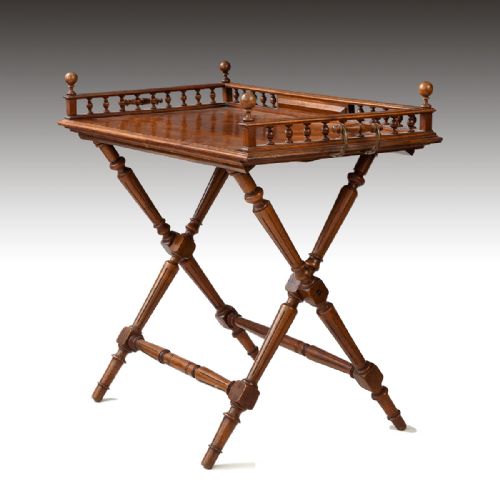
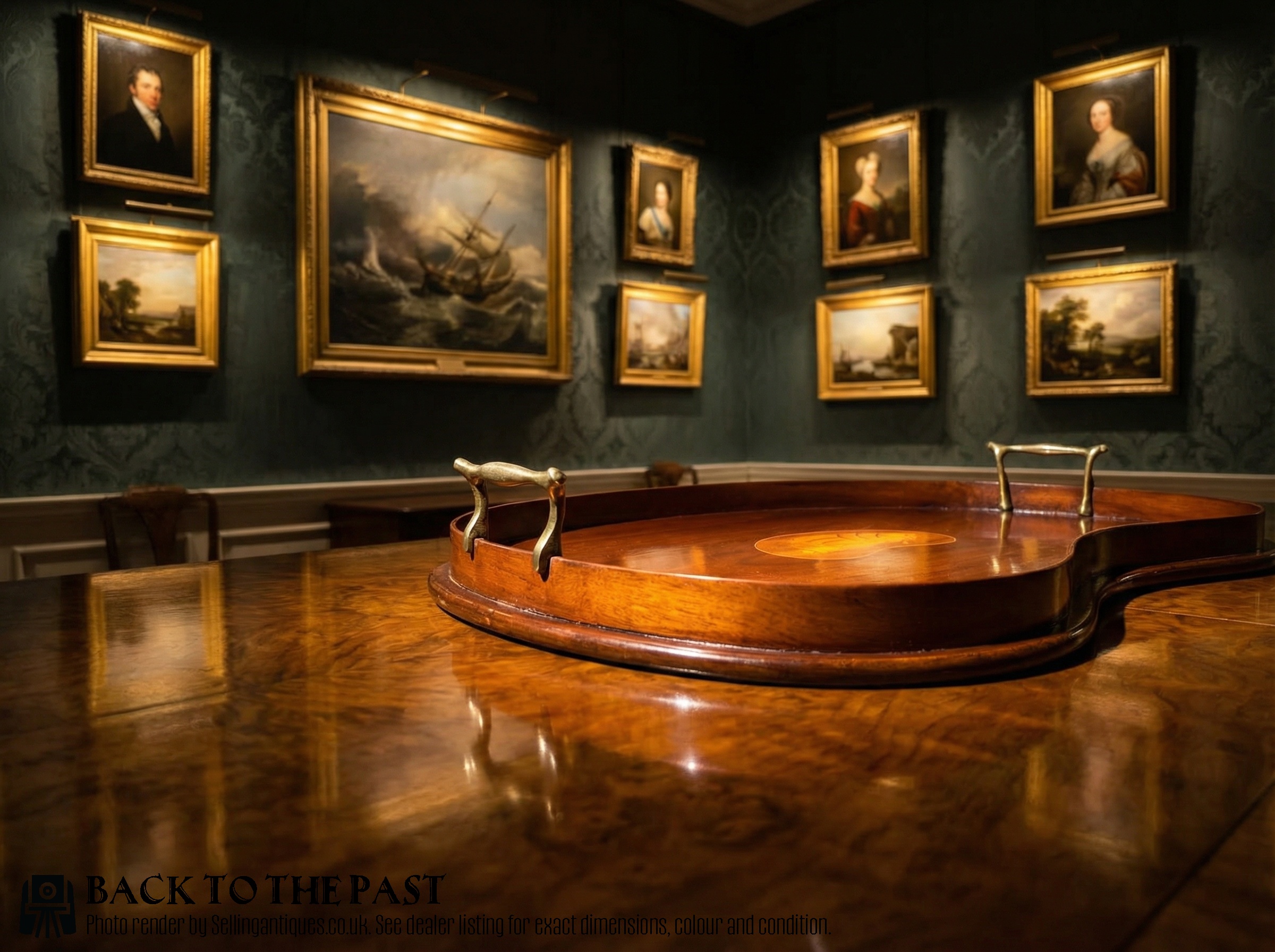
A brown wooden tray encompasses serving trays, tea trays, and drinks trays fashioned primarily from rich mahogany. These pieces span the Georgian period, the nineteenth century, and the Edwardian era, appearing in oval, kidney-shaped, and galleried forms.
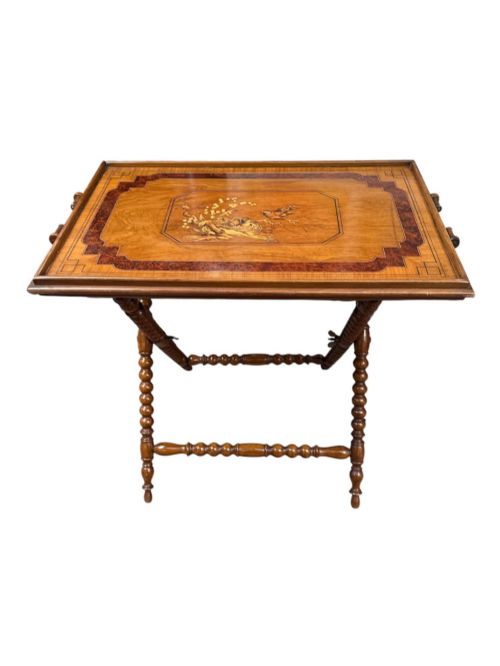
The Edwardian examples frequently feature inlaid decoration alongside kidney-shaped profiles intended for tea or drinks service. Earlier Georgian and nineteenth-century pieces lean towards simple oval outlines and galleried borders designed to secure glassware and china.
How they were made
Construction relies upon solid mahogany and satinwood timber, shaped into oval and kidney outlines with raised borders or delicate galleries. Artisans employed contrasting wood inlays to ornament the perimeters and centres of the serving surfaces.
Metal elements such as brass handles and silver plate integration appear alongside the primary wooden structures. These combined materials required precise joinery to secure the galleried edges and mounting plates.
Retail Price Guide 2026
Typical UK retail prices for brown wooden tray, calculated from the Sellingantiques database of over a million retail prices indexed since 2003. This retail price guide relies exclusively on Sellingantiques data; no external sources or auction records are used, so the figures do not describe the wider market.
A kidney-shaped tea tray is designed with a gentle curve so the server can hold it closer without spilling the afternoon brew.
What varies in quality
The standard of a brown wooden tray is defined by the crispness of its wood inlay and the elegance of its silhouette. Pieces featuring finely cut satinwood motifs against deep mahogany show superior craftsmanship compared to plain surfaces.
The structural integrity of the raised gallery and the integration of brass or silver plate fittings distinguish finer examples. Smooth, harmonious proportions in kidney-shaped and oval formats mark the higher tier of these serving items.
The Brown Wooden Tray Glossary
- Galleried tray
- A tray featuring a raised wooden or metal rim around the perimeter to prevent items from sliding off. This protective border is often pierced or spindle-supported.
- Kidney-shaped
- A curved, indented outline mirroring the shape of a kidney, designed to fit comfortably against the body during service. This profile became particularly popular during the Edwardian period.
- Inlay
- A decorative technique where pieces of contrasting timber, such as satinwood, are inserted into recessed portions of the main mahogany surface to create flat patterns.
- Serving tray
- A flat portable board with handles or raised edges utilised for carrying food and beverages. These items combine domestic utility with decorative cabinetwork.
Frequently Asked Questions
What are brown wooden trays used for?
These pieces serve primarily for carrying tea, drinks, and tableware across rooms during social gatherings. They also function as decorative display surfaces on sideboards and coffee tables.
In daily use, their raised edges and secure handles provide a practical method for moving multiple items at once while protecting underlying furniture from spills.
How do I care for a mahogany tray?
Maintenance requires gentle dusting with a soft, dry cloth to protect the polished wood surface. Moisture and alcohol should be kept away from the finish to prevent staining.
Periodic application of appropriate furniture wax helps nourish the timber and maintains the natural lustre of the mahogany and inlay.
How can I tell a Georgian tray from an Edwardian one?
Georgian pieces generally exhibit simpler, robust oval forms with functional galleries and straightforward timber selection. They reflect the utilitarian elegance of the eighteenth century.
Edwardian examples often adopt complex kidney shapes and delicate satinwood inlay work. These later pieces frequently incorporate silver-plated mounts or brass handles.
Are these trays suitable for daily use?
While sturdy in construction, antique wooden trays benefit from careful handling to preserve their historic surfaces and delicate inlays. Using them for light service prevents undue wear on the antique timber.
Many owners choose to display them flat on tables when not in active use, safeguarding the polished finish from heavy impacts.