
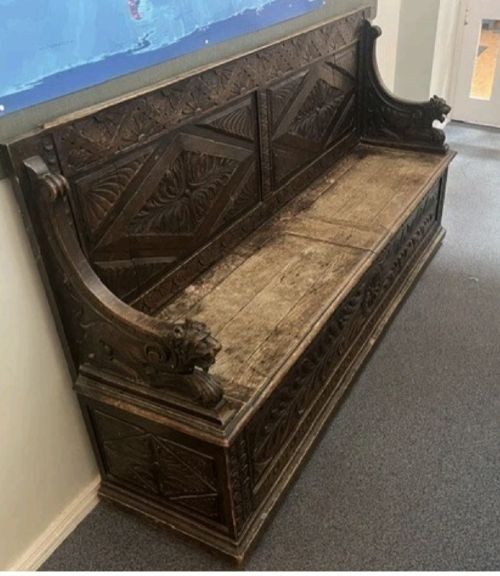
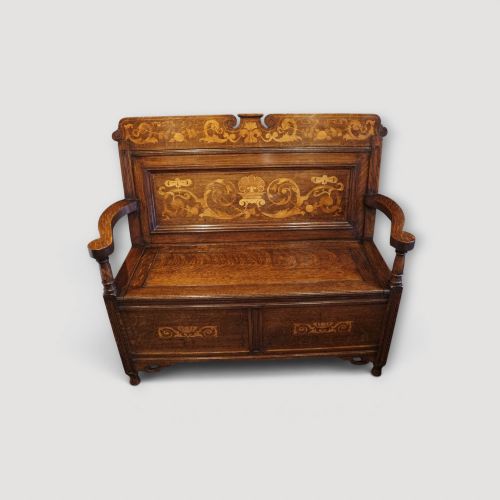
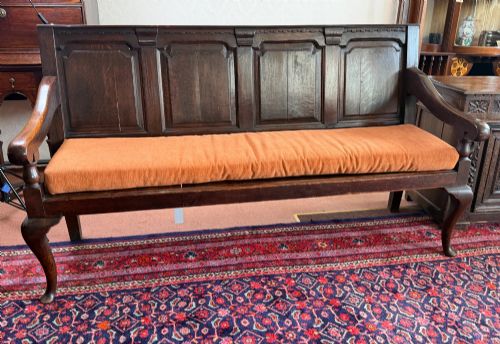
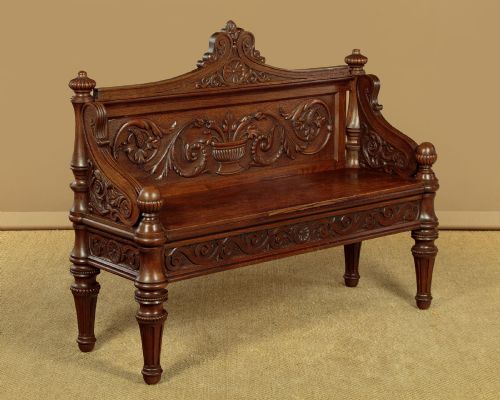
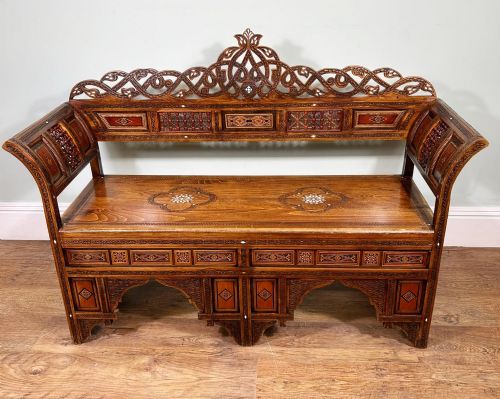
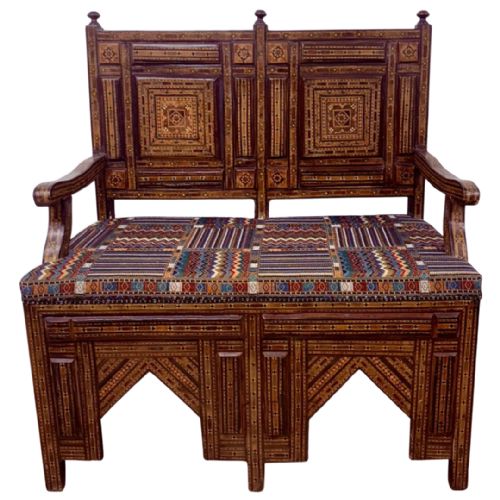
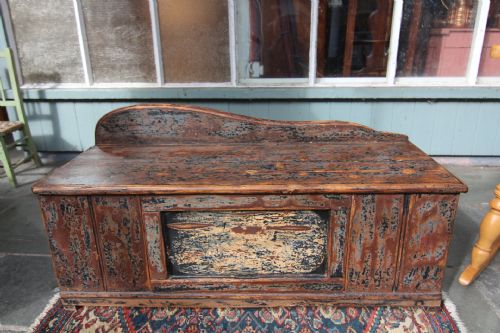
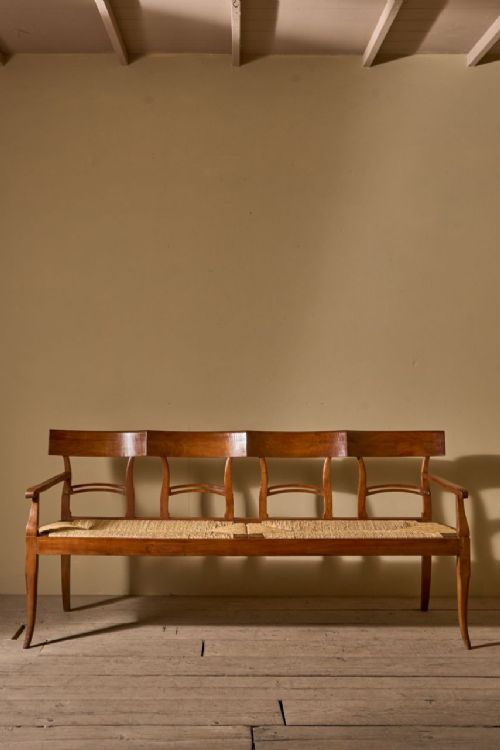
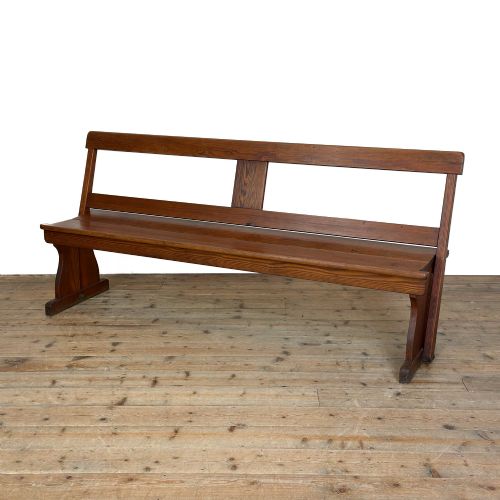
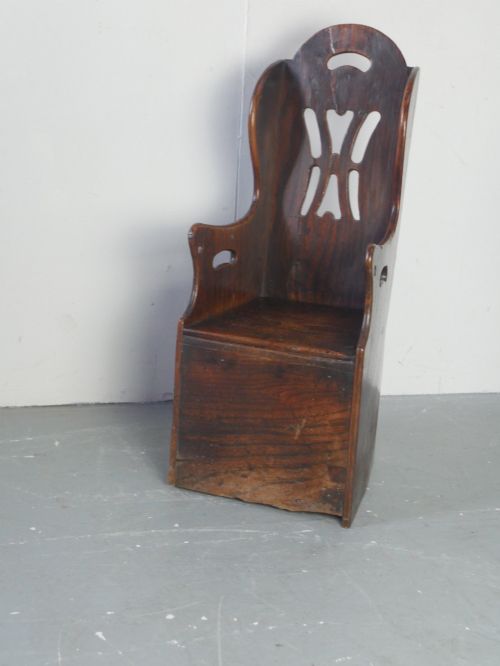
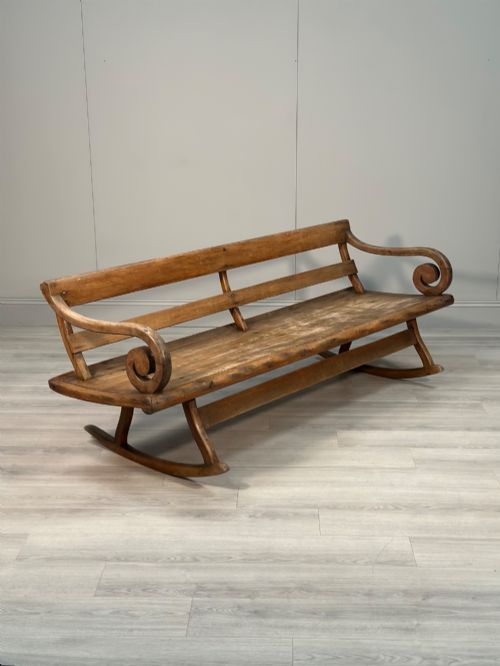
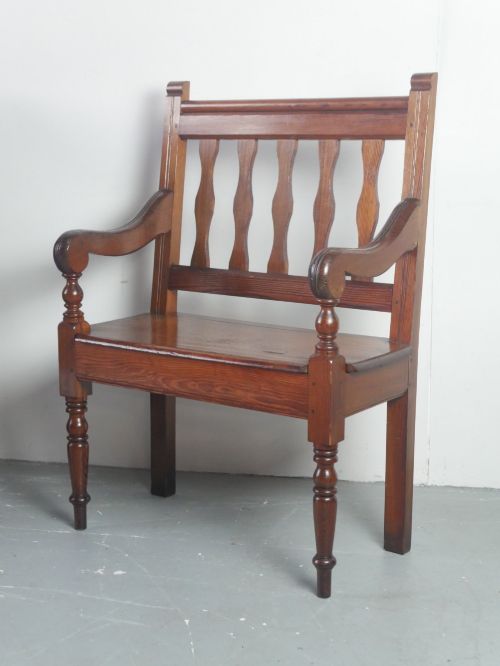
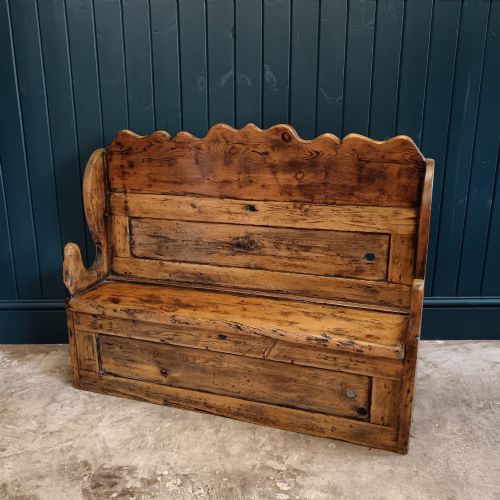
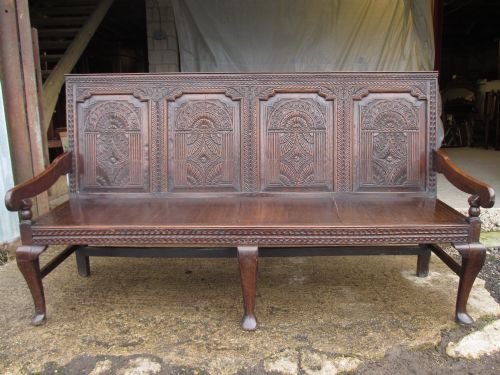
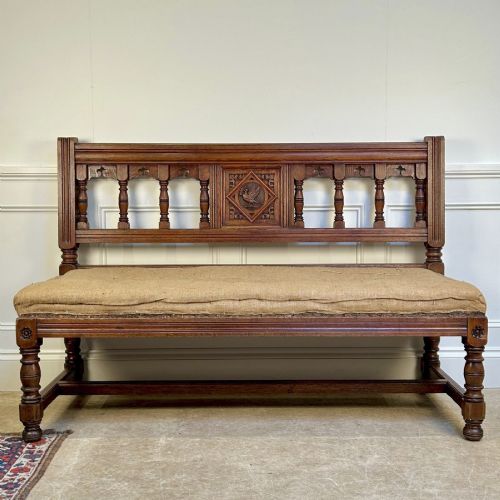
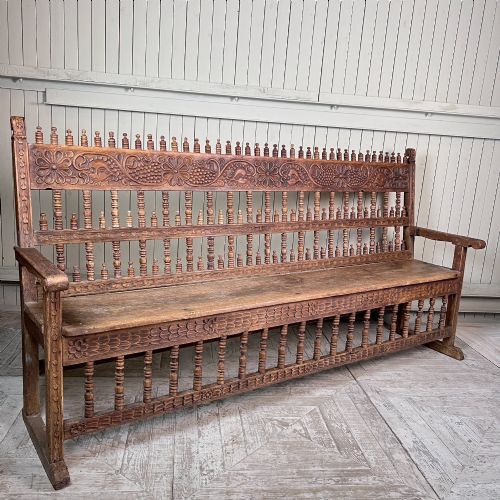
Brown Wooden Settle Seat
A brown wooden settle seat brings sturdy historic character and high-backed seating to a hallway or kitchen.
Brown Wooden Settle Seat
A brown wooden settle seat is a traditional high-backed bench designed to keep out drafts in older homes, frequently found in oak, pine, and elm.
The selections available here span from the 17th century through the Georgian and Victorian periods, including country designs and box settles with storage beneath.
Many examples originate from English, Welsh, and Irish country workshops, often featuring panelled backs, armrests, and hinged seats.
How they were made
Cabinetmakers constructed these benches using solid native timbers such as oak, elm, and ash, often joined with pegged mortise and tenon joints.
Box settles incorporate integrated storage compartments beneath the seat boards, while panel-backed variants utilise framed construction to prevent timber warping.
Listings feature woods such as oak, pine, elm, ash, cherry, and hardwood, spanning from the 17th century through the Georgian and Victorian eras.
What varies in quality
The distinction between standard country pieces and superior examples lies in the depth of timber carving, the integrity of original frame construction, and the warmth of the surface patina.
Earlier pieces from the 17th and 18th centuries demonstrate heavier gauge timbers and hand-bevelled panels, whereas later versions often rely on simpler board construction.
GIllows·Liberty
The Brown Wooden Settle Seat Glossary
- Box settle
- A high-backed wooden bench featuring a concealed storage compartment beneath the hinged seat. This design kept owners clear of floor-level drafts while housing household goods.
- Panel-back
- A wooden backrest constructed from flat panels fitted within grooved uprights and rails. This method allowed the timber to expand and contract safely with temperature changes.
- Lambing chair
- An enclosed wooden armchair, sometimes grouped with settles, featuring solid wings beside the head to block cold air. They frequently incorporate under-seat storage.
- Patina
- The deep sheen and surface character developed on wood over centuries of handling and polishing. It serves as an indicator of age and continuous use.
Brown Wooden Settle Seat: Frequently Asked Questions
What is a brown wooden settle seat used for?
These benches served historically as draught-excluding seats beside hearths or in open hallways. Their high wooden backs and solid wings protected occupants from cold air circulating in older rooms.
Today, they function as practical hallway seating with the added benefit of enclosed storage underneath the seat boards for boots and household items.
How do I tell an 18th-century settle from a Victorian one?
Earlier pieces from the 18th century and before typically display hand-pewed frame construction, heavier oak timbers, and hand-carved panel details. The joinery often shows slight irregularities from hand tools.
Victorian and later interpretations frequently utilise machine-sawn boards, softer pines, or revival styles like Gothic and Arts and Crafts that imitate earlier centuries.
Where should I place a settle in my home?
A settle sits naturally in a spacious hallway, entryway, or large kitchen where its high back creates a welcoming focal point. Because of its solid footprint and enclosed base, it requires adequate wall space.
Ensure the piece stands away from direct heat sources to prevent the historic timbers from drying out and splitting.
Are all settles made of oak?
While oak is common in early pieces, many regional examples utilise alternative local hardwoods and softwoods. Elm, ash, pine, and cherry appear frequently across country workshops.
Selection depended on the timber available locally to the cabinetmaker, resulting in regional variations in weight and grain pattern.