
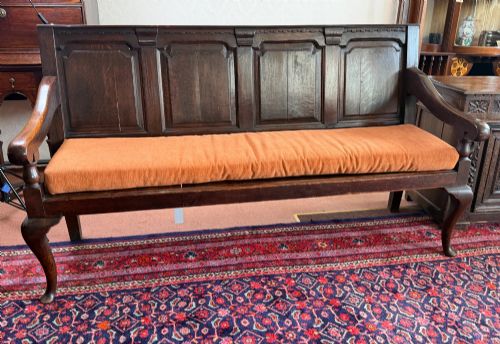
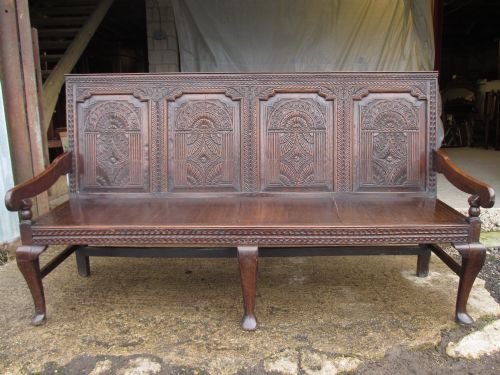
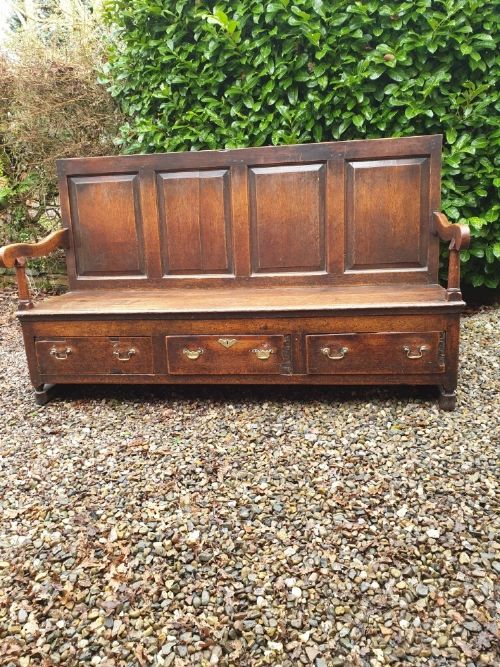
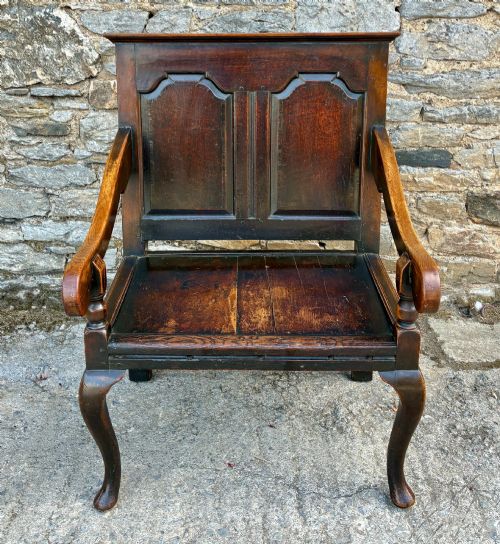
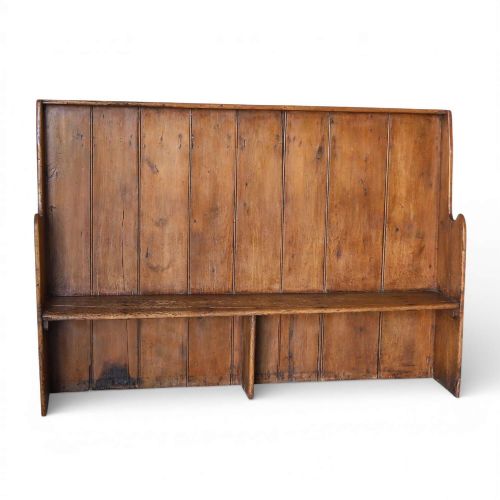
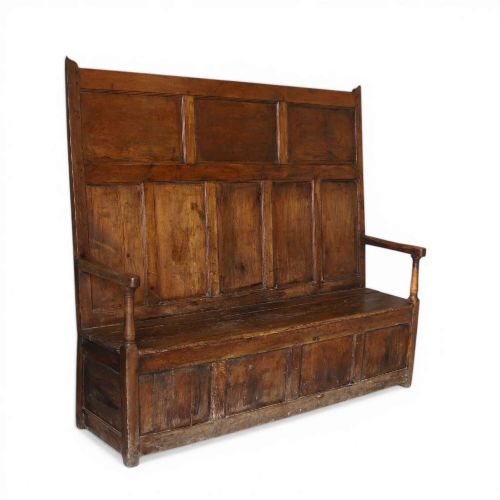
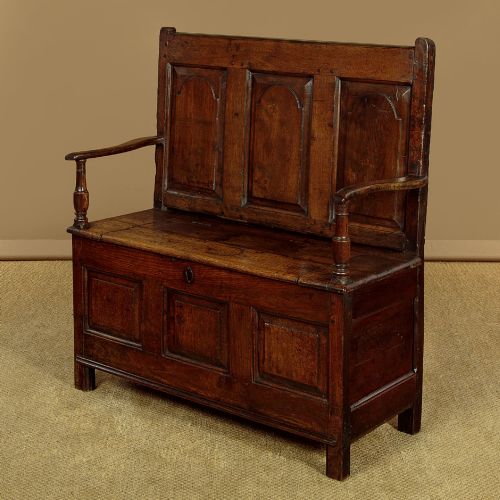


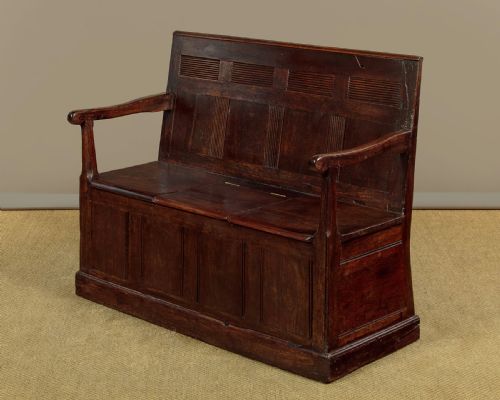


Georgian Paneled Back Settle
A Georgian paneled back settle is a heavy wooden seat built to block draughts in country halls and farmhouses.
Georgian Paneled Back Settle
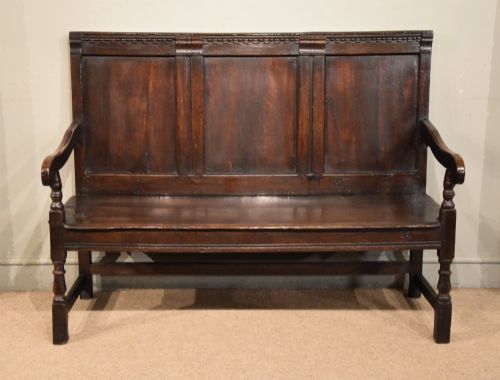
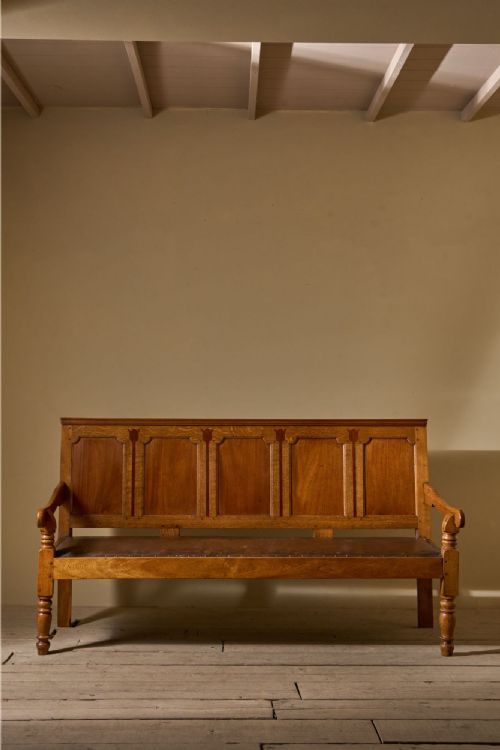
A Georgian paneled back settle is a high-backed wooden seat designed to keep cold air away from people sitting near the hearth. Most examples seen here date from the eighteenth century and come from English or Welsh provincial workshops.
Makers built these pieces primarily for utilitarian use in domestic kitchens, halls, and taverns. They served as communal seating long before upholstered sofas became common in British homes.
How they were made
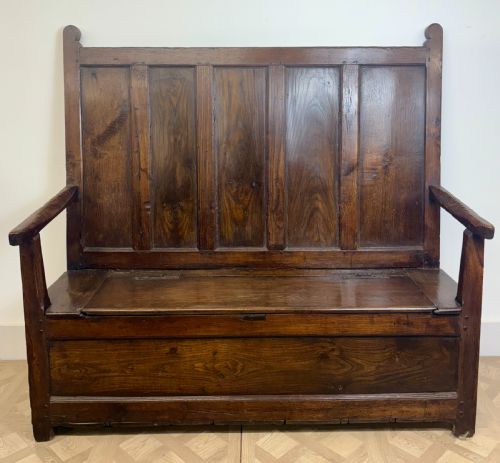
Carpenters constructed these seats mainly using native timbers such as oak, pine, and ash, often joining panels with traditional pegged mortise and tenon joints. Elm also appears in provincial framing, whilst secondary woods like pine support internal box compartments.
Surfaces display various finishes depending on regional tradition and subsequent history, including waxed patinated oak, bleached timber, and surviving layers of historic paint. Iron and brass fixings sometimes secure hinges on box seats or provide structural reinforcement.
Some provincial makers built high-backed settles wide enough to double as indoor benches for sleeping near the fire on freezing winter nights.
What varies in quality
The distinction between ordinary utility items and superior examples lies in timber selection, proportion, and structural integrity. Denser grain configurations and well-executed panel carving elevate provincial pieces above utilitarian workshop output.
Proportion and architectural presence define the better examples, particularly those retaining deep back panels or barrel curves that enclose the sitter. Original surface treatments, such as untouched honey patination or authentic early paint, preserve the historical character more effectively than stripped or heavily restored timber.
The Georgian Paneled Back Settle Glossary
- Settle
- A wooden bench with a high back and solid arms designed to shield occupants from draughts. This form evolved from medieval seating into a standard piece of vernacular furniture.
- Panel-back
- A construction method utilising flat wooden boards fitted within grooved stiles and rails. This technique allows timber to expand and contract naturally with seasonal humidity changes.
- Box settle
- A variant featuring a storage compartment beneath the hinged seat. These compartments held blankets, provisions, or household goods in cold rural dwellings.
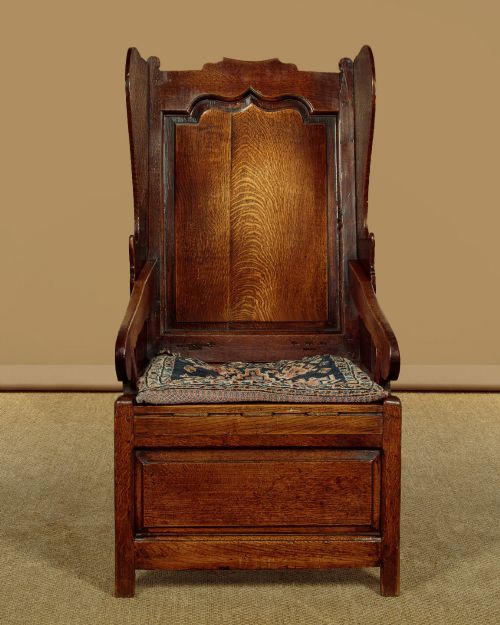
- Lambing chair
- An enclosed wooden armchair with high wings designed to block fireside draughts. Examples often incorporate small storage spaces or enclosed lower sections similar to a box settle.
- Patina
- The surface sheen and colour developed by wood over decades through handling, waxing, and exposure to light. A desirable patinated surface reflects age and continuous domestic use.
Georgian Paneled Back Settle: Frequently Asked Questions
What is a paneled back settle?
A paneled back settle is a traditional wooden bench featuring a high back made from fitted wooden panels. It was designed to block cold air and retain heat from open hearths in older buildings.
These pieces served as heavy, permanent furniture in kitchens, hallways, and rural taverns. They provided robust seating for multiple people before lighter upholstered chairs became widespread.
Where were settles used?
Settles were placed primarily in the communal rooms of farmhouses, cottages, and country houses. Their high backs and solid sides created a microclimate near open fireplaces.
They also appeared in village pubs and inns where patrons gathered around the hearth. The enclosed design offered privacy and shelter from cold drafts sweeping across flagstone floors.
How do I care for antique oak?
Antique oak benefits from stable indoor humidity and protection from direct heat sources. Applying traditional beeswax helps nourish dry timber and maintains the natural surface sheen.
Avoid using modern silicone sprays or harsh chemical polishes which can damage historic finishes. Gentle dusting with a soft cloth keeps the wood clean without harming the patina.
How do I identify a Georgian settle?
Georgian settles display characteristic period joinery, such as pegged frame construction and hand-planed panels. The proportions are typically robust, reflecting eighteenth-century vernacular design standards.
Regional variations appear in timber choices, with oak and pine predominating in English and Welsh examples. Stylistic details often include simple mouldings, fielded panels, and occasionally carved decoration.