



Brown Wooden Jewellery Chest
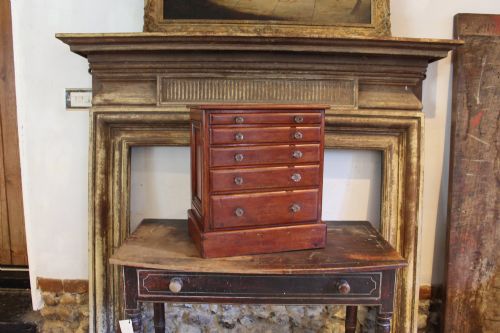
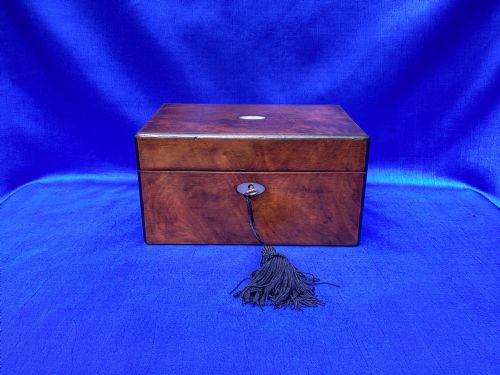
A brown wooden jewellery chest is a compact repository for keepsakes, offering fitted drawers and compartmented trays scaled down from domestic furniture.
Brown Wooden Jewellery Chest
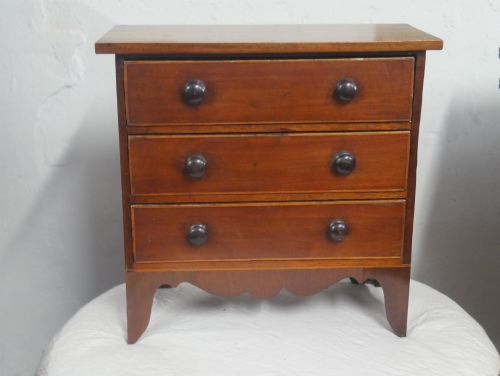
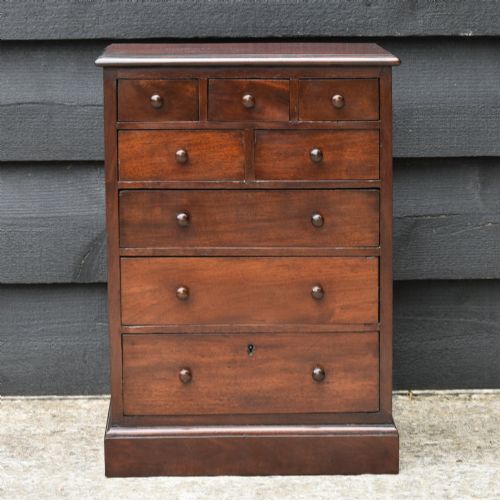
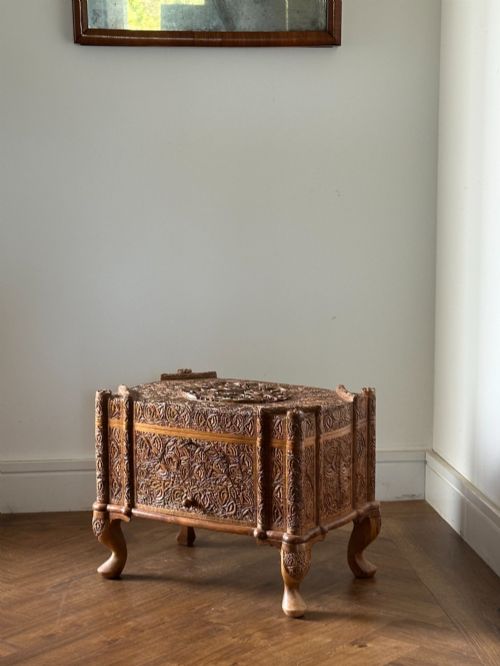
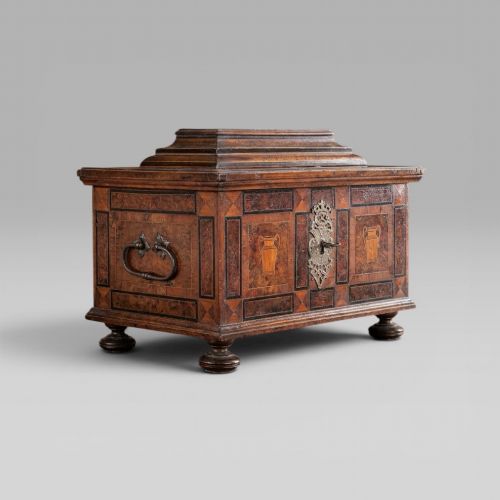
A brown wooden jewellery chest takes many forms on this page, appearing most frequently as a miniature chest of drawers or a tabletop cabinet originating from the nineteenth century. These pieces mimic full-sized furniture of the Georgian and Victorian periods, scaled down for tabletop use or created as apprentice pieces to demonstrate a joiner's skill.
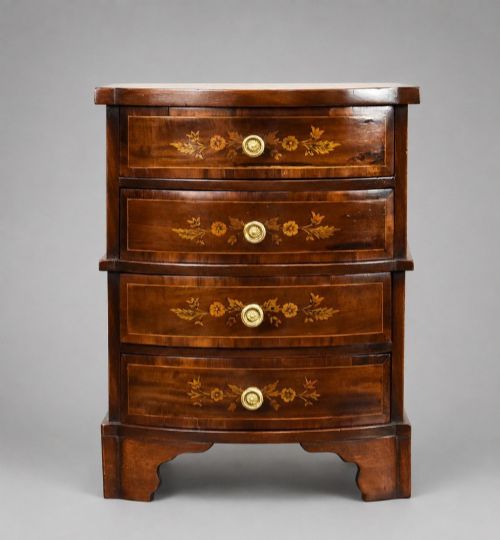
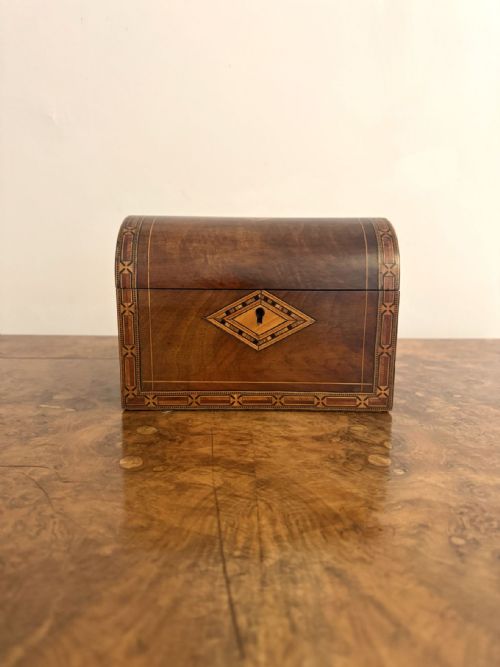
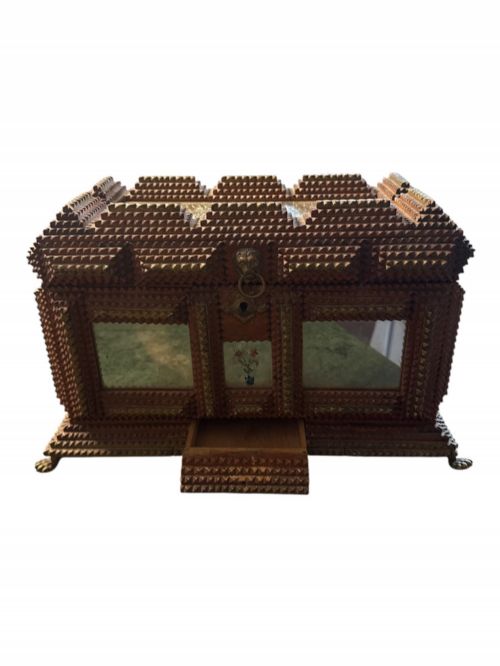
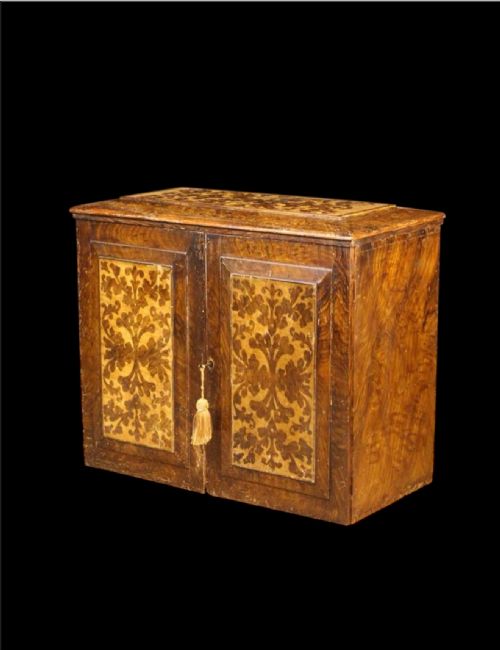
The selection ranges from simple mahogany and oak boxes to elaborate burr walnut and sandalwood caskets styled with marquetry, parquetry, or Tunbridge inlay. Alongside standard chests of drawers, buyers encounter specialised formats such as sarcophagus-shaped caskets, small armoires, and travel trunks finished in teak or leather.
Origins stretch from British workshops to continental Europe, India, and East Africa, introducing regional timbers like amboyna, laburnum, and olive wood. Many examples function equally well as trinket boxes, collectors' cabinets, or sewing cases while retaining the architectural detailing of larger period furniture.
Materials and Technique
Cabinetmakers constructed these chests from dense hardwoods including mahogany, walnut, oak, and teak, frequently selecting burr veneers or figured grains for decorative surfaces. Timber selection governed the structural integrity of small drawers and hinged lids, while secondary softwoods like pine often formed internal framing.
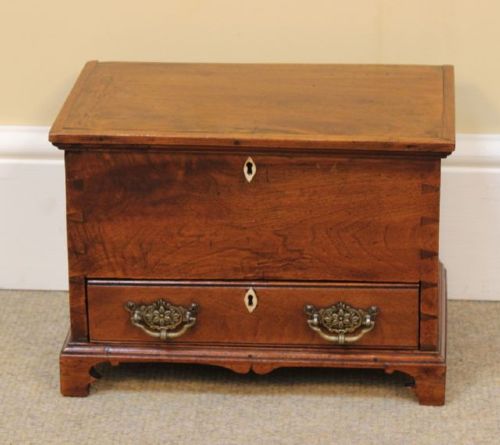
Surface decoration relied on precision joinery and inlay techniques such as Tunbridge mosaic work, parquetry, and mother of pearl embellishment. Metal fittings in brass secured corners, lock plates, and drop handles, combining functional durability with visual contrast against the dark timber.
Materials span mahogany, walnut, burr walnut, oak, teak, sandalwood, and elm across eighteenth, nineteenth, and early twentieth-century periods.
Craftsmanship and Proportion
Quality rests upon the precision of the miniature joinery, where tight dovetail joints, smooth drawer actions, and well-fitted lids distinguish superior cabinetwork from basic production. Grain selection and the alignment of veneer patterns across drawer fronts also signal the maker's intent and skill.
Proportion and decorative restraint separate finer pieces from heavier, less resolved items. Finer examples retain crisp mouldings and intact inlay work that complement the small scale without appearing cluttered.
The Brown Wooden Jewellery Chest Glossary
- Apprentice piece
- A cabinet made by a trainee woodworker to demonstrate mastery of joinery before entering a guild. These objects often take the form of miniature chests of drawers.
- Tunbridge inlay
- A meticulous form of mosaic woodwork originating in Kent, using thousands of tiny tinted wood blocks to create pictorial or geometric designs. It frequently decorates Victorian trinket boxes.
- Burr walnut
- A prized timber harvested from the gnarled growths on walnut trees, yielding swirling, organic patterns. Cabinetmakers utilised these veneers for high-status jewellery chests.
- Parquetry
- A geometric mosaic of wood veneers arranged in repeating patterns across a surface. It adds visual texture to the lids and sides of keepsake boxes.
- Sarcophagus
- A box form featuring a sloping lid and inverted base, inspired by ancient stone coffins. Nineteenth-century makers adopted this shape for grander jewellery caskets.
Brown Wooden Jewellery Chest: Frequently Asked Questions
What is an apprentice chest?
An apprentice chest is a small-scale model of a full-sized chest of drawers, built by a woodworker in training to prove their technical proficiency.
These pieces display the same dovetailing, drawer lining, and polishing techniques found on domestic furniture.
How were these chests used?
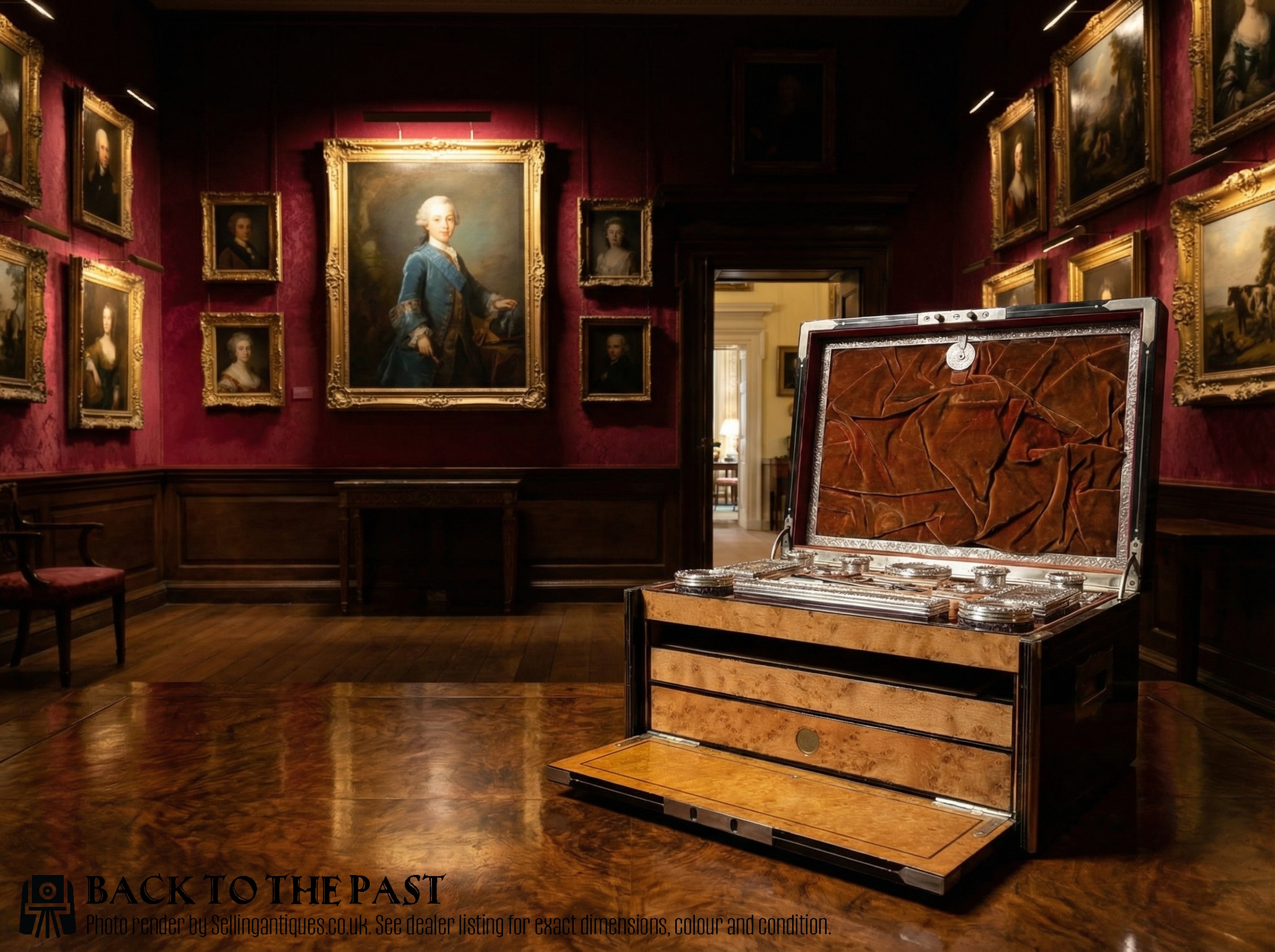
Owners stored rings, brooches, loose gemstones, and personal documents within the compartmentalized drawers or velvet-lined interiors.
They sat upon dressing tables, desks, or sideboards in period homes for daily access to valuables.
How do I care for wooden boxes?
Keep wooden chests away from direct sunlight and sudden temperature shifts to protect the timber and delicate veneers from drying or splitting.
An occasional application of appropriate wax maintains the polish without building up residue.
How are periods identified?
Dating relies on construction methods, timber choices, and hardware styles that shifted from the eighteenth century through the Victorian era and into the early twentieth century.
Hand-cut dovetails, secondary woods, and specific decorative motifs like Tunbridge inlay offer clear chronological clues.