
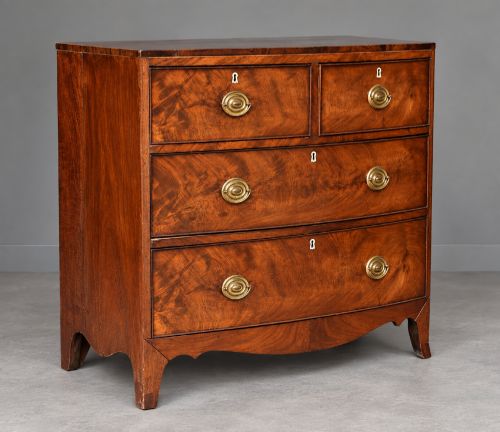


Brown Wooden Chest of Drawers
A brown wooden chest of drawers brings warmth and practical storage to a room, ranging from compact bedside chests to grand Georgian and Victorian examples.
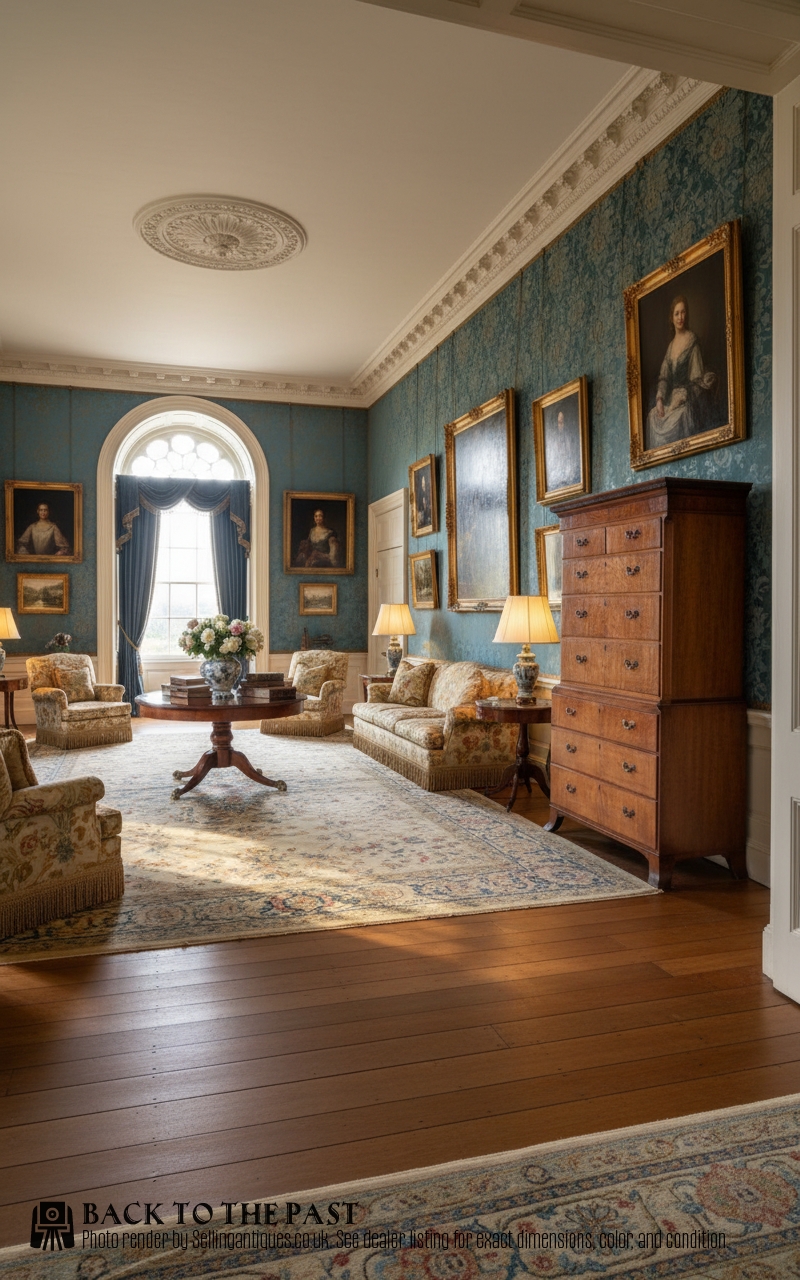
Brown Wooden Chest of Drawers
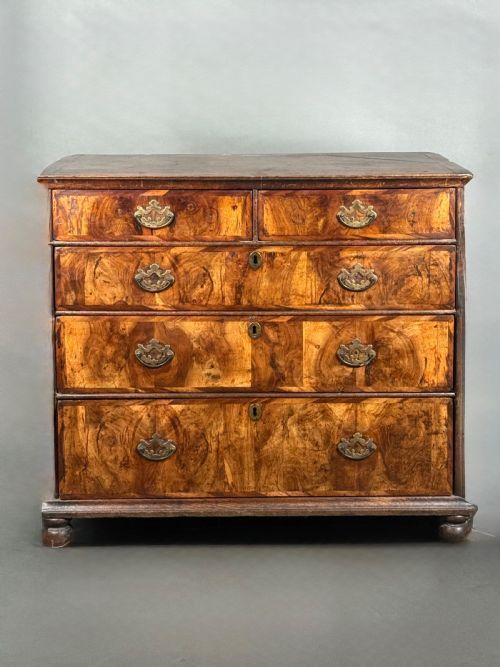
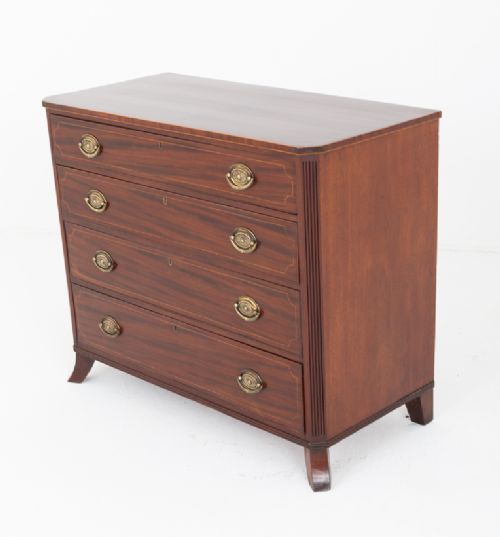
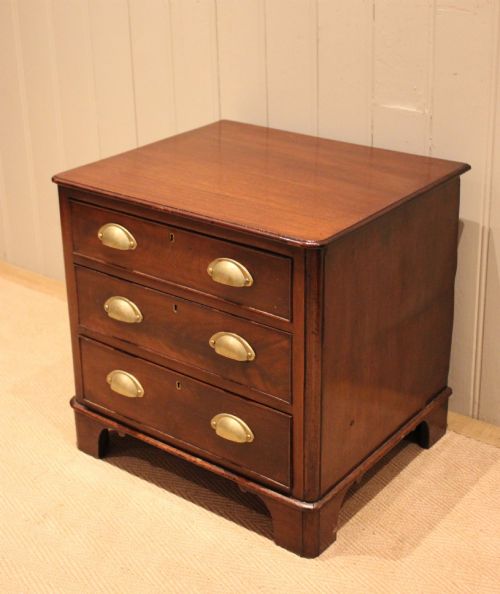
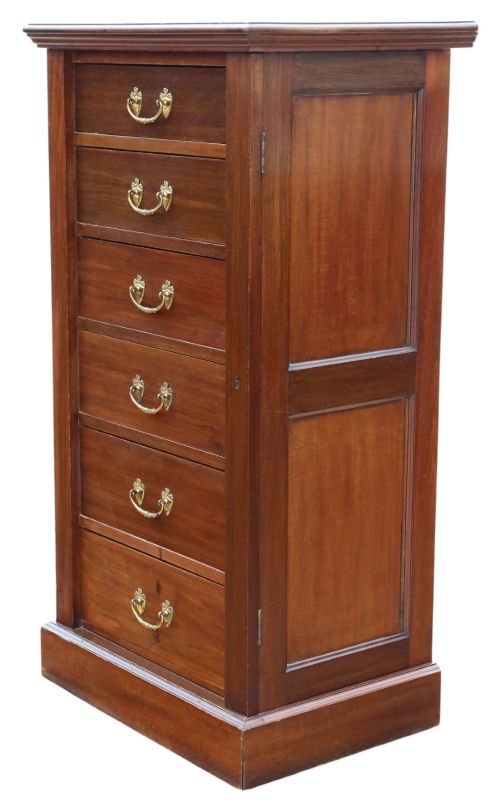
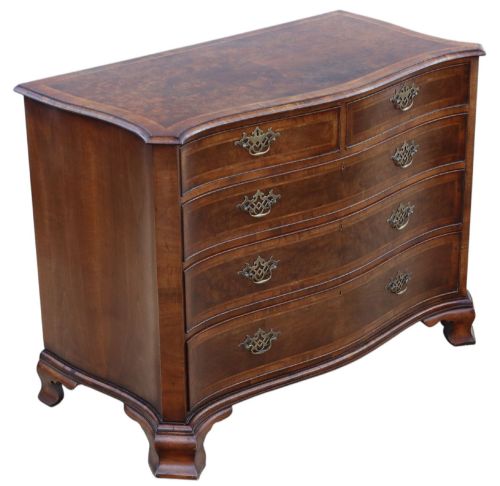
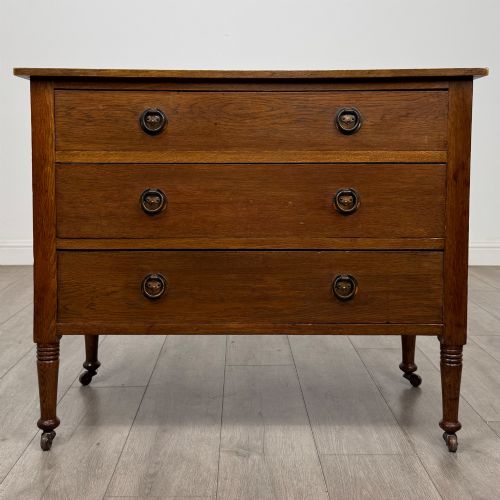
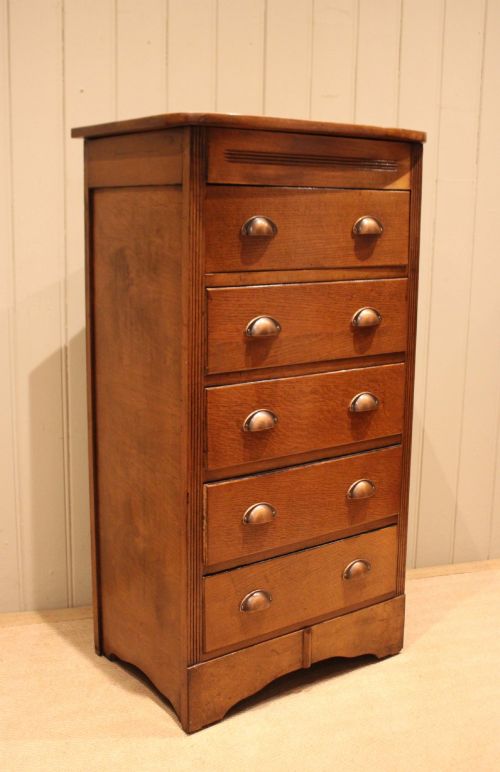
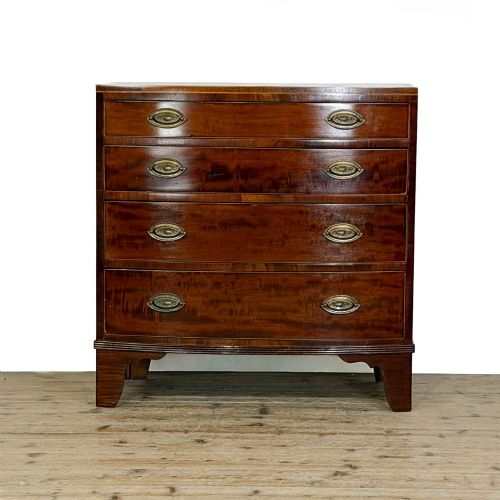
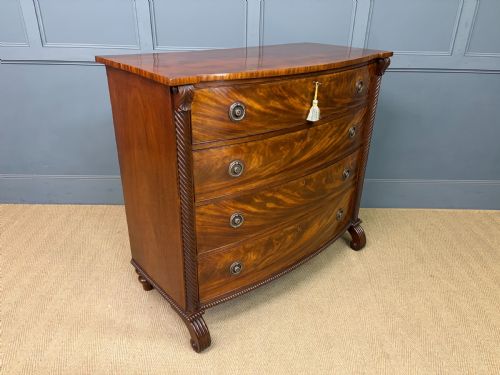
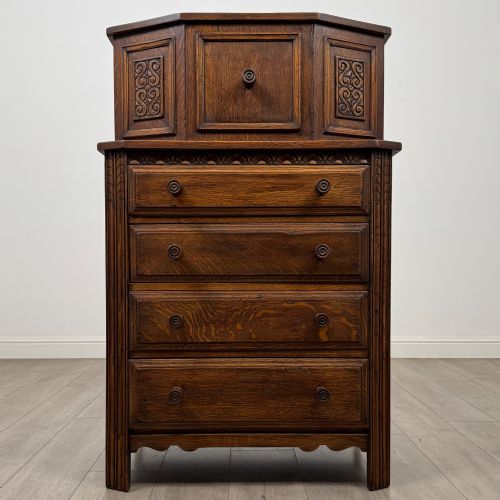
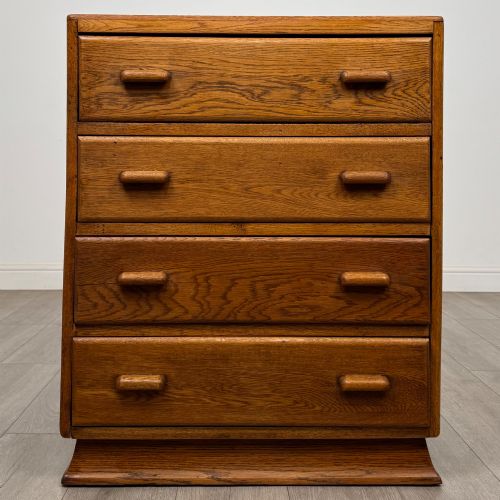
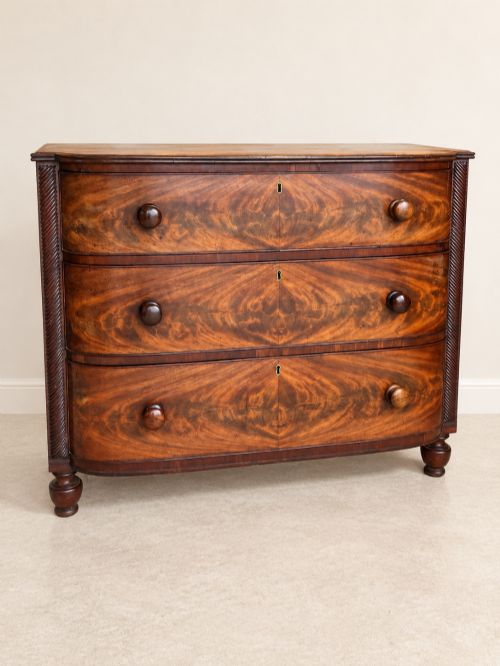
The most common versions on this page are mahogany and oak chests from the Georgian, Victorian, and Edwardian eras. You will encounter bow front, serpentine, and straight-front formats, alongside specialised forms like Wellington chests, tallboys, and chests on stands.
How they were made
Cabinet makers utilised solid timbers alongside decorative veneers such as flame mahogany, burr walnut, and figured walnut. Carcasses were constructed using traditional jointing methods to ensure stability across multiple drawers.
Hardware played a functional and decorative role, with brass handles and escutcheons fitted to drawers that often featured hand-cut dovetail joints.
What varies in quality
Quality rests upon the selection of timber and the precision of the cabinet work, visible in the matching of wood grain across drawer fronts and the tightness of the dovetails. Superior examples display carefully chosen figured veneers or solid timbers that have aged with a rich patina.
Proportion and detail separate standard utility pieces from finer commissions, seen in subtle serpentine shaping, crossbanding, and the original retention of brass hardware and feet.
The Brown Wooden Chest of Drawers Glossary
- Bow front
- A convex curved front to a chest of drawers that projects outwards in the centre. This curved design became particularly popular during the Regency and Georgian periods.
- Serpentine front
- A furniture front characterised by a double-concave curve flanking a central convex projection. It requires advanced woodworking skill to execute properly.
- Wellington chest
- A tall, narrow chest of drawers secured by a hinged locking stile on one side that fastens with a key. This style originated in the 19th century.
- Dovetail
- A traditional joint formed by interlocking wedge-shaped fingers, used to join drawer sides to drawer fronts and backs. Hand-cut dovetails indicate earlier craftsmanship.
- Brushing slide
- A pull-out shelf integrated above the top drawers of a chest, historically used for folding clothes or writing. It slides flush into the cabinet when not in use.
Brown Wooden Chest of Drawers: Frequently Asked Questions
What periods do these chests come from?
The pieces span multiple centuries, starting from early 18th-century Queen Anne and Georgian designs through to Regency, Victorian, and Edwardian examples. Later 20th-century items from the Art Deco period also appear.
Each period brings distinct proportions, timber choices, and decorative details that help define its origin and style.
How do I use a chest of drawers in a modern room?
A wooden chest provides versatile storage for bedrooms, living areas, or hallways, functioning as a surface for lamps and displays while keeping items concealed.
Their natural wood tones and varied sizes allow them to anchor a room as a focal point or blend alongside contemporary furnishings.
What woods were commonly used?
Makers relied on durable hardwoods and softwoods, with mahogany, oak, and walnut appearing frequently across the listings. Finer pieces often incorporated decorative veneers like burr walnut and flame mahogany.
Pine was also utilised for internal drawer construction and carcase linings.