

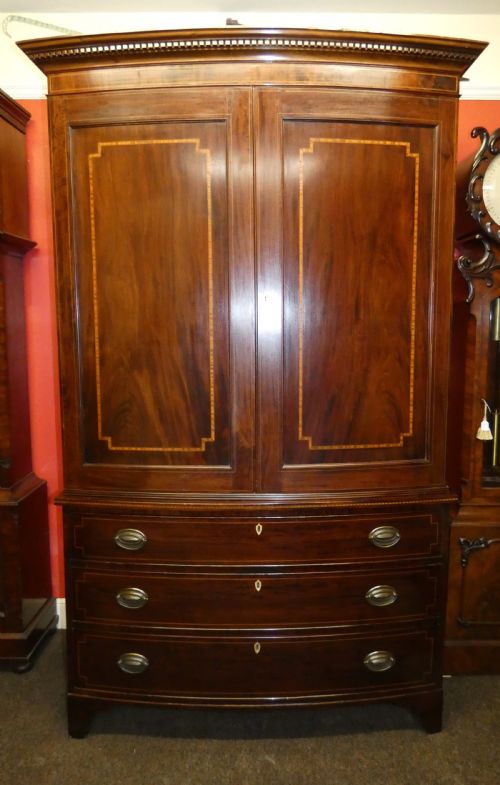
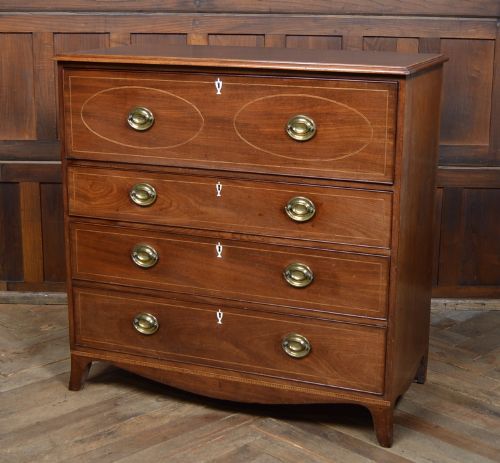
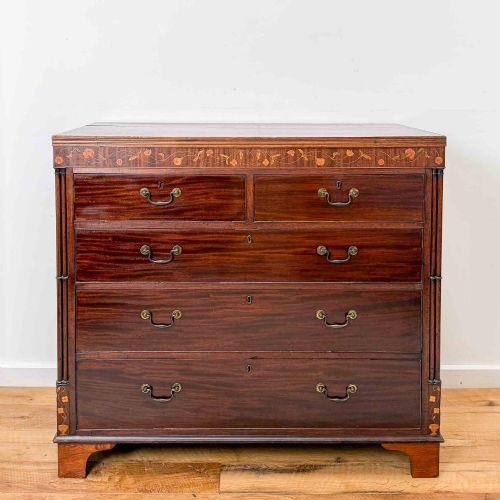
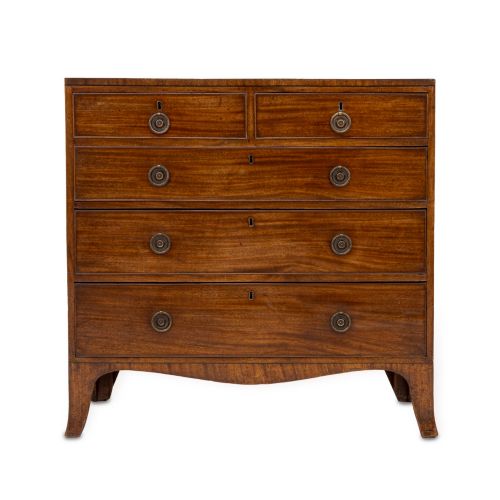





Regency Inlaid Tallboy
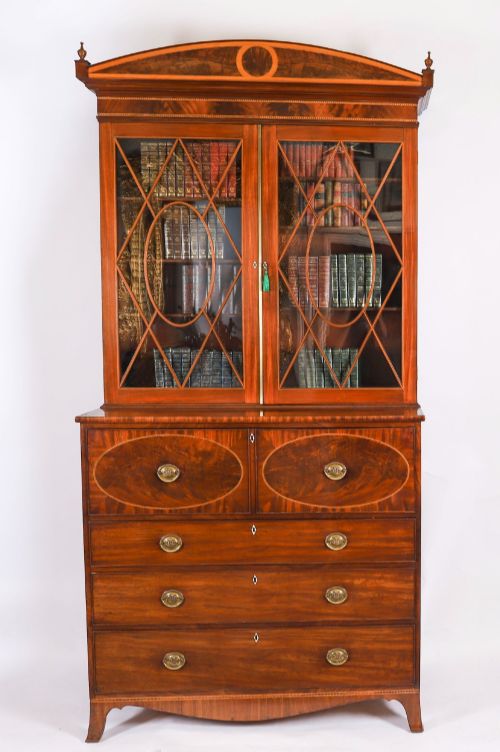
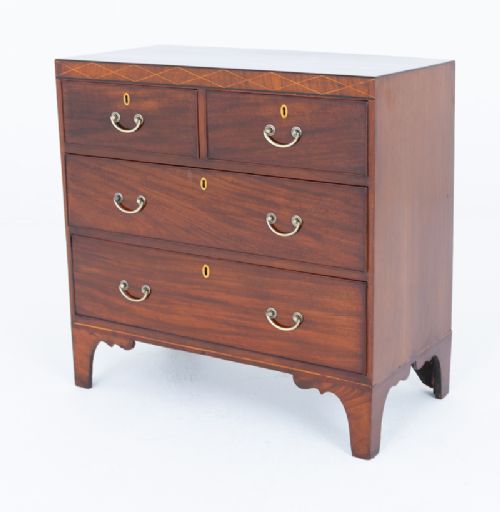
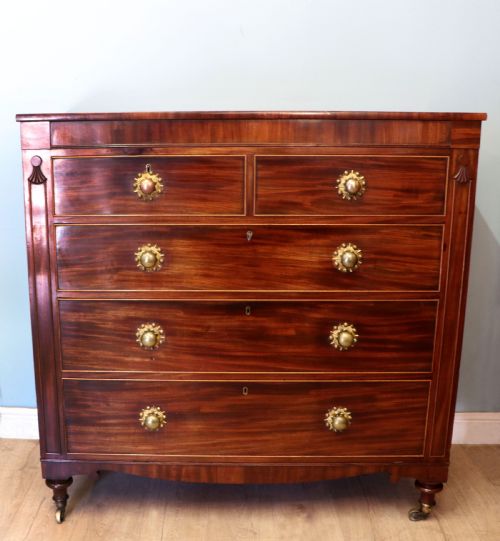
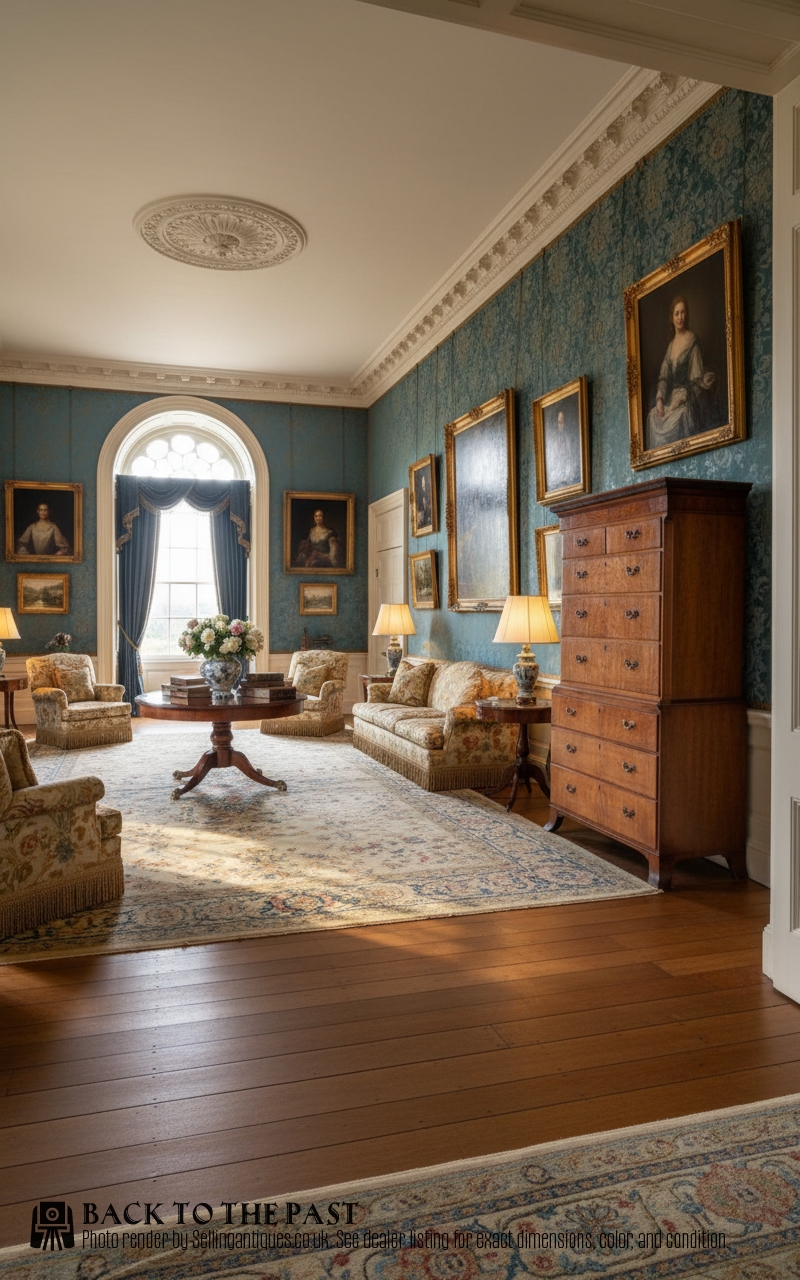
A regency inlaid tallboy brings towering presence and rich mahogany figures to a room, offering exceptional storage in a stately vertical form.
Regency Inlaid Tallboy
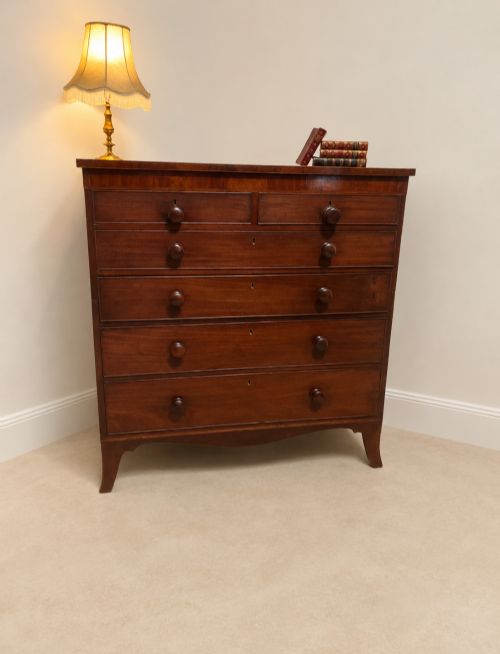
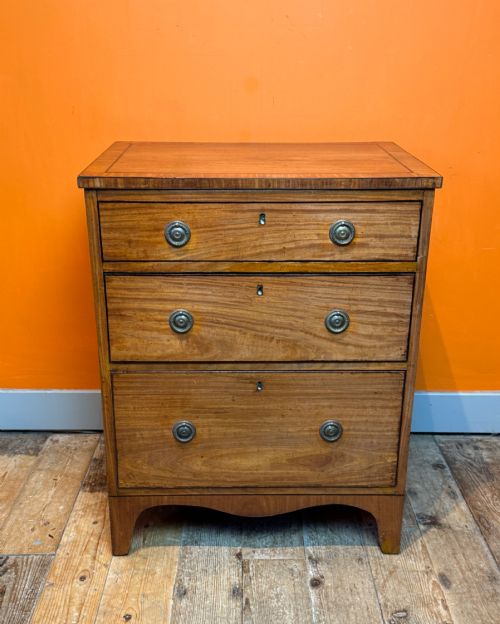
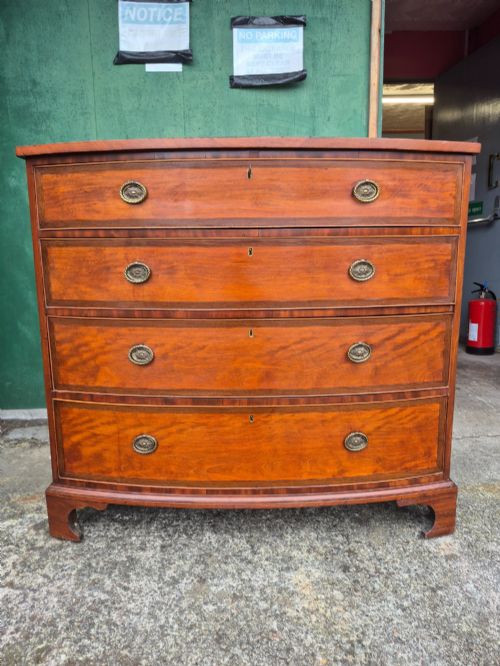
A regency inlaid tallboy combines a chest-on-chest configuration or linen press format with contrasting wood stringing and period proportions. Pieces span the Georgian, Regency, and George periods, alongside later 19th-century interpretations and Edwardian revivals. Buyers encounter bow-fronted carcasses, serpentine outlines, and fitted secretaire drawers alongside traditional tallboy stackings.
The form prioritises vertical capacity over floor space, dividing storage across upper and lower carcases. Surviving examples incorporate bracket feet, caddy tops, and detailed line inlay framing the drawer fronts. Oak internal linings and flame mahogany veneers appear frequently across the surviving pieces.
Materials and construction
Cabinet makers built these carcasses primarily from solid mahogany and oak, applying figured mahogany veneers to the primary surfaces. Contrasting details rely on precision-cut satinwood and boxwood inlay, creating delicate line work and geometric borders around the drawers. Brass hardware, including drop handles and escutcheons, secures the functional openings.
Joinery techniques involve substantial secondary woods such as oak for drawer linings and internal framing. Carcases utilise bracket feet or shaped bases to support the considerable weight of the stacked upper and lower sections. Fine stringing relies on contrasting woods channelled directly into the solid timber or veneered ground.
Regency Inlaid Tallboy Retail Price Guide 2026
Typical asking prices for regency inlaid tallboy among the pieces listed under this phrase on Sellingantiques today, from the lower quarter to the upper quarter. They describe what is for sale here now, not the wider market.
Channel Islands makers occasionally left their distinct remote aesthetic upon a towering flame mahogany chest.
Judging quality and execution
Quality reveals itself in the choice of timber and the precision of the contrasting inlay work. Finely figured flame mahogany and crisp boxwood or satinwood stringing separate superior pieces from simpler utilitarian chests. The alignment of drawer fronts and the integrity of the secondary oak linings indicate the standard of the original joinery.
Proportion and architectural balance dictate the overall standing of an individual piece. Refined bracket feet and well-executed caddy tops complement the vertical form without appearing heavy. The crispness of the inlaid details and the depth of the timber finish define the upper tier of the range.
The Regency Inlaid Tallboy Glossary
- Tallboy
- A tall chest of drawers made in two sections, traditionally a chest-on-chest. The upper carcase rests directly upon a slightly larger lower section.
- Inlay
- A decorative technique where contrasting woods such as boxwood or satinwood are embedded into the primary surface to form lines or patterns. This adds subtle geometric framing to drawer fronts.
- Secretaire
- A drawer fitted with a drop-front writing surface and small internal pigeonholes or miniature drawers. It conceals a writing desk within the standard chest format.
- Caddy top
- A raised, stepped moulding topping a chest or cabinet, referencing the profile of tea caddies from the period. It provides an architectural finish to the upper carcase.
- Bracket foot
- A structural support foot shaped like a bracket, commonly used on case furniture from the Georgian and Regency periods. It lifts the carcase cleanly off the floor.
Regency Inlaid Tallboy: Frequently Asked Questions
What is a regency inlaid tallboy?
A regency inlaid tallboy is a stacked vertical chest of drawers featuring decorative wood stringing and period stylistic details.
These pieces combine substantial storage capacity with decorative veneers and contrasting boxwood or satinwood lines.
How do you use a tallboy today?
A tallboy serves as a primary bedroom storage unit for folded clothing and linens.
The vertical configuration provides high-volume storage while maintaining a minimal footprint on the floor.
How do I spot period inlay?
Period inlay uses contrasting natural timbers like boxwood or satinwood hand-channelled into the primary wood.
Look for subtle tonal variations and flush integration into the surrounding mahogany veneer rather than printed or modern synthetic substitutes.