

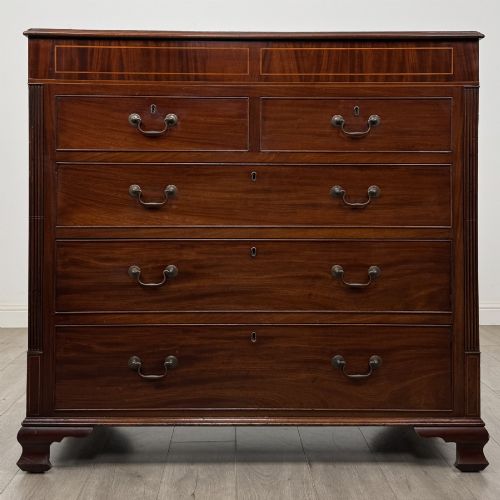
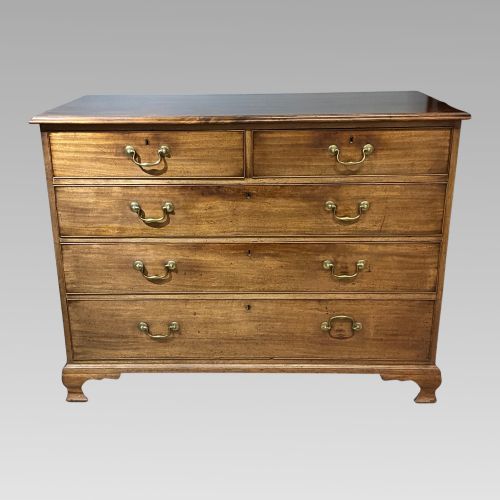
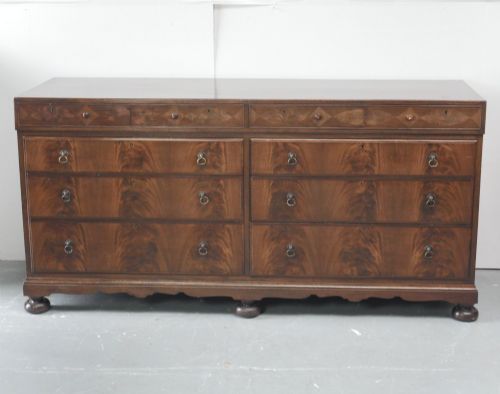
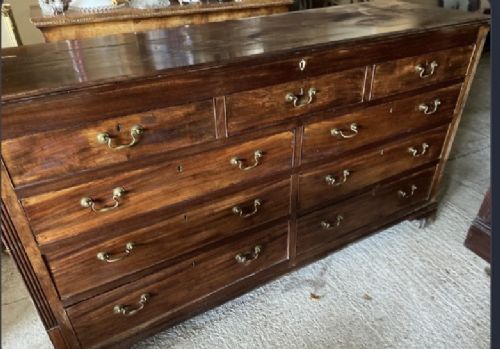
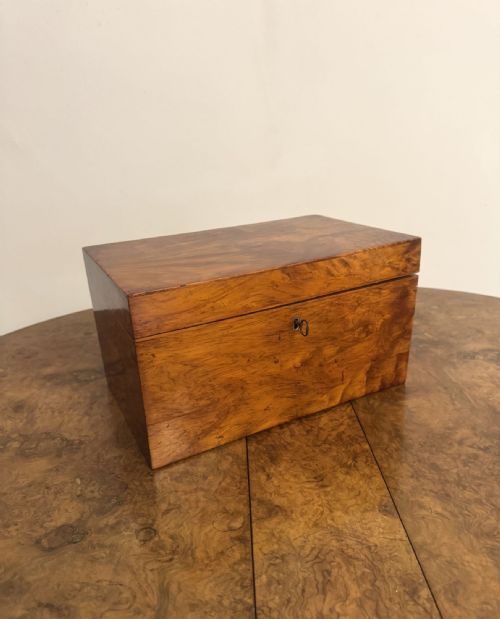
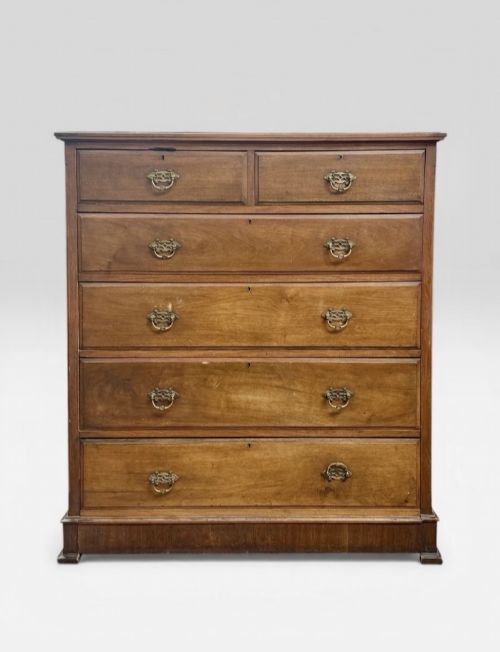
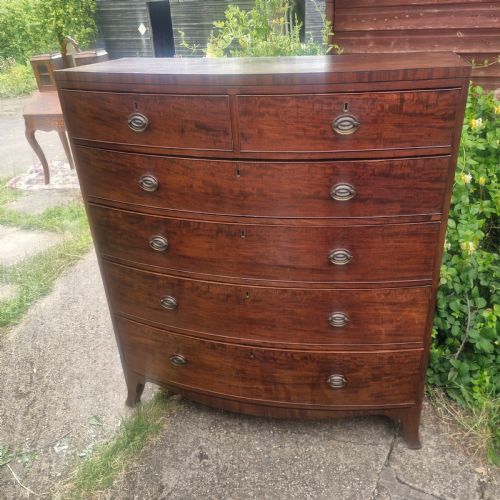


Large Mahogany Storage Chest
A large mahogany storage chest provides substantial room for belongings while bringing solid timber construction and rich grain patterns into a room.
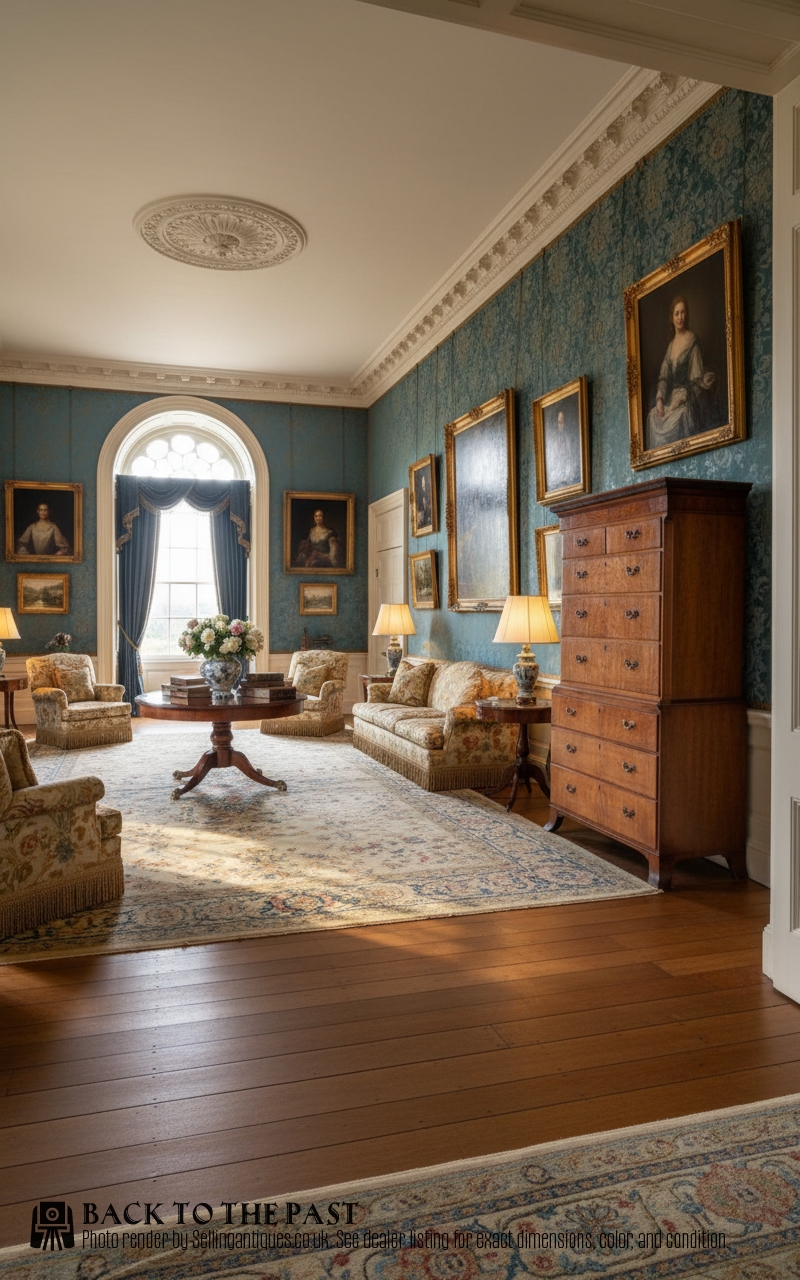
Large Mahogany Storage Chest
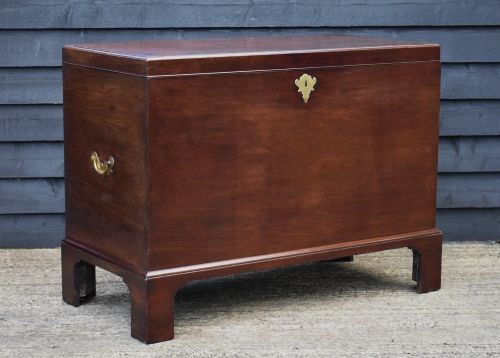
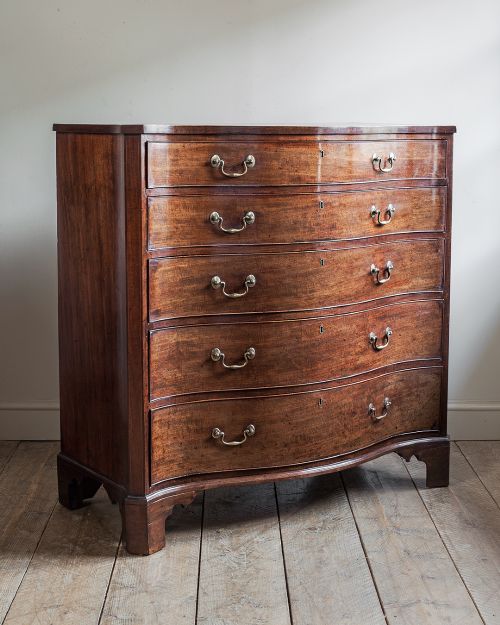
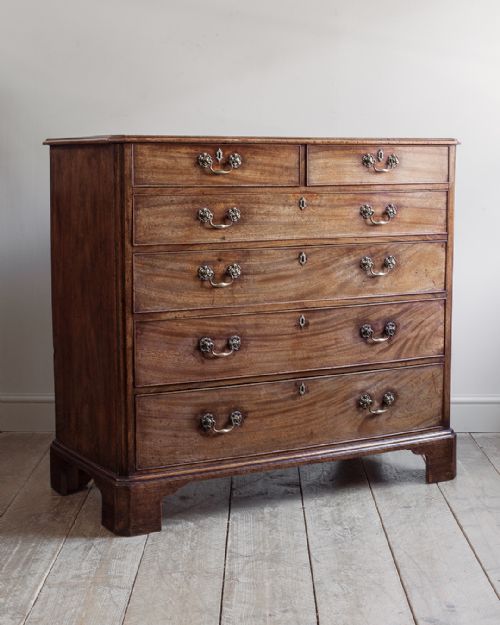
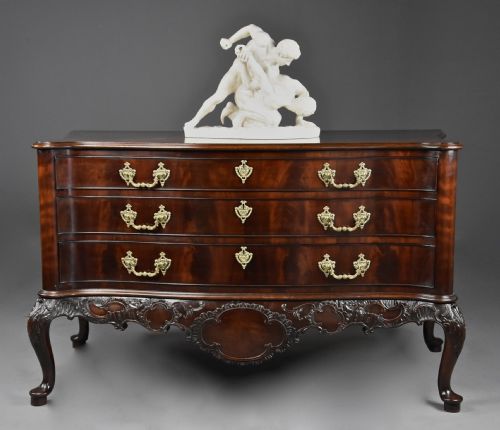
A large mahogany storage chest appears primarily as a chest of drawers, tallboy, commode, or campaign trunk spanning periods from the eighteenth century through the Victorian era. These pieces served practical domestic and travel storage needs in country houses, bedrooms, and offices, utilising generous proportions to house household goods.
The pieces on this page lean heavily toward Victorian and Georgian iterations, encompassing serpentine fronts, bow fronts, and crossbanded details alongside utilitarian workshop fittings and campaign boxes. Buyers encounter robust timber construction shaped by prevailing classical and revival styles.
Forms extend beyond standard drawer units to include mule chests, blanket boxes, ottomans, and specialised storage boxes lined with zinc or fitted for travel. Each variation reflects the specific storage requirements of its period, from military transport to grand bedroom organisation.
How they were made
Cabinetmakers constructed these pieces primarily from solid mahogany and flame mahogany veneers applied over secondary woods such as pine and oak. Brass hardware, including flush carrying handles, lock escutcheons, and corner brackets, reinforced pieces intended for travel or heavy daily use.
Internal elements often incorporated secondary timbers alongside zinc linings in travel trunks and specialised compartments in chests and caddies. Timber selection prioritized durable hardwoods capable of supporting heavy drawer loads and withstanding environmental shifts.
Large Mahogany Storage Chest Retail Price Guide 2026
Typical asking prices for large mahogany storage chest among the pieces listed under this phrase on Sellingantiques today, from the lower quarter to the upper quarter. They describe what is for sale here now, not the wider market.
Listings feature pieces spanning the 18th century, Georgian, Regency, Victorian periods, and 1920s industrial workshops.
What varies in quality
Quality reveals itself in the selection of timber figures, such as flame mahogany grain matching across drawer fronts, and the precision of structural joinery. Finer examples display meticulous attention to secondary wood choice, harmonious proportions, and integrated brass fittings that sit flush with the timber surface.
The sophistication of the design, whether a complex serpentine profile or understated campaign construction, dictates the level of craftsmanship invested by the maker. Superior execution appears in smooth drawer operation, crisp carving details, and well-preserved original surfaces.
Whytock & Reid·Hallett & Sons·Alfred Dunhill
The Large Mahogany Storage Chest Glossary
- Mahogany
- A durable tropical hardwood prized for its deep reddish-brown colour and stable grain. It forms the primary structural and visual material for most pieces on this page.
- Flame mahogany
- Timber veneer cut from fork intersections of the tree that produces a distinctive flamelike grain pattern. Cabinetmakers reserved this decorative wood for prominent exterior surfaces like drawer fronts.
- Campaign chest
- A modular storage chest built in sections with recessed brass handles and corner brackets for military transport. These units separated into distinct stacking boxes for ease of movement.
- Crossbanding
- A decorative border of veneer laid perpendicular to the surrounding grain. This technique frames drawer fronts and top panels to create visual contrast.
- Serpentine front
- A furniture front featuring a concave centre flanked by convex curves. This undulating profile requires skilled carpentry to execute successfully.
- Tallboy
- A tall chest of drawers consisting of one chest stacked upon another. This form maximised vertical storage capacity in period bedchambers.
Large Mahogany Storage Chest: Frequently Asked Questions
How do I date a large mahogany storage chest?
Dating relies on observing construction methods, hardware styles, and timber choices relative to documented periods like the Georgian and Victorian eras. Secondary woods inside drawers and the presence of hand-cut dovetails offer reliable chronological clues.
Stylistic markers such as bracket feet, ogee brackets, or plinth bases further narrow down the decade of manufacture. Comparing these elements with dated examples helps establish an accurate timeframe.
Where should I place a large storage chest?
These substantial pieces anchor bedrooms, hallways, and living spaces while offering deep capacity for linens, clothing, or household items. Their strong timber presence suits rooms with traditional or eclectic interior schemes.
Ensure the chosen space accommodates the full depth and swing of drawers or hinged lids. Avoid positioning timber storage units directly against heat sources to prevent wood splitting.
How do I care for antique mahogany furniture?
Maintain antique mahogany surfaces by dusting regularly with a soft, dry cloth and avoiding silicone-based polishes. Applying occasional applications of high-grade beeswax preserves the moisture and natural lustre of the timber.
Keep the pieces away from direct sunlight and sustained high humidity to protect the wood and veneer from warping or cracking. Stable indoor environments ensure the structural integrity remains sound over time.
What is a campaign chest?
A campaign chest is a portable storage unit engineered in two or more stacking sections for military officers on the move. Recessed brass handles and reinforced corners protected the piece from damage during transport.
These functional travel chests combine robust utility with refined cabinetmaking, featuring secure locking mechanisms and durable hardwood construction.