

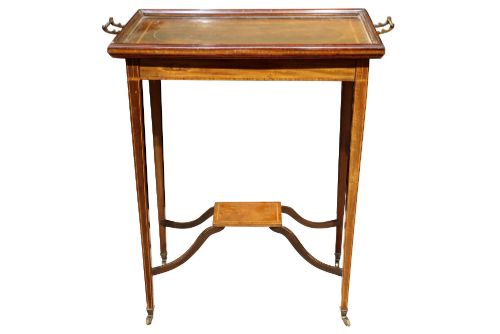

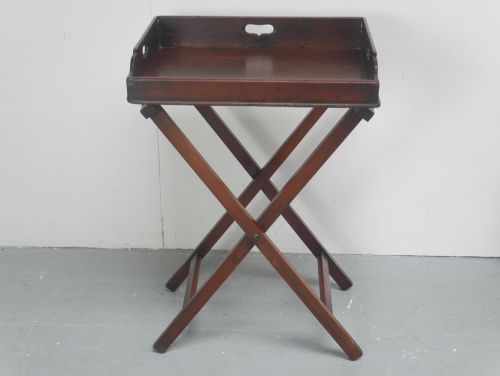

Brown Wooden Butler Tray
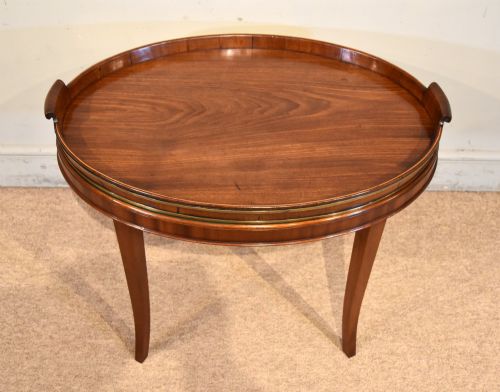
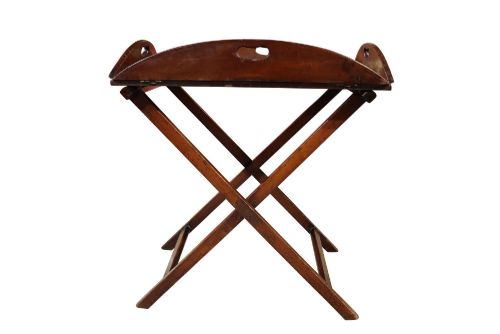
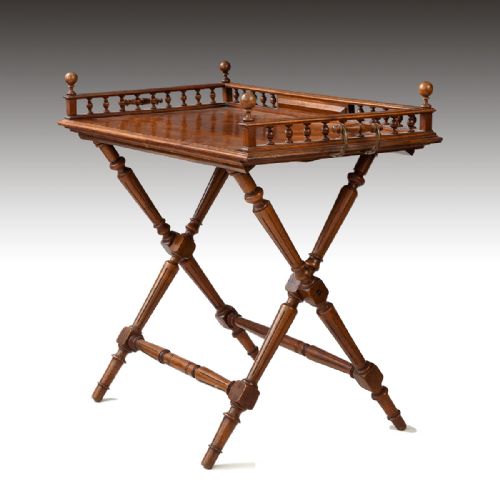
A brown wooden butler tray brings practical heritage into a room, serving as a portable tabletop or sitting on a folding stand.
Brown Wooden Butler Tray
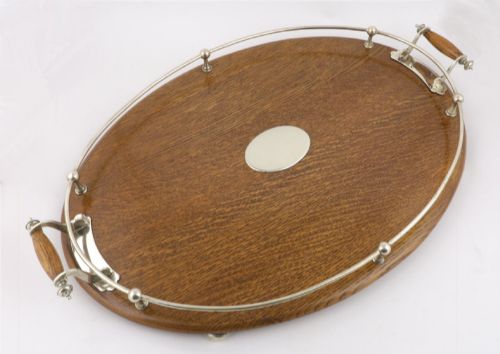
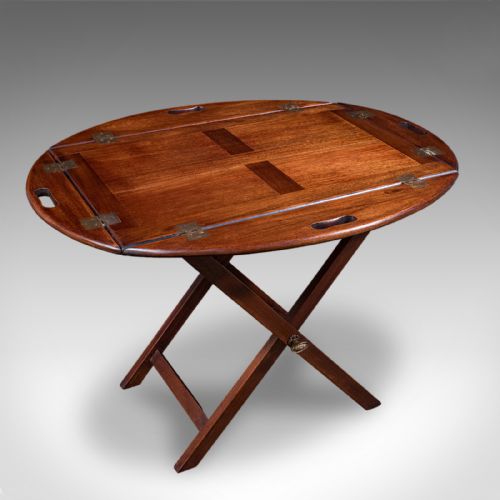
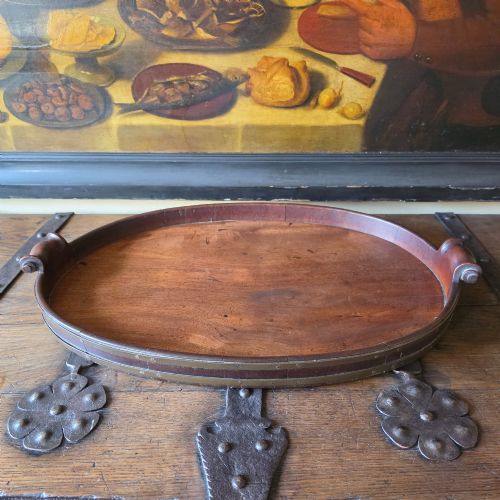
A brown wooden butler tray is a portable serving surface with raised edges, historically designed for carrying silver and china before being placed on a dedicated folding stand.
Most examples encountered here date from the Georgian, Victorian, and Edwardian periods, frequently fashioned from dense timbers like mahogany, walnut, or oak.
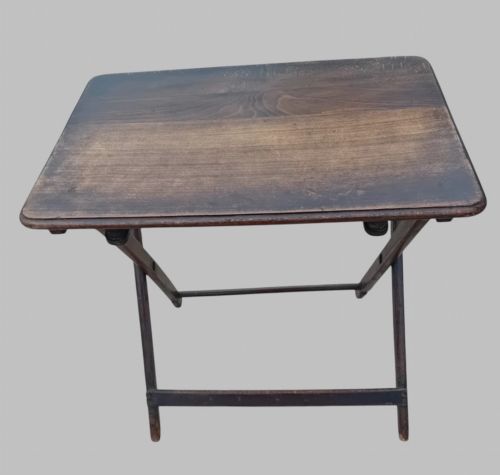
Many of these pieces function today as low occasional tables, coffee tables, or side tables when paired with their original or compatible folding stands.
How they were made
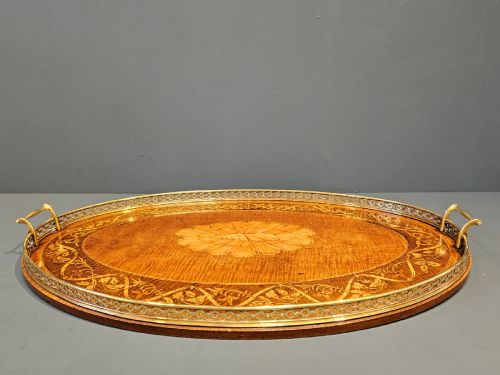
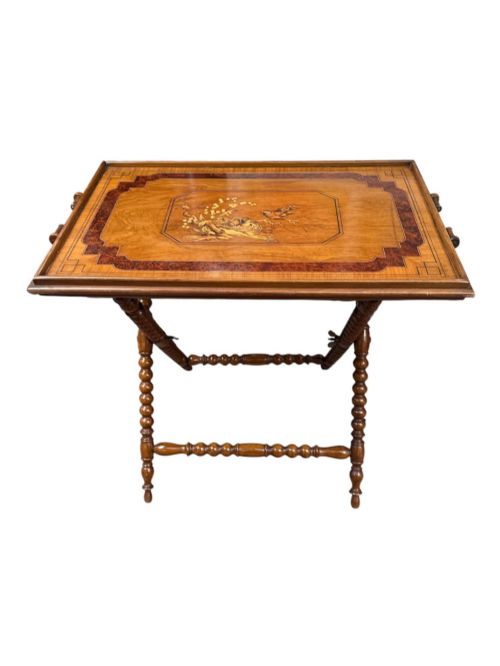
Cabinet makers utilised choice hardwoods such as mahogany, walnut, and oak, often applying figured veneers or contrasting satinwood inlay to the surface.
Drop-flap hinges and shaped carry cut-outs were integrated into the solid timber frames to allow for easy lifting and compact storage.
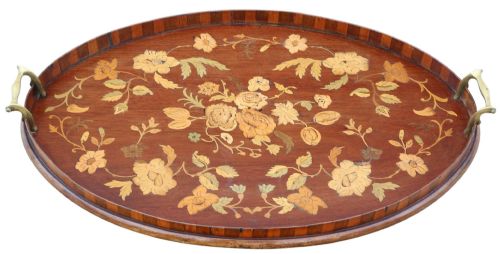
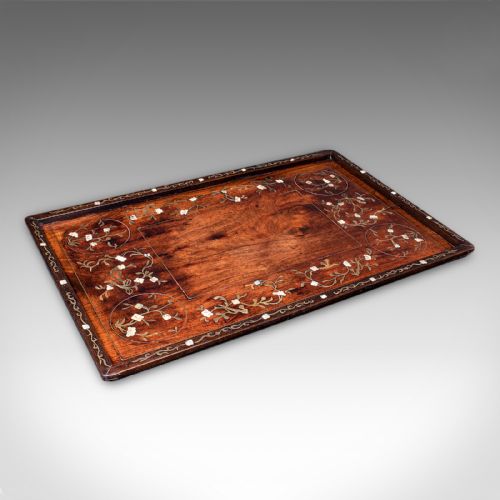
Marquetry and Sorrento ware techniques introduced decorative floral or geometric motifs, contrasting the natural grain of the wood.
Some trays double as work boxes, proving that nineteenth-century hosts liked to keep their sewing close to the afternoon tea.
What varies in quality
The sophistication of the timber selection and inlay work sets finer examples apart, particularly where intricate satinwood or marquetry details remain crisp and intact.
The integration between the tray and its stand dictates overall utility, with dedicated folding bases showing considered proportion and matching timber quality.
The Brown Wooden Butler Tray Glossary
- Campaign style
- Describing portable furniture designed for easy dismantling and transport by military officers. These pieces feature folding stands and brass hardware.
- Marquetry
- The art of applying small pieces of veneer to a structure to form decorative patterns. This technique creates pictorial or geometric surfaces on the tray top.
- Galleried
- Having a raised border or rim around the edge of the tray. This feature prevents items from sliding off during transit.
- Drop-flap
- A hinged section of the tray edge that lowers when required. It allows for extended surface area while maintaining portability.
- Oyster veneered
- Cut across branches or small trunks to produce circular grain patterns resembling oyster shells. This decorative surface treatment appears on select Edwardian trays.
Brown Wooden Butler Tray: Frequently Asked Questions
How were butler trays originally used?
Servants used these trays to carry food and drink from the kitchens to the dining rooms in large houses. Once delivered, the tray rested on a folding stand to serve as an impromptu side table.
Over time, the form transitioned from a purely utilitarian item into a flexible piece of household furniture suited for entertaining.
Can I use a butler tray as a coffee table?
Many people place these trays on stands to use as low tables in modern living spaces. The removable top maintains the original portable function while offering a stable surface for daily use.
Ensuring the stand is stable and the dimensions suit your seating height will make the piece practical for daily living.
How do I date an antique wooden tray?
Dating relies on observing the timber species, construction methods, and decorative styles present in the piece. Georgian and Victorian examples typically display solid mahogany or oak with hand-cut joinery.
Later Edwardian versions frequently incorporate marquetry inlay, oyster veneering, or lighter beech frames influenced by campaign designs.
Are the stands usually original to the trays?
Some pieces survive with their original folding stands, while other trays have been matched with compatible bases from the same period. Examining the wear patterns and timber colour helps determine if the pairing is traditional.
Both matched and original combinations offer practical use and retain the classic aesthetic of the form.