



Late Victorian Tray Table
A late victorian tray table brings together the utility of a removable surface and the compact form of a period occasional table.
Late Victorian Tray Table
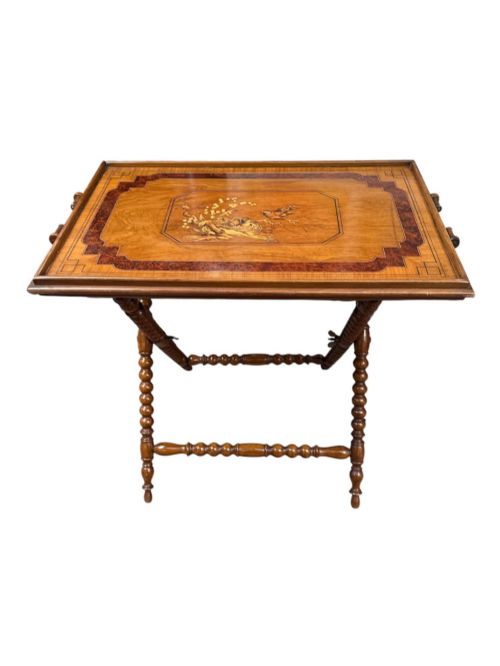
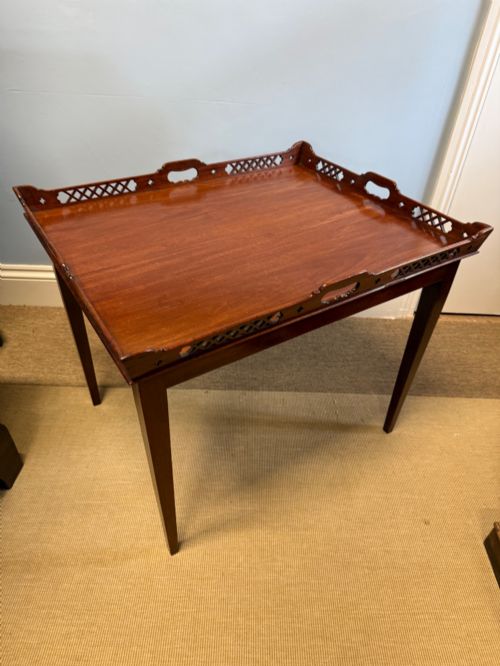
A late victorian tray table combines a portable serving surface with a folding or fixed wooden stand, dating from the late nineteenth century. These items appear in various styles including Arts and Crafts, Anglo-Indian, and Sorrento Ware marquetry.
The primary forms seen on this page include tray tables, side tables, and occasional tables constructed from woods such as walnut, mahogany, oak, and hardwood. Many incorporate removable butler trays or metal insets made of copper and brass.
Originating from the Victorian period, these tables serve both utilitarian and decorative functions in domestic interiors. Pieces range from British regional cabinet-making to imported Anglo-Indian and Sorrento craft traditions.
Materials and construction methods
Makers utilised solid timbers like mahogany, walnut, and oak alongside exotic hardwoods for the framework and tray surfaces. Marquetry inlay, such as the Sorrento Ware examples, demonstrates precise wood-cutting and fitting techniques.
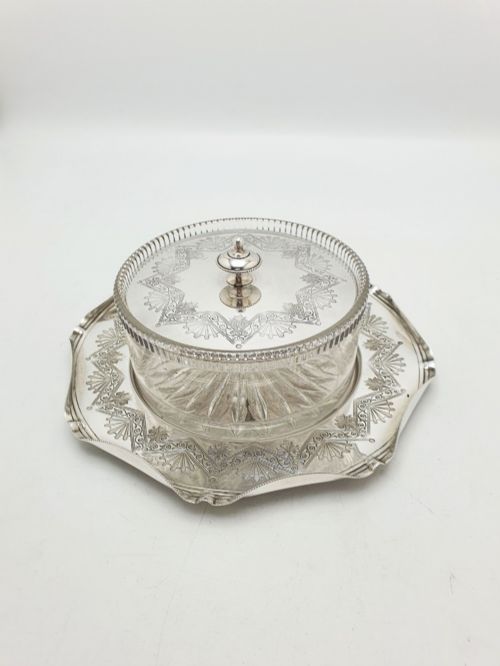
Metal elements including brass, copper, and silver plate form decorative insets and folding stands. These metallic components are often paired with carved wooden bases or intricate floral and geometric motifs.
One listed item includes a rotating lazy-susan mechanism, proving that nineteenth-century dining convenience reached even the occasional side table.
Quality factors in construction and finish
The standard of craftsmanship relies on the precision of the joinery in the folding stands and the tightness of the marquetry or metal insets. Superior examples maintain structural rigidity in the base while allowing the tray to lift off smoothly.
Material selection dictates the grade of the piece, with dense hardwoods and well-preserved brass or copper panels showing greater durability. The crispness of hand-carved details and the preservation of original wooden surfaces separate standard production from finer workshop output.
The Late Victorian Tray Table Glossary
- Butler's tray
- A removable wooden tray with raised sides, often fitted with cut-out handles, designed to sit upon a folding X-frame stand.
- Marquetry
- Decorative veneer work using various coloured woods to create pictorial or geometric patterns on a surface.
- Anglo-Indian
- A style of furniture produced in India during the British colonial period, typically featuring dense carving and inlaid metal elements.
- Sorrento Ware
- A specific type of Italian marquetry and wood-carving originating from Sorrento, frequently depicting intricate architectural or floral scenes.
- Mamluk Revival
- A nineteenth-century design movement inspired by the medieval art of the Mamluk Sultanate, characterised by elaborate engraved brasswork and geometric patterns.
Late Victorian Tray Table: Frequently Asked Questions
What is a late victorian tray table?
A late victorian tray table is a piece of nineteenth-century furniture comprising a removable serving tray placed on a folding or rigid wooden stand.
These tables were designed for portability and versatility, allowing servants to serve food or drinks before folding the stand away for storage.
How do I use one in a modern home?
These tables function effectively as compact coffee tables, side tables, or plant stands in contemporary living spaces.
The removable tray top also allows the surface to be lifted off independently for serving drinks or displaying decorative objects.
How do I identify a Sorrento Ware tray?
Sorrento Ware trays feature distinctive multi-coloured wood marquetry, often displaying intricate floral or landscape designs created using various natural timber veneers.
This Italian technique relies on precise cutting and fitting of small wood pieces into a prepared surface.
What is an Anglo-Indian table?
An Anglo-Indian table is a nineteenth-century piece created in India under British rule, combining traditional local craftsmanship with European furniture forms.
They frequently incorporate dense hardwood construction alongside brass or copper inset tops with elaborate engraved decoration.
Are the trays always removable?
Most tray tables feature a loose tray resting securely on a folding or stationary base, though some variations integrate the surface directly into the frame.
Removable versions were originally intended for carrying items between rooms before being placed back onto the support stand.