







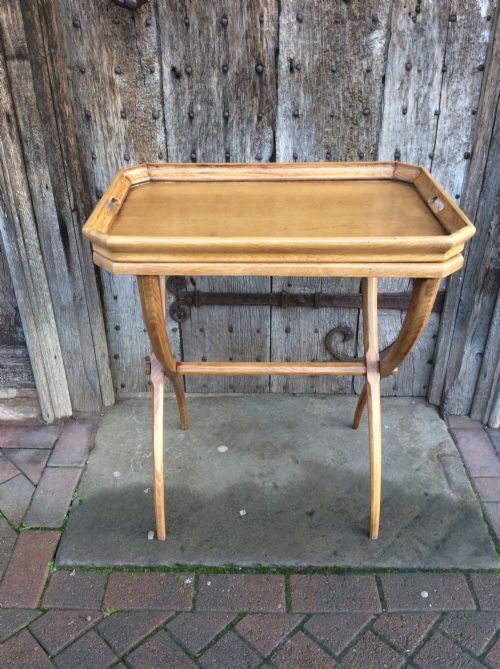
Edwardian Butler Tray Stand
An edwardian butler tray stand offers portable service and sturdy folding design, bringing practical utility and traditional style to any room.
Edwardian Butler Tray Stand
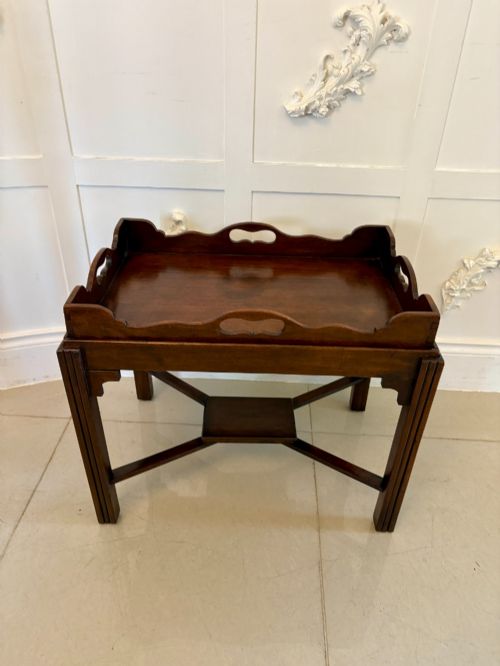
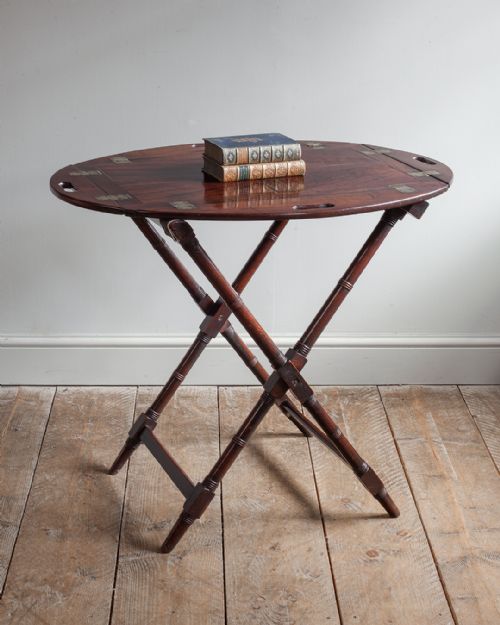
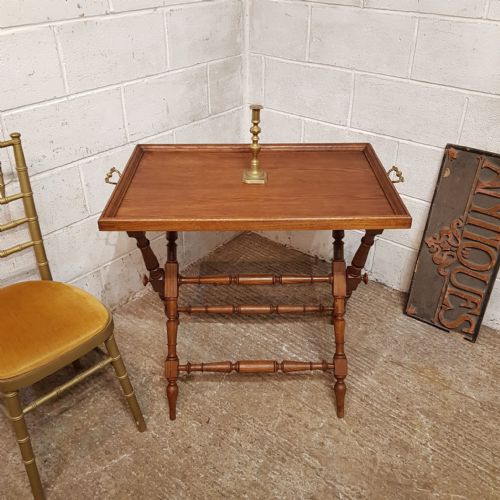
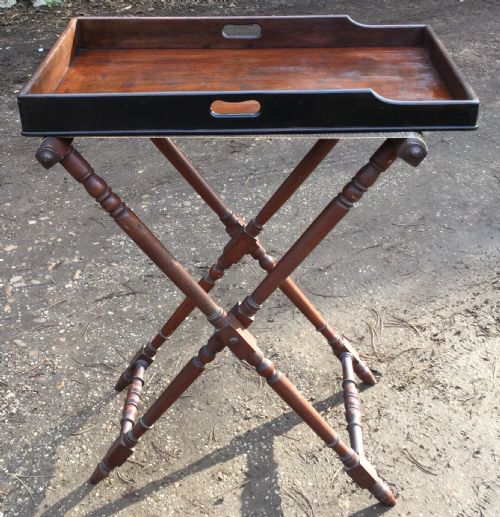
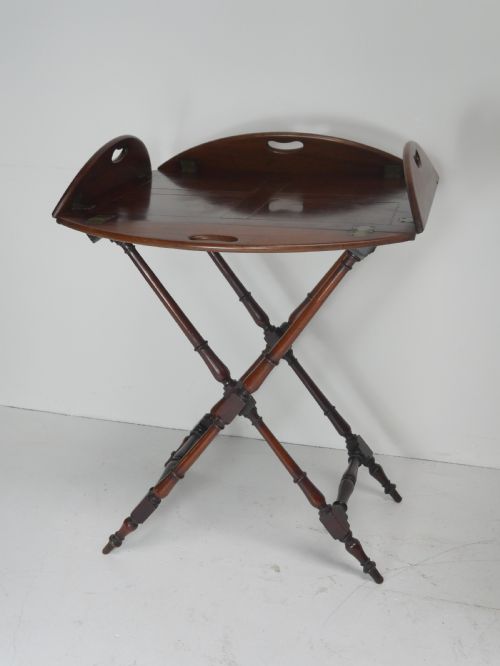
When searching for an edwardian butler tray stand, buyers encounter portable serving tables designed for versatility and ease of storage. These pieces combine a removable tray top featuring gallery edges with a folding wooden stand.
The most common examples on this page date from the Edwardian period, constructed from timbers such as mahogany and oak, often designed with handles cut directly into the tray sides for carrying.
While the search term highlights the Edwardian era, surviving examples frequently span the Victorian and Georgian periods, alongside Regency interpretations and later Edwardian variations.
Determining quality in these stands
The distinction between standard examples and superior pieces rests upon the selection of timber and the crispness of any decorative inlay work. Solid mahogany or figured oak displays greater depth than simpler mixed wood veneers.
Structural integrity of the folding mechanism and the retention of an original matching stand rather than a later replacement dictate the standing of the piece. Attention to detail in the hand-cut carrying handles and the stability of the gallery edges further separate regional utility items from finer parlour furnishings.
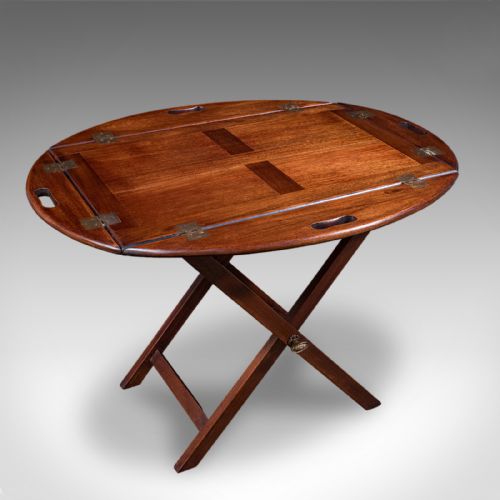
Some butler trays include clever folding flaps that transform a flat serving surface into a miniature railinged balcony for your afternoon tea.
The Edwardian Butler Tray Stand Glossary
- Butler tray
- A portable wooden tray featuring raised sides or a gallery, originally used by domestic staff for serving food and beverages. These trays lift off their supports entirely.
- Folding stand
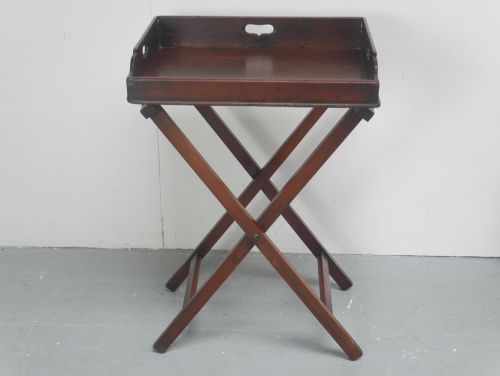
- A collapsible wooden support frame designed to hold a removable tray at serving height. Many utilise an X-frame construction for simple storage.
- Gallery
- A raised wooden border surrounding the perimeter of a tray to prevent items from sliding off during transport. They can be solid, pierced, or fitted with hinged drop flaps.
- Marquetry
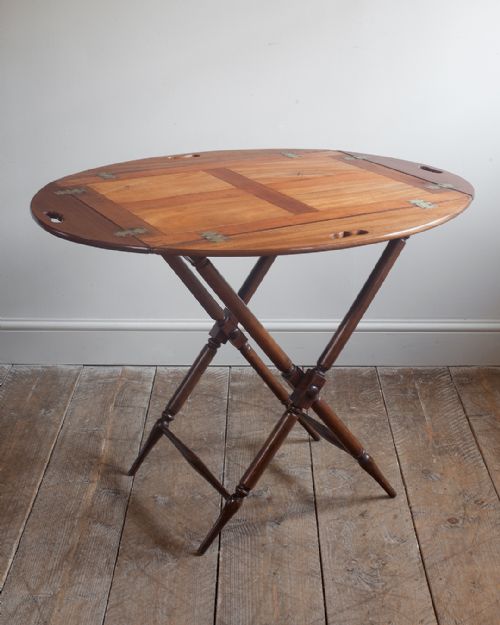
- Decorative patterns formed by the insertion of various coloured wood veneers into a prepared surface. This technique appears on finer Edwardian and satinwood examples.
- Drop-flap
- A hinged section of a tray side that lowers to allow easier access or to expand the usable surface area. These often feature brass hinges and support brackets.
Edwardian Butler Tray Stand: Frequently Asked Questions
What is an edwardian butler tray stand?
An edwardian butler tray stand is a piece of portable furniture consisting of a detachable wooden tray placed upon a folding X-frame base. Originally designed for moving drinks and tableware between rooms, it functions today as a flexible side table.
The design allows the entire assembly to fold flat when not in use, making it practical for modern living spaces where floor area is at a premium.
How were butler trays used originally?
Staff in large houses used these trays to carry food, tea, and drinks from the kitchens to the drawing rooms or living quarters. The raised gallery kept glassware and china secure during transit.
Once in the room, the tray rested on its stand to serve guests, and could be lifted off again to clear the space quickly once refreshments finished.
Are the tray and stand usually original to each other?
Many surviving examples retain their matching original stands, particularly those from the Edwardian period. Because trays and stands were easily separated over decades of use, replacement stands do occur.
Examining the timber grain, wear patterns, and colour consistency between the two components helps determine if they originated together.
How do I care for a wooden butler tray?
Protect the polished wooden surface by avoiding direct contact with excessive moisture, hot cups, or alcohol. Use coasters and mats to preserve the finish of the mahogany or oak.
Routine dusting with a soft, dry cloth keeps the timber clean, while occasional application of appropriate furniture wax maintains the lustre of antique wood.