

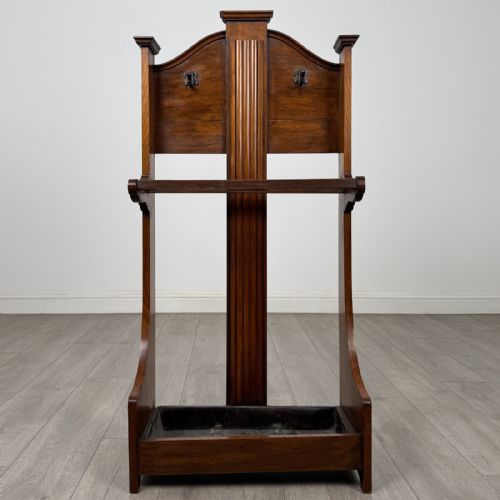


Walnut Tray Stand
A walnut tray stand brings versatile surface space and rich grain figure into a room.
Walnut Tray Stand
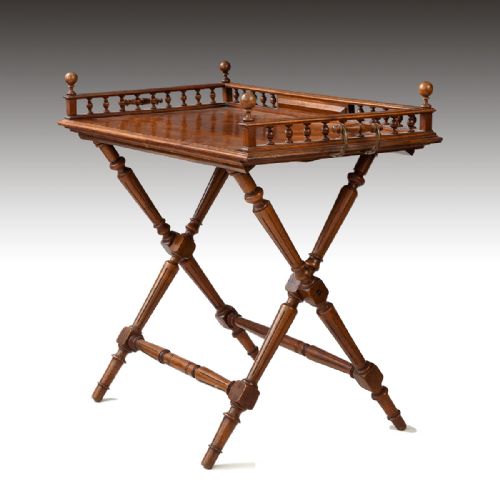
When you search for a walnut tray stand, you encounter a practical piece of furniture designed for serving, display, or occasional use. These items combine a removable or fixed tray top with a supportive folding or static stand.
Originating as utilitarian serving items, these pieces now function readily as coffee tables, bedside tables, or decorative accents. Their dual-purpose nature makes them adaptable to modern domestic interiors while retaining their period character.
Materials and construction methods
The primary material visible across these examples is walnut, prized for its deep warm tones and durable properties. Cabinet makers frequently utilised burr walnut for decorative veneer work, introducing complex swirling grain patterns to the surface of the trays.
Complementary materials enhance the structural integrity and visual appeal of the stands. Brass mounts, hinges, and carrying handles appear regularly, alongside occasional contrasting stringing in boxwood or inlay work such as Sorrento ware.
Construction techniques include folding mechanisms that allow the stand to collapse for easy storage when not in use. Carved details and marquetry enrich specific models, demonstrating the range of carpentry skills employed during the nineteenth and early twentieth centuries.
Even the humblest tray stand harbours a folding hinge that secretly wishes it were a deckchair.
Assessing quality in walnut tray stands
Quality in a walnut tray stand reveals itself through the selection of timber and the precision of the grain matching. Pieces featuring finely figured burr walnut veneers or detailed marquetry sit at the upper end of the scale compared to plain timber surfaces.
The integrity of the construction and the quality of the hardware further distinguish superior examples. Robust folding mechanisms, original brass mountings, and crisp carving indicate careful workshop production rather than mass manufacture.
The Walnut Tray Stand Glossary
- Burr walnut
- A prized veneer taken from the growth burls of the walnut tree. It displays highly decorative, swirling grain patterns that catch the light.
- Butler's tray
- A deep-sided wooden tray, often rectangular with cut-out handles, originally designed for carrying food and drink. It lifts off its supporting stand.
- Marquetry
- The art of applying decorative pieces of veneer to a structure to form intricate designs or pictures. Craftsmen use contrasting woods to create depth and pattern.
- Sorrento ware
- A style of decorative woodwork originating from Italy featuring detailed micro-mosaic inlay. It frequently appears on tabletop surfaces of the period.
- Gothic Revival
- An architectural and decorative style popular during the Victorian era. It draws inspiration from medieval design motifs and structural forms.
Walnut Tray Stand: Frequently Asked Questions
How were butler's trays originally used?
These trays served domestic households for transporting meals, tea service, or correspondence from kitchens to living quarters.
The folding stands allowed servants to pack the furniture away swiftly when the task was complete.
Can I use a tray stand as a coffee table?
Many buyers repurpose these stands today as low coffee tables in sitting rooms.
The removable tray top offers practical depth for holding cups, books, and decorative objects.
How do I identify a Victorian piece?
Victorian examples display characteristic timber patination, traditional joinery methods, and period brass hardware.
Looking closely at the grain and construction underside often reveals the age of the woodwork.
Are the tray tops fixed or removable?
Traditional butler's tray tops lift off the folding X-frame stand entirely.
Other variations on this page feature fixed tiered shelves or hinged folding frames designed for stability.