
Brown Wooden Buffet
When you search for a brown wooden buffet, you are looking at substantial timber serving pieces and sideboards spanning several centuries of dining room history.

Brown Wooden Buffet
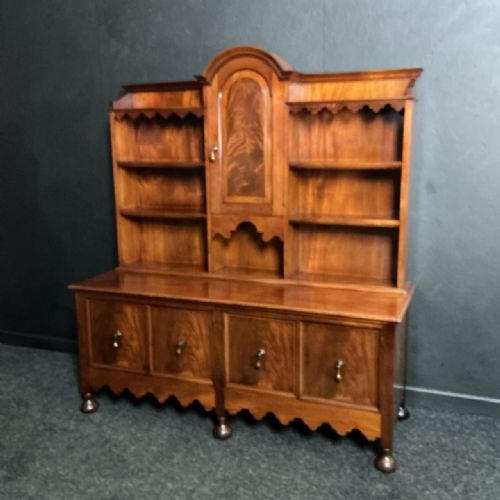
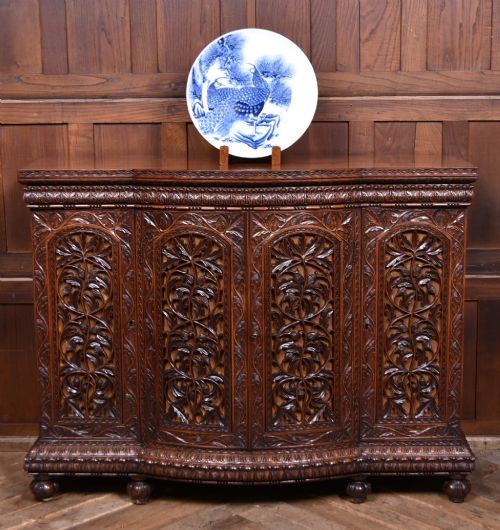
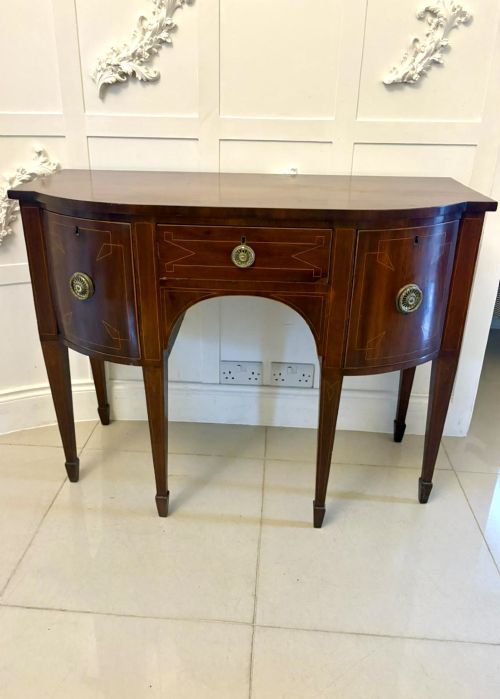
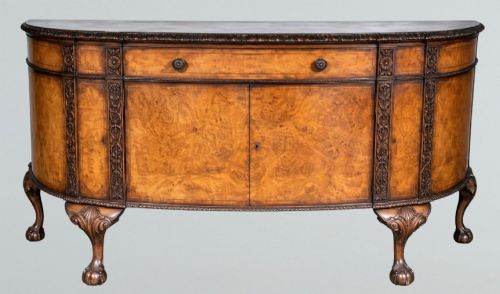
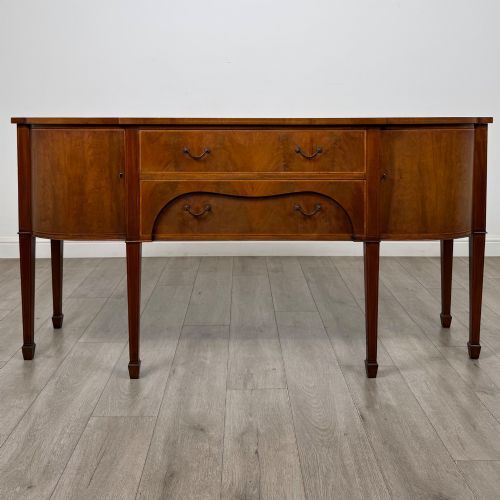
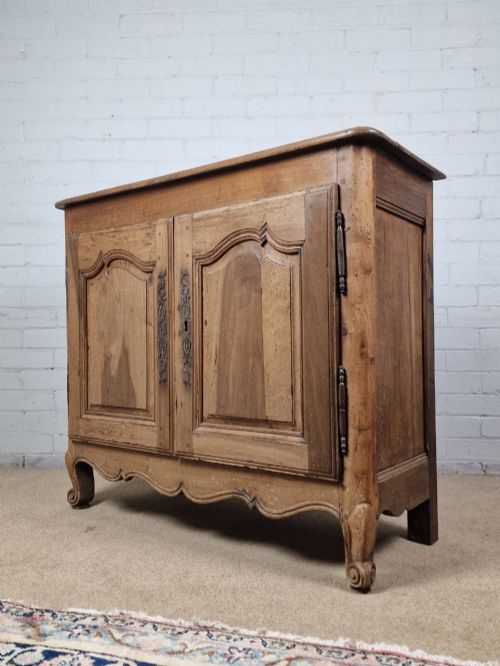
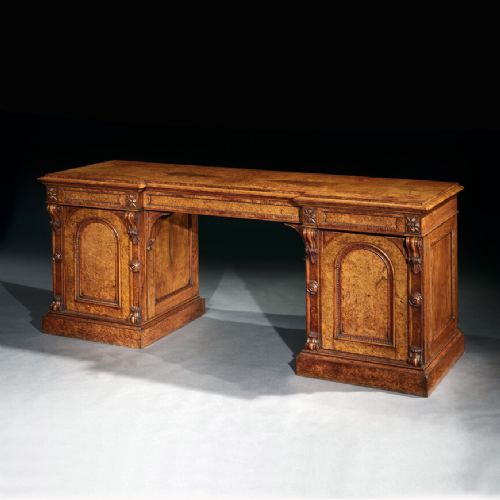
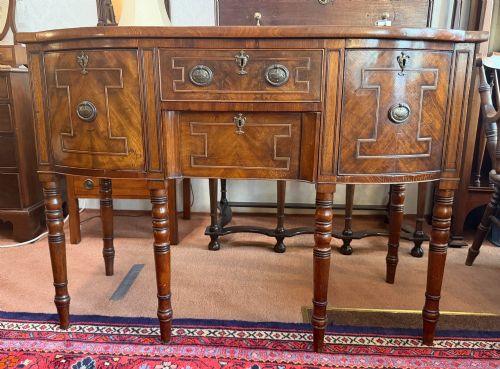
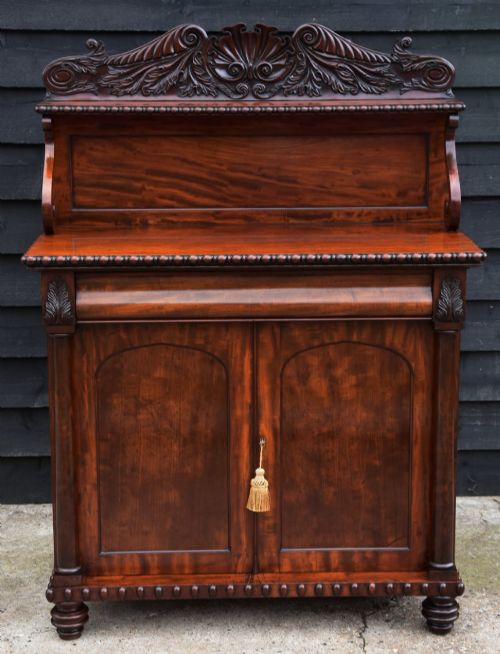
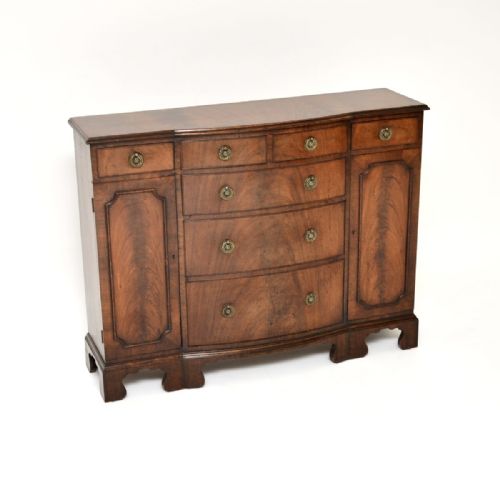
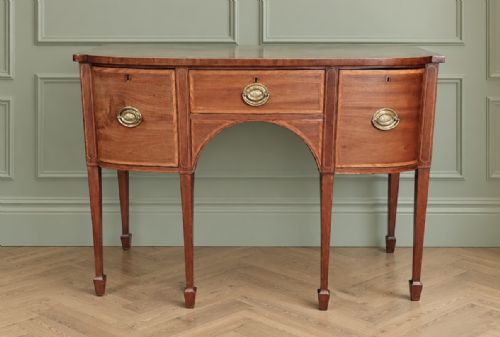
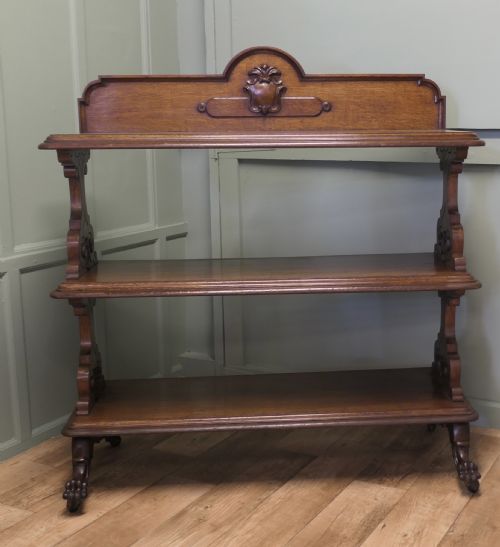
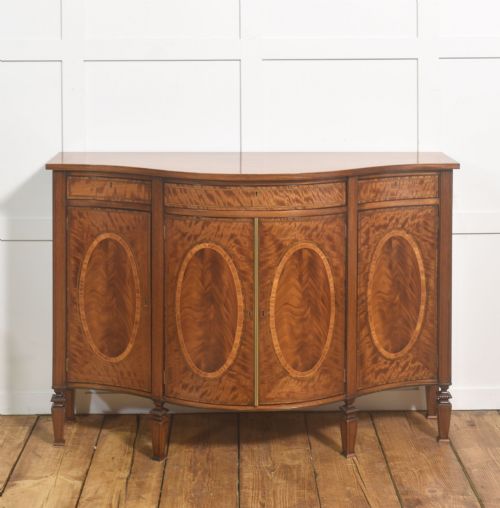
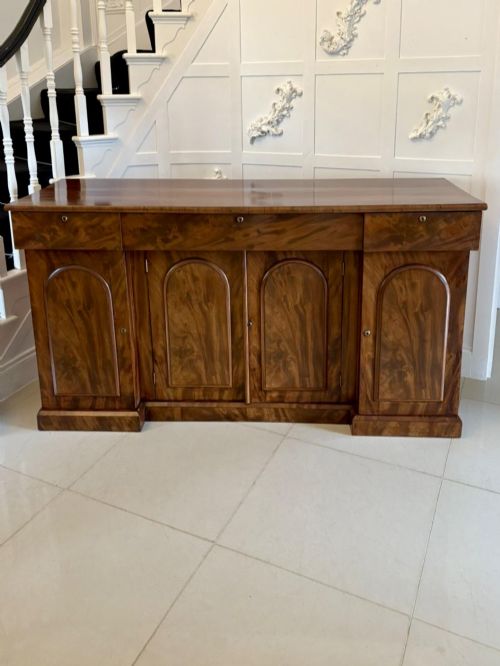
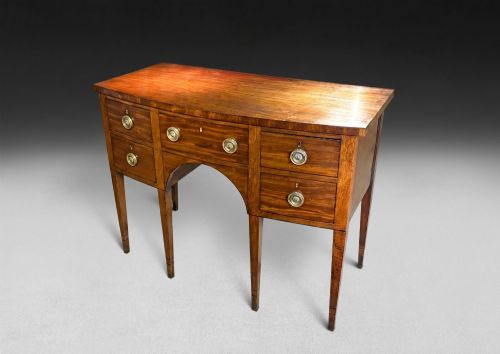
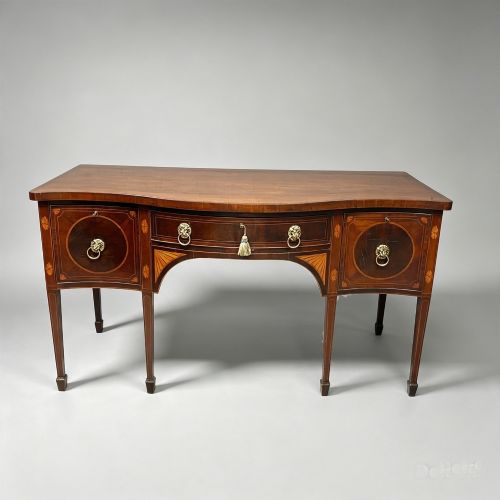
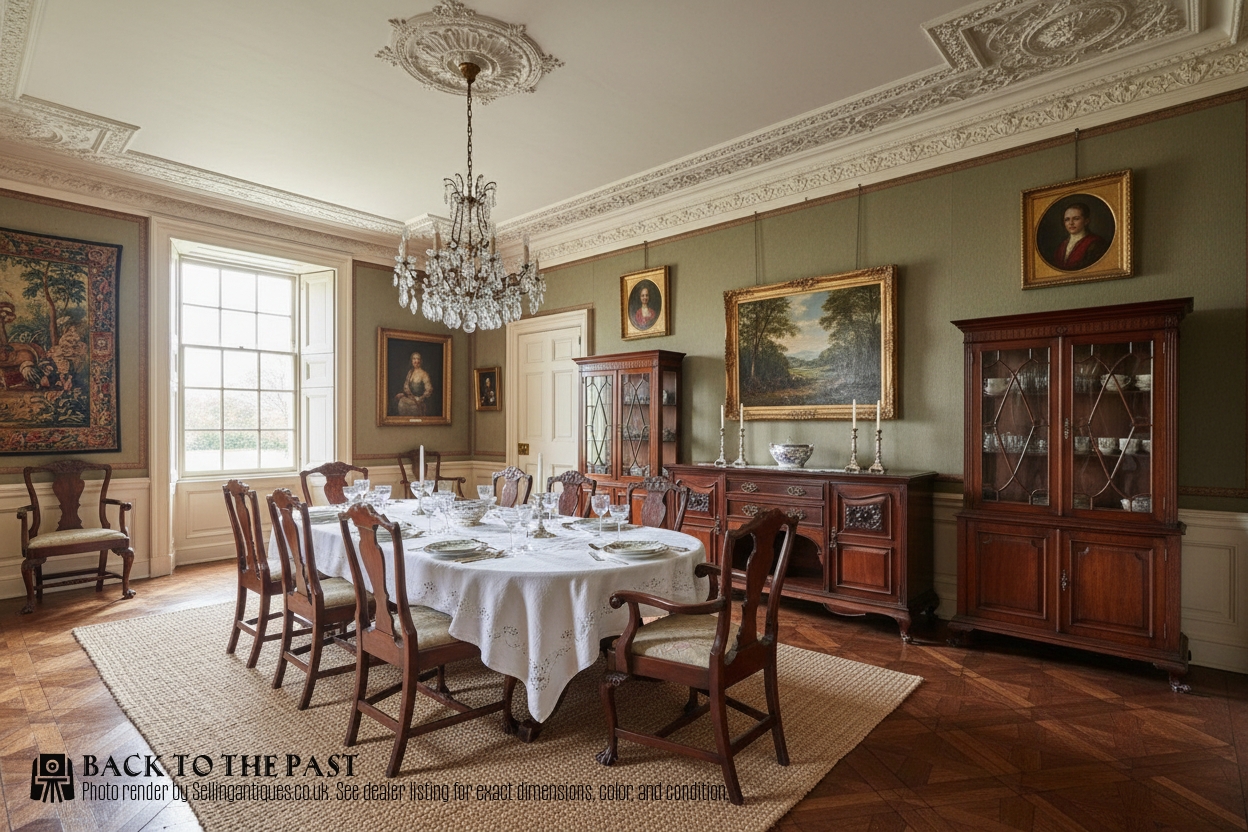
A brown wooden buffet takes several distinct forms across the periods represented here, appearing as formal Georgian and Regency sideboards, robust oak dresser bases, and late Victorian or Edwardian serving cabinets. These pieces served primarily to store dining silver, linen, and china while providing a surface for food and drink service during meals.
The materials you encounter most frequently in a brown wooden buffet are rich hardwoods such as mahogany and oak, often detailed with contrasting stringing or figured veneers. Pieces range from clean-lined 18th-century serpentine shapes to more substantial carved oak court cupboards and late 19th-century kitchen storage cabinets.
Materials and Construction
Cabinet makers relied predominantly on solid mahogany and oak for structural integrity, utilising flame mahogany and burr walnut veneers on drawer fronts and doors to create dramatic visual grain patterns. Inlays of satinwood, boxwood, and brass hardware provide the fine decorative contrast characteristic of finer periods like the Sheraton and Regency eras.
Joinery methods reflect the traditional techniques of their respective centuries, employing hand-cut dovetails for drawers and solid timber backs and linings. Timber selection dictated whether a piece received a smooth polished finish or retained an original painted surface, as seen on certain country house and kitchen examples.
Brown Wooden Buffet Retail Price Guide 2026
Typical asking prices for brown wooden buffet among the pieces listed under this phrase on Sellingantiques today, from the lower quarter to the upper quarter. They describe what is for sale here now, not the wider market.
French tramp art makes an unexpected appearance alongside formal Sheraton revival pieces.
Assessing Quality and Execution
The distinction between standard examples and superior pieces rests on the choice of timber and the precision of the cabinet maker's hand. High-tier pieces utilise highly figured veneers and subtle inlay work that align seamlessly across multiple drawers and doors.
Proportion and architectural balance set exceptional items apart from utilitarian furniture. Finer sideboards and buffets demonstrate careful attention to tapering legs, crisp carving, and original brass fittings that complement the overall design without overwhelming the timber.
Whytock and Reid·M. D. Miller and Sons
The Brown Wooden Buffet Glossary
- Serpentine
- A front design characterised by a gentle convex curve flanked by two concave curves. This contour requires immense skill from the cabinet maker to shape timber accurately.
- Dresser Base
- A low rectangular cabinet fitted with drawers and cupboards beneath a flat top surface. These originated in country kitchens before finding a place in formal dining rooms.
- Inlay
- A decorative technique where contrasting woods or metals are fitted into recesses carved into the primary surface. Boxwood and satinwood are typical choices for linear banding on mahogany.
- Figured Mahogany
- Wood cut from specific sections of a mahogany tree that exhibit swirling, reflective grain patterns. Craftsmen reserved these striking veneers for prominent drawer fronts and doors.
- Pedestal Sideboard
- A heavy formal dining room piece featuring a central section flanked by two distinct column-like pedestals. These became popular during the Regency period.
- Stringing
- Very narrow strips of contrasting wood inlaid into the surface of a cabinet to form delicate border lines. This detail defines much of the Sheraton Revival style.
Brown Wooden Buffet: Frequently Asked Questions
What is the difference between a buffet and a sideboard?
Historically, sideboards tended to be longer formal dining pieces designed for serving and storage, while buffets often served a similar function with slightly different proportions and regional naming conventions.
In modern usage, the terms overlap considerably, encompassing low wooden cabinets with cupboards and drawers used for dining room storage.
How do I date an antique wooden buffet?
Dating relies on observing the combination of timber species, construction methods, hardware, and prevailing stylistic influences. Georgian and Regency pieces show refined mahogany work and fine inlays, while 19th-century examples often feature heavier proportions and carved oak.
Examining the drawer linings, backboards, and secondary timbers underneath provides further clues to the exact manufacturing period.
How should I care for a wooden buffet surface?
Maintain antique timber by keeping it away from direct heat sources and strong sunlight, which can dry out and fade the wood over time. Regular dusting with a soft, dry cloth is usually sufficient.
Apply a traditional beeswax polish sparingly when the wood appears dry to preserve the natural lustre of the finish without building up heavy residues.
Can a buffet fit in a modern dining room?
These pieces offer practical storage for tableware and linens while serving as a functional surface for serving food during gatherings. Their warm wooden tones and classic proportions anchor modern interior schemes effectively.
Measuring your available wall space carefully ensures that the depth and length of the cabinet will not crowd the room.