
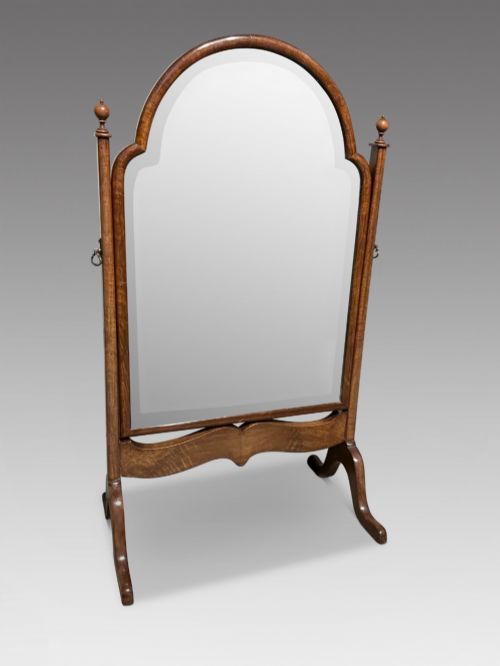
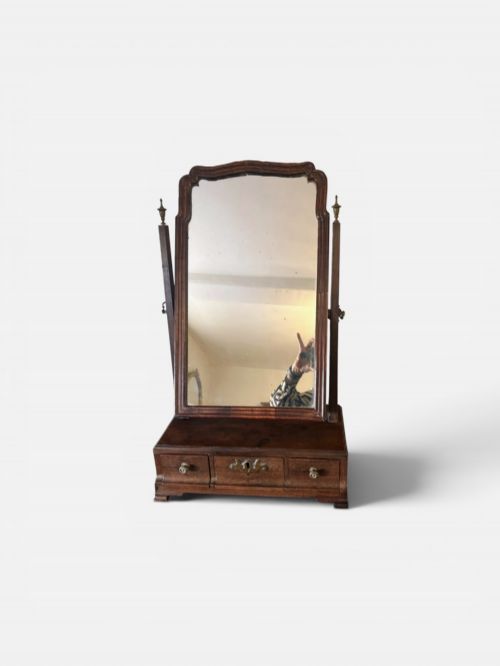
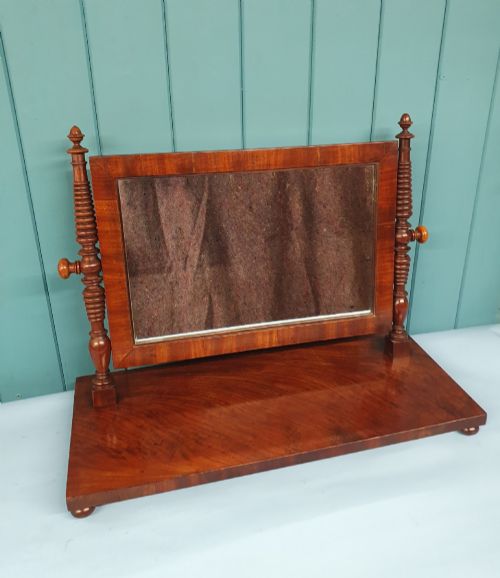

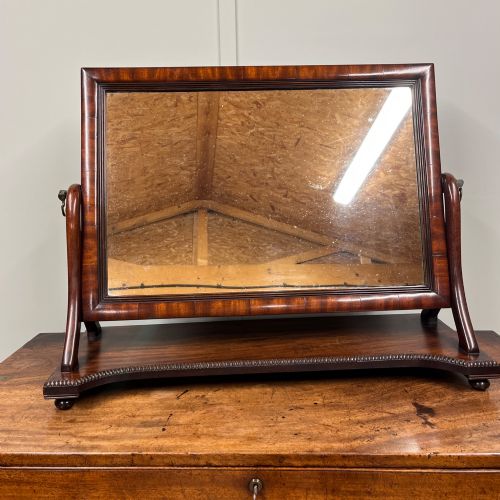
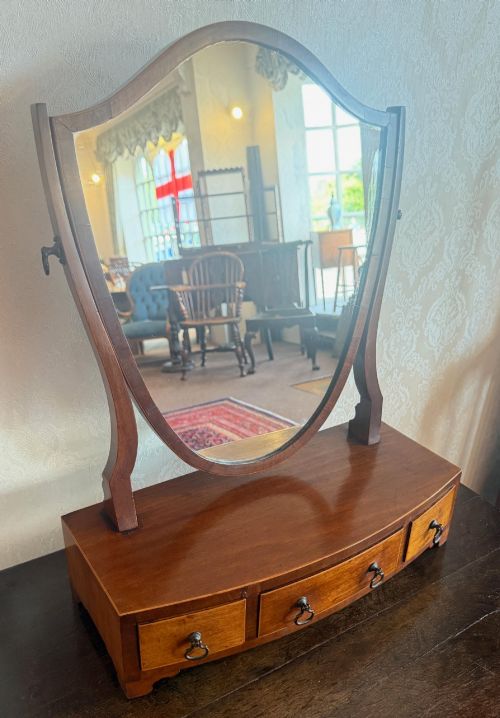
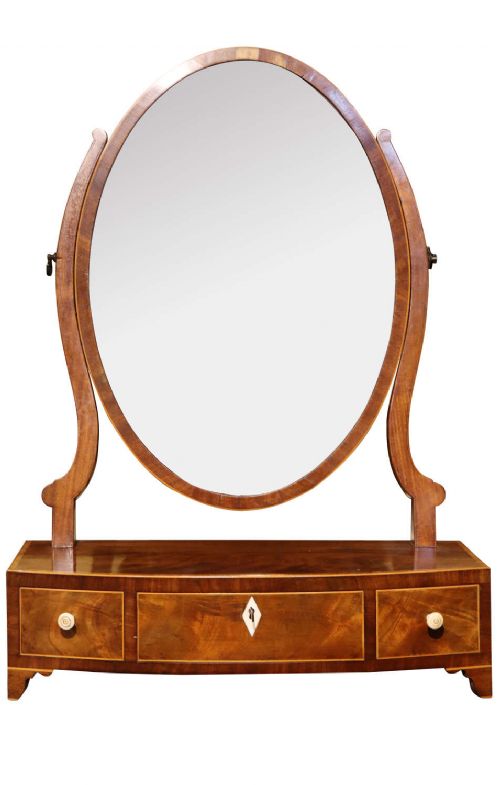

Brown Wood Tabletop Mirror
A brown wood tabletop mirror brings warmth and practicality to a dressing space, offering a movable glass plate framed in rich mahogany, walnut or oak.
Brown Wood Tabletop Mirror
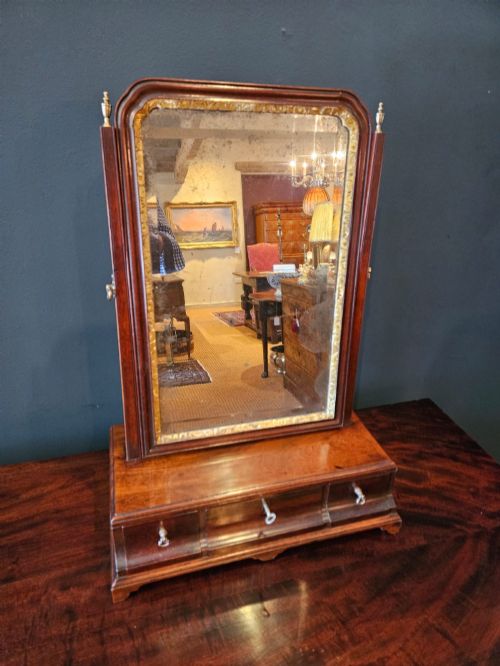
A brown wood tabletop mirror, also known as a dressing table mirror or toilet mirror, sits upon a chest or table to assist with grooming. These pieces range from early 18th-century Queen Anne walnut examples to 19th-century Victorian and Regency designs.
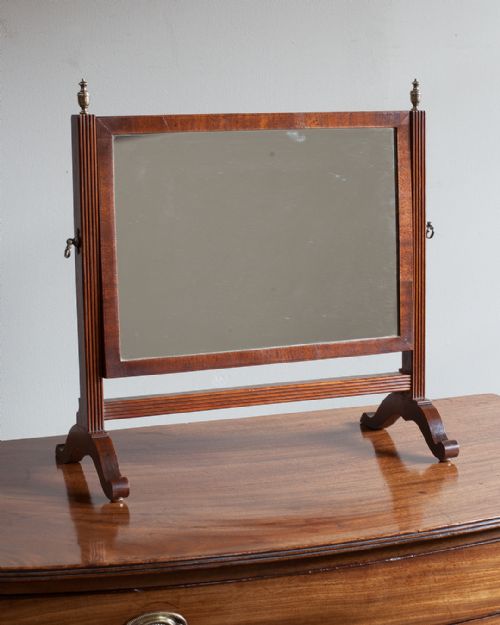
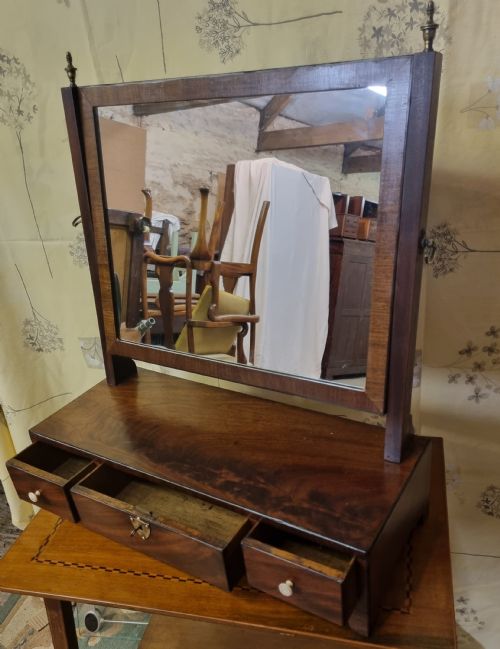
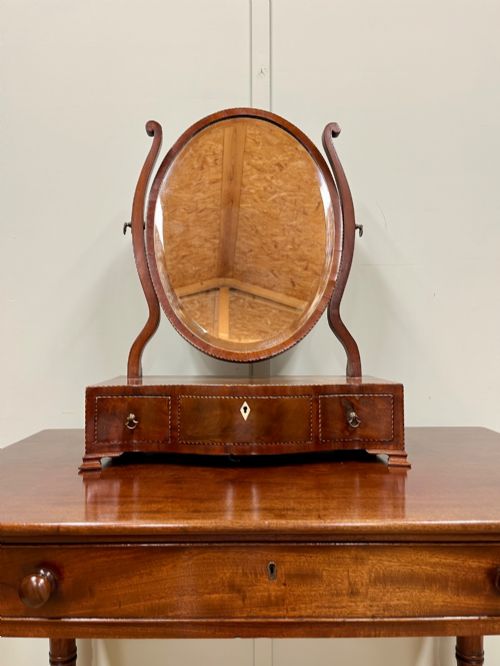
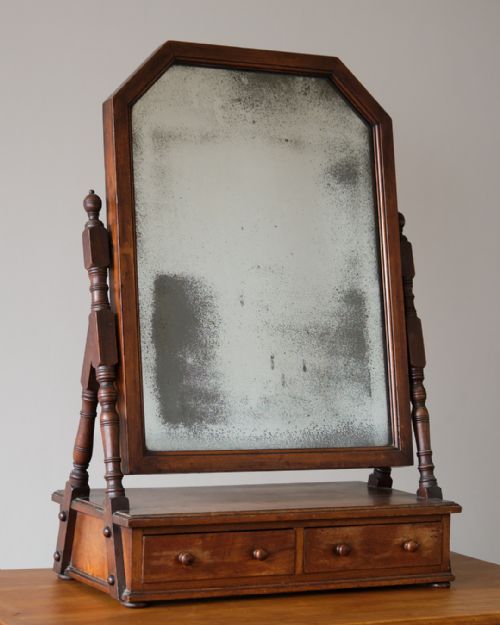
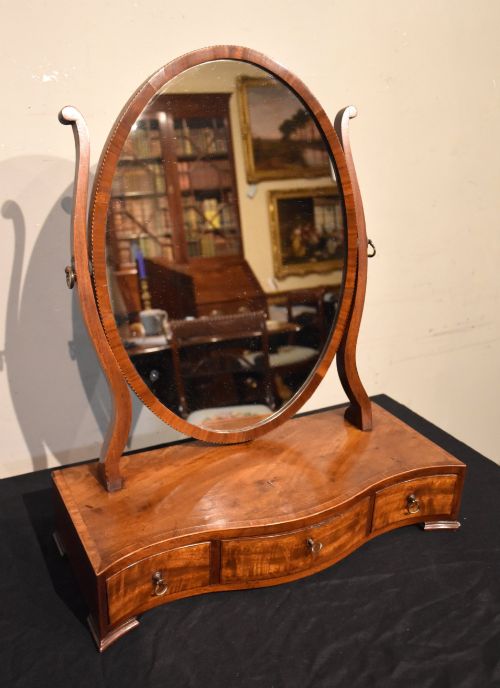
The most common pieces on this page are mahogany dressing mirrors dating from the Georgian and 19th-century periods. Many feature swing glass plates mounted between upright supports above small box bases fitted with drawers.
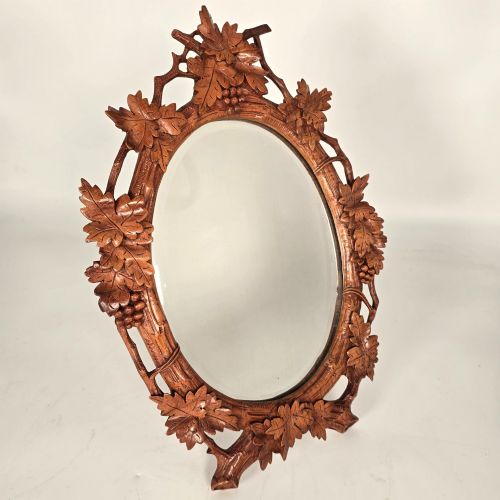
Makers adapted forms to suit changing interiors, producing serpentine fronts, bow-fronts and crossbanded details. Alongside British workshops, listings include Dutch marquetry and Swiss or Black Forest lime wood carvings.
How they were made
Cabinetmakers utilised dense timbers such as mahogany, walnut and oak, often shaping them with curved fronts or embellishing surfaces with wood inlay and crossbanding. Brass fittings such as swing pivots and tiny drawer knobs secure the moving glass and open the small compartments.
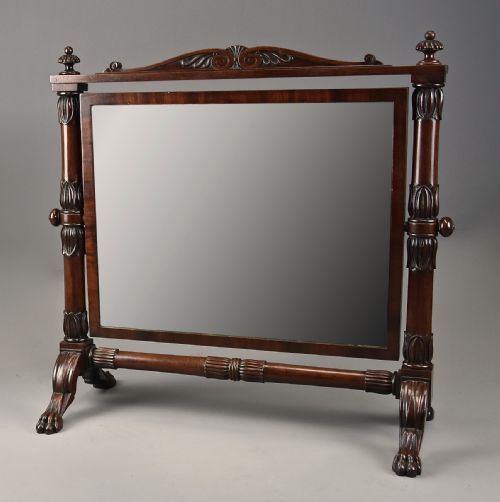
The mirror glass itself rests within shaped wooden frames, suspended between upright arms that allow the angle of reflection to tilt. Master carvers occasionally applied intricate lime wood foliage or Rococo revival details to the outer frames.
Some portable campaign mirrors packed down neatly into compact kits for gentlemen on the move.
What varies in quality
The fineness of the cabinetmaking dictates the distinction between standard and superior examples, seen in the selection of figured Cuban mahogany or matched walnut veneers. Drawer construction with hand-cut dovetails and well-proportioned ogee or serpentine base contours indicate skilled workshop production.
Proportion and retention of original components separate distinguished pieces from later alterations. Original mirror glass plates, matching brass hardware and undisturbed patination on the timber elevate the standing of a tabletop mirror.
Heal & Sons·P & MA Nicholson
The Brown Wood Tabletop Mirror Glossary
- Toilet mirror
- A smaller mirror designed to sit on a tabletop or dressing chest for personal grooming. These portable desk accessories became popular in domestic bedchambers during the 18th century.
- Swing mirror
- A glass plate hung on pivot screws between two upright posts so the user can adjust the tilt. This mechanism allows the reflection angle to change at will.
- Crossbanding
- A narrow strip of veneer laid across the grain of the primary wood to form a decorative border around the edge of a tabletop or drawer front. Cabinetmakers used this technique to highlight the geometric lines of Georgian furniture.
- Serpentine
- A front contour shaped with a convex centre flanked by two concave curves, resembling a winding snake. This fluid shaping requires precise woodworking skill.
- Marquetry
- The art of applying pieces of veneer to a structure to form decorative patterns or pictures. Dutch makers frequently employed floral wood marquetry on toilet mirrors.
Brown Wood Tabletop Mirror: Frequently Asked Questions
What is a brown wood tabletop mirror used for?
These pieces provide a movable reflective surface for personal grooming and dressing. Placed upon a chest of drawers or a vanity table, they offer adjustable angles without requiring wall fixings.
Historically, they served a central role in bedchambers for arranging hair and adjusting attire. Today they retain that function while adding traditional warmth to interior schemes.
How do I date a Georgian dressing mirror?
Dating relies upon timber selection, base proportions and construction methods within the drawer boxes. Early 18th-century examples often display walnut veneers, while later Georgian pieces favour mahogany with serpentine or bow-front drawer units.
Examining the backboards and secondary woods provides further clues regarding the period of manufacture. Hand-cut dovetails and original brass pivot screws also help confirm an 18th-century or Regency origin.
Are these mirrors attached to tables?
Most pieces listed here are entirely independent tabletop items rather than permanently fixed fixtures. The mirror frame rests on vertical arms attached to a small box base, allowing the entire assembly to lift and move easily.
Some variants, such as campaign shaving mirrors, were designed for portable use during travel. This freestanding nature makes them versatile for placement on various pieces of furniture.
What woods were used for these mirrors?
Mahogany is the predominant timber found across these listings, spanning Georgian, Regency and Victorian periods. Walnut appears frequently on earlier 18th-century pieces, whilst oak and lime wood feature in specific regional or carved styles.
Cabinetmakers also incorporated decorative elements like wood inlay and crossbanding using contrasting timbers. This variety in materials reflects shifting interior fashions across different decades.