
Vintage Mahogany Toilet Mirror
These vintage mahogany toilet mirror examples sit upon a chest or table to reflect light and capture daily routines with period proportion.
Vintage Mahogany Toilet Mirror
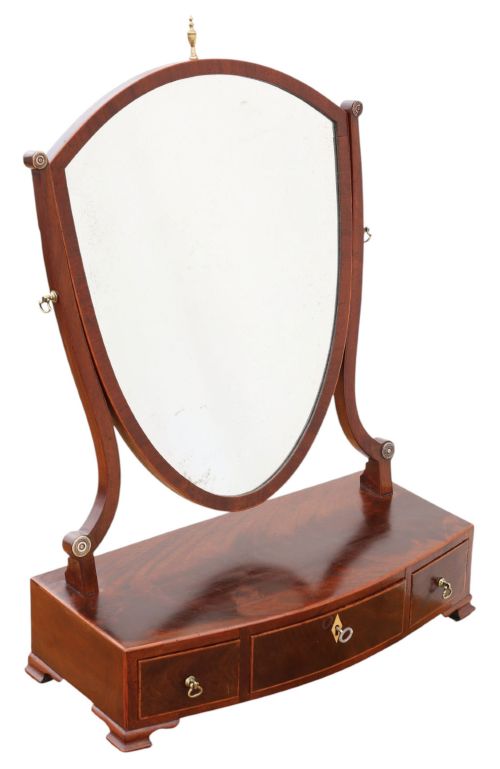
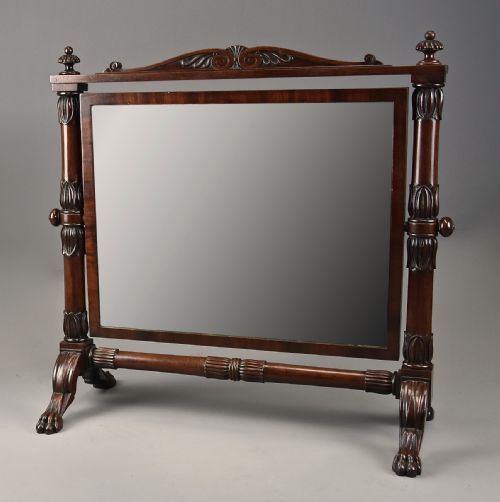
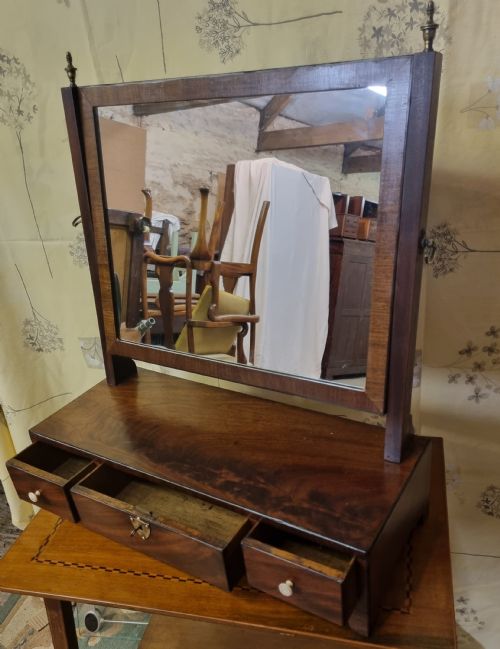
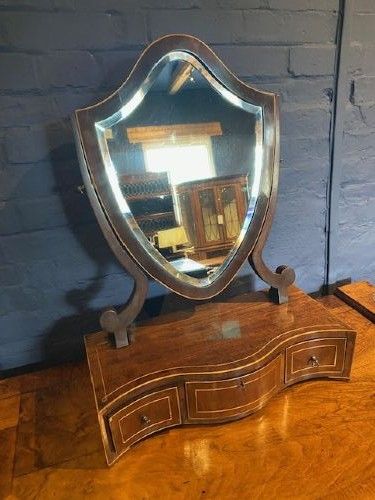
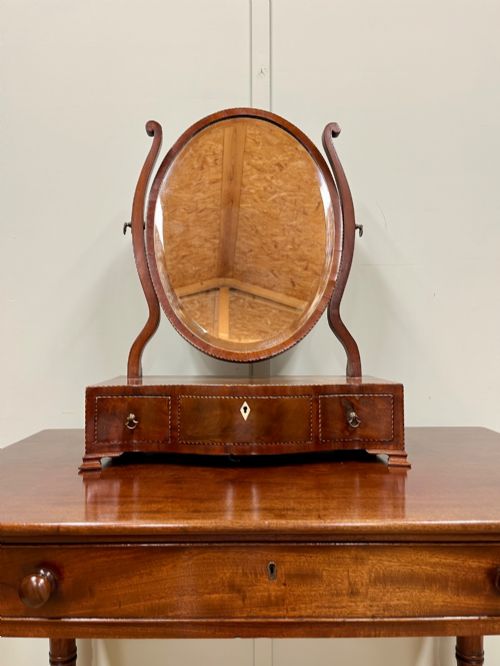
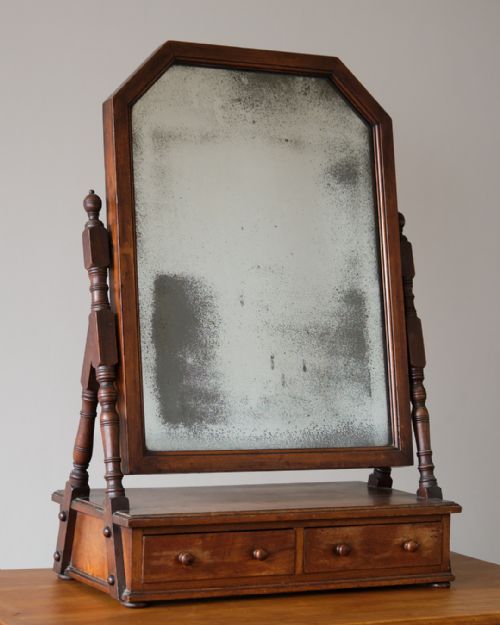
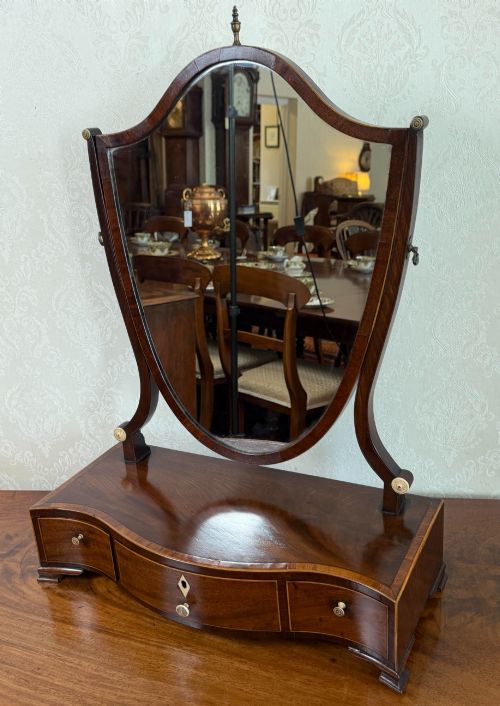
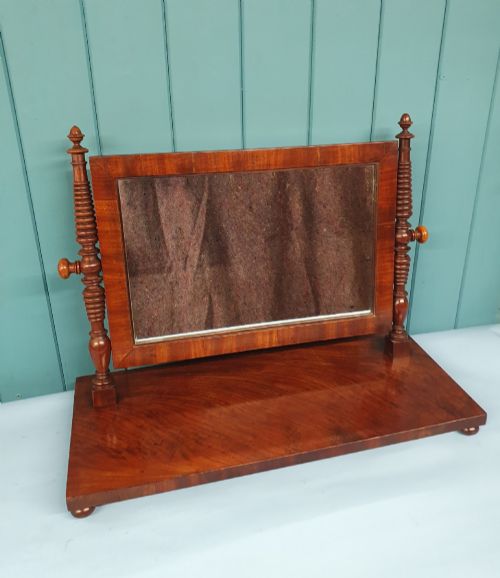
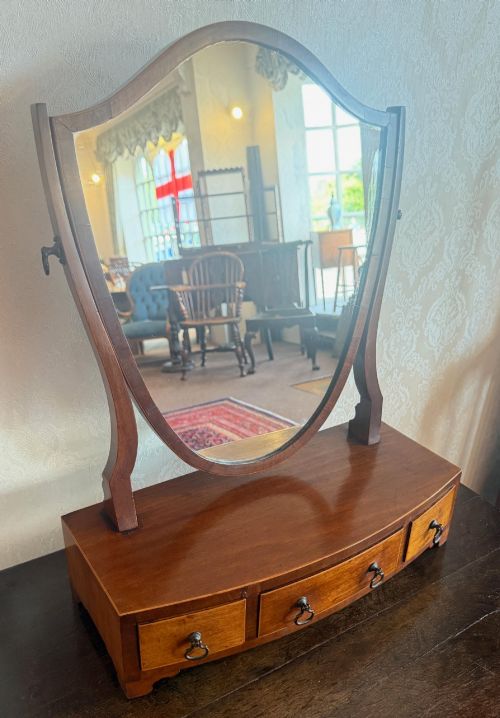
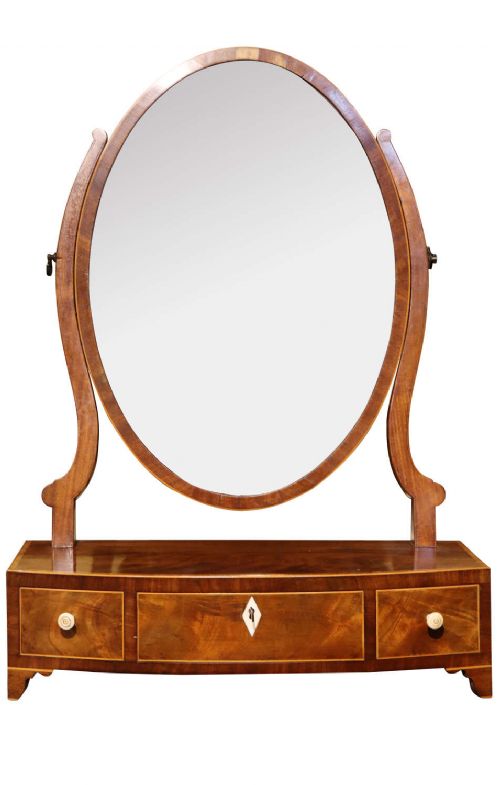
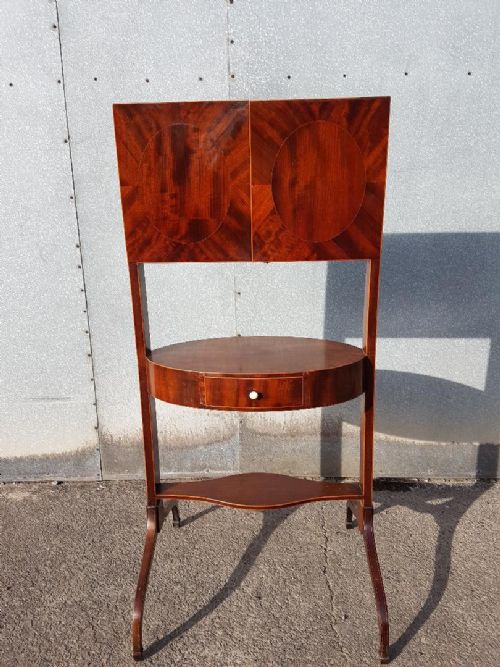
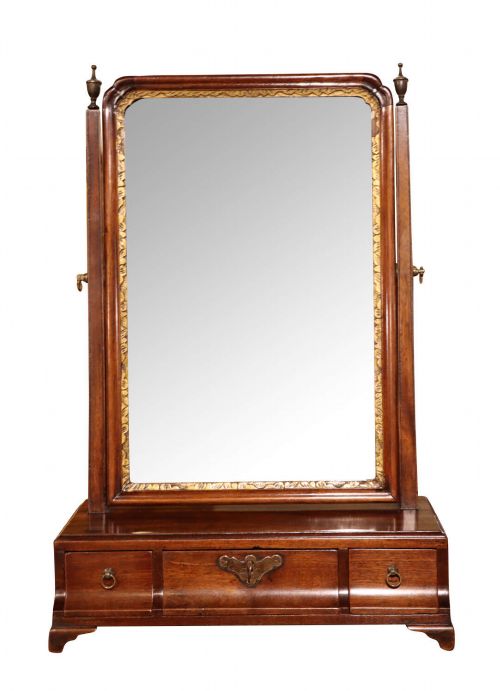
A vintage mahogany toilet mirror is a tabletop or dressing piece designed for personal grooming, most commonly encountered here in Georgian, Victorian, and Regency formats. These items take the form of swing mirrors, shield mirrors, oval plates, and box mirrors fitted with small storage drawers.
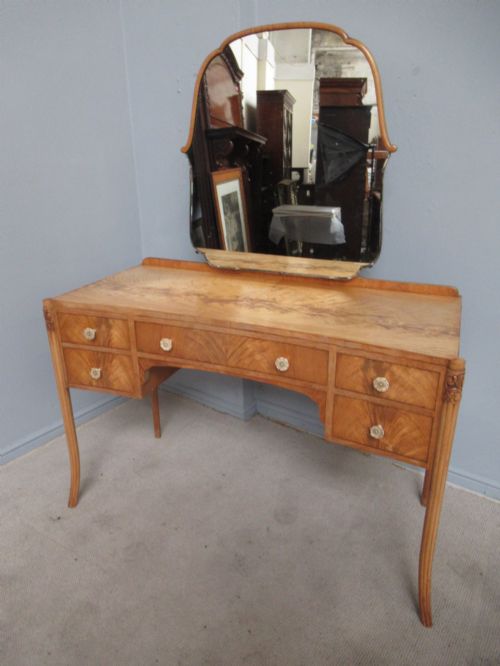
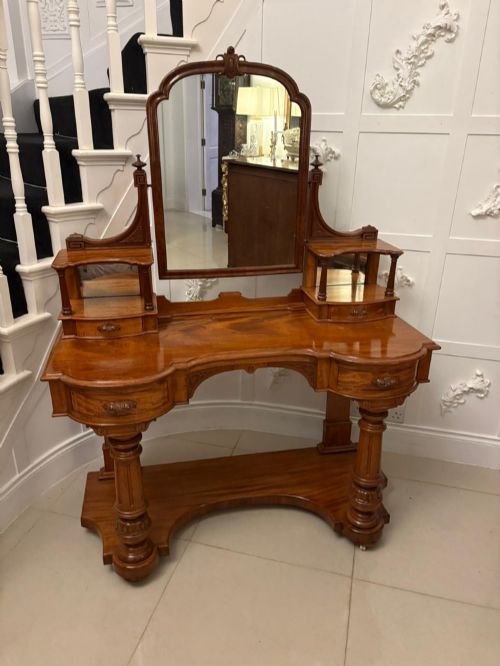
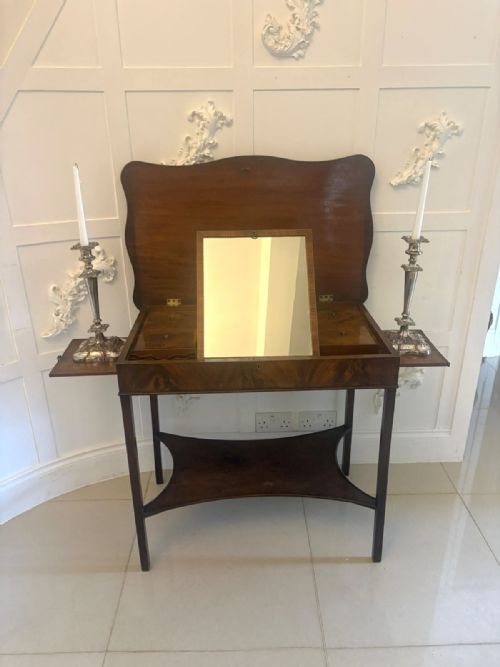
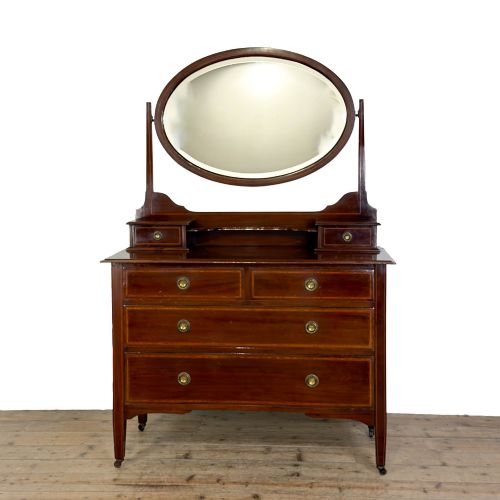
Many examples arrive with adjustable glass set into upright frame arms, whilst larger formats incorporate serpentine fronts, barrel shapes, or three-drawer table bases. The assortment spans compact 18th-century boxes up to substantial Victorian Gothic and Edwardian dressing chest attachments.
Buyers seeking a vintage mahogany toilet mirror will find both tabletop swing versions and larger dressing table integrations. The selection relies heavily on 19th-century and Georgian production traditions, maintaining classic timber frames and pivoting glass plates.
Materials and construction methods
Makers built these pieces primarily from solid and veneered mahogany, often supplemented by secondary woods and detailed with satinwood inlay, crossbanding, or parcel-gilt highlights. Brass fixtures such as adjustable screw knobs, swing arms, and small drawer pulls provide both structural function and decorative contrast.
The glass elements consist of original or replacement mirror plates held securely within wooden rebates, whilst box bases utilise traditional dovetail joinery for the drawer compartments. Some examples incorporate bone escutcheons, maple accents, or walnut elements to enrich the primary mahogany structure.
The inventory incorporates items spanning the Georgian period, the Regency era, Victorian Gothic Revival, and the Edwardian epoch.
Distinctions in construction and material standard
The standard of a vintage mahogany toilet mirror rests on the depth of the timber grain, the precision of the crossbanding, and the subtlety of any satinwood inlay or parcel-gilt carving. Superior examples display refined proportions in the swing frame supports and elegant shaping in the drawer bases.
Construction integrity defines the upper tier, seen in tight dovetailing on the box sections, well-fitted brass hardware, and clean mirror glass retention. Lesser examples rely on heavier, unadorned frames or later replacements that alter the original balance of the piece.
P & MA Nicholson·Heal & Sons
The Vintage Mahogany Toilet Mirror Glossary
- Swing mirror
- A glass plate mounted on pivoting side arms that allows the user to tilt the reflection angle. This mechanism is central to most table top dressing glasses.
- Shield mirror
- A glass plate cut into the rounded shape of a heraldic shield. This silhouette appears frequently on late 18th-century and Georgian examples.
- Crossbanding
- A border of veneer laid across the grain of the primary wood to create a contrasting frame effect. It is often found on the edges of table tops and drawer fronts.
- Parcel-gilt
- A decorative treatment where specific carved details are selectively covered in gold leaf. This technique highlights mouldings on high-status Georgian pieces.
- Dovetail
- A traditional interlocking joint used to construct sturdy drawer boxes. Fine hand-cut dovetails indicate careful workshop production.
Vintage Mahogany Toilet Mirror: Frequently Asked Questions
How do I date a vintage mahogany toilet mirror?
Dating relies on observing structural clues such as the thickness of the mahogany frame, the shape of the mirror plate, and the presence of hand-cut dovetails in the base drawers. Earlier 18th-century and Georgian pieces tend to feature more slender proportions and subtle inlay work compared to later Victorian iterations.
Hardware also offers guidance, as original brass swing nuts and escutcheons match the manufacturing techniques of their specific period. Comparing the overall silhouette against documented Georgian, Regency, or Victorian forms helps narrow the decade of production.
Are the mirror plates usually original?
Many surviving examples have replacement mirror plates because antique glass is fragile and prone to degradation or silvering loss over centuries of use. Clear, unblemished glass on an 18th-century frame usually indicates a modern replacement.
Original plates often display characteristic foxing, light oxidation, or minor distortion within the glass. Collectors generally accept replacements if the frame and backing boards remain entirely undisturbed.
Where should I place a toilet mirror at home?
These mirrors suit dressing tables, chest tops, sideboards, or deep windowsills where they can capture natural light and sit securely. Their compact footprints make them versatile additions to bedrooms, hallways, or living spaces.
Placement should avoid areas of direct, harsh sunlight or extreme humidity to protect the mahogany finish and the backing of the glass plate. Ensuring the supporting surface is level prevents undue strain on the pivot arms.
What is the difference between a toilet mirror and a cheval mirror?
A toilet mirror is designed to sit on top of a chest, table, or dressing surface and is scaled for tabletop use. They usually feature an integrated box base with small drawers for storage.
A cheval mirror is a full-length floor-standing glass mounted in a heavy frame with vertical floor supports. Cheval versions allow a person to view their entire outfit, whereas toilet mirrors focus on the upper body and face.