


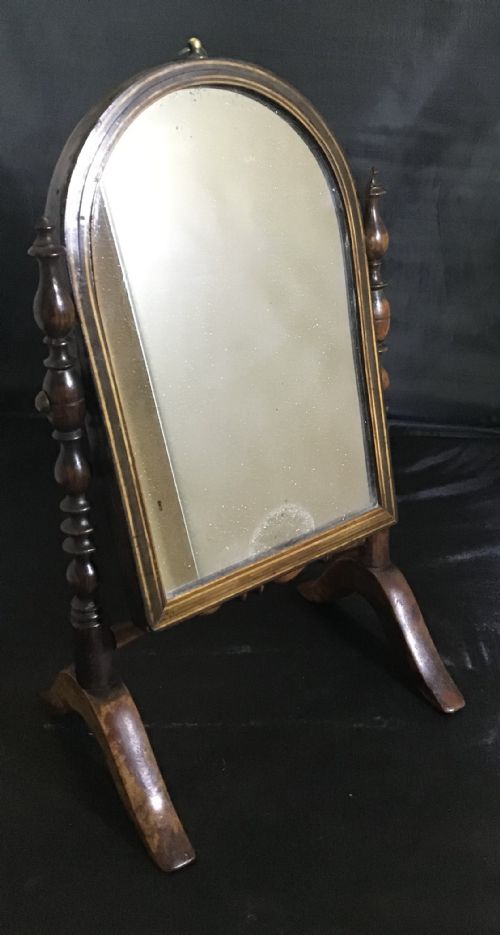

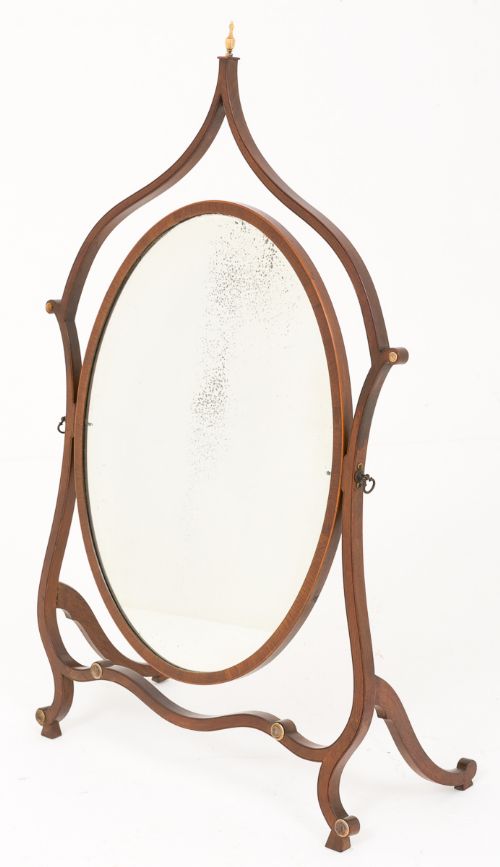
Traditional Mahogany Dressing Mirror
These traditional mahogany dressing mirror examples are substantial wooden looking glasses designed for grooming, combining rich timber and polished glass to anchor a period room.
Traditional Mahogany Dressing Mirror
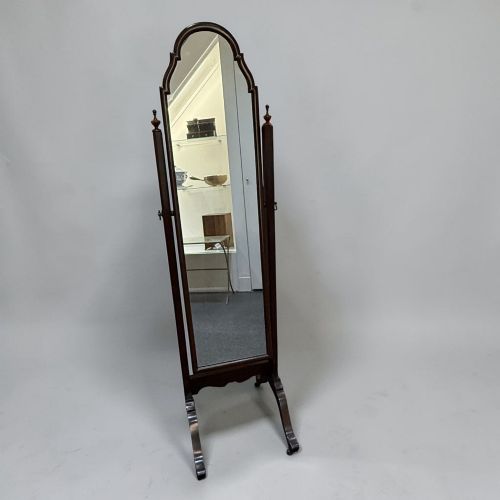
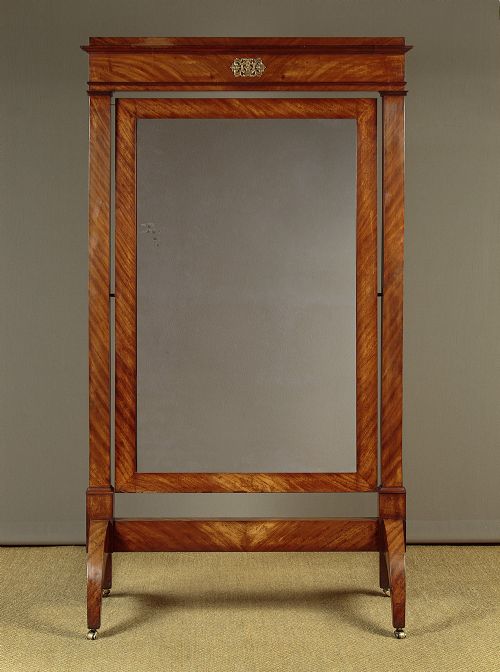
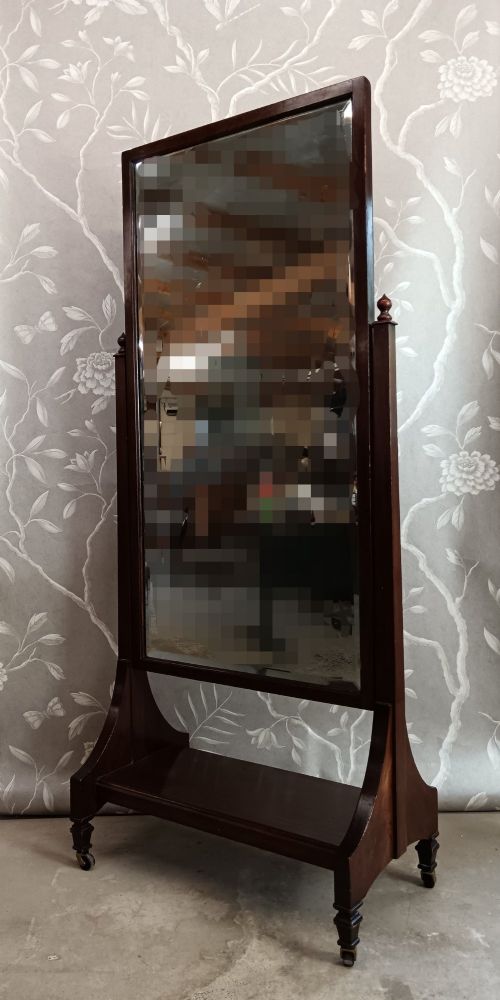
When you search for a traditional mahogany dressing mirror, you are looking at centuries of functional British and international joinery designed for the bedroom or dressing room. These pieces range from compact table-standing toilet mirrors to grand freestanding cheval glasses that offer a full-length reflection.
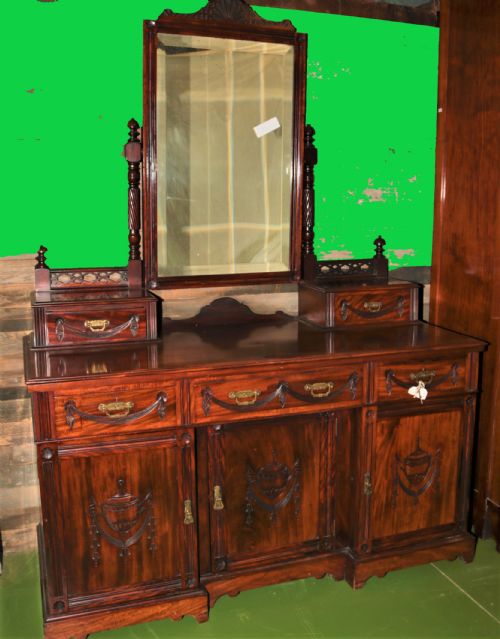
The versions you are most likely to meet on this page span the Georgian, Regency, and Victorian eras, alongside later nineteenth and twentieth-century interpretations. They appear in forms such as swinging table mirrors with serpentine drawer bases and heavy floor-standing cheval frames.
Makers from the eighteenth century onwards utilised the deep reddish-brown grain of mahogany to signal domestic elegance and stability. Surviving examples demonstrate how these mirrors adapted from intimate portable vanity items to permanent architectural fixtures within the home.
How they were made
Cabinetmakers constructed these frames using solid mahogany and carefully selected veneers, often incorporating secondary timbers for internal drawer linings. Brass hardware such as adjustable pivot screws, candle sconces, and delicate handle knobs secured the pivoting glass plates within their upright supports.
Mirror glass itself was heavy and bevelled or flat depending on the period, held securely in place by thin wooden backboards and glazier's pins. Surface finishes relied on hand-applied French polish or wax to deepen the natural lustre of the mahogany grain without obscuring its movement.
Object forms recorded on this page include cheval mirrors, wall mirrors, toilet mirrors, dressing tables, and bedside cabinets.
What varies in quality
The distinction between standard utility items and exceptional pieces rests upon the crispness of the carving, the selection of figured mahogany timber, and the architectural proportions of the stand. Superior examples display dovetailed drawer construction with secondary woods like satinwood or bone inlay, while lesser pieces rely on plain, unfigured boards and simpler joinery.
Originality of components defines the standing of a traditional mahogany dressing mirror among collectors, particularly the retention of the original mercury or silvered mirror glass and matching brass fittings. Altered pivot mechanisms or replaced base sections diminish the integrity of the piece.
The Traditional Mahogany Dressing Mirror Glossary
- Cheval mirror
- A large freestanding floor mirror that swings vertically within a stable wooden frame, allowing the user to view their entire outfit.
- Toilet mirror
- A smaller dressing mirror designed to sit atop a chest of drawers or a dedicated dressing table for close grooming.
- Serpentine
- A gently undulating curved shape seen along the front frames and drawer bases of finer eighteenth and nineteenth-century pieces.
- Satinwood
- A pale, highly figured contrasting timber frequently utilised for decorative stringing and inlay work on mahogany frames.
- George III
- A British historical style period spanning the mid to late eighteenth century, known for refined classical proportions and elegant cabinetmaking.
Traditional Mahogany Dressing Mirror: Frequently Asked Questions
Where should I place a cheval mirror?
Freestanding cheval mirrors require a stable floor space away from direct sunlight and damp conditions to protect both the wooden frame and the silvered glass backing.
Positioning the glass opposite a window maximises reflected natural light, making bedrooms or dressing rooms feel deeper and brighter.
Are these mirrors easy to dismantle?
Most table-standing swing mirrors detach easily from their upright scroll supports by unscrewing the brass side knobs and pivot pins.
Freestanding cheval frames are bulkier and generally require two people to disassemble safely during relocation or transport.
How do I date a mahogany frame?
Examination of the timber grain, construction joints like hand-cut dovetails, and the style of the brass hardware reveals the likely manufacturing period.
Georgian and Regency pieces exhibit lighter, more refined framing, whereas Victorian examples tend to be heavier and more robust in their proportions.