
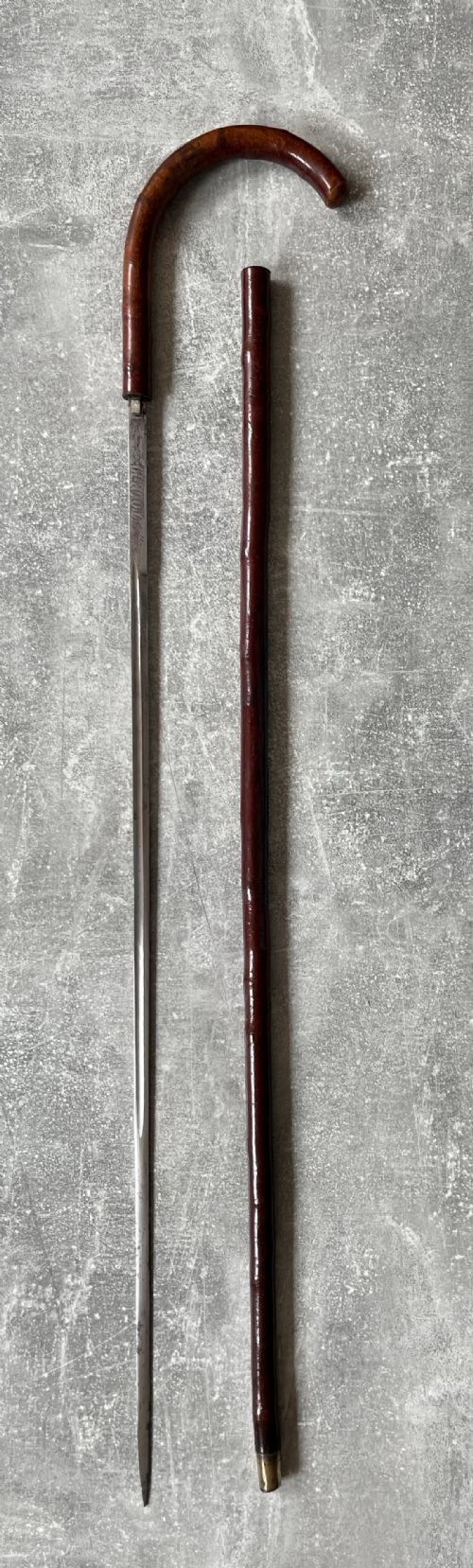
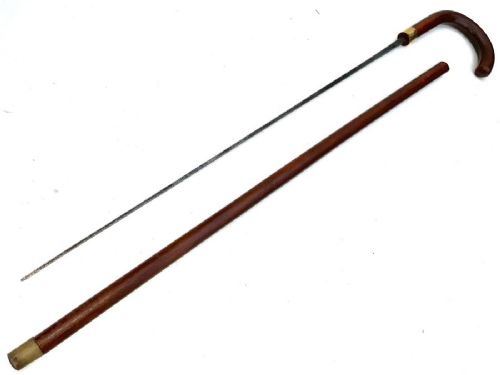
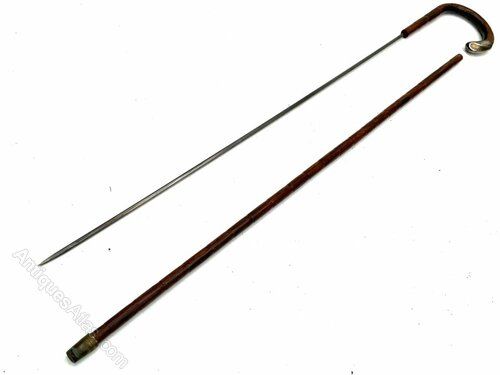
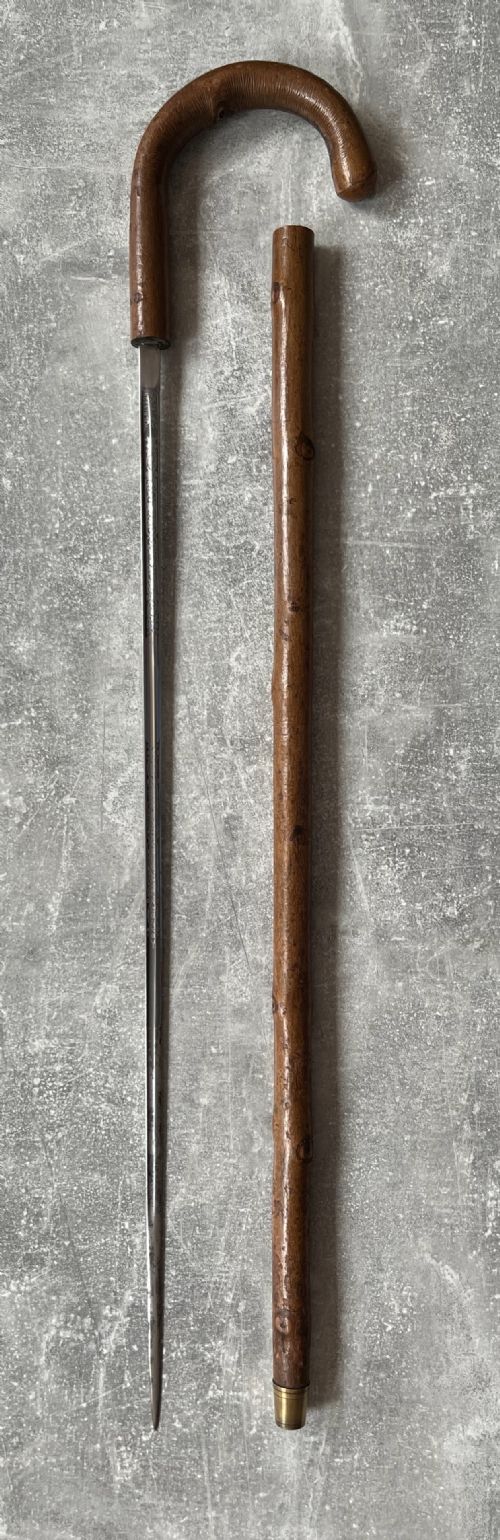
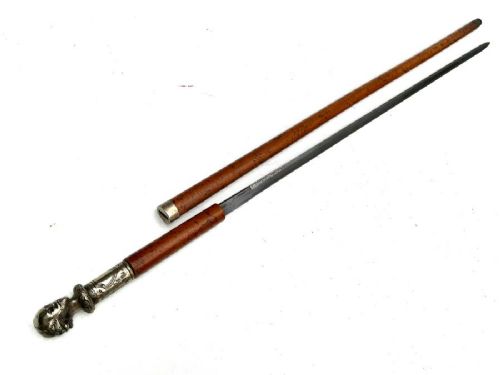
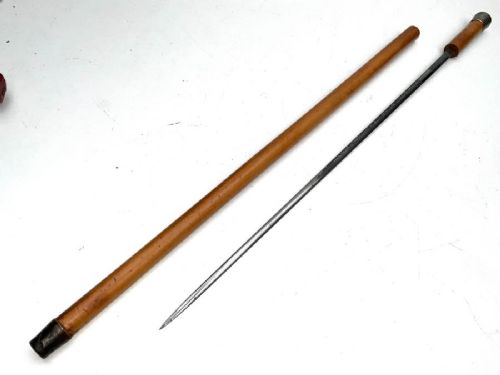


Brown Wood Sword Cane
These brown wood sword cane examples combine a gentleman's walking stick with a concealed steel blade, originating primarily from the Victorian and Edwardian eras.

Brown Wood Sword Cane
A brown wood sword cane serves as a dual-purpose accessory for walking and personal defence, housed inside natural timber shafts like cherrywood, chestnut, hazel wood, and partridge wood. You encounter forms equipped with crook handles, root ball grips, antler handles, and silver mounts designed for gentlemen and military officers.
The pieces on this page span from the late Victorian period through the Edwardian era into the 1920s, including military specimens and masonic examples. Most items disguise their blades within standard walking sticks and canes, maintaining the outward appearance of an ordinary daily accessory.
How They Were Made
Craftsmen utilised various natural timbers such as malacca cane, partridge wood, cherrywood, and hazel wood to form the outer shafts, frequently pairing them with brass or silver mounts. Handles were fashioned from root ends, antler, and crook shapes, then fitted securely to the timber body.
Internal steel blades were forged by notable makers, with specific examples incorporating Toledo and Wilkinson blades. Metal collars and precise joinery ensured the blade remained concealed within the wooden housing until drawn.
Several walking sticks double as Masonic lodge accessories or military swagger sticks hiding sharp steel.
What Varies in Quality
Quality rests upon the choice of timber and handle material, distinguishing standard walking sticks from pieces featuring root ball handles, silver mounts, or antler grips. Fine specimens incorporate named military associations or specific regional woods.
The integration of the blade elevates a piece, particularly those housing marked Wilkinson or Toledo steel blades within the wooden shaft. Superior examples balance robust construction with refined handle carving and secure locking mechanisms.
The Brown Wood Sword Cane Glossary
- Sword cane
- A walking stick or cane containing a concealed metal blade within its shaft. It functions primarily as a walking aid with hidden defensive utility.
- Malacca cane
- A durable natural rattan material imported from Southeast Asia, prized for its mottled brown finish and flexibility in walking stick production.
- Partridge wood
- A dense tropical timber exhibiting a distinctive partridge-feather pattern, utilised for strong and decorative walking stick shafts.
- Crook handle
- A walking stick handle curved into a hook shape at the top, allowing the cane to be hung over an arm.
Brown Wood Sword Cane: Frequently Asked Questions
How do you open a sword cane?
Most sword canes release through a threaded screw mechanism, a spring catch, or a simple pull-apart friction fit between the handle and the wooden shaft.
Users pull the handle straight out from the timber housing to reveal the concealed steel blade.
Were these used by military officers?
Military officers utilised walking sticks and swagger sticks equipped with hidden blades during the Victorian and Edwardian periods.
These pieces often reflected military service or regimental preferences alongside civilian gentlemanly attire.
What woods were used for the shafts?
Makers utilised timbers such as partridge wood, cherrywood, hazel, chestnut, and malacca cane for the exterior shafts.
These materials provided the necessary strength and straightness to disguise an internal steel blade.
How do you date a sword cane?
Dating relies on stylistic clues like silver hallmarks, handle materials such as antler or root ball, and associated military markers.
Periods range from late Victorian and Edwardian eras into the early twentieth century.