
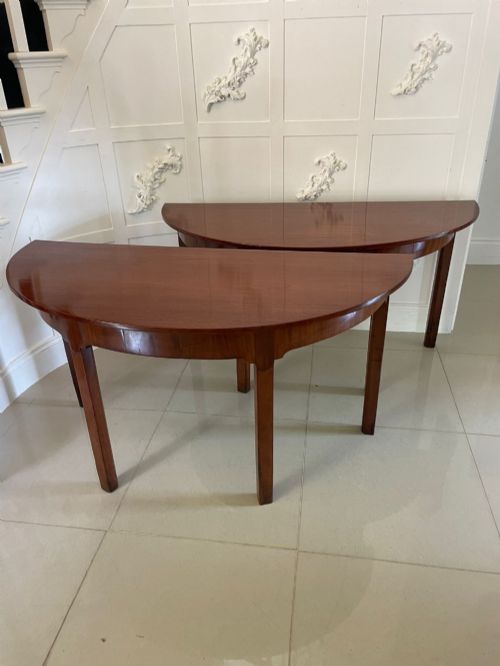
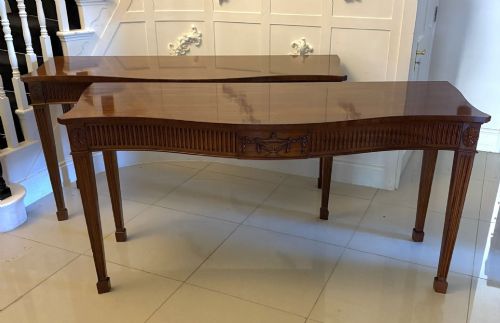
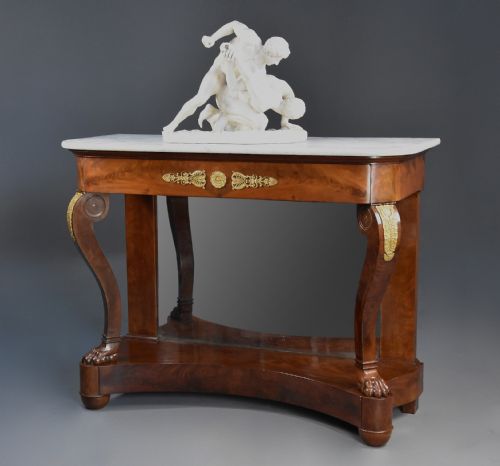
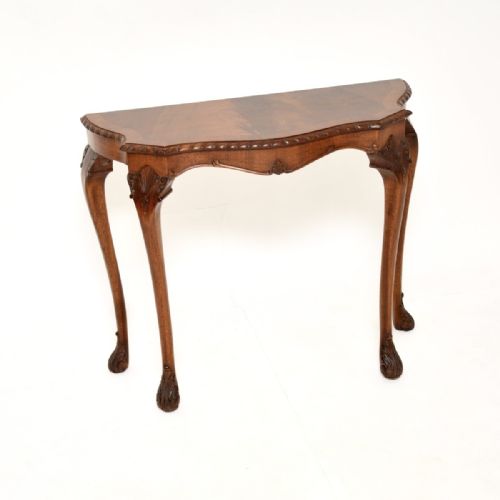


Brown Wood Pier Table
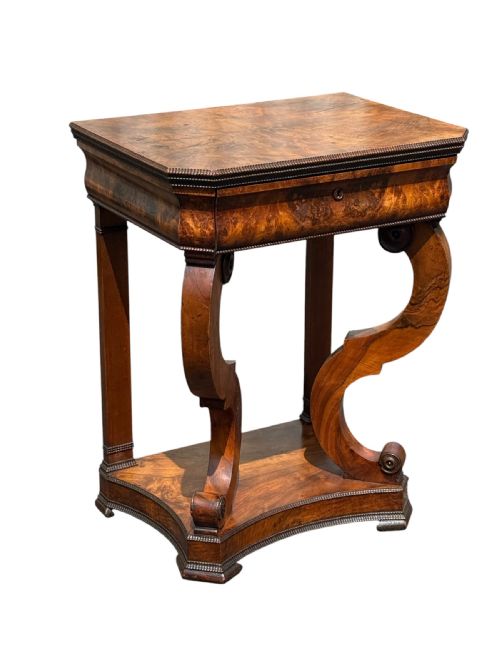
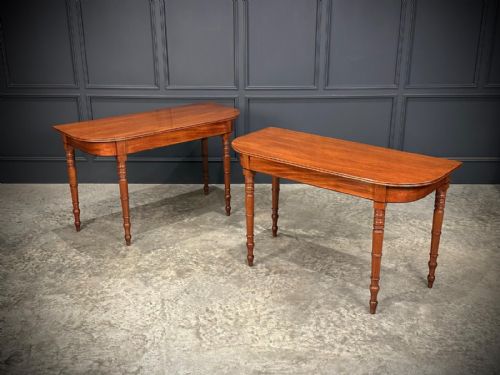
A brown wood pier table anchors a hallway or drawing room with solid timber gravitas, offering a flat surface designed to stand flat against a wall.
Brown Wood Pier Table
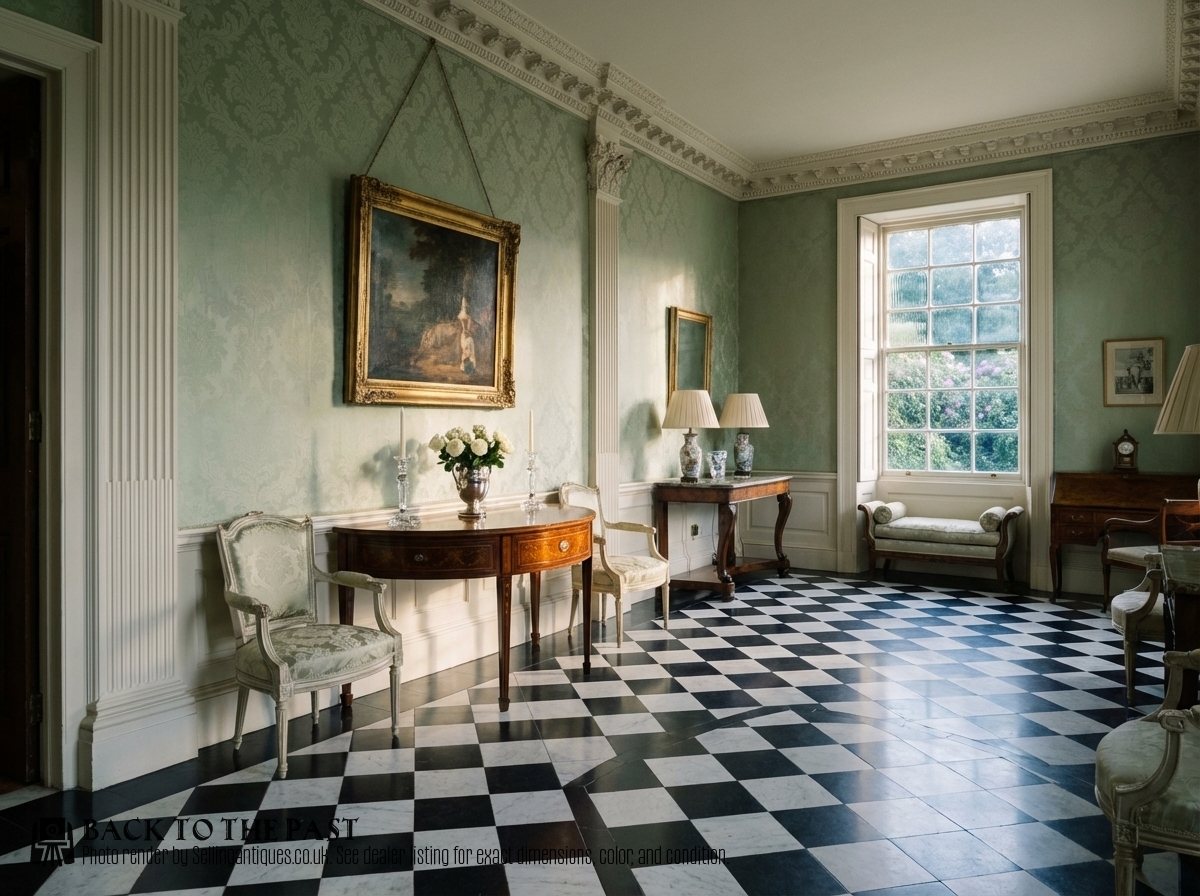
A brown wood pier table sits flush against architectural wall spaces, typically positioned between windows or beneath mirrors in formal reception rooms. Buyers encounter these pieces primarily in rich timbers such as mahogany and walnut, shaped in demi-lune, serpentine, or rectangular formats dating from the eighteenth century through to the early twentieth century.
The selections span distinct periods including Georgian, Regency, and William IV eras, alongside continental French and Italian workshops. Many examples function equally as side tables, hall tables, or serving consoles, reflecting flexible historical uses in domestic interiors.
Makers utilised architectural forms influenced by Neoclassical, Baroque, and Rococo styles, integrating marble tops and intricate carved details. The inventory demonstrates substantial variety in scale, ranging from compact hall pieces to large pairs designed for grand spaces.
Materials and construction methods
Cabinetmakers constructed these tables using dense primary timbers like solid mahogany and walnut, frequently applying flame mahogany veneer to achieve striking grain patterns on drawer fronts and tabletops. Secondary woods provide structural stability beneath the polished exterior surfaces.
Many formal examples incorporate heavy marble slabs inset into the wooden frame, providing a durable and cool surface for serving or display. Brass mounts, glass elements, and satinwood stringing appear selectively to accent the primary timber structure.
Brown Wood Pier Table Retail Price Guide 2026
Typical asking prices for brown wood pier table among the pieces listed under this phrase on Sellingantiques today, from the lower quarter to the upper quarter. They describe what is for sale here now, not the wider market.
The listings span multiple centuries, uniting eighteenth-century Georgian walnut and mahogany forms with later Victorian and twentieth-century revivals.
Assessing quality and execution
Superior execution shows in the crispness of hand-carved Neoclassical or Rococo details and the careful selection of figured timber veneers that align symmetrically across the piece. Lesser examples rely on plain timber stock with minimal decorative carving and simpler joinery.
The integration of heavy marble tops and the weight of the timber frame distinguish formal architectural console tables from domestic utility tables. Premium items retain original surface patination and cohesive period hardware rather than later replacements.
Epstein and Co
The Brown Wood Pier Table Glossary
- Demi-lune
- Half-moon shape. This curving format allows the table to project minimally from the wall while offering a useful display surface.
- Serpentine
- Wavy curving front edge. This contour requires skilled carpentry to shape timber and veneer smoothly.
- Console table
- Table designed to stand against a wall. These pieces often feature decorative front legs while relying on wall brackets for additional support.
- Flame mahogany veneer
- Timber sliced to reveal a flickering flame-like grain pattern. Cabinetmakers laid these thin sheets over stable secondary wood bases for decorative effect.
Brown Wood Pier Table: Frequently Asked Questions
Where should I place a brown wood pier table?
These tables suit narrow entrance halls, narrow wall spaces between windows, or beneath large living room mirrors where their shallow depth prevents obstruction.
Their flat backs ensure they rest securely against vertical surfaces while providing a surface for lamps or decorative objects.
How do I distinguish a console table from a side table?
Console tables traditionally anchor against a wall and historically relied on structural wall fixings, whereas side tables stand independently on four fully finished legs.
Over time these definitions overlap as many pieces serve identical functions in domestic settings.
What woods were used for antique pier tables?
Mahogany and walnut dominate the surviving examples, often enhanced with figured veneers or satinwood inlay.
Oak and softer secondary timbers appear in internal framing and structural elements.
Are marble tops original to these tables?
Many continental and formal British console tables were designed specifically to carry heavy marble slabs for a grand architectural appearance.
Matching the stone type and edge profile to the timber base helps confirm period integrity.