

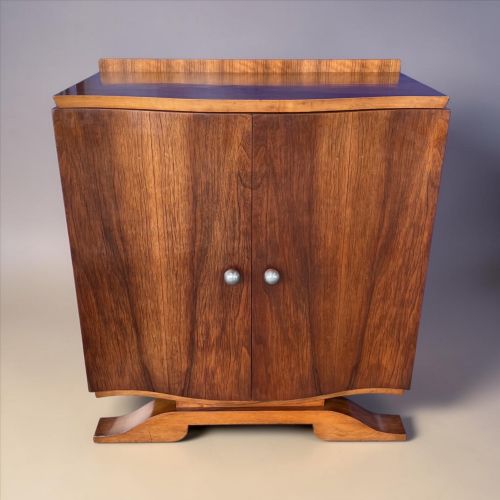
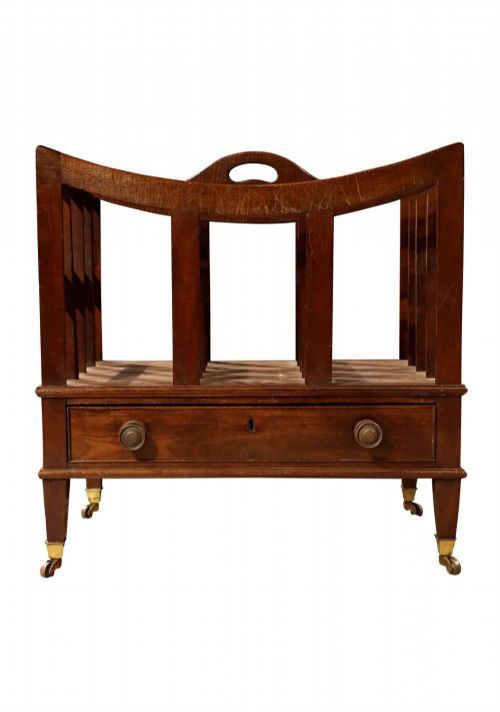
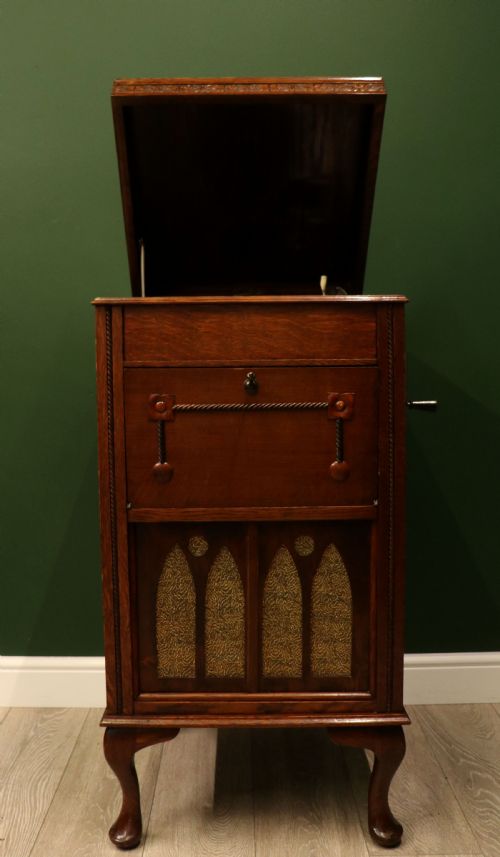


Brown Wood Music Cabinet
These brown wood music cabinet pieces offer practical storage for sheet music and folios, bringing period craftsmanship into a modern interior.
Brown Wood Music Cabinet
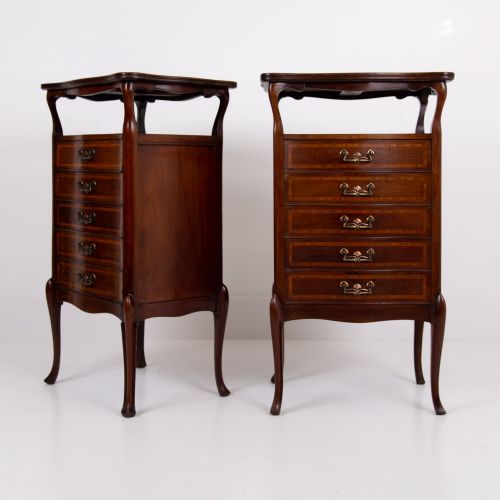
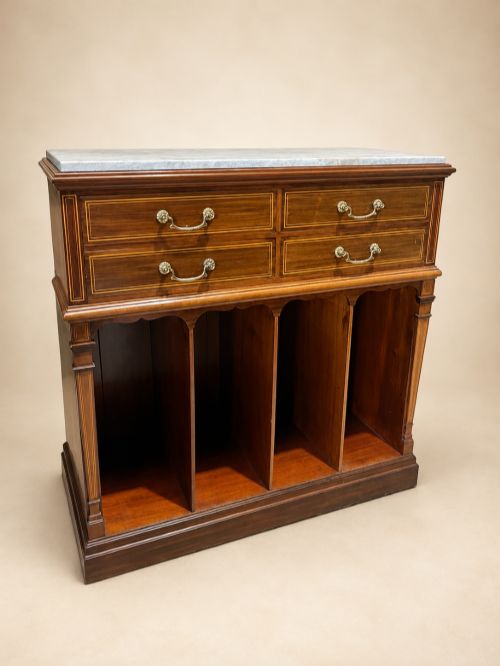
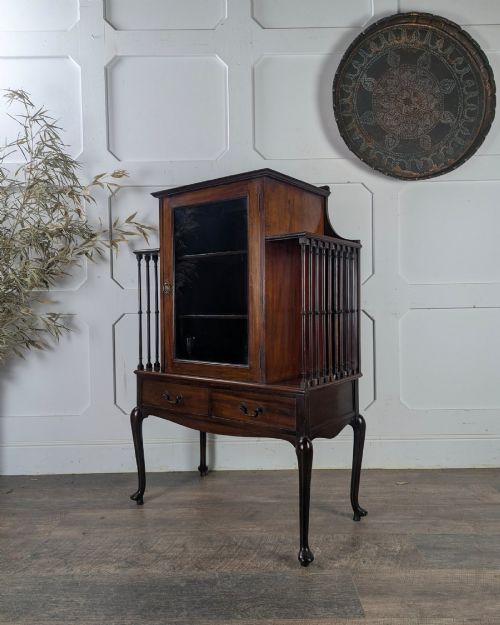
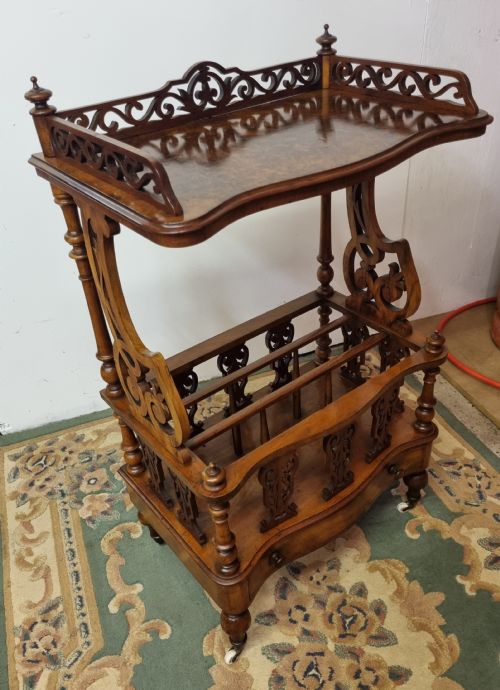
A brown wood music cabinet serves as a dedicated storage item for sheet music, folios, and scores, frequently appearing across Victorian and Edwardian periods. These pieces encompass upright cabinets with internal drawers, drop-front compartments, and open canterbury designs.
Buyers will most commonly encounter Edwardian and Victorian examples rendered in mahogany or walnut. The selection includes dedicated filing units alongside hybrid forms that double as display cabinets or magazine racks.
Construction and materials
Makers utilised solid timbers and decorative veneers, notably burr walnut, flame mahogany, and satinwood, often enhanced with intricate marquetry and contrasting stringing. Brass handles, hinges, and castors complete the structural hardware on these pieces.
Cabinetmakers constructed the internal filing divisions and drawers to precise dimensions suited for holding paper sheets and folios securely. Exterior surfaces received French polishing to highlight the natural grain patterns of the brown wood.
Some cabinets hide their sheet music behind delightful drop-front panels that make every practice session feel like a tiny theatrical reveal.
Assessing quality and detail
Quality reveals itself in the selection of timber veneers, where symmetrical burr walnut or figured mahogany denotes a superior standard of manufacture. The crispness of inlaid marquetry and the integration of fine brass mounts further separate standard production from exceptional examples.
Structural integrity depends on the original fittings, such as functioning drop-front mechanisms and properly aligned internal filing slots. Cabinets retaining original glass panels, castors, and polished finishes command greater interest from collectors.
U Phone of Leeds·Keeble London·J.C.Loudon
The Brown Wood Music Cabinet Glossary
- Canterbury
- A low stand featuring slatted divisions for holding music sheets, magazines, or folios, often fitted with a drawer below.
- Marquetry
- Decorative patterns formed by fitting together small pieces of coloured wood veneer into a design on a timber surface.
- Serpentine
- A curved furniture shape that undulates with a convex centre flanked by concave ends, common on mid-Victorian pieces.
- Stringing
- Thin lines of contrasting wood inlay used to outline panels, drawers, and tabletops on cabinet furniture.
- Pier cabinet
- An upright display unit designed to stand against a narrow section of wall between windows.
Brown Wood Music Cabinet: Frequently Asked Questions
What fits inside a music cabinet?
These cabinets house sheet music, folios, and documents within purpose-built internal compartments or shallow drawers.
Many examples feature drop-front shelves designed to keep paper flat and organised without bending.
How do I date a cabinet?
Dating relies on stylistic clues, timber choice, and construction methods characteristic of Victorian or Edwardian periods.
Earlier pieces often showcase rich flame mahogany, while Edwardian versions frequently display lighter satinwood inlay and Sheraton Revival motifs.
Are canburys the same as music cabinets?
Canterburys are open-framed racks with vertical partitions specifically built for holding sheet music and periodicals close to hand.
Music cabinets are fully enclosed pieces with doors or drop-front drawers providing more concealed storage.
Where should I place one?
These cabinets fit well in living rooms, studies, or music rooms as functional accent furniture.
Their modest footprints allow them to serve as side tables or display surfaces while housing collections inside.