

Brown Wood Gaming Table
A brown wood gaming table brings centuries of social play into a room, offering fold-over tops and clever internal compartments.
Brown Wood Gaming Table
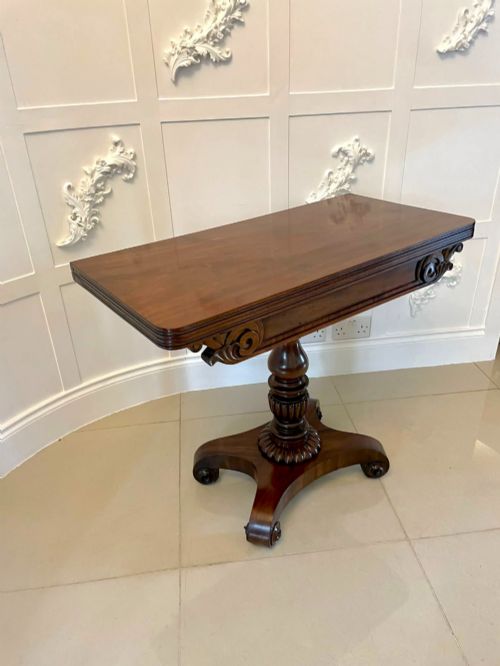
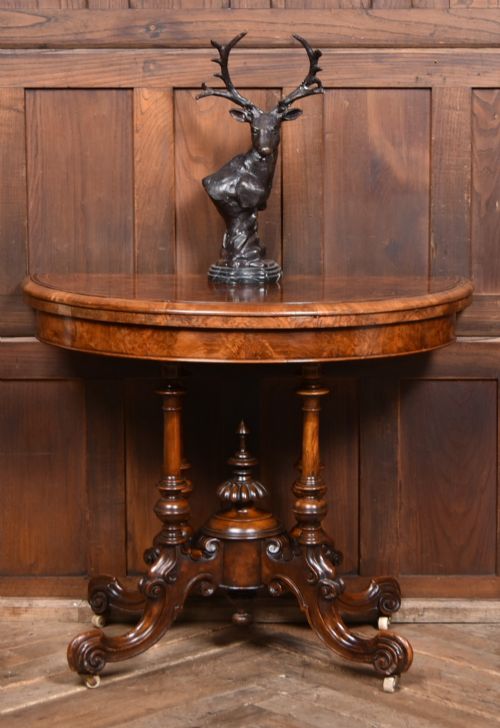
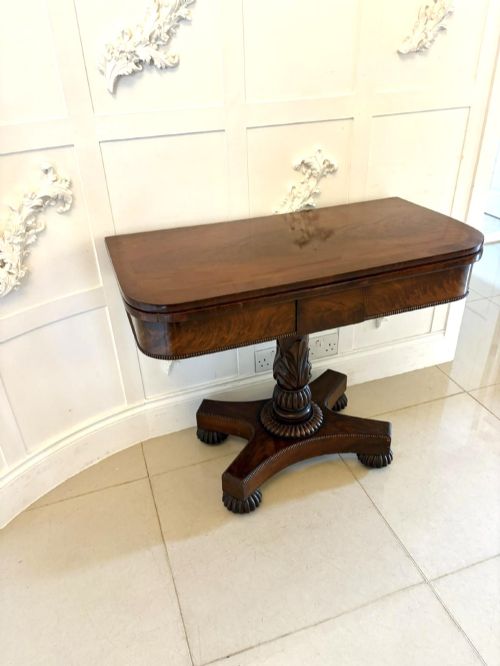
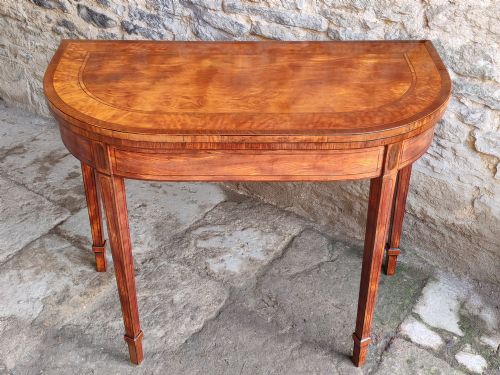
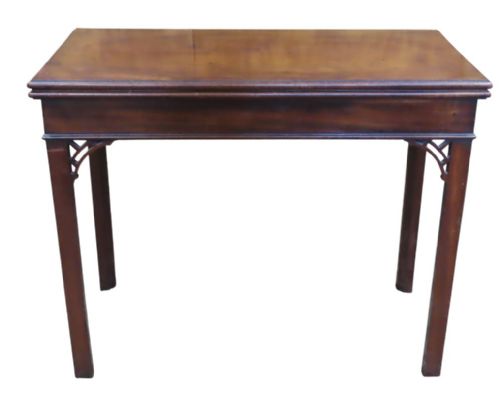
A brown wood gaming table serves multiple functions in a room, shifting easily from a compact side piece to a wide surface prepared for cards, chess, or backgammon. The examples seen here span periods from the eighteenth century through the Edwardian era, taking the form of card tables, fold-over tables, and specialised game blocks.
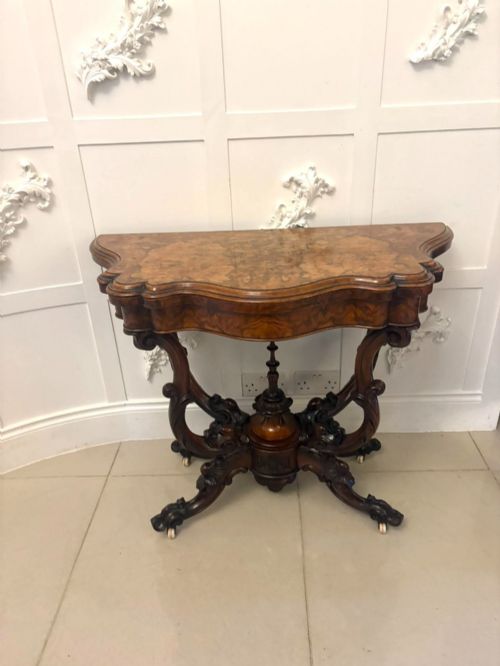
Most pieces on this page appear in mahogany or burr walnut, reflecting the preference for rich timbers during the Georgian, Regency, and Victorian periods. Makers often incorporated concertina actions, swivel tops, or concealed storage compartments beneath the playing surface to hold pieces and cards.
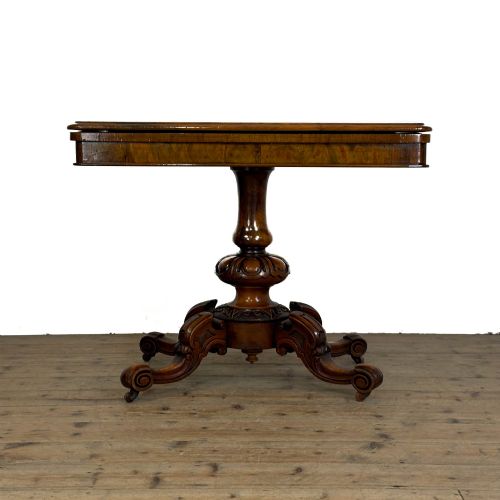
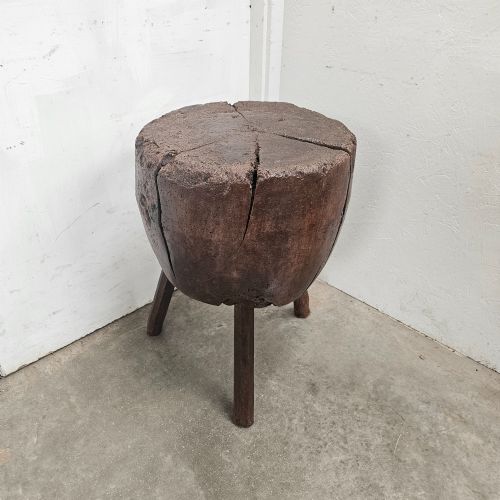
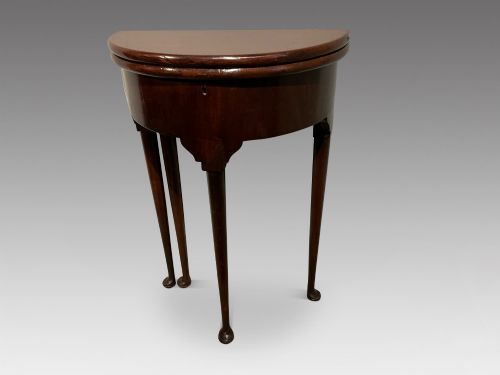
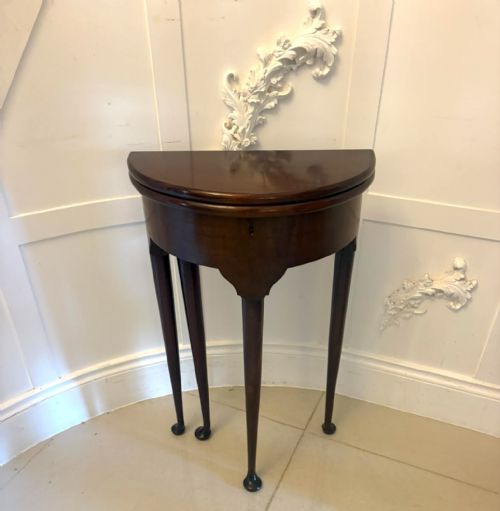
Forms range from simple D-shaped and demi-lune tables to ornate console tables featuring carved basket bases, porcelain mounts, or ormolu details. Simpler primitive beech game blocks also appear, showing that timber gaming surfaces served practical purposes across various households.
How they were made
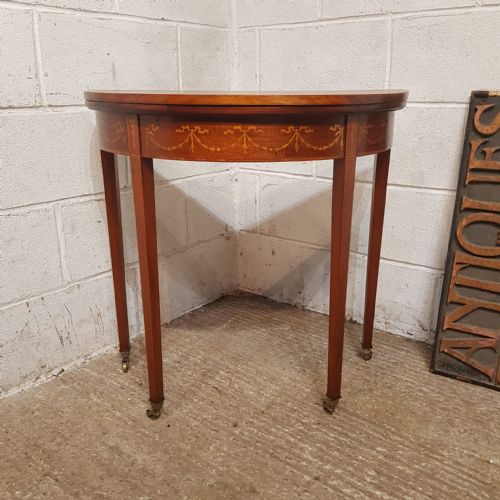
Cabinet makers constructed these tables using solid timbers and veneers such as mahogany, walnut, satinwood, and kingwood, frequently applying cross-banding and wood inlay to enrich the surfaces. Timber selection prioritized rich grain patterns, particularly in figured mahogany and burr walnut.
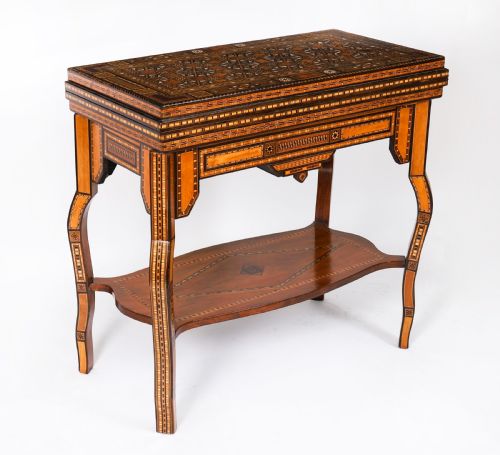
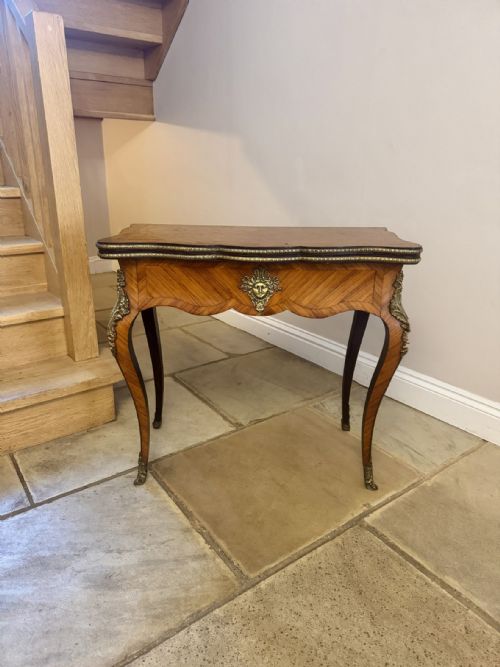
Mechanisms relied on sturdy hinges, concertina actions, and pivoting top leaves that allowed the tables to double their surface area when opened for play. Finer examples integrated brass hardware, ormolu mounts, and hand-carved elements like the basket bases seen on Victorian consoles.
Some tables hid your losing card streak inside a secret compartment before you even finished shuffling.
What varies in quality
The standard of a brown wood gaming table depends largely on the selection of timber veneers and the precision of the joinery in its folding or concertina mechanism. Superior examples display carefully matched wood grain across the fold-over leaves and crisp, deep carving on the bases.
Attribution to recognised makers or workshops elevates certain pieces, particularly when combined with specialised multi-game boards for chess and backgammon. Metalwork mounts, such as ormolu or porcelain details, also distinguish finer production from standard domestic furniture.
G T Morant·François Linke·Edwards & Roberts
The Brown Wood Gaming Table Glossary
- Demi-lune
- Having a half-moon shape with a flat back edge for placement against a wall. These tables often feature fold-over tops that reveal a baize-lined playing surface.
- Concertina action
- An expanding frame mechanism that supports a fold-over table top evenly when extended. This design allows four legs to support the opened top without a central swinging leg.
- Cross-banding
- A decorative border of veneer laid around the perimeter of a tabletop with the grain running perpendicular to the central panel. It frames the primary wood figure.
- Ormolu
- Gilt bronze mounts applied to furniture for decoration. Found on finer nineteenth-century pieces alongside porcelain inserts.
- Bagatelle
- A cue sport played on a specialised board with holes and pins. Tables adapted for this game include internal scoring arrangements or compartments.
Brown Wood Gaming Table: Frequently Asked Questions
How do you play chess on these tables?
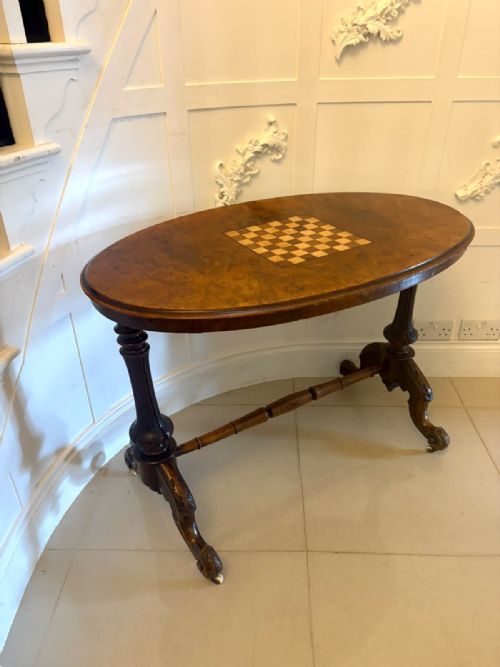
Tables designed for chess often incorporate an inlaid wood board directly into the top surface using contrasting timbers such as satinwood and ebony. Some Victorian examples feature removable or reversible tops that switch between a plain wood surface and a gaming grid.
Players used carved wooden pieces stored within the table's internal compartments during matches.
What woods were commonly used?
Mahogany and walnut dominate the selection, especially in figured and burr varieties that display dramatic natural grain patterns. Cabinet makers also utilised satinwood, kingwood, rosewood, and yew wood for inlay and decorative banding.
Simpler items utilised beech or domestic fruitwoods for utilitarian game blocks.
How do I identify a Regency table?
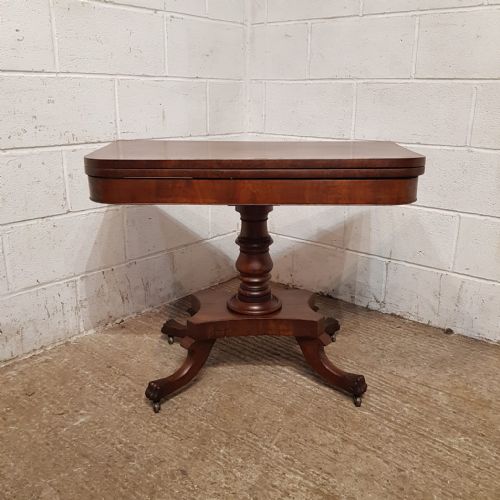
Regency tables typically date from the early nineteenth century and feature clean architectural lines, dark mahogany timbers, and often brass inlay or lion paw feet. They frequently take "D" shapes or rectangular forms with robust pillar supports.
Their construction emphasises classical proportions and restraint compared to later Victorian ornamentation.