



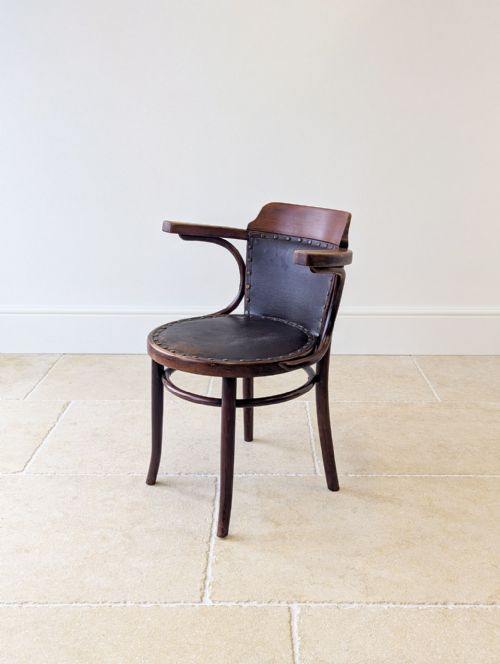
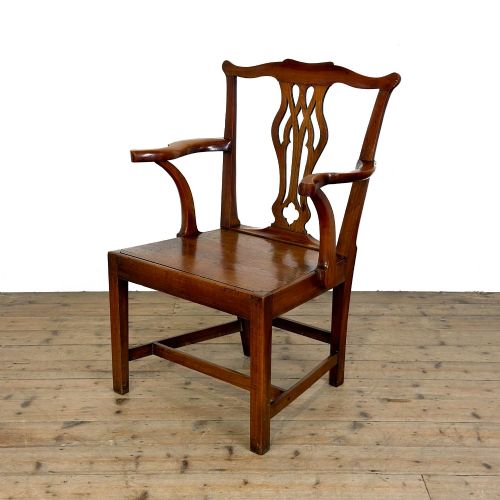
Brown Wood Desk Chair
A brown wood desk chair brings substantial warmth and practical comfort to a study through traditional timber construction.
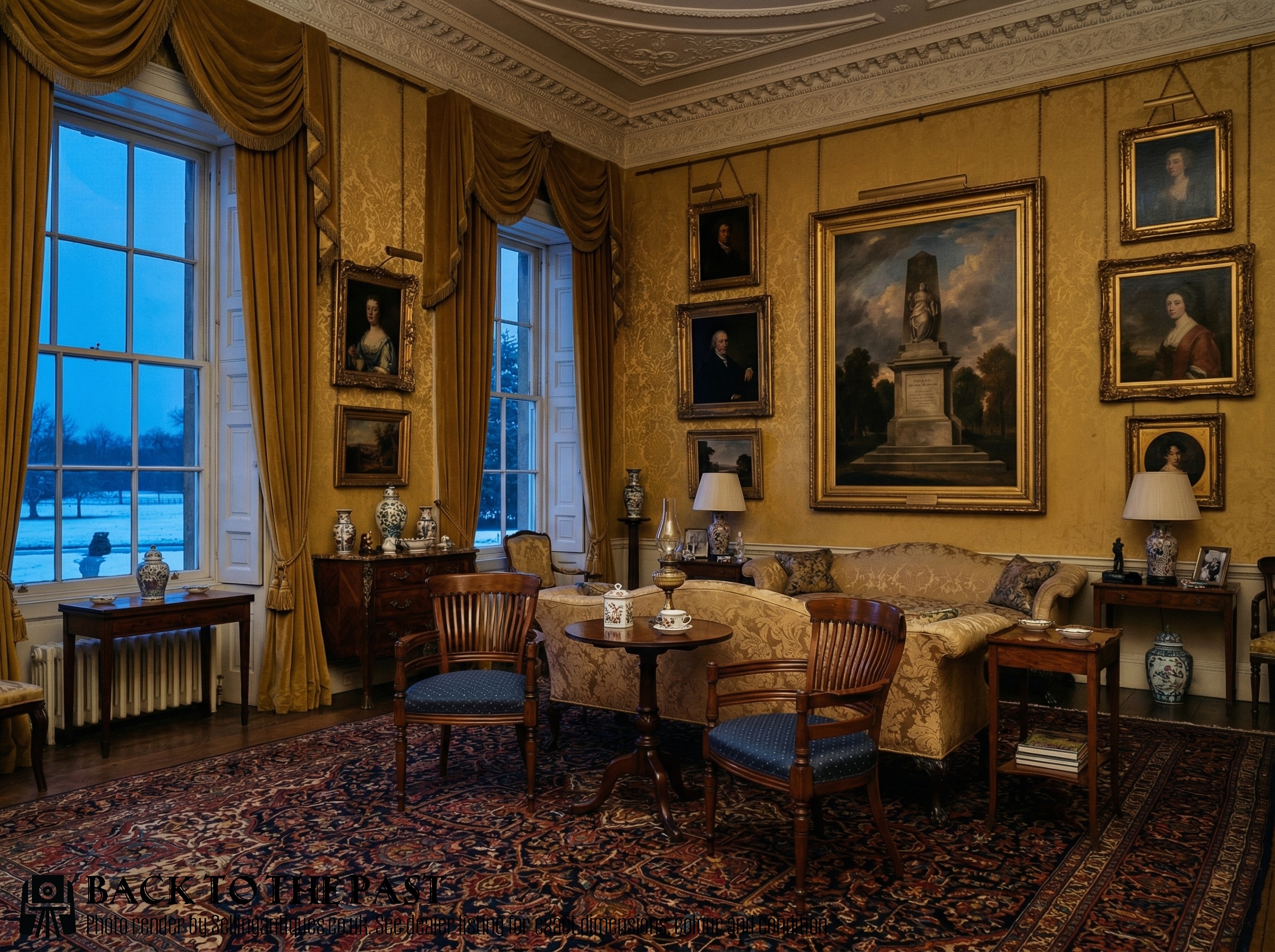
Brown Wood Desk Chair
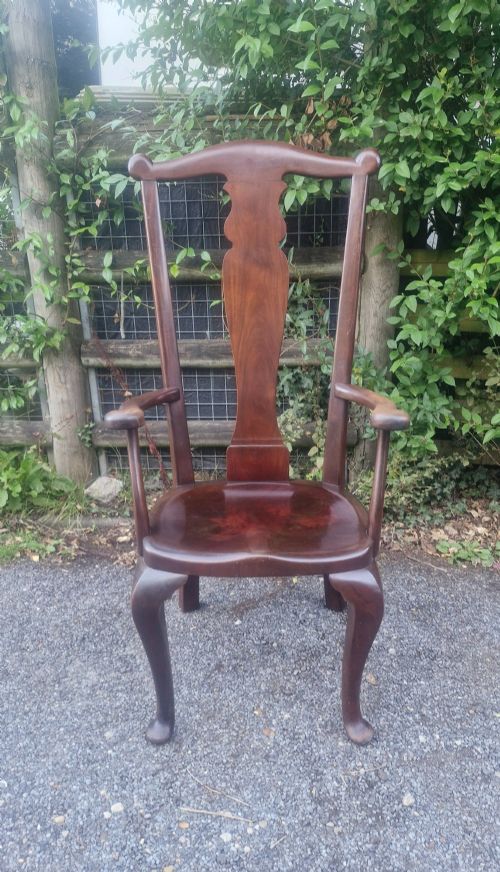
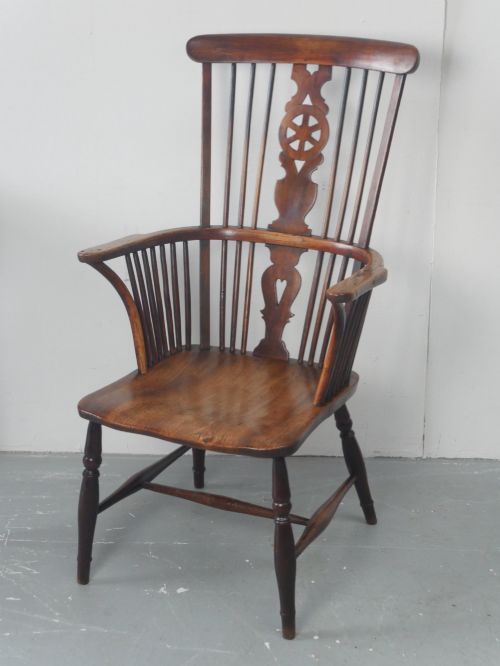
A brown wood desk chair is a practical seat designed for workspace use, typically constructed from timber such as mahogany, elm, or yew. You encounter various forms here, ranging from revolving office seats to solid Windsor armchairs and high-backed library models.
The selection spans several centuries and styles, including Georgian, Victorian, Edwardian, and Regency periods alongside English country vernacular designs. Many examples feature robust armrests and supportive backrests intended for prolonged daily sitting at a desk or table.
The materials reflect traditional cabinetmaking, utilising local hardwoods that develop deep patinas over generations of use. Buyers searching this phrase find chairs that combine functional workspace utility with historical character.
Materials and construction methods
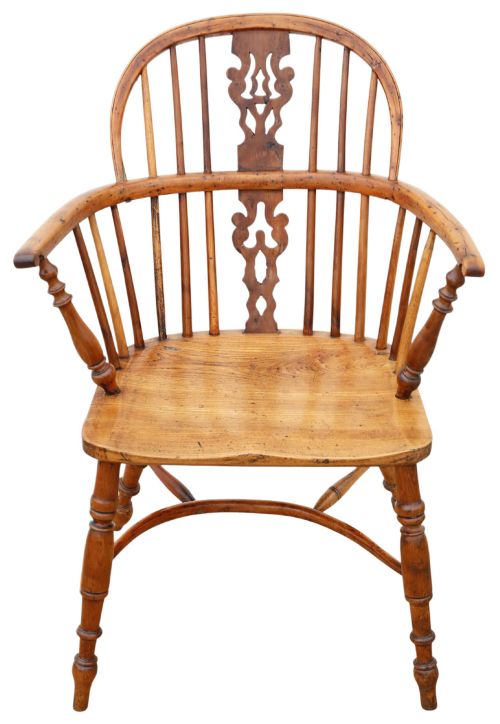
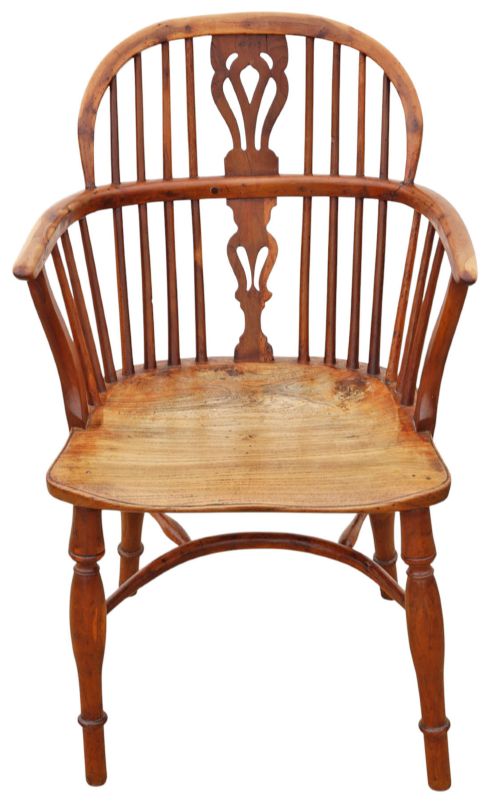
These chairs rely upon sturdy timbers like mahogany, elm, ash, and yew, often combining different woods within a single frame for structural integrity. Windsor models typically employ ash or beech for the bent components and elm for the scooped seats.
Joinery techniques include traditional mortise and tenon joints, steam bending for curved components like hoop backs, and turning for spindles and legs. Swivel and revolving mechanisms in later Victorian desk chairs incorporate metal screw posts and iron bases to permit movement.
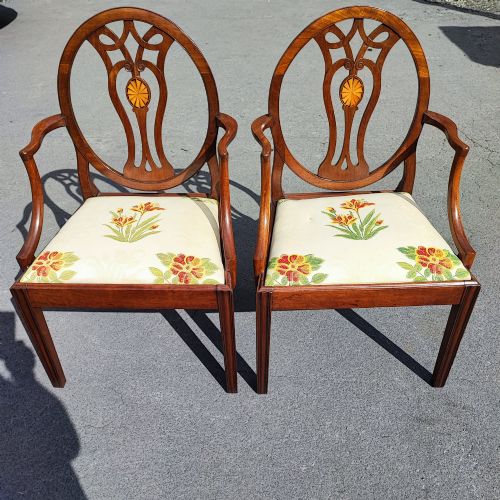
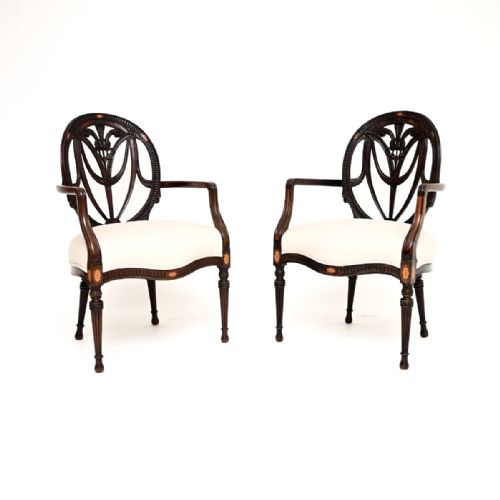
Surface finishes generally consist of polished wax, shellac, or varnish applied directly to the bare timber to protect the wood while highlighting the natural grain. Inlaid examples incorporate contrasting veneers and banded details into mahogany or satinwood surfaces.
Listings feature 18th-century, Regency, Victorian, and Edwardian periods, utilising timbers such as mahogany, yew, elm, beech, and ash.
Judging quality in traditional chairs
Quality rests upon the selection of timber and the integrity of the original construction, distinguishing robust pieces from compromised ones. Dense, well-figured grains in mahogany or carefully matched yew and elm combinations indicate superior initial material selection.
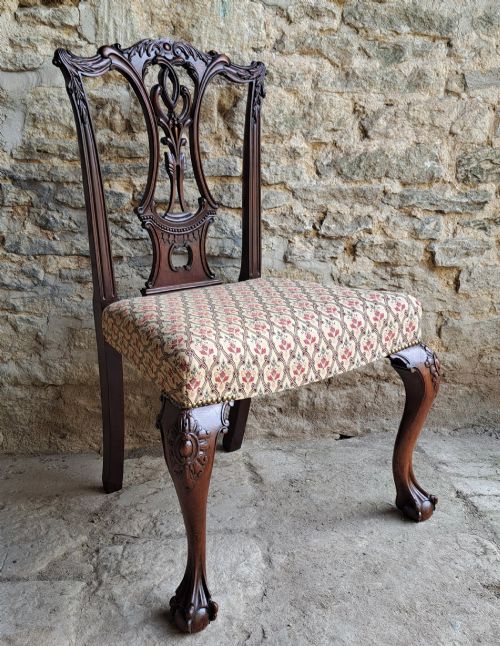
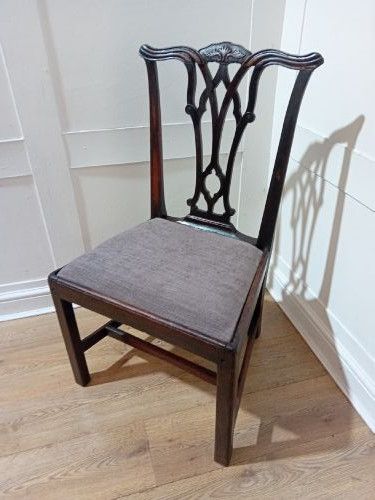
Proportion and comfort dictate the success of the design, where balanced armrests, supportive back angles, and stable leg placement ensure proper ergonomic function. Original turning details and crisp carving in Chippendale or Regency styles show greater maker skill than simplified vernacular equivalents.
The Brown Wood Desk Chair Glossary
- Windsor
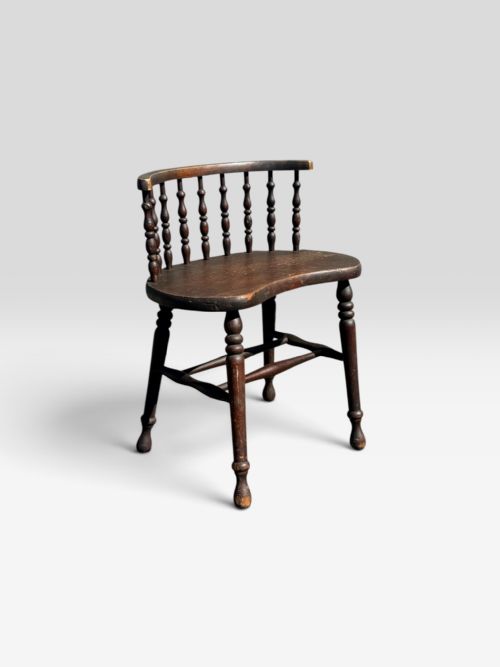
- A chair built with a solid wooden seat into which the legs and back spindles are directly tenoned. These regional country seats often combine elm seats with ash or yew superstructures.
- Carver
- An armchair, usually designed to match a set of smaller dining or side chairs. They frequently appear at the head of a table or beside a desk.
- Smokers Bow
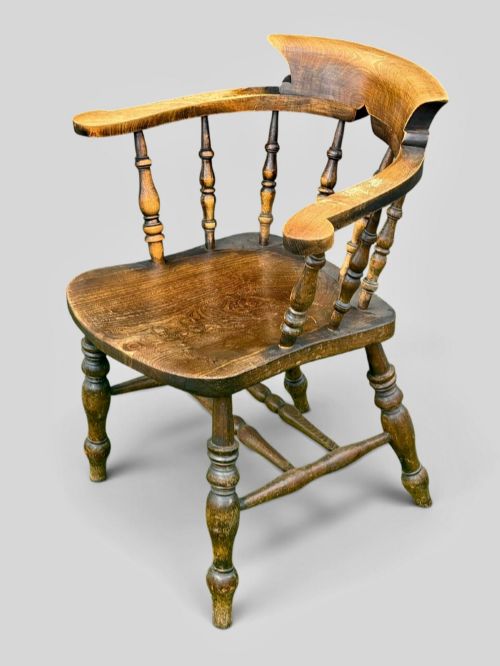
- A low-backed Windsor armchair featuring a continuous curved armrail supported by turned spindles. This vernacular form is also known as a captain's chair.
- Revolving Desk Chair
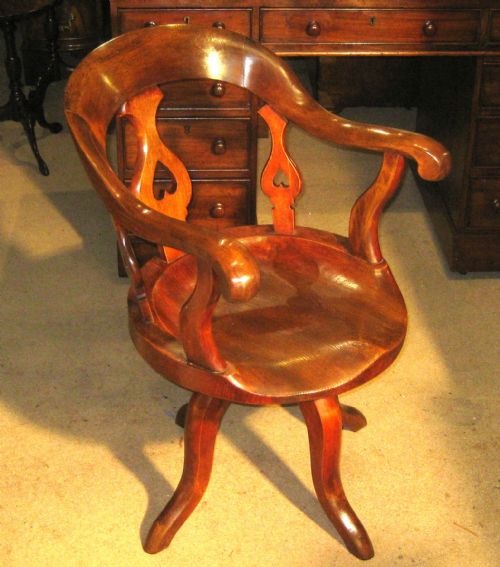
- A swivel seat mounted on a central pivot mechanism, frequently produced during the Victorian period. They often incorporate height adjustment screws and upholstered leather panels.
- Vernacular
- An architectural and woodworking term describing objects made by local craftsmen following regional traditions rather than high-style metropolitan patterns.
Brown Wood Desk Chair: Frequently Asked Questions
How do I identify a Windsor desk chair?
A Windsor chair is distinguished by its solid wood seat, into which the legs and back spindles are bored rather than joined through a traditional frame.
They frequently combine different timbers, such as an elm seat paired with yew or ash spindles, and lack upholstery on the main body.
What periods are common for these chairs?
The listings span the 18th century through the Edwardian era, encompassing Georgian, Regency, and Victorian periods.
Earlier examples from the 1700s often display Chippendale influences or country vernacular styles, while later 19th-century pieces include revolving office models.
Are these chairs comfortable for daily use?
Many models were originally built for working environments, featuring supportive high backs and ergonomic scooped seats carved from solid elm.
Some incorporate leather pads or caned panels, though adding a loose cushion is common for extended modern sitting.
What timbers should I expect to find?
Mahogany is prevalent in formal Georgian and Victorian desk chairs, frequently showing rich grain and dark polish.
Country pieces tend to utilise native British hardwoods like elm, ash, beech, and yew.