

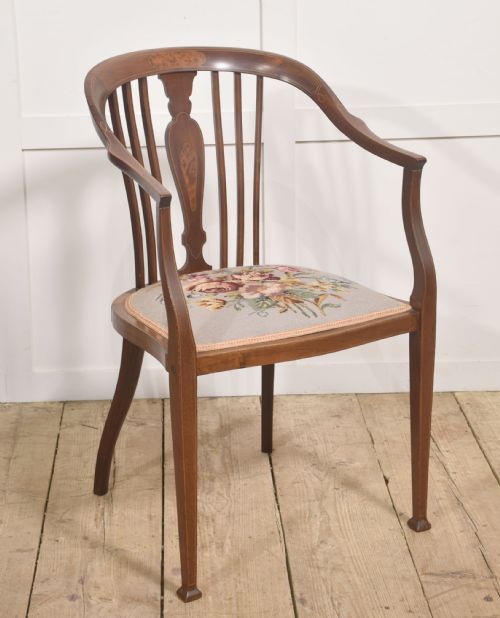


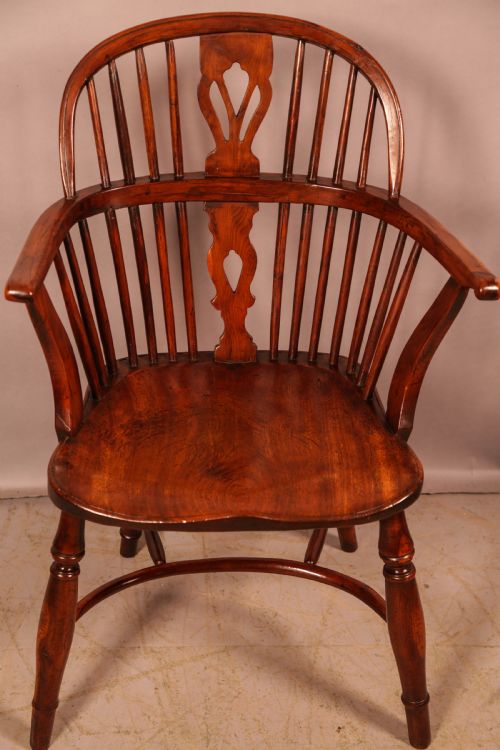


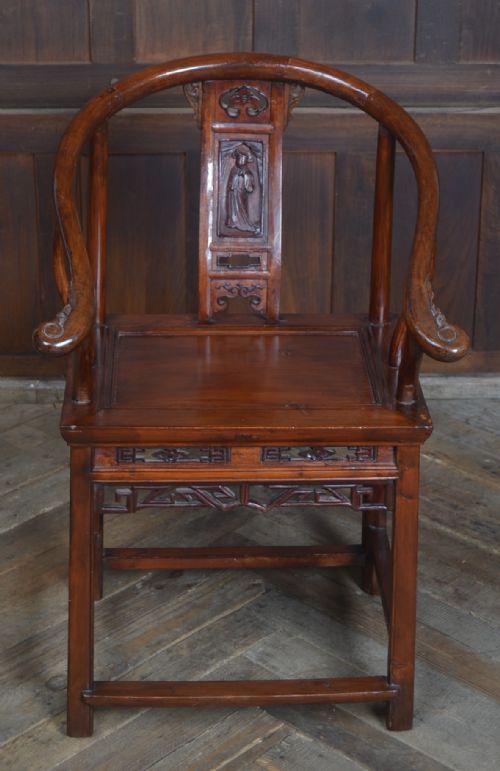


Curved Back Elbow Chair
A curved back elbow chair brings practical support and a graceful silhouette to a room, drawing on centuries of seating design.
Curved Back Elbow Chair
A curved back elbow chair combines enclosed seating comfort with defined armrests, shaped to support the arms while seated. These pieces appear in forms ranging from Windsor seating to inlaid parlour designs.
The selections visible here span several periods including Regency, Victorian, Edwardian, and the early twentieth century. Armchairs dominate this category, taking specific shapes like low back Windsors, tub chairs, and corner chairs.
English country traditions meet refined stylistic influences across these examples, with aesthetic movement and Chinese lacquered details appearing alongside standard domestic forms. Buyers encounter various interpretations, from simple spindle backs to inlaid mahogany frames.
How they were made
Timbers selected for these frames include mahogany, yew wood, elm, and satinwood, chosen for their grain patterns and structural strength. Workshops utilised contrasting wood inlays and lacquering to decorate surfaces.
Upholstery methods involved traditional stuffing materials finished with velvet or needlepoint tapestry covers. Windsor constructions employed turned wooden spindles and bentwood components to form the characteristic curved backs.
Curved Back Elbow Chair Retail Price Guide 2026
Typical asking prices for curved back elbow chair among the pieces listed under this phrase on Sellingantiques today, from the lower quarter to the upper quarter. They describe what is for sale here now, not the wider market.
Listings feature 19th Century, Edwardian, Regency, and Victorian periods, constructed from mahogany, yew wood, elm, and satinwood.
What varies in quality
The distinction between standard domestic seating and exceptional pieces rests on the precision of timber selection and the complexity of decorative details. Finer examples display meticulous satinwood inlay, balanced proportions, and skilled turning.
Construction integrity governs the longevity of each frame, where tight joints and well-seasoned wood prevent movement. The integration of the curved back into the arms demonstrates the maker's proficiency in handling tension and form.
Benjamin Gilling·E.W. Godwin
The Curved Back Elbow Chair Glossary
- Elbow chair
- An armchair designed with low arms that support the elbows, common in dining and desk settings.
- Windsor chair
- A wooden chair featuring a solid saddle seat into which the legs and curved back spindles are wedged.
- Tub chair
- An armchair with a continuous curved back and armrest rail forming a rounded enclosure.
- Satinwood
- A lustrous, hard timber native to the tropics, frequently used for contrasting stringing and decorative inlay.
- Needlepoint tapestry
- Hand-worked canvas embroidery utilised for traditional upholstery covers.
Curved Back Elbow Chair: Frequently Asked Questions
What is a curved back elbow chair?
A curved back elbow chair is a form of armchair featuring a rounded backrest that flows into integrated arm supports.
These chairs appear in diverse styles ranging from rustic Windsor designs to formal inlaid mahogany parlour seating.
How do I date a curved back elbow chair?
Dating relies on identifying timber choices, construction techniques, and stylistic markers characteristic of periods like the Regency or Edwardian era.
Examining the joinery and decorative motifs such as satinwood inlay helps place the piece within its historical context.
Where were Windsor elbow chairs placed?
Windsor elbow chairs served utility roles in country houses, farmhouses, and domestic studies.
Their sturdy elm and yew wood construction made them practical for daily use around desks and communal tables.
What is a tub chair?
A tub chair is a fully enclosed armchair where the curved back and arms form a continuous rounded barrier.
Examples from the Victorian and Edwardian periods often feature upholstered panels and mahogany frames.