


Brown Wood Coffer
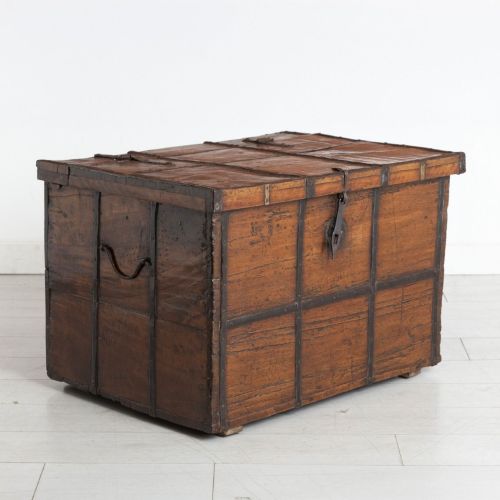
A brown wood coffer provides solid timber storage with centuries of utility behind its hinged lid.
Brown Wood Coffer
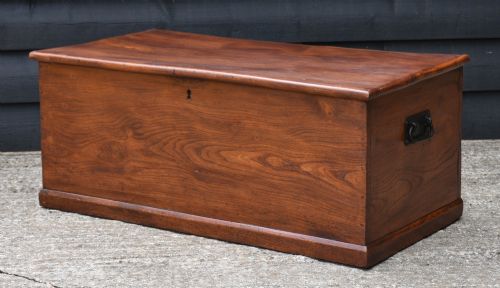
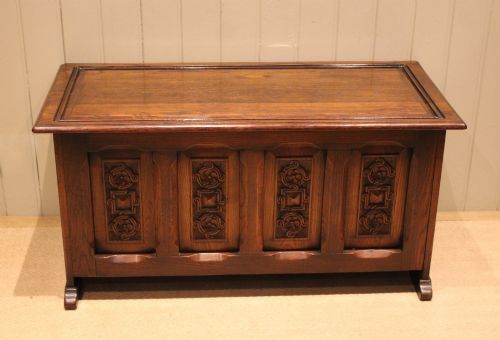
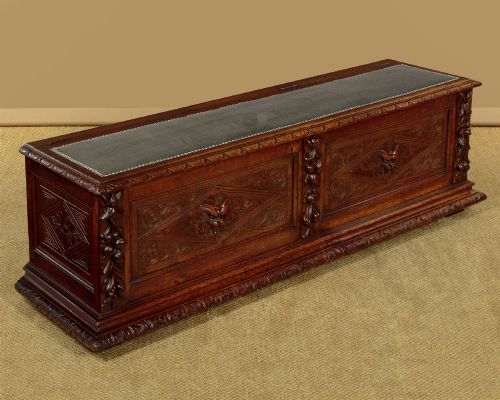
A brown wood coffer covers heavy timber storage chests and blanket boxes originating from the seventeenth century onward. Buyers searching for a brown wood coffer encounter vernacular elm six-plank pieces alongside robust carved oak examples.
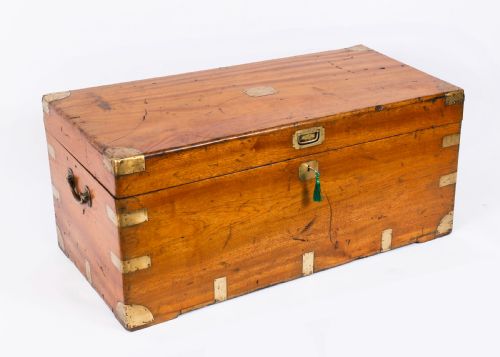
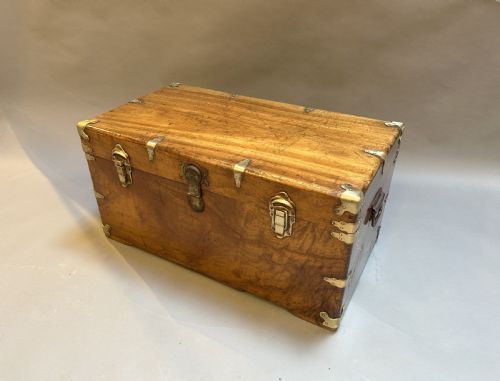
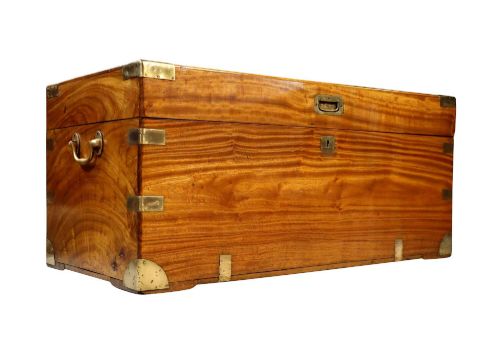
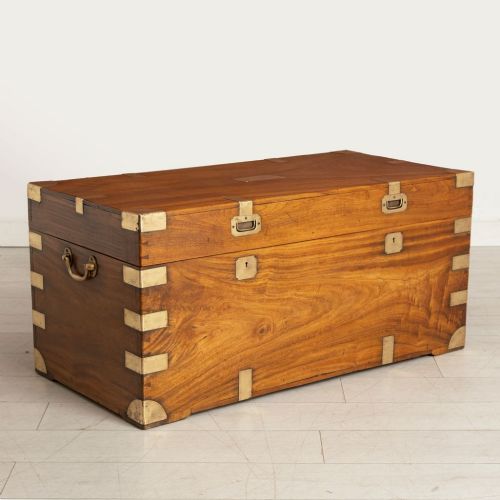
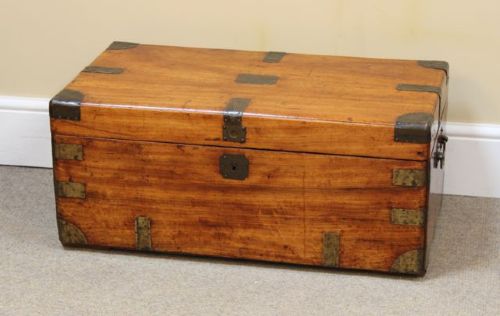
The selection extends to camphor wood trunks built for military campaigns, complete with brass mounts and bound corners. Period pieces range from early English oak dowry chests to colonial camphor trunks intended for travel.
Materials and construction
Construction relies on sturdy native hardwoods such as oak, elm and mahogany, joined with traditional pegged joints or dovetails. Camphor wood appears frequently in military and campaign pieces due to its insect-repellent properties.
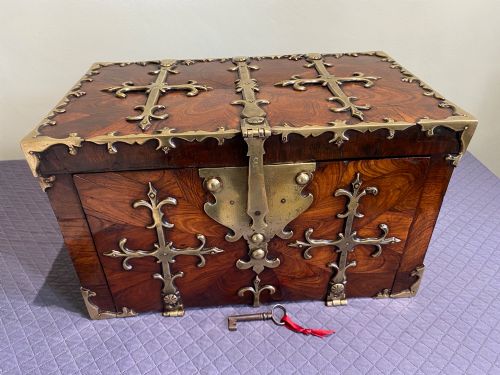
Metalwork plays a structural role, with brass corners, straps and flush-fitting carrying handles reinforcing the timber frames. Iron brackets and hinges secure heavy lids designed to withstand rigorous movement.
Camphor wood trunks retain their distinct botanical scent after centuries of travel.
Quality factors
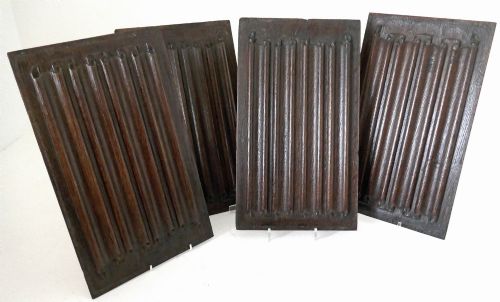
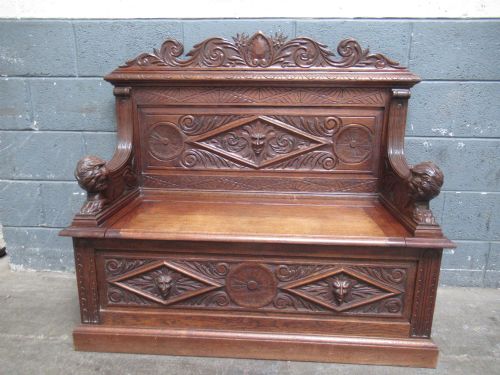
Subtlety of hand-carved ornamentation distinguishes standard utility boxes from superior examples. Crisp linenfold panels and deep relief carving indicate skilled joinery.
The integrity of the original timber grain and the depth of surface patina dictate desirability. Intact brass hardware and original internal tills elevate a piece above altered variants.
The Brown Wood Coffer Glossary
- Coffer
- A heavy wooden chest traditionally used for storing valuables or documents. These storage pieces often feature hinged lids and robust plank construction.
- Campaign trunk
- A portable chest made in sections with recessed brass handles for military transport. Camphor wood is the primary timber utilised for these travel boxes.
- Linenfold
- A style of relief carving imitating folded linen. This decorative motif appears predominantly on early oak panels.
- Six-plank
- A simple construction method utilising six boards joined at the edges to form a box. This vernacular technique defines early provincial coffers.
- Patina
- The surface sheen developed through age, handling and polishing. Original finishes display deep colour variations acquired over centuries.
Brown Wood Coffer: Frequently Asked Questions
What is a brown wood coffer used for?
These timber chests serve as practical storage furniture for blankets, linens and household goods. Their sturdy flat lids also allow them to function as occasional seating or low tables.
Historically, they secured valuable belongings against theft and damp conditions. Today, they integrate into living spaces to provide concealed storage while introducing period character.
How do I identify an oak coffer from the seventeenth century?
Early oak pieces display pegged mortise and tenon joints rather than modern fixings. Hand-cut tool marks remain visible on the interior boards.
Surface timber shows deep oxidation and a dry wax finish rather than glossy modern varnishes. Carved details tend to be geometric or floral motifs typical of the period.
Why are campaign trunks made from camphor wood?
Camphor wood emits a strong natural aroma that deters insects and moths from damaging uniforms during tropical service. The timber resists humidity changes well.
These travel trunks feature brass bound edges and recessed hardware to prevent snagging during transit. Officers relied on their durability for long sea voyages.
How should I care for a vintage wooden chest?
Maintain stable indoor humidity levels to prevent the solid timber from splitting or warping. Avoid placing the chest near direct heat sources or strong sunlight.
Apply a microcrystalline wax periodically to nourish the dry wood and preserve the surface patina. Clean the exterior using a soft, dry cloth without harsh chemical polishes.