
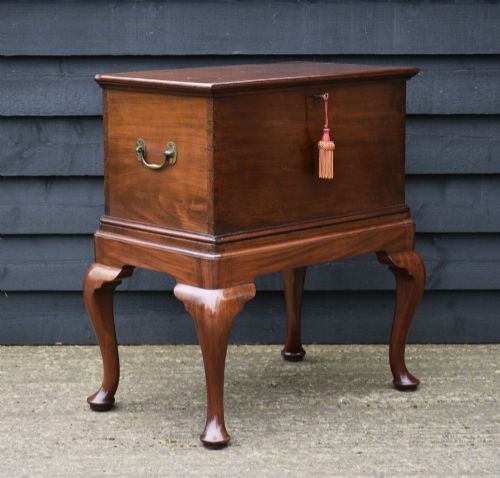
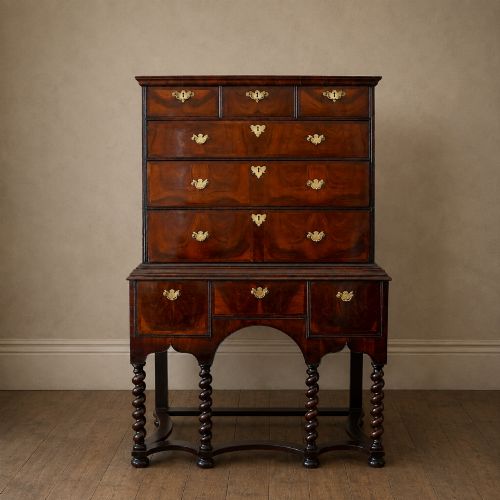


Georgian Coffer on Stand
A georgian coffer on stand provides practical storage elevated on sturdy legs, blending utility with formal presence.
Georgian Coffer on Stand
When you search for a georgian coffer on stand, you are looking at substantial storage furniture elevated above the floor on legs or a dedicated stand. These pieces combine the capacious storage of a traditional chest with the lighter visual profile of a raised base.
The versions you are most likely to meet on this page span the eighteenth and nineteenth centuries, with forms ranging from sturdy oak examples to refined mahogany and walnut pieces made during the reigns of the early Georges. Makers adapted these chests for various domestic duties, including silver storage and dowry containment.
The evidence shows both solid timbers and veneered surfaces across these forms, often accompanied by brass hardware. Oak and mahogany dominate the construction, reflecting the prevailing joinery traditions of the period.
How they were made
Cabinetmakers constructed these pieces using dense hardwoods such as oak, mahogany, and walnut, frequently applying flame mahogany veneer or burr walnut to create striking visual patterns on the exterior surfaces. These timbers provided both the structural integrity needed for heavy storage and a fine canvas for polishing.
Joinery techniques combined traditional frame and panel construction with dovetailed box building, mounted onto distinct stands that often featured brass handles, locks, and hinges. Steel components occasionally reinforced the internal mechanisms of silver chests and cellarettes.
What varies in quality
The distinction between standard examples and finer pieces lies in the selection of timber figures, such as burr walnut or flame mahogany veneer, and the crispness of any inlay work. Superior items demonstrate careful matching of wood grain across the panels and drawers.
Proportion and the integration between the chest and its stand dictate the overall elegance of the piece. Stands with well-turned legs and harmonious dimensions elevate the status of the furniture far above simpler utilitarian boxes.
The Georgian Coffer on Stand Glossary
- Cellarette
- A lockable container designed specifically to hold bottles of wine or spirits. In this context, it is often incorporated into a stand or fitted with interior divisions.
- Dowry chest
- A storage trunk prepared for a bride to hold her household linens and personal possessions prior to marriage. These pieces frequently received decorative attention from makers.
Georgian Coffer on Stand: Frequently Asked Questions
What is a coffer on stand?
A coffer on stand is a traditional storage chest elevated on a base with legs. This design keeps textiles and valuables away from damp floors while offering easier access.
They combine the deep storage of a standard chest with the lighter proportions of a table or low stand.
How were these chests used?
These pieces served multiple domestic purposes, from holding household linens and clothing to storing valuable silver or wine bottles. Specialised interiors often accommodated specific goods.
In many households, they acted as secure receptacles for family documents and prized possessions.
Which woods are most common?
Oak and mahogany appear most frequently in the surviving examples, alongside walnut and satinwood veneers. Cabinetmakers selected these timbers for their durability and appearance.
Earlier pieces tend to utilise solid oak or walnut, while later examples often feature mahogany and decorative veneers.
How do I date a piece?
Dating relies on observing the timber species, construction methods, and hardware styles associated with specific periods like the reigns of the Georges. Details such as dovetailing and timber preparation reveal the era of manufacture.
Comparing the primary wood and decorative techniques against known historical styles helps narrow the timeframe.