
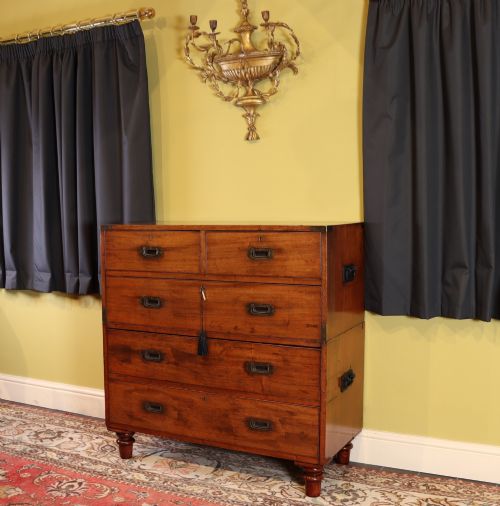
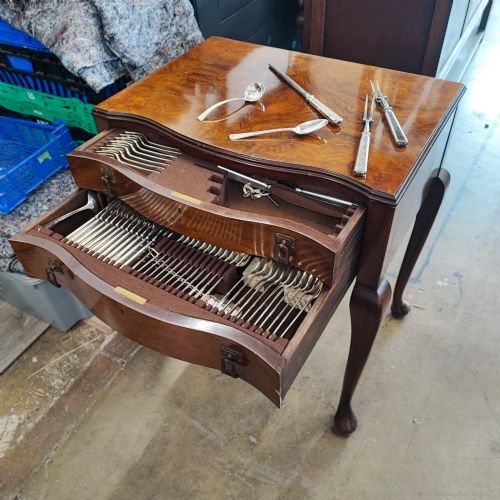


Mahogany Silver Chest
These mahogany silver chest examples are robust storage pieces built to house precious tableware, offering both security and rich timber grain for the home.
Mahogany Silver Chest
A mahogany silver chest is a heavy storage receptacle traditionally designed to protect and transport valuable silver plate and flatware. Buyers seeking these pieces encounter substantial timber trunks dating from the eighteenth and nineteenth centuries, including Georgian and Victorian examples.
Many of these chests appear alongside related forms such as cutlery canteens, cutlery boxes, and campaign chests. The selection frequently includes pieces raised on stands or fitted with internal trays for organised storage.
Origins span standard domestic furniture and specialised campaign pieces intended for travel. The material framework relies primarily on solid mahogany, occasionally featuring satinwood or burr walnut elements.
Judging quality and craftsmanship
Quality depends heavily on the selection of timber figure, such as highly figured mahogany or contrasting satinwood inlays, alongside the crispness of brass mounts. Superior examples retain their original internal fittings, lining materials, and working locks.
The integrity of the structural joinery separates finer production from simpler boxes. Pieces that retain a deep, honest patina and maker signatures demonstrate higher workshop standards.
Some chests still retain faint traces of silver polish tucked deep within their dovetailed corners.
S. W. Silver & Co. London & Liverpool·Walker & Hall, Sheffield·T Wilson
The Mahogany Silver Chest Glossary
- Mahogany
- A durable tropical hardwood known for its rich reddish-brown colour and stable grain. It serves as the primary material for the majority of these storage chests.
- Campaign chest
- Portable furniture made in sections with recessed brass handles and corner brackets, designed for military officers on the move. These pieces often feature sturdy brass reinforcement.
- Canteen
- A fitted box, chest, or table designed specifically to hold a complete set of cutlery. Interiors usually feature partitioned trays to separate knives, forks, and spoons.
- Patina
- The surface sheen and mellowing developed by wood and metal over decades of handling and age. A good patina reflects the history of the object without artificial enhancement.
- Bracket stand
- A raised support frame elevating a chest off the floor. Some seventeenth and eighteenth-century forms sit on dedicated stands rather than resting directly on the ground.
Mahogany Silver Chest: Frequently Asked Questions
What was a mahogany silver chest used for?
These chests were utilised by wealthy households to store, protect, and lock away valuable family silver and cutlery when not in use. The heavy timber construction and secure brass locks kept precious items safe from theft and tarnishing.
Over time, many families also adapted these sturdy containers for general storage, blankets, or important documents. Their robust build made them suitable for both stationary domestic life and frequent travel.
How do I date a Georgian silver chest?
Dating relies on examining the construction methods, such as hand-cut dovetails, timber thickness, and the style of the brass hardware. Georgian examples typically display simpler, cleaner lines with strong architectural proportions.
Checking for maker stamps, locks with imperial ciphers, and secondary woods like oak or pine inside the drawers also helps narrow down the period of manufacture.
Are campaign silver chests different from standard ones?
Campaign chests are specifically engineered for dismantling or easy transport, featuring flush brass carrying handles, reinforced corners, and sometimes sectional bodies. Standard domestic chests remain heavier and lack the recessed hardware designed for travel.
Both types utilise mahogany, but campaign variants place greater emphasis on structural protection against rough handling during transit.
How should I care for a mahogany chest?
Keep the wood away from direct heat sources and strong sunlight to prevent the mahogany from drying out or splitting. Regular dusting with a dry, soft cloth preserves the historic surface.
Applying occasional conservative wax feeds the timber and maintains the natural shine without building up heavy chemical layers.