
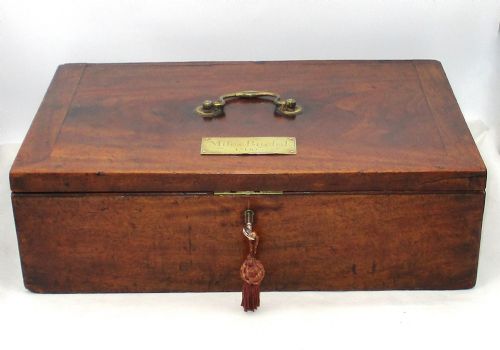
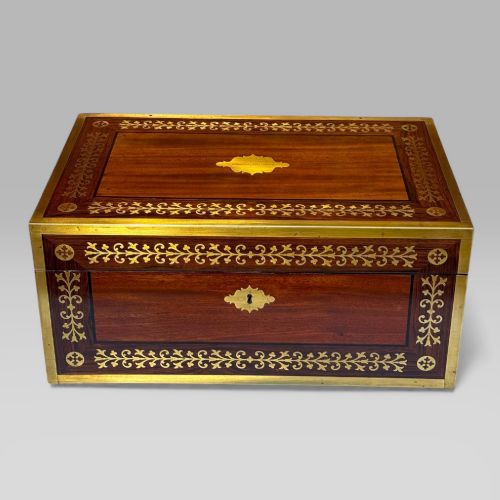
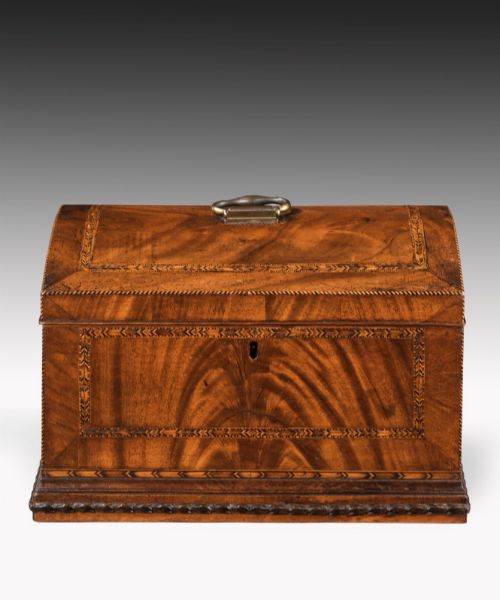
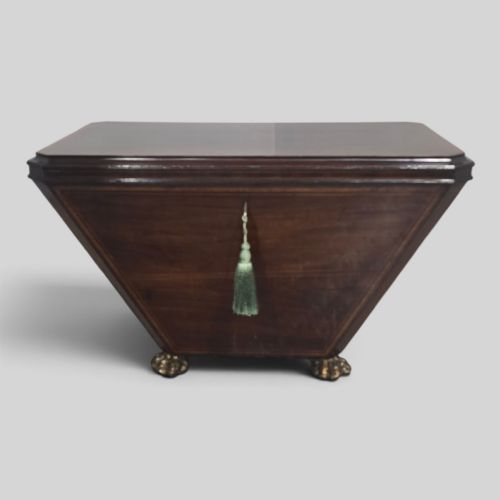


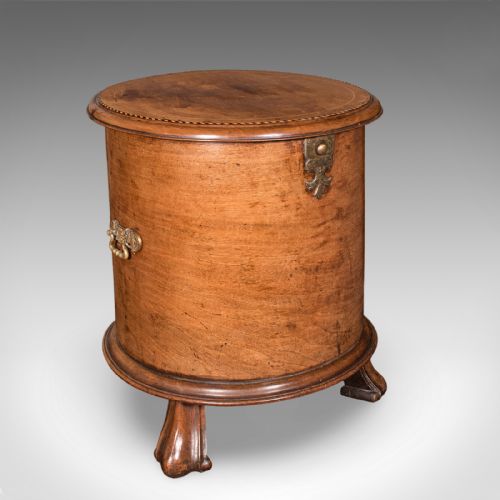


Brass Inlaid Mahogany Box
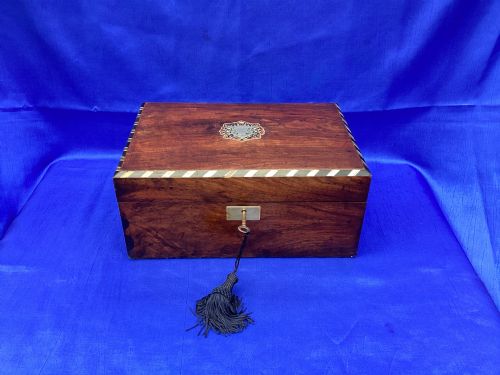
A brass inlaid mahogany box brings together warm timber and bright metalwork to organise letters, tea, or valuables.
Brass Inlaid Mahogany Box
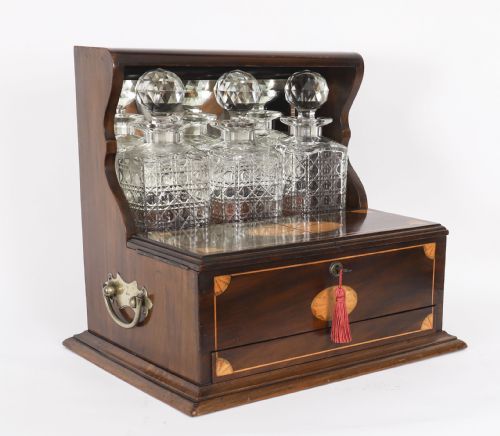
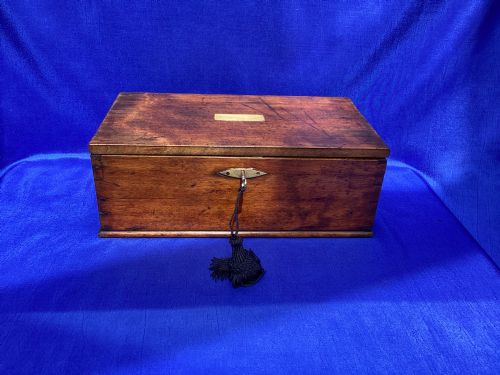
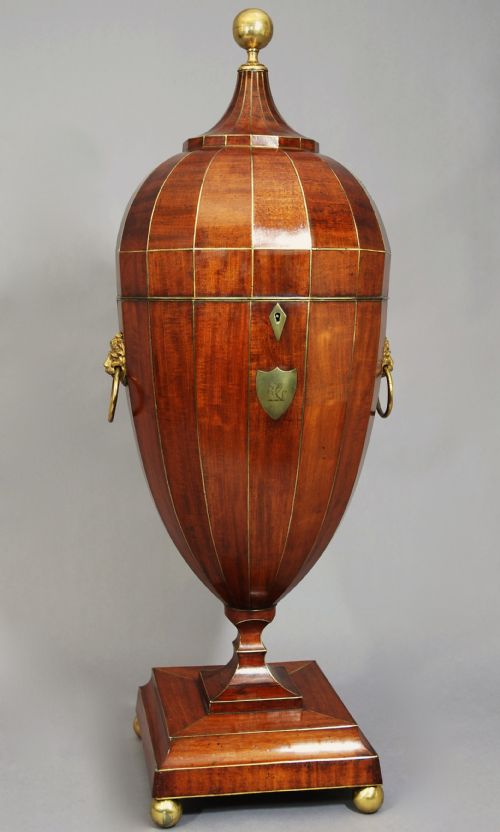
A brass inlaid mahogany box serves practical storage needs through periods spanning the Georgian era, the Regency period, and the Victorian age. These containers take many forms, including writing slopes, tea caddies, document boxes, and wine coolers.
The pieces appearing most frequently on this page date from the 18th century through to the Edwardian period, reflecting centuries of cabinet-making traditions. Buyers encounter everything from compact table boxes to large military campaign chests designed for travel.
Makers utilised mahogany as the primary structural timber, often enriched with contrasting wood inlay, boxwood, and polished brass stringing. Each survivor demonstrates how domestic and travel requirements shaped everyday receptacles.
Distinctions in craftsmanship
Quality rests upon the precision of the brass inlay work and the selection of the mahogany timber itself. Finer examples display tight, unblemished grain patterns and flush metalwork that remains secure within the wood.
Internal fittings dictate the grade of a piece, separating standard utility containers from elaborate fitted dressing boxes and campaign writing slopes. Complete interiors with original glass, metal canisters, or secret compartments elevate the standing of the work.
A Georgian mahogany snuff box carved in the exact shape of a shoe.
Edwards and Roberts·Holtzapffel and Co·T.J. Morris
The Brass Inlaid Mahogany Box Glossary
- Writing slope
- A portable desk featuring a slanted writing surface that folds down to reveal compartments for stationery and ink. These slope boxes often include secret drawers and brass corner reinforcement for durability.
- Tea caddy
- A specialised container designed to store dry tea leaves securely away from moisture. Georgian and Regency examples frequently feature internal divisions and fitted metal canisters.
- Wine cooler
- A large storage vessel intended to hold bottles and ice during dining. Makers constructed these in octagonal and freestanding forms using mahogany and brass mounts.
- Campaign style
- Furniture and boxes designed for military officers on active service, featuring recessed brass handles and reinforced corners. These items folded or disassembled to save space during transport.
- Stringing
- A narrow strip of contrasting wood or metal inlaid into the surface of a box to create decorative borders. It requires high skill to execute without disturbing the surrounding timber.
Brass Inlaid Mahogany Box: Frequently Asked Questions
What were writing slopes used for?
Writing slopes provided a portable desk surface for corresponding and keeping personal papers organised during the Georgian and Victorian periods.
Users opened the hinged lid to reveal slanted ledges for writing, alongside dedicated spaces for inkwells, pens, and loose documents.
How do I identify a Regency period box?
Regency boxes typically exhibit clean classical proportions, dark mahogany timbers, and precise geometric brass stringing or inlay.
They often incorporate rosewood accents and robust brass campaign mounts intended for travel and military use.
Are the interiors usually original?
Many surviving pieces retain their fitted wooden partitions, secret compartments, and velvet or leather writing surfaces.
Certain items, such as tea caddies and apothecary boxes, may show replacements where glass bottles or metal canisters were lost over time.
How do I care for mahogany and brass?
Maintain the timber by keeping it away from direct sunlight and sudden temperature shifts that cause wood to dry out.
Clean brass components gently with a soft cloth to preserve the polished metal without abrading the surrounding mahogany veneer.