
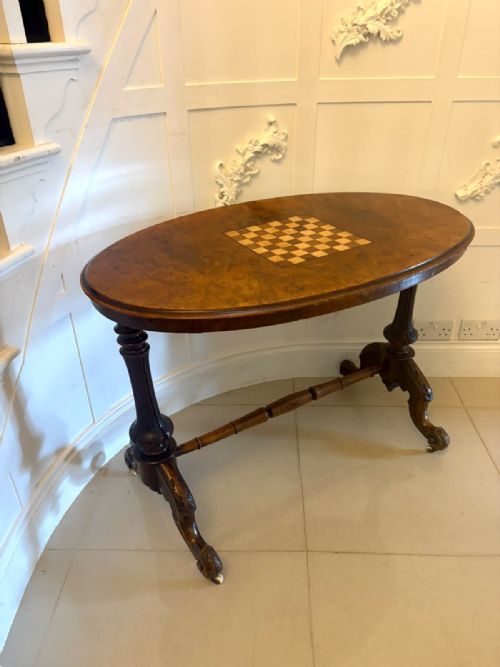
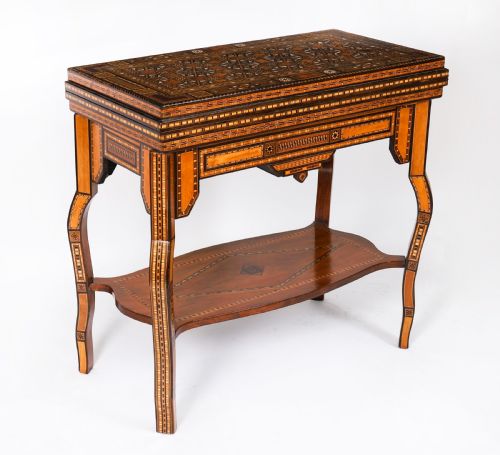
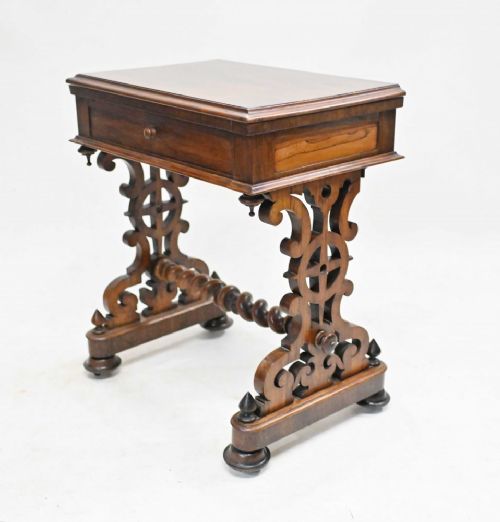


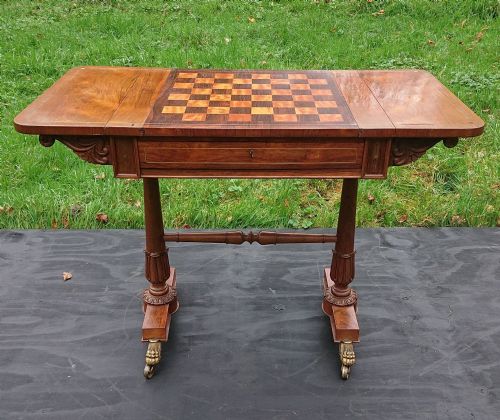


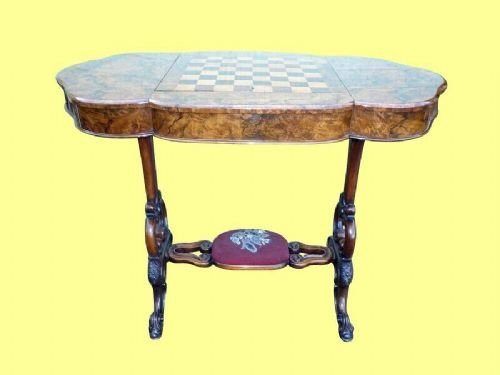

Brown Wood Chess Table
A brown wood chess table combines fine cabinetmaking with a traditional pastime, offering a dual-purpose surface that anchors a room.
Brown Wood Chess Table
A brown wood chess table serves as both a functional playing surface and a refined piece of furniture for the home. The selection ranges from Victorian burr walnut examples to Regency and William IV period designs in mahogany and rosewood.
Many of these pieces double as multi-purpose games tables featuring inlaid boards for chess, draughts and backgammon. Others integrate clever mechanisms such as foldover tops, tilt tops or removable boards to suit various domestic uses.
Materials and Construction
Cabinetmakers utilised rich timber veneers including burr walnut, rosewood and mahogany over solid wood carcases. Marquetry, parquetry and wood inlay formed the contrasting light and dark squares of the chequer boards.
Specialised techniques enabled multi-game capability through pivoting tops, sliding drawers and removable surfaces. Finer pieces incorporated decorative elements such as brass details, mother-of-pearl and bone inlay.
The listings span the nineteenth century, encompassing Regency, William IV, and Victorian periods through walnut, mahogany, and rosewood.
Judging Quality and Execution
The distinction between standard examples and superior pieces lies in the choice of timber and the precision of the inlay. Finely figured burr walnut and intricate marquetry demonstrate the skill of the original workshop.
Structural integrity and the smooth operation of mechanical components dictate the success of a design. Tables that transition seamlessly between a chess board and a flat occasional surface show superior joinery.
Gillows
The Brown Wood Chess Table Glossary
- Burr walnut
- A prized timber veneer obtained from the growth excrescences of walnut trees, displaying swirling, highly figured grain patterns. It was frequently utilised on high-end Victorian furniture.
- Marquetry
- The art of applying decorative pieces of veneer to a structure to form intricate pictorial or geometric designs. Craftsmen used various woods to create contrasting tones on table tops.
- Parquetry
- A geometric mosaic of wood pieces used for decorative floors and table tops. It provides the crisp grid pattern required for a playing surface.
- Tilt top
- A table mechanism allowing the top to pivot and lock vertically when not in use. This saved space in nineteenth-century interiors.
- Scumbled
- A paint effect imitating the grain of more expensive woods or creating a decorative finish. It appears on certain Regency period pieces.
Brown Wood Chess Table: Frequently Asked Questions
What is a brown wood chess table?
A brown wood chess table is a nineteenth-century furniture piece designed specifically for playing board games while functioning as a decorative table. These items bridge the gap between utility and parlor elegance.
Most examples date from the Victorian and Regency periods, utilising timbers like walnut and mahogany. They often include internal storage or multi-game tops.
How do I date a Victorian chess table?
Dating relies on examining the timber, construction methods and stylistic revival cues. Pieces from the mid-nineteenth century frequently feature burr walnut veneers and heavy scrolling supports.
Earlier Regency examples tend to display cleaner lines in mahogany or rosewood. Cabinetmaker attribution and hardware styles also help narrow the decade.
Where should I place a chess table?
A chess table sits comfortably in a study, library or drawing room as a focal point. Placing it near a window or light source highlights the wood grain and inlay.
Because many feature finished backs and polished surfaces all round, they suit freestanding placement rather than pushing against a wall.