

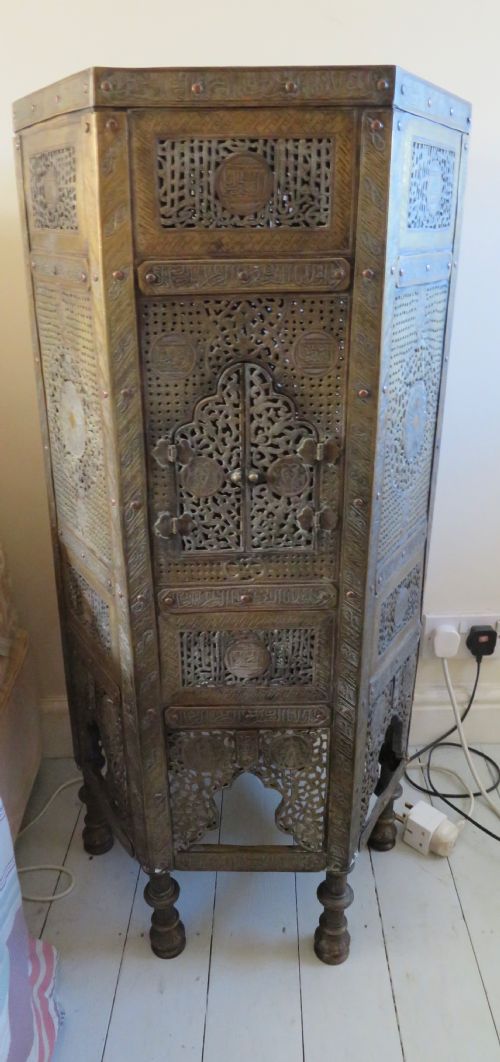


Orientalist Inlaid Table
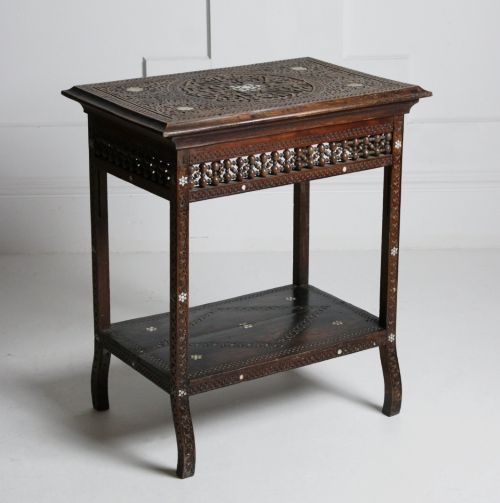
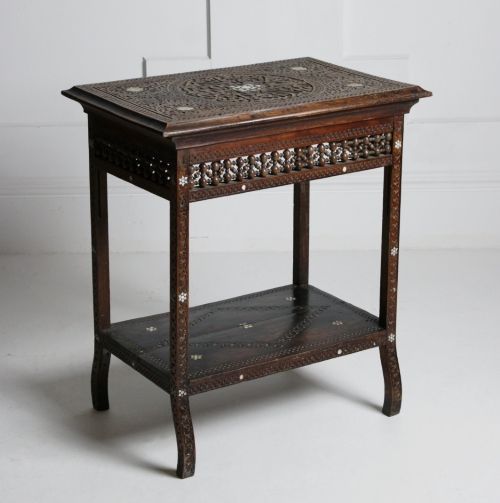
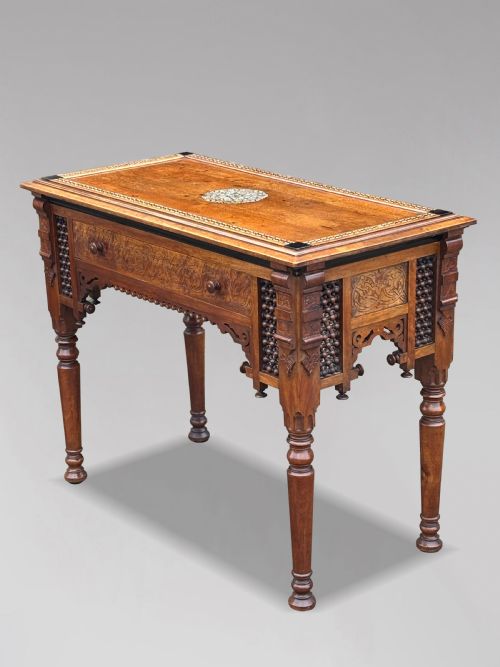
An orientalist inlaid table brings geometric Moorish revival design and intricate mother-of-pearl or bone work directly into a room.
Orientalist Inlaid Table
An orientalist inlaid table unites various revival styles, including Moorish and Mamluk, across the nineteenth and twentieth centuries. These pieces typically take the form of octagonal occasional tables, two-tier side tables, and specialised games tables for chess.
Makers and workshops across Syria, Egypt, and North Africa produced these pieces alongside British firms influenced by the aesthetic movement. The most common forms on this page utilise hexagonal or octagonal tops designed to function as striking occasional furniture.
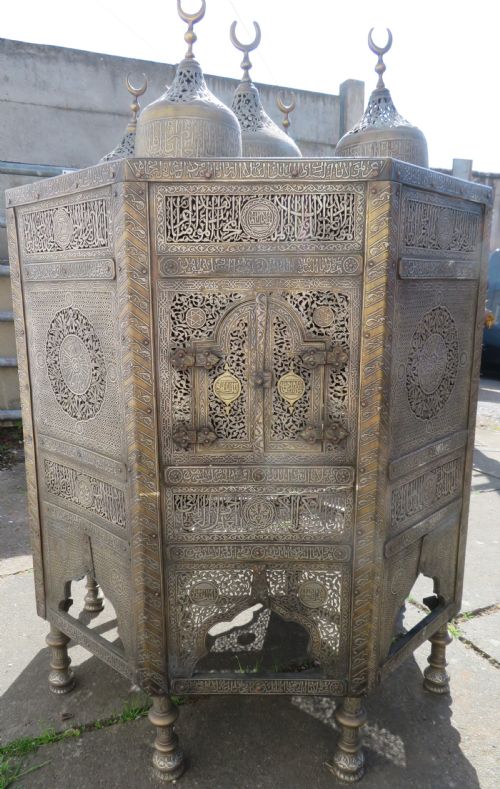
Craftsmen built these tables to serve distinct domestic uses, ranging from Quran stands known as kursi to low coffee and games surfaces. Their complex geometric silhouettes draw heavily on Ottoman Syrian and Cairo ware traditions.
What varies in quality
Quality depends upon the precision of the geometric tessellation and the density of the inlay across the wooden substrate. Superior examples maintain tight, flush joints where bone, mother-of-pearl, and metal meet the walnut background without gaps.
The ambition of the form also dictates standing, moving from simpler two-tier side tables to complex multi-sided occasional tables and specialised games surfaces. Greater depth of design in the brass work or white-metal openwork indicates superior workshop output.
Several tables double as chess boards, proving that nineteenth-century diplomacy occasionally involved a quick rook sacrifice.
Liberty and Co·Carlo Bugatti
The Orientalist Inlaid Table Glossary
- Cairo ware
- Brass or copper vessels and tables decorated with heavy silver and gold inlay, often associated with workshops in Egypt. These pieces emerged strongly in the late nineteenth and early twentieth centuries.
- Kursi
- A traditional low stand or table, frequently used for supporting sacred texts such as the Quran. They often feature hexagonal or octagonal geometry.
- Moorish Revival
- An architectural and decorative style that draws inspiration from North African and Spanish Islamic design. It became particularly popular in British and European interiors during the nineteenth century.
- Mother-of-Pearl
- The iridescent inner layer of certain mollusc shells, harvested and cut into tiny geometric polygons for inlay work. It creates bright contrast against dark walnut and ebonised timber.
- Octagonal
- Having eight sides and eight angles, forming the characteristic multi-sided top seen on many orientalist occasional tables. This geometry allows for complex radiating star patterns in the inlay.
Orientalist Inlaid Table: Frequently Asked Questions
Where were orientalist inlaid tables made?
These tables originated in workshops across Syria, Egypt, and North Africa, where artisans mastered intricate geometric inlay techniques.
European firms and retailers like Liberty & Co. also commissioned or imported similar Moorish style pieces to satisfy domestic demand during the late nineteenth century.
How do I use a kursi table today?
Originally built as low stands or Quran supports, these octagonal and hexagonal pieces function well as compact side or occasional tables.
Their rich surface patterns make them suitable as focal points beside a chair or sofa without requiring heavy styling.
What materials make up the inlay?
Artisans used a combination of natural bone and iridescent mother-of-pearl to create pale, luminous geometric patterns against the dark wood.
Many examples also incorporate metallic wires and sheets, including brass, copper, silver, and white-metal.
How do I distinguish Moorish revival from aesthetic movement pieces?
Moorish revival pieces lean heavily on traditional Middle Eastern geometric star patterns, intricate arch motifs, and dense Middle Eastern inlays.
Aesthetic movement examples produced in Britain often blend these Islamic forms with contemporary European artistic sensibilities and dark ebonised framing.