

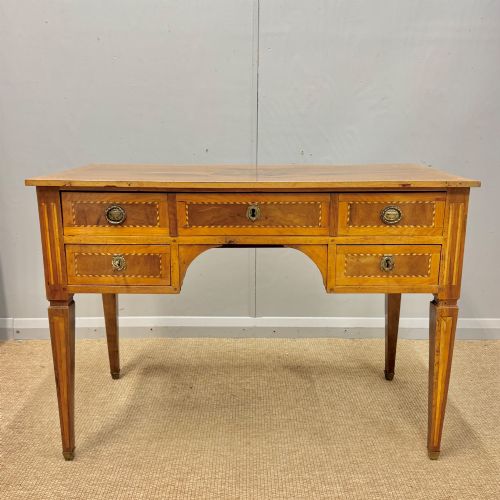
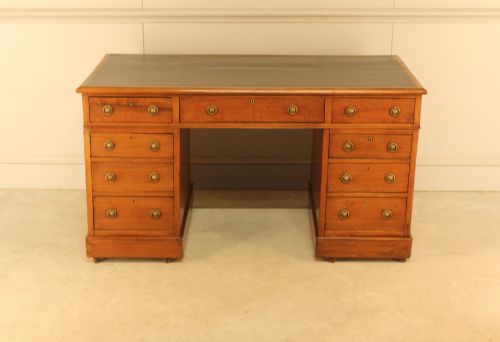
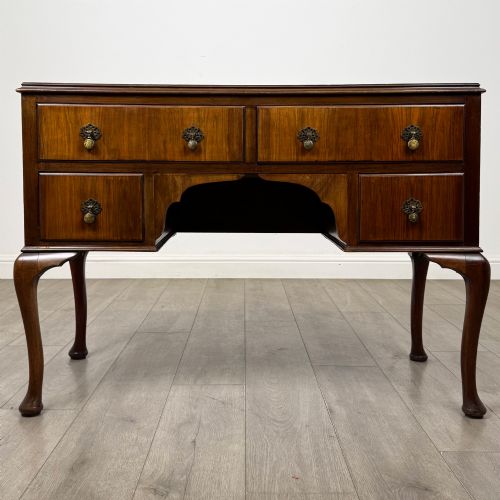
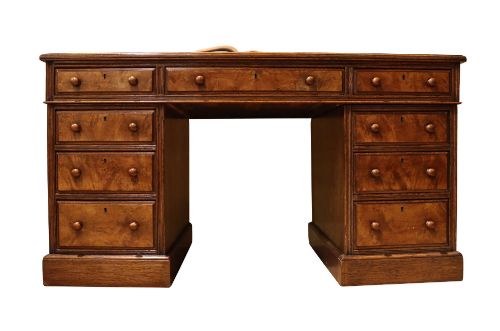
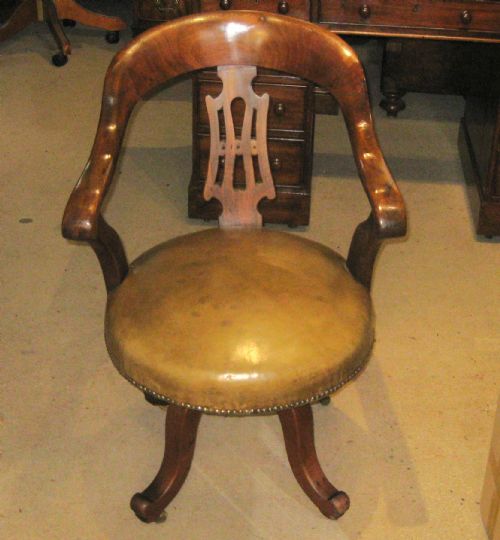
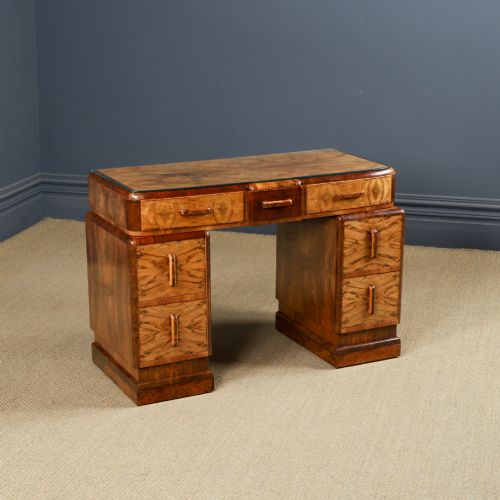
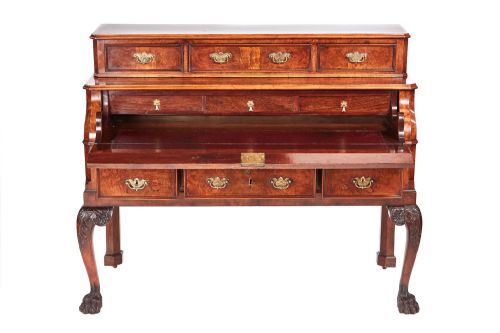
Brown Walnut Study Desk
A brown walnut study desk brings warmth and steady utility to a room, offering rich grain and practical surface space.
Brown Walnut Study Desk
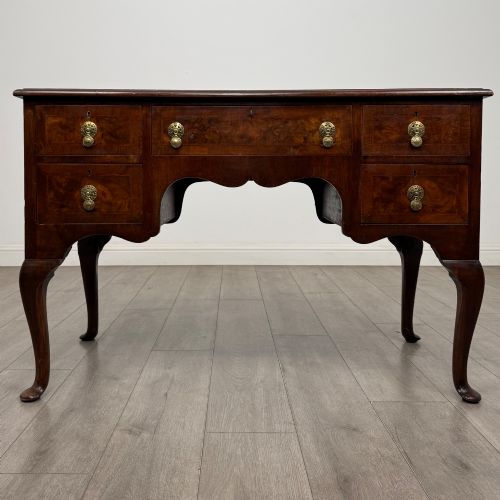
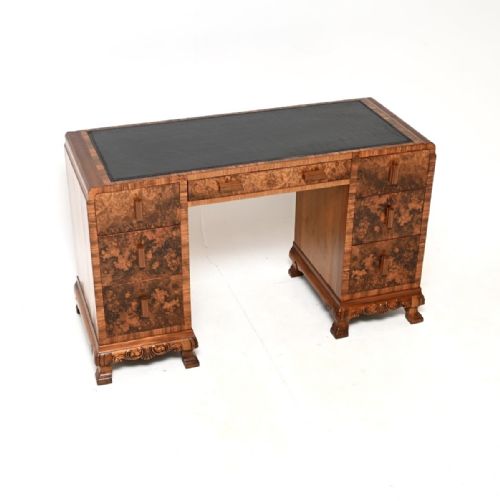
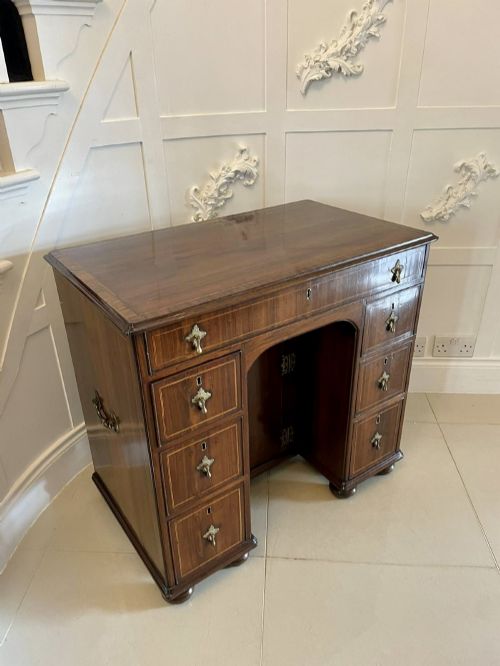
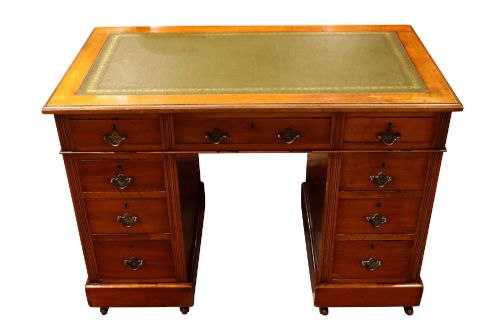
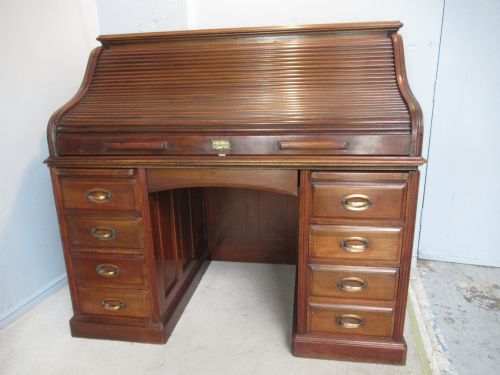
A brown walnut study desk encompasses practical writing furniture built from walnut timber across multiple centuries, including pedestal forms, kneehole models, and writing tables. These pieces provide surface workspace for study or administration.
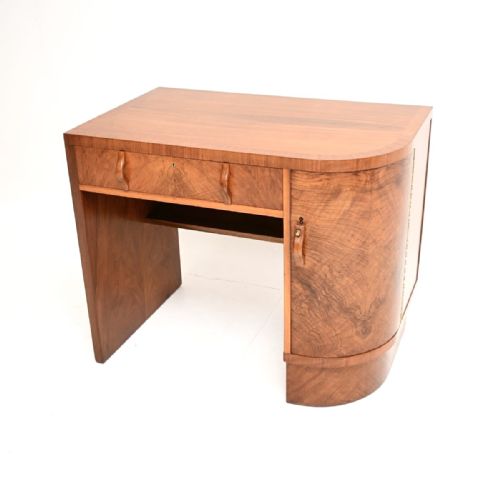
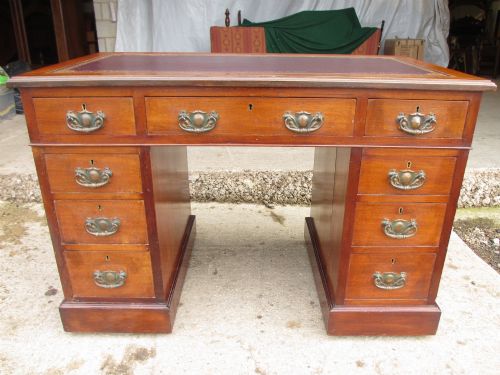
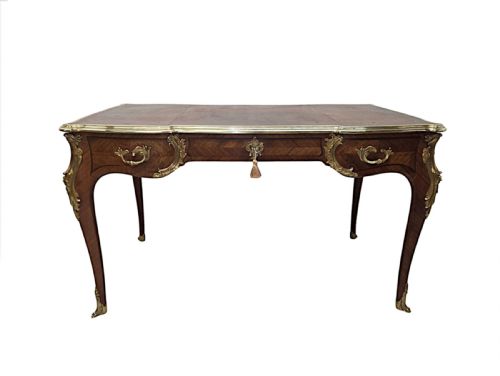
The versions most commonly met on this page date from the Victorian era and the 1930s Art Deco period. Examples range from compact nine-drawer pedestal models to grander partners desks and writing tables.
Earlier pieces from the eighteenth century appear alongside Edwardian and Queen Anne revival forms. These variations reflect shifting domestic requirements for private study and correspondence over time.
Materials and Construction
Makers utilised solid walnut and decorative burr walnut veneers applied to secondary woods such as oak and fruitwood. Burr walnut provides intricate swirling grain patterns across drawer fronts and primary surfaces.
Writing surfaces frequently feature inset tooled leather panels framed by timber borders. Brass handles, escutcheons, and occasional glass elements complement the warm brown tones of the wood.
One exceptional Art Deco desk even integrates a built-in reading lamp into its walnut and sycamore frame.
Quality and Proportion
Quality rests in the selection of timber figure, particularly the depth of burr walnut veneer used on primary facades. Finer examples display balanced proportions and crisp carved details such as paw feet or modest mouldings.
Construction methods determine durability, visible in the tight tolerances of drawer dovetails and the smooth operation of pedestals. The integrity of internal framing separates utilitarian manufacture from superior cabinet work.
Maple & Co·Wylie & Lochhead Glasgow·Edwards & Roberts
The Brown Walnut Study Desk Glossary
- Pedestal desk
- A form comprising two banks of drawers supporting a single desktop. This layout creates an enclosed workspace with storage on both sides.
- Burr walnut
- Timber taken from the wart or growth on a walnut tree, yielding highly figured circular patterns. Cabinet makers prized this veneer for principal display surfaces.
- Kneehole desk
- A compact desk featuring a central recess for the user's legs, flanked by smaller drawers. It provides an efficient footprint for smaller study spaces.
- Writing table
- A freestanding table designed primarily for correspondence rather than storage. These pieces lack pedestals and often feature slender legs.
- Partners desk
- A large double-sided desk built with drawers and cupboards facing both directions. It allows two people to work opposite one another.
Brown Walnut Study Desk: Frequently Asked Questions
What is a brown walnut study desk?
A brown walnut study desk is a wooden work table or pedestal bureau constructed primarily from walnut timber. These pieces serve as functional writing surfaces while displaying the natural grain of the wood.
They appear in various forms, from compact Edwardian tables to substantial Victorian pedestal desks. Each incorporates drawers or compartments designed for paperwork and study equipment.
How do I identify a Victorian walnut desk?
Victorian walnut desks typically display darker timber tones, substantial proportions, and traditional joinery methods. Many incorporate burr walnut veneers, brass hardware, and inset leather writing surfaces.
Details such as carved paw feet, turned wooden pulls, or royal commemorative leather tooling point directly to nineteenth-century manufacture. Interior drawer construction using hand-cut dovetails further confirms the period.
Where were these desks used?
These desks served primarily in domestic libraries, private studies, and home offices. They provided a dedicated station for correspondence, reading, and household administration.
Larger pedestal and partners models also saw service in professional offices and institutional chambers. Their dual function of storage and workspace made them central fixtures of the nineteenth-century interior.
How should I care for walnut wood?
Walnut furniture benefits from stable indoor environments away from direct sunlight and strong heat sources. Excessive temperature fluctuations can cause timber and veneer to dry out or split.
Regular dusting with a soft cloth preserves the finish. Occasional application of appropriate wax feeds the wood and maintains its natural lustre without building up heavy residues.