
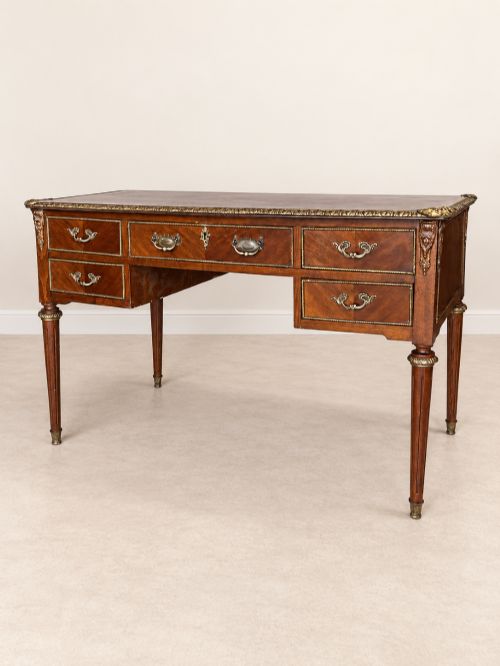
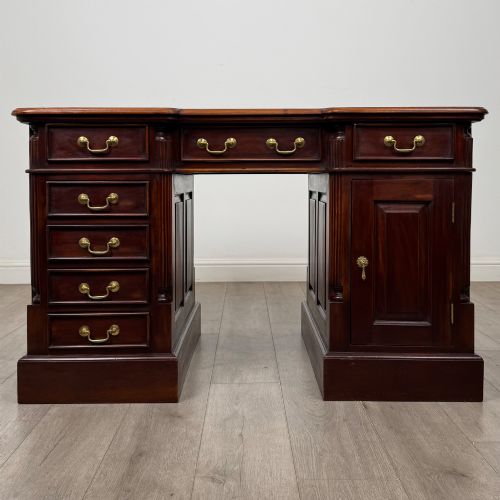
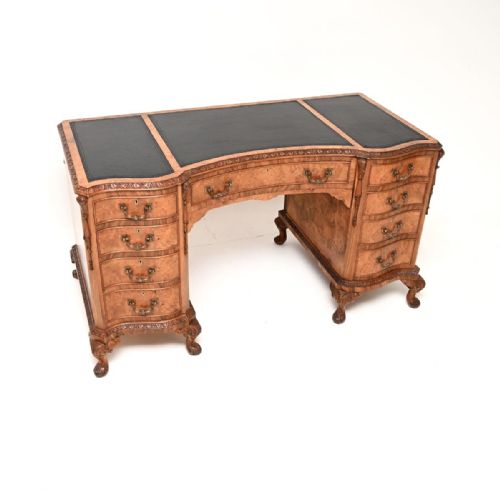
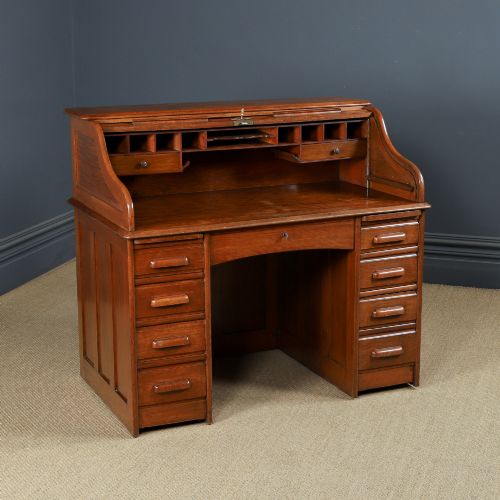


Vintage Pedestal Writing Desk
A vintage pedestal writing desk provides a robust workspace with deep banks of drawers, anchored by traditional period craftsmanship and timber.
Vintage Pedestal Writing Desk
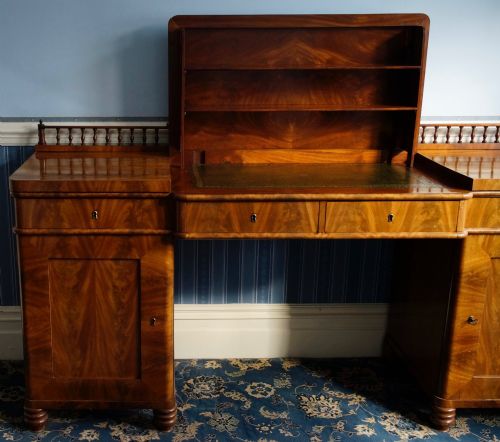
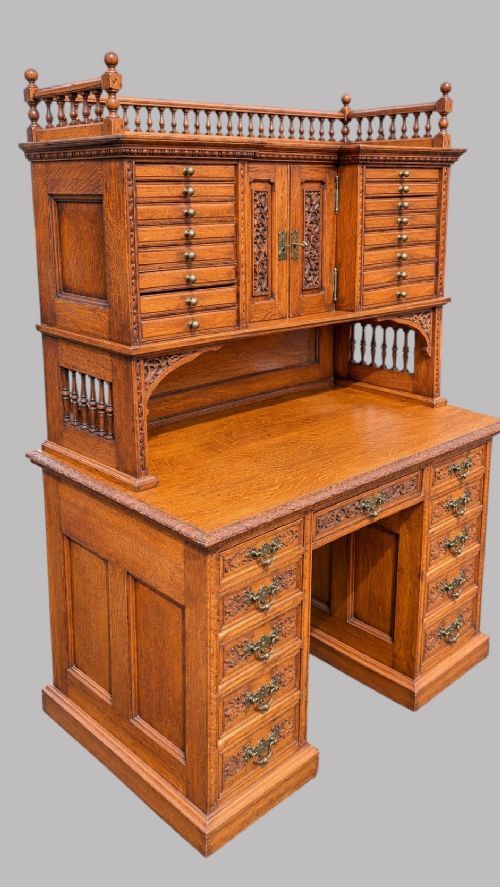
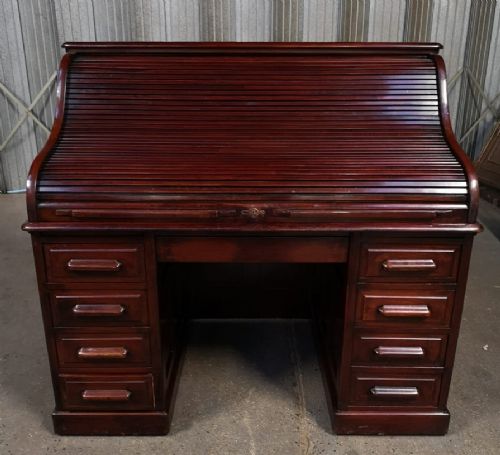
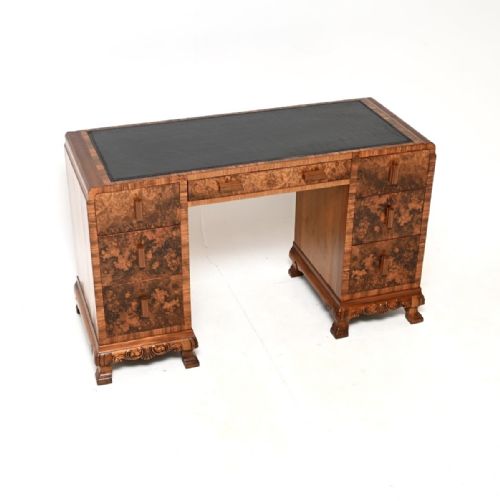
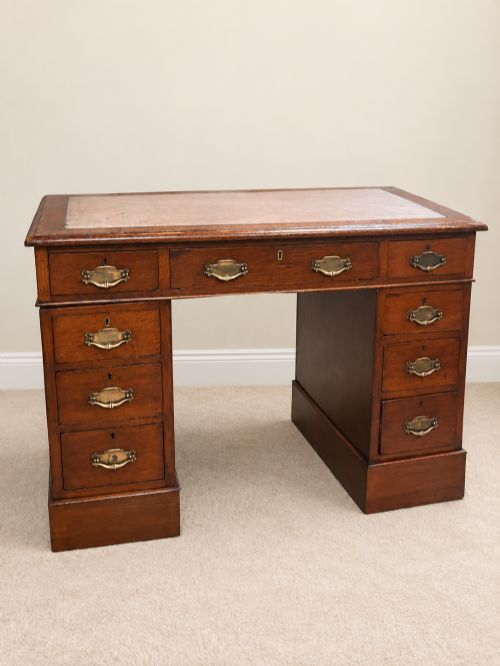
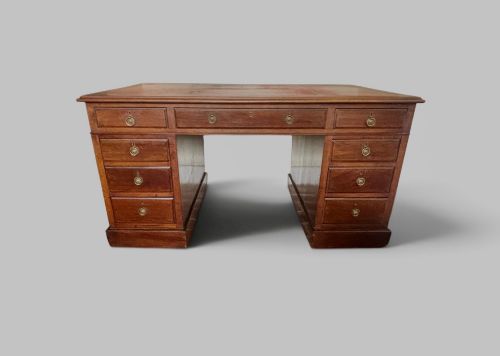
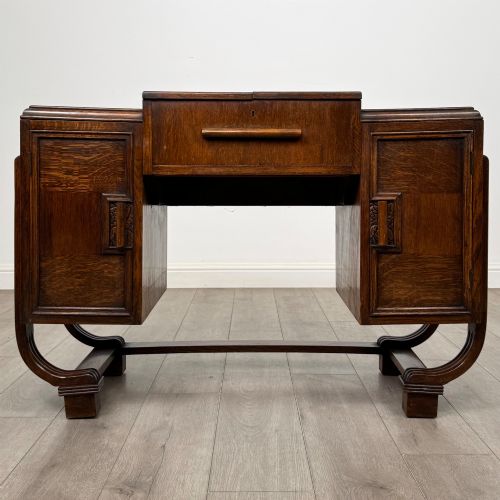
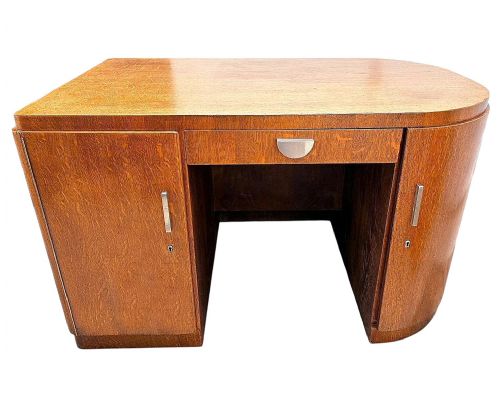
A vintage pedestal writing desk comprises a central writing surface supported by two independent banks of drawers, creating a substantial double-sided or single-sided station. These pieces appear frequently in Victorian, Edwardian, and Art Deco iterations, using timbers such as mahogany, oak, and burr walnut.
The most common examples on this page are nineteenth-century and early twentieth-century variations in mahogany and oak, often featuring inset leather writing surfaces and multiple functional drawers.
Materials and construction
Cabinet makers utilised dense hardwoods like mahogany and oak for the structural carcases and drawer linings, frequently applying decorative veneers such as burr walnut to the primary display surfaces. Solid brass handles, hinges, and key escutcheons complete the hardware.
Writing surfaces were traditionally inset with tooled leather or hide, secured with blind tooling or gilt borders. Drawer construction relied on hand-cut dovetail joints, ensuring durability across the pedestals.
Secret stationery drawers and hidden writing slides reveal the clever ways Victorian cabinet makers kept private correspondence tucked safely away.
Assessing the execution
Superior examples distinguish themselves through the selection of matched timber veneers and the precision of the joinery, particularly in the hand-cut dovetails of the internal drawers. Finer pieces retain original hardware, functioning locks, and well-preserved leather inserts.
The integration of secondary timber choices for internal framing and the crispness of carved details, such as linenfold or panelled sides, separate standard commercial output from workshop pieces built for prominent firms.
Trollope and Sons·Edwards and Roberts·Maple and Co
The Vintage Pedestal Writing Desk Glossary
- Pedestal desk
- A freestanding office or library desk featuring a central writing surface supported by two columns of drawers.
- Partners desk
- A large pedestal desk designed with drawer banks on both sides so two people may sit opposite each other.
- Burr walnut
- A prized timber veneer obtained from the gnarled growth on walnut trees, showing intricate swirling grain patterns.
- Kneehole desk
- A compact desk or writing table featuring a central recessed space for the legs beneath the desktop drawers.
- Leather top
- A writing surface inset with coloured and tooled leather, protected by timber margins around the perimeter.
Vintage Pedestal Writing Desk: Frequently Asked Questions
How do I clean the leather top?
Wipe the surface gently with a damp cloth using mild soap, avoiding harsh chemicals that might damage the vintage hide.
Condition the leather periodically with a suitable balm to preserve suppleness and maintain the gilded tooling.
Can these desks sit in the middle of a room?
Many examples are finished on all four sides, including partners desks and freestanding pedestals designed to face outwards into an open space.
Check the reverse of the piece to confirm whether the timber panelling matches the front before placing it away from a wall.
How do I identify a Victorian desk?
Victorian models typically utilise solid mahogany or walnut, exhibiting heavy construction, hand-cut dovetails, and traditional brass hardware.
Look for deeper drawer configurations and patinated timber finishes characteristic of nineteenth-century workshops.