


Brown Walnut Nursing Chair
A brown walnut nursing chair is a low-seated Victorian bedroom seat designed for comfort, and these walnut examples bring period charm to a modern sitting room.
Brown Walnut Nursing Chair
A brown walnut nursing chair is a low-seated Victorian bedroom seat designed for comfort and ease of dress, appearing across this page in nineteenth and early twentieth century forms. Buyers search for these pieces to bring intimate nineteenth-century scale and rich timber grain into modern bedrooms and drawing rooms.
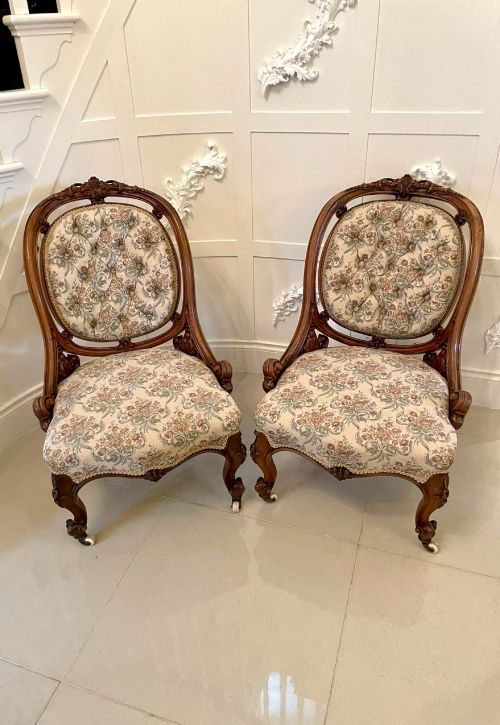
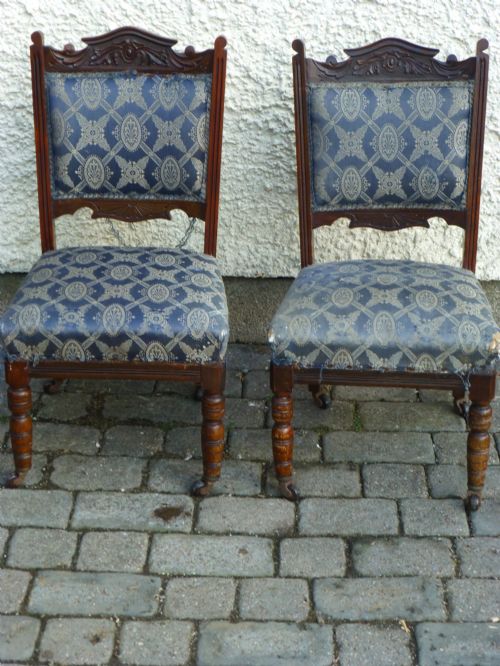
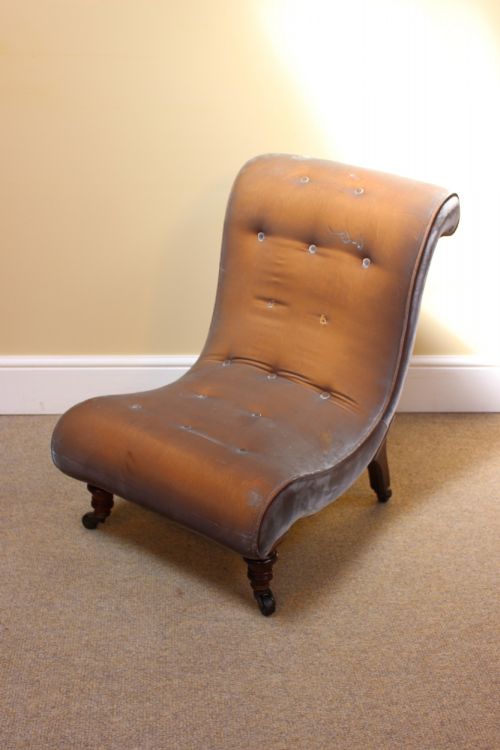
The pieces listed on this page encompass side chairs, slipper chairs, and occasional armchairs, alongside pairs and larger salon suites. Most examples date from the Victorian era, spanning the mid-nineteenth century through to the early twentieth century.
Stylistic variations range from simple round-seat nursing chairs to Aesthetic Movement bedroom chairs and elaborate Victorian Rococo Revival and Queen Anne style frames. Walnut is the primary timber, occasionally accompanied by mahogany or highlighted with brass hardware and upholstered finishes.
How they were made
Cabinet makers constructed these frames using solid walnut and burr walnut veneers, shaping the timber into scroll backs, carved crests, and turned supports. Master joiners utilised traditional mortise and tenon joinery to ensure the low frames remained rigid under daily use.
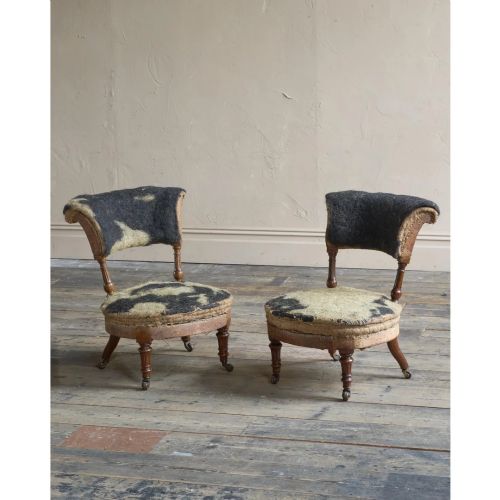
Upholstery techniques involved traditional stuffing applied over webbing and springs, finished with button-backed textiles, tapestry, velvet, or contemporary upholstery fabric. Many surviving frames retain their historic character while offering opportunities for fresh textile restoration.
Several Victorian examples are offered specifically for re-upholstery, giving new owners the final say on whether the padding wears velvet or wool.
What varies in quality
Quality in a brown walnut nursing chair rests upon the crispness of the timber carving and the architectural proportion of the low frame. Superior examples display figured walnut grain, balanced scroll arms, and robust structural integrity within the turned legs and brass castors.
The sophistication of the upholstery detailing distinguishes standard production from finer pieces, particularly where buttoning, tassel fringes, or hand-tacked tapestry work survive. Pairs and matched salon suites demonstrate a higher grade of original patronage than isolated, utilitarian bedroom chairs.
The Brown Walnut Nursing Chair Glossary
- Nursing chair
- A low-seated Victorian chair originally designed for comfort in the bedroom or nursery, allowing women to tend to infants or dress comfortably. These seats typically feature low profiles and padded backs.
- Slipper chair
- An upholstered chair with very short legs designed to sit low to the ground for dressing and putting on shoes. They share the compact scale common to nineteenth-century bedroom seating.
- Aesthetic Movement
- A late nineteenth-century design style that emphasised artistic expression, simplicity, and Japanese-inspired motifs over heavy Victorian ornamentation. Pieces from this movement often feature clean walnut frames and refined geometry.
- Rococo Revival
- A mid-nineteenth-century decorative style marked by naturalistic carved ornament, asymmetrical C-scrolls, and flowing floral motifs. Walnut frames in this taste display deep relief carving.
- Burr walnut
- A highly prized timber cut from walnut tree growths, yielding intricate, swirling grain patterns. Cabinet makers utilised these veneers on prominent show-wood panels.
Brown Walnut Nursing Chair: Frequently Asked Questions
What is a nursing chair used for?
These low seats were originally built for the bedroom or nursery to assist with infant care and daily dressing.
Today, buyers place them in bedrooms, reading corners, and sitting rooms where their compact scale fits neatly into smaller floor plans.
How do I date a walnut chair?
Dating relies upon examining construction methods, timber choice, and stylistic cues such as Victorian scrollwork or Aesthetic Movement simplicity.
Makers often marked pieces less frequently as time progressed, so proportions and upholstery remnants provide the primary chronological clues.
Can I reupholster these chairs?
Many period frames arrive ready for re-upholstery, allowing owners to apply modern textiles that match their interior colour schemes.
Traditional webbing and padding techniques should be respected during restoration to preserve the historic profile of the seat.
How do I style a bedroom chair?
A low bedroom chair acts as a sculptural accent piece when paired with a small side table or placed beside a fireplace.
Their restrained height prevents them from overwhelming intimate spaces while adding warmth through dark walnut grain.